
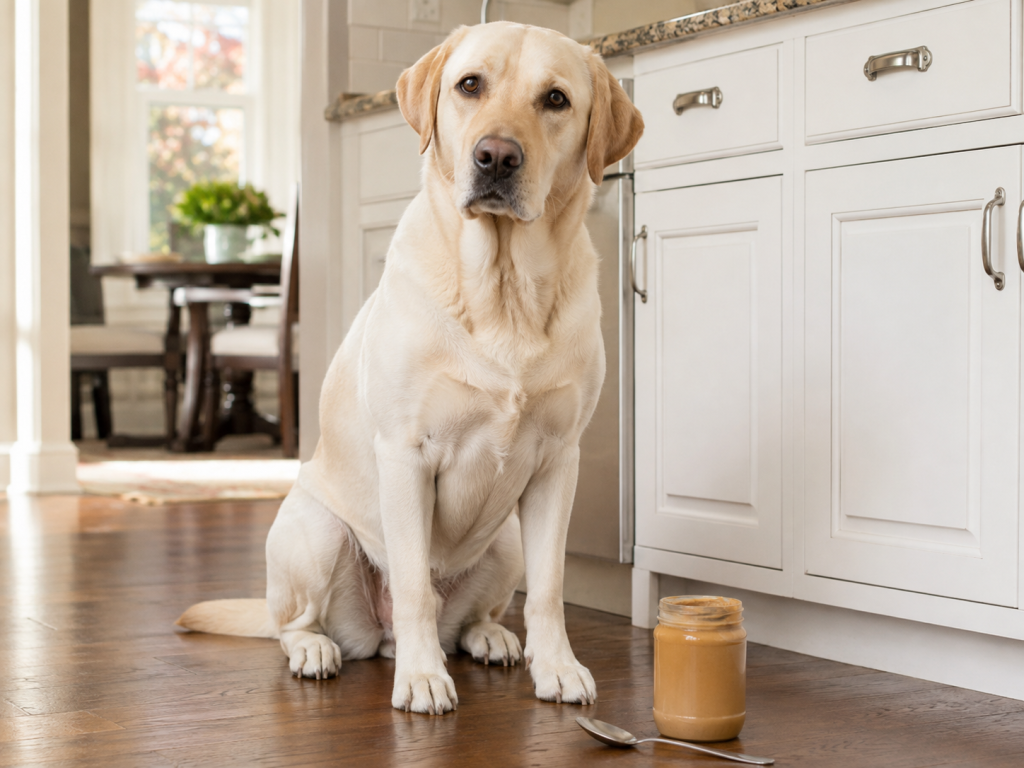
Can dogs eat peanut butter safely? Yes, most dogs can enjoy small amounts of plain peanut butter as an occasional treat, provided it does not contain xylitol. Xylitol is a sweetener that is highly toxic to dogs and can appear in some peanut and nut butter products. Always read the ingredient label before sharing peanut butter with your dog.
Peanut butter is also high in fat and calories, so more is not necessarily better. A small amount can work well as a treat, training reward, or way to hide medication, but it should remain an extra rather than a major part of your dog’s diet.
Is Peanut Butter Safe for Dogs?
Plain peanut butter without harmful ingredients is generally considered an acceptable occasional treat for many healthy dogs. The ASPCA specifically lists peanut butter as a food that can be shared with pets while warning owners to check carefully for xylitol and keep portions small because peanut butter is high in fat.
However, saying peanut butter is “safe for dogs” does not mean every jar on the supermarket shelf is suitable. Different products can contain different sweeteners, salt, added sugar, oils, chocolate flavoring, or other ingredients. For that reason, checking the complete ingredient list matters more than assuming a familiar brand or flavor is safe.
Your dog’s individual health matters too. A healthy adult dog may tolerate a small spoonful without a problem, while a dog with certain digestive conditions, weight problems, or dietary restrictions may need to avoid it. When your veterinarian has prescribed a specific diet, ask before regularly adding calorie-dense human foods.
The Most Important Rule: Never Give Dogs Xylitol
Before giving your dog peanut butter, look at the ingredient list and make sure it does not contain xylitol. Xylitol is a sugar substitute that can be found in some human foods, including certain peanut and nut butters. The FDA specifically warns that xylitol is toxic to dogs.
Xylitol can cause a rapid and dangerous drop in a dog’s blood sugar. Merck Veterinary Manual explains that xylitol poisoning can cause profound hypoglycemia, with possible signs including vomiting, weakness, lethargy, difficulty coordinating movement, seizures, and coma. Severe liver injury can also develop in some dogs.
This is not an ingredient where a small taste should be considered harmless. The amount of xylitol varies between products, and even relatively small amounts can be dangerous depending on the dog’s weight and the concentration involved.
If your dog eats peanut butter containing xylitol, contact a veterinarian or emergency veterinary clinic immediately. Do not wait until symptoms develop. The FDA warns that xylitol poisoning can begin quickly and should be treated as an urgent situation.
What Kind of Peanut Butter Can Dogs Eat?
The simplest option is usually a plain peanut butter with a short ingredient list and no xylitol. Ideally, peanut butter used as a dog treat should not rely on large amounts of added sugar, salt, or unnecessary flavorings.
Always check the label each time you buy a product. Manufacturers can offer several versions of the same product, and ingredients can differ between varieties. A jar labeled “sugar-free” or “reduced sugar” deserves particularly careful inspection because sugar substitutes may be present.
Do not rely only on the front of the package. Turn the jar around and read the ingredient list before giving it to your dog. The FDA notes that xylitol may also appear under names such as “birch sugar,” so unfamiliar sweeteners should not be ignored.
Chocolate-flavored peanut butter products should also stay away from dogs. Chocolate is another food that can be toxic to pets, so plain peanut butter is a much safer choice than dessert spreads or flavored combinations.
How Much Peanut Butter Can a Dog Have?
Peanut butter should be treated as an occasional extra rather than a normal meal ingredient. Because it contains a lot of fat and calories in a small amount, portions can become excessive surprisingly quickly. The ASPCA recommends keeping peanut butter quantities small for this reason.
For many dogs, a small lick or thin layer inside a toy is enough to provide the enjoyment you want. Smaller dogs naturally need less than large dogs because their overall daily calorie needs are lower. There is no single spoon measurement that is ideal for every dog.
Think about everything else your dog receives during the day. Training rewards, dental chews, table scraps, stuffed toys, and peanut butter all contribute additional calories on top of the regular diet.
If you use peanut butter frequently for medication or training, discuss the amount with your veterinarian. They can help you fit treats into the dog’s overall diet without unnecessarily increasing calorie intake.
Why Do Dogs Like Peanut Butter So Much?
Many dogs find peanut butter highly appealing because of its strong smell, rich flavor, and thick texture. Its consistency also makes it last longer than many small treats, especially when placed inside an enrichment toy.
This makes peanut butter convenient for certain situations. A thin layer can keep some dogs occupied while grooming, or it can make an appropriate puzzle toy more interesting. Owners also commonly use small amounts to disguise medication, although medications should always be given according to veterinary instructions.
The fact that your dog loves peanut butter does not mean they need large portions. Dogs can become extremely enthusiastic about calorie-rich foods, and excitement is not a reliable measurement of nutritional need.
Can Puppies Eat Peanut Butter?
A puppy can potentially have a very small amount of xylitol-free peanut butter, but treats should not interfere with a nutritionally complete puppy diet. Growing dogs have important nutritional requirements, so their main food should remain appropriate for their stage of development.
Introduce new treats carefully rather than giving a large portion the first time. Puppies have smaller bodies, which means even seemingly modest human-food portions can represent a significant number of extra calories.
Peanut butter can occasionally work as a high-value reward during training. However, tiny portions are usually enough. Regular puppy food can also be used for many training sessions, which helps prevent treats from becoming too large a part of the daily diet.
Can Senior Dogs Have Peanut Butter?
Healthy senior dogs may still enjoy small amounts of appropriate peanut butter. However, older dogs are more likely to develop health conditions or changes in activity that affect what they should eat.
A senior dog that moves less than before may need fewer calories. Adding calorie-dense treats without adjusting the rest of the diet can contribute to gradual weight gain.
Dental health can matter as well. Although peanut butter itself is soft, a senior dog experiencing appetite changes, weight loss, vomiting, or other symptoms should not simply be encouraged to eat with increasingly tempting treats. Those changes deserve veterinary attention.
If your senior dog takes medication, a small amount of peanut butter may sometimes make tablets easier to give. Still, make sure the medication can be given with food and follow your veterinarian’s instructions.
Can Peanut Butter Upset a Dog’s Stomach?
Even when peanut butter contains no toxic ingredients, some dogs may develop digestive problems after eating too much. High-fat foods can be difficult for some dogs to tolerate, particularly when the dog is not accustomed to them.
Watch for vomiting, diarrhea, abdominal discomfort, or reduced appetite after introducing a new treat. If symptoms are persistent, severe, or accompanied by unusual behavior, contact your veterinarian rather than continuing to offer the food.
Dogs with known digestive disorders or a history of problems associated with high-fat foods require additional caution. A treat that works perfectly well for another dog may not be appropriate for yours.
This individual variation is one reason small portions are sensible when introducing any new food.
Can Dogs Be Allergic to Peanuts?
Food allergies can occur in dogs, although symptoms alone cannot prove that peanuts are the cause. Merck Veterinary Manual notes that food-induced allergic reactions in dogs may involve itching, recurring skin problems, ear problems, and sometimes gastrointestinal signs. A properly controlled elimination diet and food challenge are used to confirm a food allergy.
Therefore, do not immediately assume peanut butter is responsible because your dog scratches after eating it once. Many other conditions can cause itching or digestive problems.
If you repeatedly notice symptoms after a particular food, stop giving that treat and discuss the pattern with your veterinarian. Randomly removing many foods without a clear plan can make identifying the true problem more difficult.
Is Peanut Butter Good for Giving Dogs Medication?
Peanut butter can be useful for hiding certain pills because its strong flavor and sticky texture may encourage a dog to swallow medication more easily. Only a small amount is normally necessary.
However, first confirm that the medication can be given with food. Some medicines have specific administration instructions, and hiding every tablet in food is not automatically appropriate.
You should also inspect the peanut butter for xylitol before each use. The FDA specifically identifies some peanut butter products as a possible source of xylitol exposure, so this safety check remains important even when you are using only a tiny amount.
If your dog needs medication every day, those small portions can add up over time. Consider the additional calories as part of the overall feeding plan.
What Should You Do If Your Dog Eats Xylitol Peanut Butter?
Treat possible xylitol ingestion as an emergency. Contact your veterinarian or an emergency veterinary hospital immediately and tell them what your dog ate, the product name, approximately how much may be missing, your dog’s weight, and when the ingestion occurred.
Keep the package or ingredient label with you if possible. This can help veterinary professionals determine whether xylitol is present and assess the situation more accurately.
Possible warning signs include:
- Vomiting
- Weakness
- Reduced activity
- Difficulty standing or walking
- Shaking
- Collapse
- Seizures
The FDA lists these among potential signs of xylitol poisoning and warns that serious cases can involve liver failure and other life-threatening complications.
Do not wait for these symptoms before calling. Xylitol can affect dogs rapidly, and prompt veterinary assessment is important.
Better Ways to Give Peanut Butter to Your Dog
When peanut butter is appropriate for your dog, moderation makes it easy to use safely. Instead of giving a large spoonful straight from the jar, spread a thin layer inside a food toy or use a tiny amount as an occasional high-value reward.
You can also use a small dab when your dog needs to remain calm for a brief grooming activity, provided the situation is safe and supervised. If peanut butter becomes a daily enrichment tool, reduce the portion rather than letting the calories accumulate unnoticed.
Avoid combining peanut butter with unsafe ingredients. Human desserts, cookies, candy, chocolate spreads, and sugar-free products can contain ingredients that are not appropriate for dogs.
Plain and simple is usually the better approach.
When Should a Dog Avoid Peanut Butter?
Not every dog needs peanut butter, and some dogs are better off without it. Dogs on strict therapeutic diets should not receive additional foods unless the veterinarian responsible for their care approves them.
Extra caution is also sensible for dogs that need calorie control or have previously developed digestive problems after fatty foods. If your dog has a diagnosed health condition, ask whether peanut butter fits the recommended diet rather than assuming a small amount cannot matter.
Finally, any peanut butter containing xylitol should always be considered unsuitable for dogs. That rule applies regardless of the dog’s age, size, or usual tolerance of peanut butter.
Can Dogs Eat Peanut Butter Every Day?
A tiny amount may fit into some dogs’ daily calorie allowance, particularly when it serves a practical purpose such as giving medication. However, there is no nutritional need for a healthy dog to eat peanut butter every day.
Your dog’s primary calories should come from an appropriate complete and balanced diet. Treats and extras should remain secondary.
If you find yourself adding peanut butter to every meal because your dog refuses normal food, investigate the appetite change rather than continually making the food more tempting. Persistent appetite changes can have medical causes and deserve veterinary attention.
Is Crunchy Peanut Butter Safe for Dogs?
The presence of small peanut pieces does not automatically make a product unsafe. The ingredient list remains the most important safety check.
However, smooth peanut butter may be easier to spread thinly and measure in small quantities. It can also be more convenient when hiding medication or filling certain food toys.
Whichever texture you choose, avoid xylitol and unnecessary extras. Portion size matters much more than whether the peanut butter is smooth or crunchy.
So, Can Dogs Eat Peanut Butter Safely?
Dogs can eat peanut butter safely when the product contains no xylitol and the portion remains small. Plain peanut butter can be an enjoyable occasional treat, useful training reward, enrichment food, or convenient way to hide some medications.
The ingredient label should always come first. Xylitol is toxic to dogs and can cause dangerous hypoglycemia, seizures, liver injury, and other serious complications. If your dog consumes a xylitol-containing product, contact a veterinarian immediately rather than waiting for symptoms.
For ordinary xylitol-free peanut butter, moderation is the main concern. Keep portions small, consider the additional calories, and remember that individual dogs may have different dietary needs.
Peanut butter can be a fun extra, but it should remain exactly that: an extra within a balanced feeding routine.