
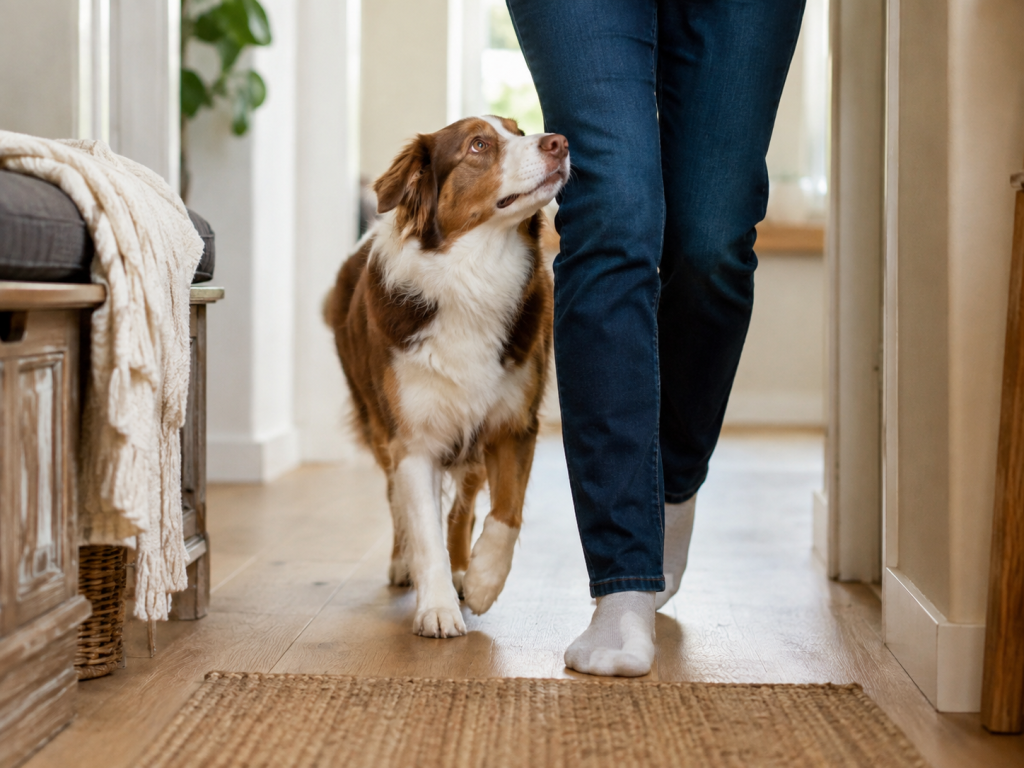
If you have ever wondered, “why does my dog follow me everywhere,” the short answer is attachment, instinct, and routine. Staying close to you often feels safe and rewarding, especially if you are the main source of food, attention, and comfort. In most cases, this is simply a sign of a strong bond rather than a behavior problem.
That said, not every case looks the same. Some dogs follow out of simple habit, while others follow because they feel anxious when left alone. Understanding the difference helps you know when to relax and when it might be worth a closer look.
This guide walks through the most common reasons dogs shadow their owners. It also covers how the behavior can shift with age and breed. Finally, it explains the specific signs that separate normal attachment from something that may need professional support.
Why Do Dogs Follow Their Owners Everywhere?
Dogs are naturally social animals, and many form strong attachments to the people who care for them. Several overlapping reasons usually explain this behavior, and most dogs show a mix of them rather than just one.
Attachment and Bonding
Dogs often build a genuine emotional bond with their primary caregiver. Because you likely provide food, walks, play, and affection, your presence becomes strongly associated with safety and comfort. As a result, staying physically close simply feels good.
This bond develops gradually through repeated positive interactions. A dog who has spent years by your side has learned, through experience, that closeness usually leads to something pleasant.
This is similar to how young children stay near a trusted caregiver in an unfamiliar setting. The comparison is not exact, since dogs and humans experience attachment differently. Still, the underlying idea is similar: a trusted presence can make the surrounding environment feel safer.
Instinct and Group Behavior
Dogs descend from social ancestors that relied on group cooperation to stay safe and find food. Although modern pet dogs live very differently, some of that instinct still shapes their behavior. Following the “leader” of the household can feel like an automatic response, even without conscious thought.
This does not mean your dog sees you as a pack leader in a strict, hierarchical sense. Instead, it reflects a general comfort in sticking close to a trusted companion, similar to how a dog might stay near another dog it trusts.
Modern behavior science has moved away from rigid “pack leader” explanations for most everyday behaviors. Even so, the instinct to stay near a reliable, resourceful companion remains a reasonable, simple explanation for why proximity feels rewarding to many dogs.
Routine and Habit
Dogs thrive on predictability. If you consistently move from room to room throughout the day, your dog learns to anticipate your patterns. Over time, following becomes an automatic habit rather than a deliberate choice.
For example, a dog may follow you from the kitchen to the home office simply because that is what usually happens after breakfast. The behavior becomes part of the daily rhythm of the household.
Curiosity and Mental Stimulation
Dogs are naturally curious, and following you often means access to new sights, sounds, and smells. Watching you cook, work, or garden can be mentally engaging, especially for dogs who do not get much stimulation elsewhere during the day.
Seeking Reassurance
Some dogs follow their owners more closely during stressful periods. This can happen after moving to a new home, adjusting to a new family member, or recovering from an illness. In these situations, following behavior often functions as a coping strategy rather than true anxiety.
Food and Attention Association
If following you has previously led to treats, play, or affection, your dog has likely learned that staying close pays off. This kind of learned association can strengthen the habit significantly over time, even if it was not intentional on your part.
For instance, if your dog follows you into the kitchen and occasionally receives a small snack, that pattern reinforces itself. Over weeks and months, this can turn an occasional habit into a strong, consistent behavior.
Is It Normal for a Dog to Follow You Everywhere?
In most cases, yes. Many dogs naturally prefer to stay near their owners, and this is considered typical behavior rather than a red flag. Breeds originally developed for close human cooperation, such as herding and companion breeds, often show this tendency more strongly.
The key difference between typical closeness and a concerning pattern usually comes down to flexibility. A dog that enjoys following you but can still relax independently is behaving differently from a distressed dog. The distressed dog reacts the moment you step out of sight.
Signs that following behavior is likely normal include:
- The dog can relax calmly in another room when needed
- The dog does not panic when briefly left alone
- Following happens mostly during specific times, like meals or walks
- The dog shows loose, relaxed body language while following
Understanding “Velcro Dog” Behavior
Some dogs take this tendency further and rarely leave their owner’s side, even around the house. This pattern is sometimes nicknamed “Velcro dog” behavior. According to the American Kennel Club, this tendency can stem from breed traits, individual personality, and the strength of the human-animal bond.
Velcro behavior is not automatically a problem. Many dogs display it their entire lives without any signs of distress. However, because the behavior can look similar to anxiety-driven following, it helps to watch for additional signals rather than judging by closeness alone.
Some dogs become more “Velcro-like” after a major life change, such as a move or a new pet in the home. In these cases, the behavior often settles down naturally as the dog adjusts, especially with a steady routine.
Following Behavior vs. Separation Anxiety
This is often the most important distinction for owners to understand. Normal attachment and separation anxiety can look similar on the surface, but they come from very different emotional states.
Attachment is generally a comfortable, low-stress preference. Separation anxiety, on the other hand, involves genuine panic tied specifically to being apart from a person. Telling the two apart matters, because the right response is very different in each case.
Typical following behavior usually includes:
- Calm, loose body language while following
- The ability to settle and relax nearby
- No distress when the owner leaves the room briefly
- Consistent behavior that does not worsen suddenly
Signs that may point toward separation anxiety instead include:
- Pacing, whining, or barking when you leave a room
- Destructive behavior that only happens when left alone
- Drooling, panting, or trembling before you leave the house
- Attempts to block doorways or prevent you from leaving
- Panic-like behavior rather than simple preference
If several of these signs appear consistently, especially around actual departures, it may indicate a deeper issue rather than simple attachment. According to VCA Animal Hospitals, separation anxiety is a genuine behavioral condition, and dogs experiencing it often show distress specifically tied to being left alone, not just a general preference for company.
Does Age or Breed Change This Behavior?
Following behavior can shift throughout a dog’s life, and certain breeds are more prone to it than others.
Puppies
Puppies naturally stay close to trusted figures while they learn about their environment. This is a normal part of development, and it typically becomes less intense as the puppy grows more confident.
Adult Dogs
Most adult dogs settle into a consistent pattern of following, often shaped by daily routine and the strength of their bond with you. Sudden increases in this behavior are worth noting, since they can sometimes reflect stress, changes at home, or health issues.
Senior Dogs
Older dogs may follow more closely due to reduced vision or hearing, which can make staying near a trusted person feel safer. In some cases, increased clinginess in senior dogs is also linked to cognitive changes, so a noticeable shift deserves a veterinary conversation.
Breed Tendencies
Herding breeds, retrievers, and many companion breeds are often described as more prone to close following, partly due to traits historically selected for cooperation with humans. That said, individual personality can outweigh breed tendencies, so two dogs of the same breed may behave quite differently.
How to Respond If You Want More Independence
If your dog’s following behavior feels excessive, or if you simply want to encourage more independence, a few gradual steps can help. The goal is not to discourage bonding, but to help your dog feel just as comfortable when you are out of sight.
- Offer a comfortable resting spot in a different room, not just your bedroom
- Reward calm, independent behavior instead of only reacting when your dog stays close
- Practice short, low-pressure separations throughout the day
- Provide mental stimulation, such as puzzle toys, during alone time
- Avoid dramatic greetings or goodbyes, since these can heighten emotional intensity around departures
- Keep a predictable daily routine to build overall confidence
These steps work best when introduced gradually. Sudden, forced separation can increase stress rather than reduce it, especially for dogs who are already somewhat anxious.
When to Talk to a Veterinarian or Behaviorist
Occasional following is rarely a concern. However, certain patterns are worth discussing with a professional rather than managing alone.
Consider reaching out if you notice:
- Sudden, dramatic increases in following behavior
- Signs of panic when you are out of sight, even briefly
- Destructive behavior tied specifically to your absence
- Following combined with other new symptoms, such as appetite changes or lethargy
A veterinarian can help rule out pain, illness, or cognitive changes as contributing factors. If a medical cause is ruled out, a certified behaviorist or a qualified trainer using humane, science-based methods can help address anxiety-driven following safely.
Early intervention generally leads to better outcomes. Waiting until the behavior becomes severe often makes the underlying anxiety harder to manage. It is worth addressing noticeable changes sooner rather than later.
Frequently Asked Questions
Is it bad if my dog follows me to the bathroom?
No, this is extremely common and usually reflects simple attachment rather than a problem. Many owners jokingly call this having a “bathroom buddy.”
Should I ignore my dog when they follow me?
You do not need to ignore the behavior itself. Instead, focus on gradually rewarding calm independence so your dog learns that being apart from you is also comfortable.
Can too much closeness cause separation anxiety?
Closeness alone does not cause separation anxiety. However, dogs who never practice being alone may struggle more when separation eventually happens, so occasional short separations can be helpful.
Do some dogs never grow out of following behavior?
Yes. Many dogs follow their owners their entire lives without it ever becoming a problem. As long as the dog can also relax independently, this pattern is simply part of their personality.
Does getting a second dog reduce following behavior?
Sometimes, but not always. A second dog can provide companionship during the day, which may ease some clinginess. However, if the behavior is tied to anxiety rather than boredom, adding another pet will not resolve the underlying cause on its own.
Key Takeaway
So, why does my dog follow me everywhere? For most dogs, it is a sign of trust, comfort, and routine rather than a behavior problem. Pay attention to body language and how your dog handles brief separations. Doing so will help you tell the difference between simple attachment and something that may need extra support.
If your dog shows signs of real distress when left alone, a veterinarian is the best starting point for guidance. In most other cases, a dog who happily trails behind you is simply telling you, in its own quiet way, that you are its favorite person.