
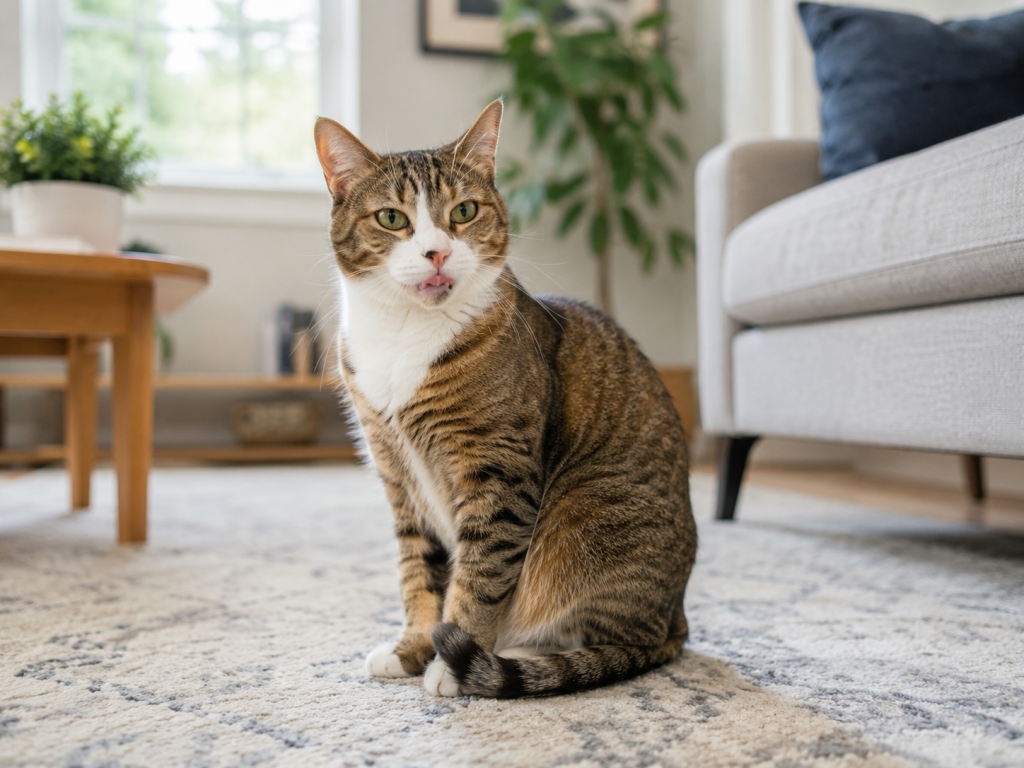
Why does my cat sneeze so often? Occasional sneezing can happen when dust, litter particles, perfume, or another irritant briefly enters the nose. However, frequent or persistent sneezing can also occur with upper respiratory infections, inflammation inside the nose, foreign material, dental problems, fungal disease, or other conditions that deserve veterinary attention.
The most important question is not whether your cat sneezes once or twice. Instead, pay attention to how often it happens and whether other symptoms appear. Nasal or eye discharge, reduced appetite, fever, noisy breathing, lethargy, facial swelling, or difficulty breathing make repeated sneezing more concerning.
A healthy cat may occasionally sneeze and immediately return to normal. A cat that sneezes repeatedly every day or suddenly develops additional symptoms should be evaluated more carefully.
Occasional Sneezing Can Be Completely Normal
Cats sneeze for the same basic reason people do: the body is trying to clear something irritating from the nasal passages. A small amount of dust, loose fur, or another particle may trigger several sneezes before the cat continues with the day normally.
This type of sneezing is usually brief. Your cat continues eating, playing, grooming, and using the litter box normally, and there is no discharge from the eyes or nose.
Pay attention to what was happening immediately beforehand. A cat may sneeze after digging enthusiastically in dusty litter or investigating a dusty corner of the home.
If the sneezing stops quickly and does not keep returning, simple nasal irritation is a reasonable explanation. Frequent sneezing that continues for days is a different pattern and deserves more attention.
Dust and Household Irritants Can Trigger Sneezing
A cat’s nose can react to particles and strong smells in the environment. Dust from litter, cleaning sprays, smoke, perfumes, air fresheners, candles, and other airborne irritants may contribute to temporary nasal irritation.
If sneezing regularly happens immediately after your cat uses the litter box, consider whether the litter produces a visible cloud of dust. Trying a low-dust, unscented product may help if environmental irritation is contributing.
Avoid spraying strong cleaning products or fragrances close to your cat. Even when a product is not directly toxic, a strong smell can still irritate sensitive airways.
However, environmental irritation should not become an automatic explanation for prolonged sneezing. Merck Veterinary Manual notes that nasal inflammation in cats can have infectious, inflammatory, fungal, foreign-body, and other causes.
Upper Respiratory Infections Are a Common Cause
Repeated sneezing is commonly associated with feline upper respiratory infections. These illnesses affect areas such as the nose, throat, and eyes and may cause symptoms that resemble a human cold.
Cornell Feline Health Center lists sneezing, coughing, and clear or colored discharge from the eyes or nose among common signs of upper respiratory infection.
Two important viral causes are feline herpesvirus type 1 and feline calicivirus. Merck Veterinary Manual identifies these among the principal infections involved in feline respiratory disease complex.
An infected cat may develop sneezing along with nasal congestion, watery or inflamed eyes, fever, reduced appetite, or low energy. Some cats also develop mouth-related signs depending on the infectious agent involved.
Kittens, cats living in shelters or multi-cat environments, and cats with weaker immune defenses may be especially vulnerable to respiratory disease.
Why Does My Cat Sneeze and Have Watery Eyes?
Sneezing together with eye discharge makes an upper respiratory problem more likely than an isolated irritant.
Feline respiratory infections can affect both the nose and eyes. Cornell specifically lists nasal and ocular discharge together with sneezing as common respiratory infection signs.
Discharge may initially look clear and watery. In some cases, it can later become thicker or more colored. Merck describes feline viral rhinotracheitis as potentially causing frequent sneezing, conjunctivitis, and increasing discharge from the eyes and nose.
Do not automatically treat the condition with leftover antibiotics. Many feline upper respiratory infections involve viruses, so treatment depends on the individual cat and the complications present.
Contact your veterinarian if eye or nasal discharge persists, becomes thick, or appears alongside appetite loss, fever, or lethargy.
Why Is My Cat Sneezing but Acting Normal?
A cat that sneezes occasionally while remaining completely normal may simply have minor irritation. Even repeated sneezing over a short period can happen after something enters the nose.
Watch the pattern rather than panicking immediately. If your cat continues eating, drinking, grooming, playing, and breathing normally, monitoring may be reasonable when the sneezing is mild and short-lived.
However, cats can sometimes hide early illness well. Persistent sneezing should still be discussed with a veterinarian if it continues or becomes more frequent.
VCA recommends veterinary assessment when sneezing does not resolve after a short period or when excessive nasal discharge appears.
The fact that your cat appears energetic is reassuring, but it does not make long-term sneezing something to ignore indefinitely.
Chronic Rhinitis Can Cause Ongoing Sneezing
Rhinitis means inflammation of the tissues lining the nose. Cats with rhinitis may sneeze frequently or experience episodes that come and go over time.
Merck lists sneezing, nasal discharge, pawing at the face, noisy breathing, and sometimes open-mouth or difficult breathing among possible signs of rhinitis and sinusitis.
Some cats develop chronic upper respiratory problems after previous infections. In other situations, the underlying cause may be difficult to identify.
Chronic sneezing is different from a few isolated sneezes after sniffing dust. If your cat has been sneezing for weeks or months, veterinary evaluation can help determine whether chronic nasal inflammation or another problem is responsible.
Further testing may sometimes be needed when basic examination does not explain persistent symptoms.
Could Something Be Stuck in My Cat’s Nose?
Foreign material inside the nasal passages is another possible cause of sneezing. Grass, small plant material, dust, or other objects can sometimes enter the nose and cause irritation.
Merck notes that a foreign object in the nose can cause sneezing or nasal discharge.
A foreign object may cause sudden, intense sneezing rather than a gradual pattern. Your cat may also paw at the face or show discharge primarily from one nostril.
Do not attempt to insert tweezers, cotton swabs, or other objects into your cat’s nose. The nasal passages are delicate, and you could push material deeper or cause injury.
If you suspect something is lodged inside the nose, contact your veterinarian.
Dental Problems Can Sometimes Affect the Nose
The roots of some upper teeth are located close to the nasal structures. Severe dental or oral problems can occasionally contribute to nasal symptoms.
This is one reason persistent sneezing may require more than simply examining the outside of the nose. A veterinarian may also inspect the mouth and teeth when investigating chronic nasal problems.
Signs of dental disease can include bad breath, difficulty chewing, reduced appetite, dropping food, drooling, or sensitivity around the face.
A cat with sneezing and obvious oral discomfort deserves veterinary assessment. Treating only the nasal symptoms would not address an underlying dental problem.
Regular dental examinations can also help identify oral disease before it becomes severe.
Fungal Disease Is an Uncommon but Important Possibility
Fungal infections are not the most common explanation for an otherwise healthy household cat that sneezes occasionally. However, certain fungal diseases can affect the nasal cavity and cause persistent symptoms.
Cryptococcosis is one example. Cornell notes that its nasal form can cause chronic nasal discharge, sneezing, loud breathing, swelling over the nose or face, and sometimes visible lesions or masses.
Merck similarly describes fungal infections as possible causes of sneezing and nasal discharge in cats.
These conditions require veterinary diagnosis and treatment. Do not assume that chronic sneezing is fungal based only on symptoms, because many other diseases can create a similar appearance.
Facial swelling, bloody nasal discharge, or persistent one-sided symptoms deserve particular attention.
Can Nasal Polyps Cause Sneezing?
Nasopharyngeal polyps are growths that can develop in the region behind the nose and throat, particularly in younger cats.
Cornell lists sneezing, nasal discharge, noisy or labored breathing, head shaking, and difficulty swallowing among possible signs of these polyps.
Because these symptoms overlap with respiratory infections, diagnosis usually requires veterinary examination and potentially additional testing.
A cat that makes unusual breathing noises or develops persistent nasal symptoms should not simply be assumed to have a recurring cold.
The veterinarian may need to investigate the structure of the nose and throat if symptoms continue despite ordinary treatment.
What Does the Color of Nasal Discharge Mean?
Nasal discharge can provide useful information, although color alone cannot diagnose the cause.
Clear discharge may appear during early respiratory infection or nasal irritation. Thick mucus or pus-like discharge can develop with more significant inflammation or secondary bacterial involvement. Merck describes nasal discharge during respiratory disease as potentially progressing from clear fluid to thicker mucus-containing material.
Blood is more concerning and deserves veterinary attention, particularly when it repeatedly comes from one nostril.
Merck notes that nasal discharge associated with respiratory disorders can contain mucus, pus, or blood depending on the underlying cause.
Take note of whether discharge comes from one nostril or both and whether it appears alongside facial swelling or breathing difficulty.
Should You Give a Sneezing Cat Human Cold Medicine?
No. Do not give your cat human cold medicine, decongestants, pain medication, or other over-the-counter products unless a veterinarian specifically instructs you to do so.
Cats metabolize many medications differently from humans. A product that seems ordinary in a household medicine cabinet may be unsafe for feline use.
Treatment depends on why the cat is sneezing. A viral respiratory infection, foreign body, chronic rhinitis, dental problem, or fungal disease will not necessarily require the same treatment.
Avoid using leftover veterinary medication from another pet as well.
Your veterinarian should determine whether medication is necessary and which product is appropriate.
Can You Help a Mildly Congested Cat at Home?
For a mildly affected cat that has already been assessed or does not have concerning symptoms, keeping them comfortable can help while you monitor them.
Keep the nose and eyes clean by gently wiping discharge with a soft damp cloth. Encourage normal eating and drinking, and provide a quiet place to rest.
Cats with nasal congestion can sometimes eat less because smell contributes strongly to appetite. If your cat refuses food or appetite remains reduced, contact your veterinarian rather than relying only on home care.
Do not expose a congested cat to smoke, strong perfume, aerosols, or dusty environments.
Most importantly, home support should not delay veterinary care when symptoms are persistent or worsening.
When Should You Call a Veterinarian?
Contact your veterinarian if sneezing becomes frequent, persists, or occurs with other signs of illness.
Important warning signs include:
- Persistent nasal discharge
- Eye discharge or inflammation
- Reduced appetite
- Fever
- Significant lethargy
- Bloody nasal discharge
- Facial swelling
- Repeated pawing at the nose or face
- Noisy breathing
- Coughing
- Difficulty swallowing
- Weight loss
Cornell and Merck both identify combinations of sneezing, nasal or eye discharge, respiratory changes, and systemic symptoms as signs that can accompany upper respiratory or nasal disease.
Kittens and medically vulnerable cats deserve especially careful monitoring because respiratory illness can affect them more severely.
Difficulty Breathing Is an Emergency
Sneezing itself is usually not an emergency. Difficulty breathing is different.
Seek urgent veterinary care if your cat has obvious trouble breathing, breathes with the mouth open, appears unable to get enough air, collapses, or develops severe respiratory distress.
Merck lists labored or difficult breathing among important signs of respiratory disease. VCA also recommends emergency evaluation when sneezing or respiratory symptoms are accompanied by trouble breathing or shortness of breath.
Do not attempt to examine deep inside the mouth or nose of a cat that is struggling to breathe. Stress can make respiratory difficulty worse.
Transport the cat for urgent veterinary evaluation as calmly as possible.
Why Your Cat May Be Sneezing So Much
So, why does your cat sneeze so often? A few occasional sneezes can simply mean that dust or another small irritant entered the nose. Frequent or persistent sneezing, however, can occur with upper respiratory infections, chronic nasal inflammation, foreign material, fungal disease, polyps, dental problems, and other conditions.
Look beyond the sneeze itself. A cat that sneezes once and immediately returns to normal presents a very different picture from one that develops nasal discharge, watery eyes, low appetite, lethargy, facial swelling, or noisy breathing.
Persistent symptoms deserve veterinary evaluation because several different conditions can look similar at home. Avoid treating repeated sneezing with human medication or assuming that every episode is simply a harmless cold.
Most importantly, watch your cat’s breathing. Sneezing is often manageable, but breathing difficulty requires urgent attention.