
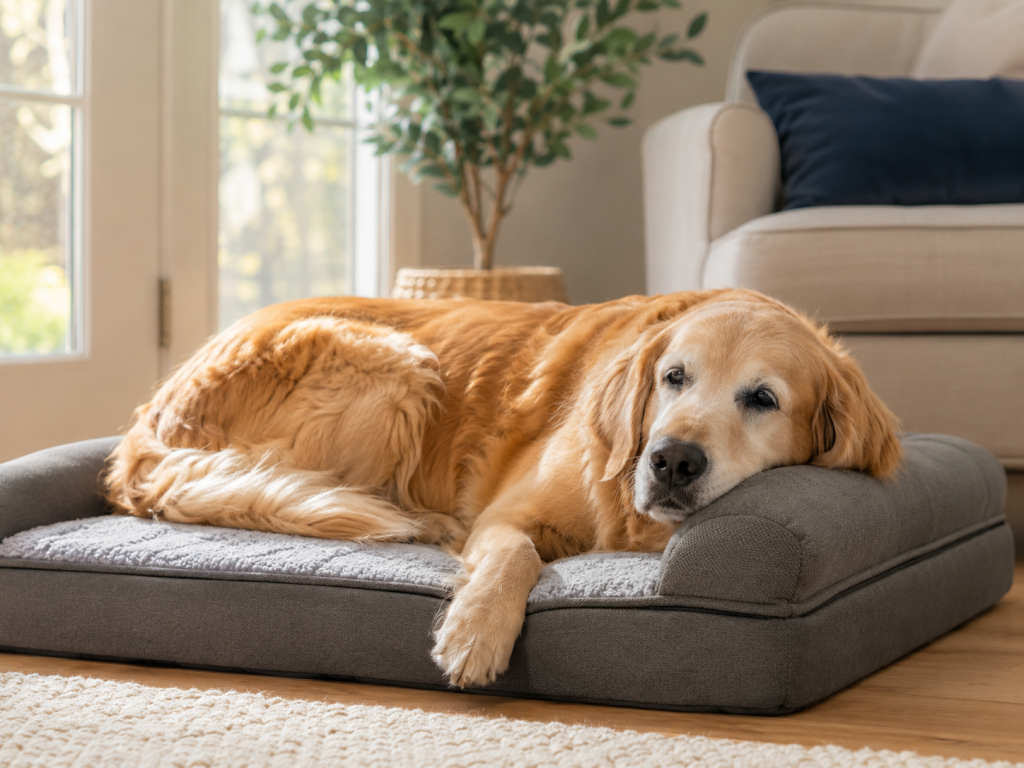
Signs your senior dog may need extra care can develop gradually, which makes them easy to overlook at first. Changes in movement, appetite, sleep, behavior, grooming habits, or bathroom routines can all indicate that your dog needs more support. Some of these changes may be part of normal aging, while others can point to discomfort or an underlying health problem.
Older dogs often adapt quietly to physical changes. Instead of crying or showing obvious distress, they may simply stop doing things they once enjoyed. For that reason, paying attention to small changes in daily habits can help you recognize when your senior dog may need extra care.
When Is a Dog Considered Senior?
There is no single age when every dog officially becomes a senior. Breed, body size, genetics, lifestyle, and overall health all influence how quickly a dog ages. In general, larger dogs tend to reach their senior years earlier than smaller breeds, but every dog is different.
Age alone also does not determine how much support a dog needs. One older dog may still enjoy long walks and active play, while another dog of the same age may begin struggling with mobility, dental problems, hearing loss, or other age-related changes. What matters most is noticing differences from your dog’s normal behavior and routine.
Regular veterinary examinations become increasingly valuable during this stage of life. A veterinarian can identify physical changes that may be difficult to notice at home and recommend adjustments based on your dog’s individual needs.
Your Senior Dog Has Trouble Moving
Mobility changes are among the most common signs your senior dog may need extra care. You may notice hesitation before climbing stairs, difficulty standing after sleeping, or reluctance to jump onto furniture. Some dogs also begin walking more slowly, taking shorter steps, or stopping more often during walks.
These changes do not always mean that your dog is simply becoming lazy. Older dogs can develop joint stiffness, arthritis, or other conditions that make movement uncomfortable. Dogs do not always show pain in an obvious way, so avoiding certain activities may be one of the first signs that something is wrong.
For example, a dog who previously became excited when you picked up the leash may suddenly remain in bed. Another dog might stop following you upstairs even though they used to do it several times each day. Changes like these deserve attention, especially when they continue for several days or gradually become worse.
You can also make simple changes around the home to help your dog move more comfortably. Nonslip rugs can improve traction on smooth floors, while ramps may reduce the need for jumping. A supportive bed can also make resting more comfortable and help an older dog get up more easily.
Never give a senior dog human pain medication unless a veterinarian specifically recommends it. Several medications that are safe for people can be dangerous for dogs.
Their Appetite or Weight Has Changed
Changes in appetite can become especially important in older dogs. A dog may occasionally eat less because of a minor digestive upset, warmer weather, or a temporary change in routine. However, a persistent decrease in appetite should not automatically be blamed on aging.
Dental problems can make chewing uncomfortable, while digestive issues, medication side effects, or certain medical conditions may also affect how much a dog wants to eat. Some senior dogs may continue eating but still lose weight, which can be another reason to schedule a veterinary examination.
Weight gain can also become a problem during the senior years. If a dog’s activity level decreases but calorie intake remains the same, extra weight may gradually develop. Carrying additional weight can place more stress on joints and make movement even harder.
Not every senior dog needs the same type of food. Nutritional needs can depend on body condition, activity level, muscle mass, dental health, and existing medical conditions. Before making major dietary changes, discuss your dog’s needs with a veterinarian.
Your Dog Is Drinking or Urinating Differently
Changes in drinking and urination are worth monitoring closely in senior dogs. You may notice that the water bowl empties faster than usual, or your dog may begin asking to go outside more often. Some older dogs also start waking during the night for bathroom breaks.
Indoor accidents can appear even in dogs that have been reliably housetrained for many years. Although an older dog may simply need more frequent bathroom opportunities, increased thirst or urination can also occur with certain health conditions.
Do not punish your dog for new accidents or assume they are behaving badly. A senior dog may have more difficulty holding urine for long periods or may struggle to reach the door quickly enough. Offering additional bathroom breaks can help while you determine whether a medical issue is contributing.
It can be useful to pay attention to how often your dog drinks and urinates. Notice whether the change appeared suddenly, whether accidents are becoming more frequent, and whether your dog seems uncomfortable while urinating. These details can help your veterinarian understand what is happening.
Their Behavior or Personality Is Changing
Behavior changes can provide important clues about a senior dog’s physical and emotional health. Because you know your dog’s normal personality, you are often the first person who can recognize when something feels different.
A normally social dog may begin spending more time alone, while another may suddenly become unusually clingy. Some senior dogs become restless, irritable, anxious, or less interested in play. Others may appear confused in familiar places or become more sensitive when touched.
Pain can sometimes explain these changes. For example, a dog with sore joints may growl when someone tries to move them from a bed. That reaction does not necessarily mean the dog has suddenly become aggressive; they may simply be protecting an uncomfortable area.
Hearing and vision loss can also influence behavior. A dog that cannot hear someone approaching may startle easily, while reduced vision can make stairs, dark rooms, or unfamiliar environments more stressful. Some older dogs may also experience cognitive changes that affect sleep, social interaction, house training, and awareness of their surroundings.
Do Not Assume Every Behavior Change Is Normal Aging
One of the biggest mistakes owners can make is assuming that every new behavior is simply part of getting old. Aging does cause changes, but sudden or significant behavior differences may still deserve veterinary attention.
A veterinarian can help identify whether pain, illness, sensory loss, or cognitive changes are contributing. Meanwhile, keeping your dog’s environment predictable can make daily life easier. Avoid unnecessary furniture changes if vision is declining, and approach gently if hearing has become weaker.
Consistency often becomes especially important during the senior years. Familiar routines can help older dogs feel more secure and reduce unnecessary stress.
Your Senior Dog Is Sleeping Much More
Senior dogs often sleep more than younger adults, and additional rest is not automatically a problem. Lower energy levels and a calmer daily routine can naturally lead to longer naps.
However, pay attention to significant changes in your dog’s usual sleep pattern. If a dog who normally wakes up excited for meals, walks, or family interaction suddenly sleeps through those activities, the change may be worth investigating.
Nighttime behavior matters as well. Some older dogs begin pacing, wandering between rooms, vocalizing, or struggling to settle during the night. Pain can make it difficult to find a comfortable position, while increased bathroom needs may interrupt sleep.
Cognitive changes can also affect the normal sleep-wake cycle. If your senior dog becomes restless at night or unusually sleepy during the day, keep track of when the change began and whether other symptoms are present.
Grooming and Hygiene Are Becoming More Difficult
Senior dogs may need more help with grooming as mobility decreases. A dog that once stood comfortably during brushing or bathing may now struggle to remain in one position for long periods.
Regular grooming also gives you an opportunity to check your dog’s skin and body. Pay attention to new lumps, irritated areas, bald patches, sores, coat changes, or places your dog repeatedly licks. Most lumps are not automatically dangerous, but new or changing masses should be examined by a veterinarian.
Nail care becomes particularly important when dogs are less active. Senior dogs may wear their nails down more slowly, which can cause them to become too long. Long nails may reduce traction and make walking on smooth surfaces more difficult.
Dental health also deserves attention. Persistent bad breath should not simply be accepted as a normal part of aging. Dental disease can cause discomfort and may make chewing more difficult, so regular dental checks remain important during the senior years.
Your Dog Is Losing Interest in Favorite Activities
Quality of life involves much more than eating, drinking, and sleeping. Think about whether your dog still shows interest in the things that normally make them happy.
A senior dog may enjoy greeting you at the door, sniffing around the yard, going for gentle walks, resting beside family members, or playing with a favorite toy. Their activity level may naturally decrease with age, but a complete loss of interest can be meaningful.
Pain may make walks uncomfortable, while hearing or vision loss can make certain activities confusing. Illness may also reduce energy. Instead of removing activity altogether, try adapting it to your dog’s changing abilities.
A long walk may become two or three shorter walks. Fast games can be replaced with gentle scent activities or food puzzles. A dog who once enjoyed hiking may now prefer slowly exploring the backyard.
Mental stimulation is still valuable for senior dogs. Calm training sessions, sniffing opportunities, simple puzzles, and gentle social interaction can help keep daily life interesting without demanding too much physically.
How to Give Your Senior Dog Extra Care
Supporting a senior dog does not always require major changes. In many cases, small adjustments can make everyday life noticeably easier and more comfortable.
Make food, water, and sleeping areas easy to reach. Use nonslip surfaces if your dog struggles on smooth floors, and consider a ramp if jumping has become difficult. Exercise should continue when appropriate, but intensity and duration may need to change.
More frequent bathroom breaks can also help older dogs, especially if they have started having accidents. Keep an eye on appetite, body weight, thirst, urination, sleep patterns, and behavior so that you can recognize gradual changes.
Regular dental care, grooming, nail trimming, and mental stimulation remain important as well. Above all, maintain a predictable routine and continue giving your dog opportunities to participate in family life.
Senior dogs often benefit from regular veterinary checkups because some health changes develop slowly. Your veterinarian may recommend additional screening based on your dog’s age, breed, medical history, and current condition.
When Should You Call a Veterinarian?
Contact your veterinarian when a new change persists, becomes worse, or starts affecting your dog’s everyday life. Changes involving appetite, weight, drinking, urination, mobility, breathing, energy, sleep, or behavior are all worth discussing when they seem unusual.
Some symptoms require faster attention. Difficulty breathing, collapse, inability to stand, severe pain, repeated vomiting, seizures, a swollen abdomen, inability to urinate, or sudden extreme weakness may require urgent veterinary care.
You do not need to wait until a problem becomes severe before seeking advice. A senior dog who gradually stops climbing stairs, begins drinking much more water, or suddenly loses interest in food may be showing an early sign of a problem.
Recognizing these changes early can give your veterinarian more information and may help your dog receive appropriate care sooner.
Is It Normal for Senior Dogs to Slow Down?
Some slowing is completely normal as dogs age. Older dogs often walk more slowly, sleep longer, and prefer gentler activities compared with their younger years.
However, a major or sudden decrease in mobility should not automatically be considered normal. Joint discomfort, pain, illness, or other health conditions can also reduce activity. If your dog begins avoiding normal movement or seems uncomfortable, speak with your veterinarian.
Why Is My Older Dog Suddenly More Clingy?
Senior dogs can become more clingy for several reasons. Reduced hearing or vision may make them feel less secure, so staying close to a familiar person can provide reassurance.
Pain, anxiety, cognitive changes, and changes in daily routine may also affect social behavior. If clinginess develops suddenly or appears together with other unusual symptoms, it is worth mentioning during a veterinary visit.
Should Senior Dogs Exercise Every Day?
Many senior dogs can benefit from daily movement, provided the activity suits their health and physical abilities. Exercise can help maintain mobility, provide mental stimulation, and give dogs an opportunity to explore their environment.
The right amount varies between dogs. One senior dog may prefer several short walks, while another healthy older dog may still enjoy longer outings. Watch how your dog moves during exercise and how they feel afterward.
If your dog limps, struggles to stand, appears unusually tired, or seems uncomfortable after activity, the exercise routine may need to change.
How Can I Tell if My Senior Dog Is Still Happy?
Look at your dog’s overall quality of life rather than focusing on age alone. Consider whether they still eat with interest, rest comfortably, interact with familiar people, move without excessive difficulty, and enjoy parts of their normal routine.
A senior dog can have physical limitations and still enjoy life. Many older dogs remain happy even when walks become shorter or they need more assistance around the home.
However, persistent pain, severe anxiety, frequent distress, or a major loss of interest in everyday activities deserves veterinary attention.
Supporting Your Dog Through the Senior Years
Recognizing the signs your senior dog may need extra care can help you respond to changes before they have a major effect on daily life. Pay attention to movement, appetite, weight, drinking, bathroom habits, sleep, behavior, grooming needs, and interest in favorite activities.
Most importantly, do not dismiss significant changes simply because your dog is getting older. Aging is natural, but pain and illness should still receive attention.
With regular veterinary care, close observation, and thoughtful adjustments at home, you can help your senior dog remain comfortable, safe, and engaged throughout their later years.