
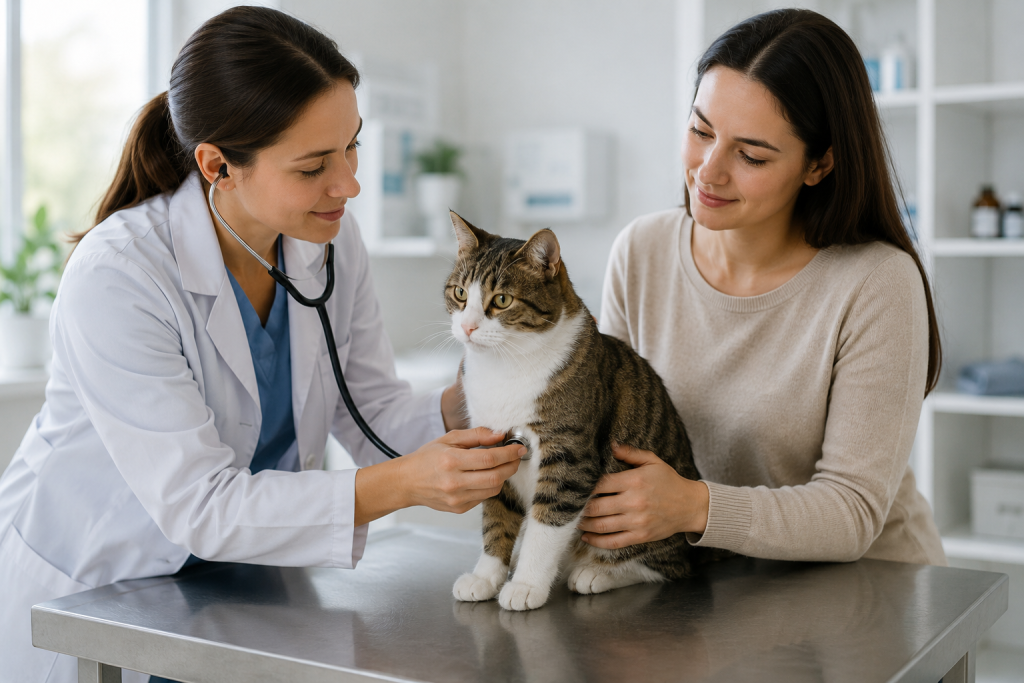
Cat health and wellness depend on preventive veterinary care, appropriate nutrition, healthy body weight, dental care, parasite prevention, vaccination, grooming, hydration, environmental wellbeing, and careful monitoring at home. Routine feline health care includes veterinary visits, vaccinations, parasite control, dental care, nutrition, grooming, and protection from household hazards.
Cats can be particularly good at hiding discomfort, which makes small changes important. Appetite, thirst, urination, bowel movements, movement, grooming, sleep, and behavior can all provide clues that something has changed. Merck Veterinary Manual specifically recommends monitoring these everyday patterns because changes may indicate a need for further examination.
The best wellness plan changes throughout life. Kittens need frequent early veterinary care and preventive treatment, healthy adults need continued monitoring, and senior cats often benefit from closer surveillance as the risk of chronic disease increases.
Regular Veterinary Care Matters
Cats should receive veterinary care even when they appear completely healthy.
Preventive examinations can include evaluation of body weight, body condition, teeth, heart and lungs, eyes, ears, skin, coat, mobility, behavior, vaccination needs, parasite risk, and nutritional status.
Feline preventive-care guidelines recommend at least one veterinary examination every year for all cats, while some cats benefit from more frequent visits depending on age, health, lifestyle, and risk factors.
Regular examinations also establish a health baseline. A small change in weight, heart function, dental condition, or muscle mass may be easier to recognize when previous measurements are available for comparison.
Preventive Care Is More Than Vaccination
Vaccines are important, but feline preventive care is broader than immunization.
Preventive healthcare can include health surveillance, vaccination, parasite control, nutrition, behavioral wellness, reproductive health, and age-appropriate planning.
Dental health, body weight, environmental needs, and early detection of chronic disease are also part of the picture.
A cat that is fully vaccinated but severely overweight, suffering from dental pain, or chronically stressed still has important wellness needs that should be addressed.
Learn What Is Normal for Your Cat
One of the most useful things an owner can do is understand the cat’s normal routine.
Notice how much your cat usually eats and drinks, how often they use the litter box, where they sleep, how they move through the home, and how interested they are in play and social interaction.
Merck emphasizes monitoring appetite, thirst, urination, defecation, movement, and general behavior as part of preventive health surveillance.
You do not need to record every detail every day. The goal is simply to recognize meaningful changes quickly.
Feed a Complete and Appropriate Diet
Nutrition is one of the foundations of feline wellness.
Cats require food formulated specifically to meet feline nutritional needs. The appropriate diet depends on life stage, body condition, health, activity, and individual requirements.
WSAVA recommends individually tailored nutrition rather than assuming that one feeding approach is ideal for every pet.
Kittens need nutrition designed for growth, while most healthy adult cats require maintenance nutrition. Cats with medical conditions may need specialized therapeutic diets recommended by a veterinarian.
Cats Have Unique Nutritional Needs
Cats are not simply smaller versions of dogs.
They have specific requirements for nutrients such as taurine and depend on animal-derived nutrients more heavily than dogs do.
A feline diet should therefore be formulated specifically for cats rather than relying on dog food or an improvised mixture of human foods.
Home-prepared diets can be appropriate in certain circumstances, but they require careful nutritional formulation to prevent deficiencies or imbalances.
Maintain a Healthy Body Weight
Weight management is an important part of feline preventive care.
Indoor cats can gradually become overweight when calorie intake exceeds energy expenditure. Because owners see their cats every day, gradual gain may be difficult to notice.
WSAVA provides a nine-point feline body-condition scoring system that helps assess whether a cat is underweight, ideal, overweight, or obese.
Ask your veterinarian to show you how to evaluate your cat’s body condition at home.
Monitor Muscle Condition Too
A cat can lose muscle even if overall body weight remains relatively stable.
This becomes particularly important in senior cats and cats with chronic disease.
Look for changes over the spine, hips, shoulders, and hindquarters.
Weight and muscle condition should be considered separately because an overweight cat can still lose significant muscle tissue.
Measure Food Portions
Free-pouring food can make calorie intake difficult to control.
Use the feeding guide on the food package as a starting point, then adjust according to body condition, activity, weight trends, and veterinary recommendations.
Treats and food used for training also contribute calories.
If several people feed the same cat, establish a shared daily amount so the cat is not accidentally fed multiple full portions.
Wet Food and Dry Food
Both wet and dry cat food can provide complete nutrition when properly formulated.
Wet food contains more moisture, while dry food is convenient and can work well in puzzle feeders or measured portions.
Some cats thrive on one format, while others receive both.
The correct choice depends on total nutrition, calorie intake, preference, dental condition, medical needs, and feeding routine rather than a simple rule that one format is always superior.
Fresh Water Is Essential
Cats should have continuous access to fresh, clean water.
Some cats prefer wide bowls that do not press against the whiskers, while others drink more readily from fountains or multiple water stations around the home.
Place water away from dirty litter areas and clean bowls regularly.
Do not restrict water because your cat appears to be drinking too much.
Persistent increased thirst can be an important medical sign.
Watch for Increased Thirst
A noticeable increase in drinking deserves attention, particularly when it persists.
You may also notice larger litter clumps or more frequent urination.
Kidney disease, diabetes, and other medical conditions can affect thirst and urination.
Monitor the pattern and discuss significant changes with your veterinarian.
Dental Health Is Part of Wellness
Dental disease can cause significant discomfort even when a cat continues eating.
Routine feline healthcare includes appropriate dental care, and preventive examinations give veterinarians opportunities to detect oral disease before it becomes more advanced.
Warning signs include bad breath, drooling, difficulty chewing, dropping food, bleeding gums, pawing at the mouth, or suddenly avoiding hard food.
Do not assume that bad breath is simply normal for cats.
Home Dental Care Can Help
Tooth brushing with cat-specific toothpaste can help reduce plaque when introduced gradually.
Begin with gentle facial and mouth handling before expecting the cat to tolerate a toothbrush.
Never use ordinary human toothpaste unless a veterinarian specifically confirms that a product is safe.
Dental treats or specialized diets may offer additional support in some cases, but they do not replace professional treatment when painful dental disease is already present.
Vaccination Plans Should Be Individualized
Vaccination helps protect cats against important infectious diseases.
The appropriate plan depends on age, health, previous vaccination, environment, lifestyle, and exposure risk.
Current feline vaccination guidelines emphasize evaluating individual risk factors rather than using exactly the same protocol for every cat.
Indoor cats still require vaccination assessment because risks can arise through escape, travel, veterinary visits, or the introduction of new animals.
Parasite Prevention
Cats can be exposed to fleas, ticks, intestinal worms, and other parasites depending on their lifestyle and environment.
Even indoor cats are not necessarily at zero risk.
Discuss prevention with your veterinarian according to geography, travel, outdoor access, hunting behavior, and household circumstances.
Always use products confirmed to be safe for cats. Some parasite treatments formulated for dogs can be dangerous to feline patients.
Grooming Supports Health
Most cats groom themselves extensively, but brushing can still support coat health and preventive monitoring.
Regular brushing removes loose hair and can reduce shedding and hair accumulation. ASPCA notes that brushing or combing helps keep the coat clean and can reduce loose hair and hairballs.
It also gives you an opportunity to examine the skin for lumps, wounds, scabs, parasites, bald areas, or painful spots.
Long-haired cats generally require more human grooming than short-haired cats.
Watch for Excessive Grooming
Cats normally spend substantial time grooming.
However, repeated licking or chewing that causes thinning hair, bald patches, sores, or skin irritation is different.
Possible causes include itching, parasites, allergies, pain, skin disease, and stress.
Persistent overgrooming deserves evaluation rather than simply being dismissed as a behavioral quirk.
Reduced Grooming Can Also Be Important
A cat that suddenly stops grooming may be uncomfortable or unwell.
Pain, obesity, dental disease, weakness, arthritis, and other conditions can make grooming more difficult.
Senior cats may particularly struggle to reach the lower back or hindquarters.
A greasy, matted, or unusually unkempt coat can therefore provide useful health information.
Check the Skin and Coat
Part the hair occasionally and inspect the skin.
Look for redness, dandruff, scabs, lumps, wounds, unusual pigmentation, parasites, or areas that appear painful.
Merck notes that routine grooming can contribute to earlier identification of health problems.
If you find a new lump, note its location and approximate size and discuss it with your veterinarian.
Nail Care
Cats naturally maintain their claws through scratching, but some still need trimming.
Senior cats, less active cats, or cats with abnormal nail growth may be particularly likely to develop overgrown claws.
Check nails periodically to make sure they are not curling toward the paw pads.
Introduce paw handling gradually and reward cooperation.
Provide Appropriate Exercise
Physical activity supports healthy weight, mobility, muscle condition, and mental wellbeing.
Indoor cats may need intentional opportunities for movement because they do not automatically exercise enough simply by living in a house.
Interactive wand toys, climbing structures, balls, food puzzles, and short play sessions can help.
Match activity to age and health. An arthritic senior cat may enjoy gentle hunting-style play without needing intense jumping.
Mental Wellness Matters
Physical health and emotional wellbeing are connected.
Cats need opportunities to hide, climb, scratch, play, explore, rest, and control social interactions.
Feline life-stage guidance combines physical healthcare with environmental and behavioral considerations because feline wellbeing changes across life stages.
A healthy home environment should allow a cat to perform normal feline behaviors safely.
Provide Hiding Areas
Cats often feel safer when they have protected places to retreat.
Boxes, covered beds, shelves, cat trees, and quiet rooms can all provide useful options.
Do not repeatedly remove a nervous cat from hiding simply because you want interaction.
Allowing voluntary retreat can reduce stress and improve the cat’s sense of security.
Provide Vertical Space
Many cats prefer elevated resting and observation areas.
Cat trees, shelves, window perches, and stable furniture can increase usable territory without requiring a larger home.
Vertical space is especially valuable in multi-cat households because it creates additional pathways and resting places.
Make sure structures are stable and easy for the individual cat to use.
Scratching Is Healthy Behavior
Scratching maintains claws, stretches the body, and leaves scent and visual signals.
Provide appropriate scratching posts and surfaces instead of attempting to eliminate the behavior.
Some cats prefer tall vertical posts, while others prefer horizontal cardboard or carpet-style scratchers.
Place scratchers near sleeping areas or locations the cat already chooses to scratch.
Litter Box Habits Are Health Information
The litter box provides daily clues about feline health.
Watch for changes in urine clump size, frequency, stool consistency, straining, vocalization, or repeated trips to the box.
A cat that suddenly stops using the litter box may have a behavioral or environmental problem, but urinary disease, constipation, pain, or mobility problems must also be considered.
Never assume a sudden elimination change is simply disobedience.
Urinary Problems Can Become Emergencies
Repeated attempts to urinate while producing little or no urine require immediate veterinary attention.
This is especially important in male cats because urinary obstruction can become life-threatening.
Other warning signs can include vocalizing in the litter box, blood in urine, excessive genital licking, vomiting, weakness, or increasing distress.
Do not wait for symptoms to resolve overnight when your cat cannot urinate normally.
Monitor Stool
Changes in stool can reveal digestive problems.
Persistent diarrhea, constipation, blood, unusually dark stool, repeated straining, or significant changes in frequency deserve attention.
A single unusual stool may occasionally occur without serious disease.
Patterns are more important.
If gastrointestinal symptoms persist or occur with vomiting, appetite loss, weight loss, or lethargy, contact your veterinarian.
Monitor Appetite Closely
Cats should not be assumed to be merely picky when appetite suddenly changes.
Dental pain, nausea, kidney disease, digestive disorders, stress, infection, and many other problems can reduce food intake.
A cat that refuses food for a prolonged period can develop serious complications.
Persistent appetite loss should therefore be taken seriously, particularly when combined with other symptoms.
Unexplained Weight Loss Matters
Weight loss can be one of the earliest noticeable signs of chronic disease.
This is particularly important when a cat continues eating normally or becomes hungrier than usual while losing weight.
Weigh your cat periodically if possible.
A small change may be difficult to see beneath the coat but obvious on a scale.
Watch Mobility
Cats often adapt around pain rather than displaying an obvious limp.
An uncomfortable cat may stop jumping onto high surfaces, use furniture as intermediate steps, become reluctant to climb stairs, or sleep in easier-to-reach locations.
Reduced jumping is not automatically normal aging.
Arthritis and other painful conditions are common enough that mobility changes deserve discussion with a veterinarian.
Senior Cats Need Closer Monitoring
Senior cats have an increased risk of chronic disease, mobility problems, sensory changes, muscle loss, dental disease, and cognitive changes.
AAHA and FelineVMA life-stage guidance recommends at least annual physical examinations for all cats and checkups at a minimum of every six months for senior cats.
Older cats may also benefit from additional diagnostic testing according to individual risk and examination findings.
Do not wait until a senior cat appears seriously ill before arranging care.
Kittens Need Frequent Care
Kittens require more frequent veterinary attention than healthy adult cats.
Merck notes that kittens commonly visit the veterinarian every three to four weeks during the early months for vaccinations and parasite treatment.
These appointments also allow monitoring of growth, nutrition, development, and behavior.
Young kittens can deteriorate more quickly than healthy adults when illness causes vomiting, diarrhea, poor appetite, or dehydration.
Behavior Changes Can Be Medical
Sudden behavioral changes should not automatically be treated as training problems.
Pain, sensory decline, neurological disease, endocrine disease, and other health problems can change how a cat acts.
Merck recommends establishing what is behaviorally normal for the individual cat so meaningful changes can be recognized.
A friendly cat that suddenly hides or becomes aggressive when touched may need veterinary evaluation.
Watch for Changes in Sleep
Cats naturally sleep for large portions of the day.
The important issue is whether the pattern changes significantly.
A cat that suddenly sleeps through meals, stops interacting, becomes restless at night, or cannot settle comfortably may have a health problem.
Senior cats with cognitive or sensory changes can also develop altered sleep patterns.
Eyes and Ears
Check the eyes periodically for redness, discharge, cloudiness, swelling, or squinting.
Sudden inability to see normally or a painful eye deserves prompt attention.
Ear problems may cause head shaking, scratching, discharge, odor, or sensitivity.
Avoid repeatedly applying medications or cleaners without knowing the cause of persistent symptoms.
Breathing Changes Are Important
Cats should generally breathe quietly and comfortably while resting.
Open-mouth breathing, obvious abdominal effort, severe rapid breathing, blue or very pale gums, or inability to settle because of respiratory difficulty can indicate an emergency.
Cats do not normally pant routinely like dogs.
Breathing difficulty should be taken seriously, especially when it develops suddenly.
Household Safety Is Part of Wellness
Preventive care includes reducing avoidable injury and poisoning.
Human medications, cleaning products, batteries, string, thread, electrical cords, toxic plants, and unsafe foods should be secured.
Lilies are particularly dangerous to cats.
Small objects that can be swallowed should also be kept out of reach, especially around curious kittens.
Identification and Microchipping
Even indoor cats can escape.
Microchipping provides permanent identification and can increase the chance that a lost cat is reunited with its owner.
Make sure registration details remain current.
Appropriate visible identification can also be useful for cats that safely tolerate a breakaway-style collar.
When to Contact a Veterinarian
Arrange veterinary evaluation when your cat develops persistent or significant changes such as:
- Appetite loss
- Unexplained weight loss
- Increased thirst
- Increased or decreased urination
- Repeated vomiting or diarrhea
- Difficulty jumping or walking
- Persistent hiding
- Sudden aggression
- Reduced grooming
- Excessive grooming
- Dental pain or severe bad breath
- Eye or ear problems
- New lumps
- Major changes in activity or sleep
Because cats may hide disease, subtle changes can be clinically important. Monitoring appetite, thirst, elimination, movement, and behavior helps owners identify problems earlier.
Know the Emergency Warning Signs
Seek urgent veterinary care for severe breathing difficulty, collapse, repeated seizures, major trauma, uncontrolled bleeding, suspected poisoning, extreme weakness, or inability to urinate.
Repeated unsuccessful attempts to urinate are particularly concerning in cats.
Rapidly worsening symptoms should never be dismissed simply because the cat was acting normally earlier in the day.
Building a Lifelong Cat Wellness Routine
Good cat health and wellness is built through consistent preventive care rather than waiting for obvious illness.
Routine veterinary visits should evaluate much more than vaccines. Preventive feline healthcare includes nutrition, parasite control, dental health, behavioral wellbeing, vaccination, and ongoing health surveillance.
Feed an appropriate complete feline diet and adjust portions according to body condition and individual needs. WSAVA recommends individualized nutritional plans because age, health, lifestyle, and body condition all influence the best approach.
Provide fresh water, appropriate exercise, mental enrichment, scratching surfaces, hiding areas, comfortable resting places, and clean litter boxes. Maintain dental care, grooming, parasite prevention, and vaccination according to veterinary guidance.
Pay particular attention as your cat ages. Feline life-stage recommendations call for regular examinations throughout life, with senior cats benefiting from at least twice-yearly checkups.
Most importantly, learn what normal looks like for your individual cat. Changes in appetite, thirst, urination, bowel movements, movement, grooming, sleep, or behavior can provide early clues that something needs attention.
Preventive care cannot guarantee that every disease will be avoided, but it gives cats a better chance of remaining comfortable, active, and healthy throughout every stage of life.