
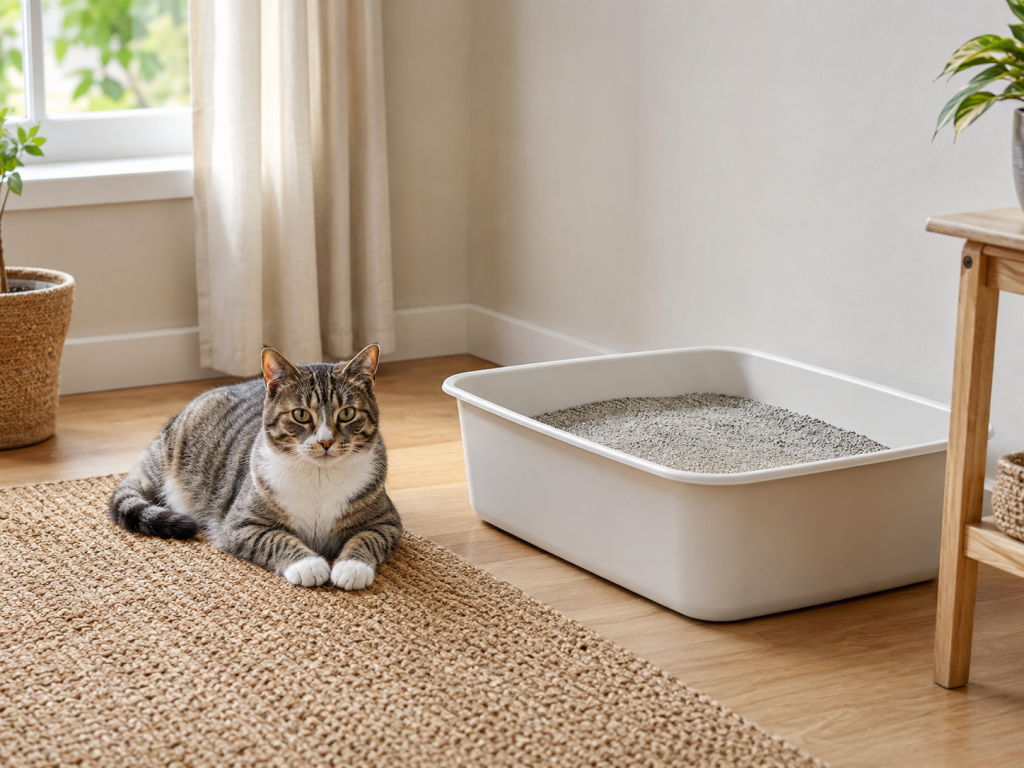
A good cat litter box setup is one of the most important parts of creating a comfortable home for your cat. Cats naturally prefer clean, accessible places where they can eliminate without feeling trapped or disturbed. When the box, litter, location, or cleaning routine does not meet those needs, litter box problems can appear even in cats that have used their boxes reliably for years.
Urination or defecation outside the litter box should never automatically be treated as bad behavior. Medical problems, pain, stress, social conflict, an unsuitable box, dirty litter, difficult access, or negative experiences can all contribute. Veterinary guidelines recommend ruling out medical causes while also improving the litter box environment when house-soiling begins.
This guide explains how to build an effective litter box setup, understand normal bathroom habits, recognize common problems, and know when a change requires veterinary attention.
Why Litter Box Setup Matters So Much
A litter box may look like a simple plastic container to us, but your cat experiences it as an important resource. The cat needs to enter, turn around, dig, choose a spot, eliminate, cover the waste if desired, and leave comfortably.
Location matters too. A perfectly clean box can still become undesirable if another cat guards the hallway leading to it or if a washing machine suddenly starts while the cat is using it. Cats generally benefit from toileting areas that provide privacy without making them feel trapped.
Veterinary feline behavior guidelines identify optimizing litter boxes as one of the basic steps when addressing house-soiling. They also emphasize meeting wider environmental needs because litter box behavior can be affected by stress and the cat’s relationship with its surroundings.
The best setup therefore considers more than litter type. Number of boxes, dimensions, entry height, location, cleanliness, household dynamics, and the individual cat all matter.
How Many Litter Boxes Should You Have?
A widely used starting point is to provide one litter box for each cat in the household, plus an additional box. However, simply placing several boxes together in one room may not provide the same benefit as distributing them around the home.
Separate locations matter because one cat can prevent another from reaching a resource without an obvious fight. Blocking may involve staring, sitting in a doorway, chasing, or simply making another cat reluctant to pass through an area. FelineVMA guidance recommends placing litter boxes in different locations and providing access on different floors where appropriate.
A household with one cat can therefore benefit from two boxes, especially in a larger or multi-level home. With two cats, three boxes in separate useful locations may provide more options and reduce competition.
This recommendation is a starting point rather than a mathematical guarantee. Some cats happily use several boxes, while others strongly prefer one particular location. Pay attention to actual usage and adjust the setup around the cats living in your home.
Why Several Boxes in One Room May Not Be Enough
Imagine placing three litter boxes side by side in the basement. From a human perspective, the household has three boxes. From a cat’s perspective, however, all three resources can become unavailable at once if access to that basement feels unsafe.
The same problem can occur if another cat guards the staircase or a noisy appliance frightens the cat near the boxes. Feline welfare guidance recommends spreading toileting resources instead of clustering everything in a single location.
Separate locations also let cats choose based on what is happening around them. A normally preferred box may temporarily feel undesirable because guests are nearby, another pet is sleeping in the hallway, or construction noise has started.
Giving cats options can prevent a temporary problem from turning into an established habit of eliminating somewhere else.
Choosing the Right Litter Box Size
Litter boxes sold for cats are not always large enough for comfortable use. A cat needs enough space to enter, turn around, dig, and position their body without constantly touching the sides.
Large boxes can be especially useful for adult cats. International Cat Care recommends choosing a tray that gives the cat adequate space and notes that larger trays can be more comfortable than small commercial designs.
Watch how your cat uses the box. If they stand partly outside it, balance on the edge, struggle to turn, or frequently eliminate next to the entrance, size may be contributing.
Some owners successfully use large storage containers or other cat-safe alternatives when standard litter boxes are too small. Whatever you choose, make sure the material is easy to clean, stable, and accessible.
Open or Covered Litter Box?
Covered litter boxes appeal to many owners because they hide waste and may reduce scattered litter. However, a covered box is not automatically more comfortable for the cat.
Some cats use covered boxes without any problem. Others prefer open trays because they provide more space, ventilation, and visibility of the surrounding environment. Cornell feline behavior guidance notes that many cats prefer uncovered boxes.
An enclosed box can also trap odors more effectively than an open one. What smells only mildly unpleasant to a person may be much more noticeable to a cat with a sensitive sense of smell.
If your cat begins avoiding a covered box, try offering a large open alternative nearby. Giving the cat a choice is more informative than assuming one design should work for every animal.
Entry Height Matters
A high-sided box can help contain litter and prevent urine from going over the edge. However, entering it may become difficult for kittens, senior cats, or cats with mobility problems.
Older cats can develop arthritis or reduced mobility that makes climbing over tall sides uncomfortable. Cornell recommends easier access to litter boxes for senior cats, while International Cat Care similarly suggests lower-sided trays when older cats find normal boxes difficult to enter.
A useful compromise may be a box with high sides around most of the perimeter but a lower entrance at the front.
Changes in mobility are also important medically. If your cat suddenly stops climbing into a box they previously used easily, do not assume the box is the only problem. Pain or another physical condition may need veterinary evaluation.
What Type of Cat Litter Is Best?
Cats can have strong litter preferences. Texture and scent often matter more to the cat than attractive packaging or odor-control claims matter to the owner.
Many cats prefer fine-textured, unscented litter. Cornell specifically recommends unscented, fine-textured litter as a good general option, and feline behavior guidance similarly reports a preference for fine, unscented, clumping substrates in many cats.
Strong fragrances may make a box smell cleaner to people while making it less appealing to the cat. Perfumed litter can also make it difficult to determine whether the underlying box is being cleaned often enough.
Individual preferences still vary. A cat accustomed to one substrate for years may resist a sudden change even if the new litter is theoretically popular with most cats.
How Deep Should Cat Litter Be?
More litter is not always better. Cats need enough material to dig and cover waste comfortably, but an extremely deep layer can feel unstable under the paws.
The exact preference varies between cats and litter types. Instead of constantly changing depth, begin with a moderate layer and observe how your cat behaves.
A cat that repeatedly digs all the way to the bottom may prefer slightly more litter. Another cat may avoid stepping deeply into a soft substrate and prefer less.
Consistency matters. Dramatically changing the depth, texture, scent, and box location at the same time can make it impossible to identify which change your cat dislikes.
Where Should You Put a Litter Box?
A good location is easy for the cat to reach, relatively quiet, and away from situations that could frighten or trap them. The cat should be able to approach and leave without passing through a stressful bottleneck.
Avoid placing every box beside loud appliances. International Cat Care specifically recommends keeping litter trays away from noisy equipment, busy thoroughfares, external doors, and other potentially stressful areas.
Privacy is useful, but complete isolation is not always ideal. A box hidden in a remote basement may be inconvenient for a senior cat or inaccessible when a door is accidentally closed.
Think about the journey as much as the final location. A cat must feel comfortable reaching the box, using it, and leaving it.
Keep Litter Boxes Away From Food and Water
Cats generally prefer some separation between toileting resources and places where they eat and drink. In nature, eliminating and feeding are different activities, and household resource placement should respect that separation where practical.
Do not create one small “cat station” containing the food bowl, water bowl, litter box, scratching post, and bed all within a few feet of each other simply because it is convenient for people.
Spread important resources through the environment. This can be particularly valuable in multi-cat homes because it reduces competition and gives cats more choices.
If space is limited, prioritize keeping the litter box as far from food and water as the home reasonably allows.
How Often Should You Scoop a Litter Box?
Cleanliness is one of the most controllable parts of litter box care. Cats often prefer a clean toilet area and may begin looking elsewhere when waste accumulates.
International Cat Care recommends removing urine-soiled litter and feces at least twice daily and cleaning the whole tray regularly.
Scooping frequently also gives you valuable health information. You become familiar with the normal number and approximate size of urine clumps and bowel movements, making sudden changes easier to notice.
A box that becomes dirty unusually quickly can sometimes signal increased urination. Conversely, a box that suddenly stays almost completely clean can indicate that the cat is eliminating elsewhere or experiencing difficulty urinating or defecating.
Cleaning is therefore about both comfort and monitoring.
How Often Should You Completely Clean the Box?
Even with regular scooping, litter boxes need periodic full cleaning. International Cat Care advises complete cleaning around weekly, although the appropriate frequency can depend on litter type, number of cats, box usage, and manufacturer guidance.
Empty the box and wash it using a cat-safe method without leaving a strong chemical smell. International Cat Care advises avoiding strongly scented cleaning products because lingering odors may make the tray less appealing.
Dry the box before adding clean litter. Regularly inspect the plastic as well, because old boxes can become scratched and harder to keep fresh.
Do not attempt to compensate for infrequent cleaning by using more perfume. Removing waste and maintaining the tray itself is more important than masking odors.
Should You Use Litter Box Liners?
Plastic liners may make cleanup seem easier, but they are not ideal for every cat. Claws can catch the material during digging, causing the liner to move or tear.
International Cat Care advises that tray liners are often best avoided because claws can become caught in them.
Some cats tolerate liners without difficulty. However, if your cat scratches excessively at the plastic, appears uncomfortable, or begins avoiding the box after a liner is introduced, try removing it.
The cat’s comfort should take priority over making cleanup slightly more convenient.
What Does Normal Litter Box Behavior Look Like?
Healthy litter box habits vary between individuals, but consistency is important. A cat normally enters the box, selects a location, urinates or defecates without obvious distress, and leaves.
Some cats cover waste carefully. Others barely cover it or leave it exposed. Covering behavior alone is not a reliable measurement of health or cleanliness.
What deserves attention is a meaningful change from your cat’s normal pattern. Repeated trips, straining, vocalizing, sudden avoidance, producing tiny amounts of urine, or remaining in the box unusually long can indicate a problem.
Knowing your cat’s baseline makes these changes easier to recognize.
Why Is My Cat Suddenly Peeing Outside the Litter Box?
There is no single explanation for inappropriate urination. The first priority is to consider medical problems, especially when a previously reliable cat suddenly changes behavior.
Merck Veterinary Manual states that medical causes should be excluded when a cat begins house-soiling because conditions that alter urine volume, frequency, control, or the ability to reach the box can contribute. Cornell makes the same point, noting that urinary tract inflammation can cause pain, urgency, and increased frequency.
Environmental causes can exist as well. A cat may dislike the litter, box size, cleanliness, or location. Another pet may make access stressful, or the cat may associate the box with a previous painful experience.
The correct solution depends on the cause. Simply putting the cat into the box repeatedly does not address pain, fear, or environmental problems.
Urinating Outside the Box Is Not Revenge
Cats do not need a human concept of spite to explain house-soiling. A cat that urinates on a bed after a household change is not necessarily trying to punish someone.
Soft surfaces may be appealing when the regular litter substrate feels unpleasant. Familiar-smelling locations can also feel safer during stressful situations. Medical urgency may leave the cat unable to reach the normal box in time.
FelineVMA guidance specifically notes that urine or fecal elimination outside the litter box is undesirable to caregivers but should not simply be interpreted as the cat behaving improperly.
Punishing the cat can increase stress while leaving the original problem unresolved.
Litter Box Avoidance vs. Urine Marking
Urination outside the box and urine marking are not always the same behavior.
A cat emptying a normal amount of urine onto a horizontal surface may be choosing an alternative toileting location. Urine marking more commonly involves depositing smaller amounts as a form of communication, often on vertical surfaces.
Cornell emphasizes distinguishing house-soiling from spraying because the causes and management can differ. Medical problems should still be ruled out in either situation.
A marking cat may stand near a vertical surface with the tail elevated while releasing a small amount of urine. A cat toileting outside the box may instead squat and empty the bladder on a bed, carpet, bathtub, or floor.
Do not rely on this distinction alone to diagnose the problem. Your veterinarian may need a detailed history and medical evaluation.
Why Do Cats Spray Urine?
Urine marking can form part of feline communication. Social conflict, unfamiliar cats, changes in the home, and other sources of stress can increase marking in some animals.
Seeing outdoor cats through windows can also influence indoor behavior. A resident cat may perceive another cat close to the home even though the two never physically interact.
Multi-cat tension deserves particular attention. Feline conflict is not always dramatic. One cat may quietly block another’s access to rooms, resources, or pathways without frequent physical fights.
When spraying begins suddenly, veterinary assessment remains important before assuming stress is solely responsible.
Why Is My Cat Pooping Outside the Litter Box?
Defecating outside the box can involve many of the same environmental issues as inappropriate urination. A dirty box, disliked litter, difficult access, or social conflict may make the cat choose another location.
Medical conditions can contribute too. Constipation, diarrhea, pain, mobility problems, and diseases affecting bowel control can change litter box behavior. Merck emphasizes that conditions influencing a cat’s ability to eliminate or reach the box can contribute to house-soiling.
Some senior cats may enter a normal box comfortably enough to urinate but find the position required for defecation more difficult. Cornell specifically describes this possibility in older cats with mobility limitations.
If defecation outside the box begins suddenly, address both the environment and the possibility of medical discomfort.
What Does Straining in the Litter Box Mean?
Straining deserves immediate attention because it can be mistaken for constipation when the cat is actually having difficulty urinating.
Cornell notes that cats with bladder or urethral problems may attempt to urinate repeatedly and spend substantial time straining in the box. Owners can sometimes misinterpret this behavior as difficulty defecating.
A urinary blockage prevents urine from leaving the body and can become life-threatening. Male cats are especially vulnerable because their urethra is narrower. Cornell identifies complete urinary obstruction as a medical emergency requiring immediate veterinary care.
Do not wait until the next day if your cat repeatedly enters the litter box, strains, cries, and produces little or no urine.
Urinary Warning Signs You Should Never Ignore
Changes in litter box behavior can provide early clues to feline lower urinary tract disease. Cornell lists painful or difficult urination, frequent attempts, crying while urinating, blood in the urine, inappropriate urination, and frequent genital licking among common signs.
Seek veterinary care promptly if you notice:
- Repeated straining with little or no urine
- Frequent unsuccessful trips to the litter box
- Crying or obvious pain during urination
- Blood in the urine
- Sudden urination outside the box with discomfort
- Excessive licking around the genital area
- Vomiting, weakness, or severe lethargy alongside urinary difficulty
A cat that cannot urinate needs emergency veterinary attention. This is particularly important in male cats, but urinary difficulty should be taken seriously in any cat.
Why Does My Cat Keep Going to the Litter Box?
Repeated visits can occur when a cat feels an urgent need to urinate but produces only small amounts. Lower urinary tract problems are therefore an important possibility.
Frequent visits can also involve diarrhea, constipation, stress, or behaviors unrelated to actual elimination. The details matter.
Watch whether your cat produces urine or feces each time. Note whether they strain, vocalize, lick themselves afterward, or immediately return.
If frequent trips begin suddenly, veterinary evaluation is safer than simply changing the litter. Environmental changes cannot treat a urinary obstruction or painful medical condition.
Why Is My Cat Sitting or Lying in the Litter Box?
Some kittens may briefly play or rest in a clean litter box because they are still learning about their environment. Adult cats usually do not choose a toilet area as a preferred bed when more comfortable options are available.
A frightened cat may remain in or near a box in certain stressful environments because it contains their own scent. Cats experiencing illness or urinary discomfort may also spend unusual amounts of time around the box.
Look at the overall context. A recently adopted kitten casually digging and sitting for a moment is different from an adult cat suddenly remaining in the box while appearing tense or unwell.
Persistent changes deserve attention, particularly when accompanied by abnormal elimination.
Litter Box Problems in Multi-Cat Homes
Multiple cats introduce social factors that can be easy to miss. Cats may share space peacefully in one situation yet compete over a narrow hallway, favorite resting area, food station, or litter box.
International Cat Care recommends distributing important resources in multi-cat homes rather than concentrating them together. Litter trays should be positioned where another cat cannot easily control access.
Provide multiple routes through the home when possible. A cat entering a litter box should not have to worry that another cat can trap them in a corner.
Observe interactions instead of assuming that the absence of obvious fights means there is no tension. Staring, blocking, chasing, and avoidance can all influence which resources a cat feels comfortable using.
Litter Boxes for Kittens
Most kittens can learn litter box habits quickly when given an appropriate environment. A low entrance makes access easier, while a predictable location helps the kitten find the tray in time.
Place boxes within reasonable reach of the areas where the kitten spends time. A young kitten in a large home should not need to race across several floors every time they need to eliminate.
Keep the box clean and avoid making the setup unnecessarily complicated. Fine, unscented litter is a sensible starting option based on common feline preferences.
Supervise young kittens around litter and discuss suitable products with your veterinarian, particularly if a kitten repeatedly eats litter or shows unusual elimination habits.
Litter Boxes for Senior Cats
Senior cats deserve an environment that changes as their bodies change. Arthritis, weakness, reduced vision, cognitive changes, kidney disease, and other age-related conditions can all influence litter box behavior.
Place boxes on floors where your senior cat spends time instead of requiring repeated stair climbing. Cornell specifically recommends easy access and boxes on multiple floors for older cats.
Choose low-entry boxes if climbing has become difficult. Make the route well lit and avoid slippery flooring where possible.
Increased urination can also accompany chronic kidney disease. Cornell explains that cats with declining kidney function may produce larger amounts of urine and drink more water.
A box becoming wetter than usual can therefore provide useful information rather than simply creating an inconvenience.
Stress and Litter Box Problems
Cats are sensitive to changes in their environment. Moving home, introducing another pet, bringing home a baby, construction, visitors, schedule changes, or conflict between cats can alter behavior.
Stress does not mean you should skip veterinary evaluation. Medical and environmental problems can occur together, and discomfort itself can create anxiety around the litter box.
Once medical causes have been addressed, improving environmental security can form an important part of management. Feline house-soiling guidelines emphasize both optimizing litter boxes and meeting broader environmental needs.
Maintain predictable access to food, water, hiding areas, scratching surfaces, resting places, play, and litter boxes. Give cats choices rather than forcing them to compete for one ideal location.
What If Your Cat Hates a New Litter?
Suddenly replacing a familiar litter with a completely different texture or fragrance can cause rejection in some cats.
If you need to change litter, a gradual transition can be easier. You can also temporarily offer separate boxes with the old and new substrates to discover which your cat prefers.
Avoid changing the litter, box style, and location simultaneously unless there is an urgent reason. If your cat stops using the box, you will not know which change caused the problem.
Whenever possible, let your cat’s behavior guide the decision instead of choosing entirely based on fragrance, appearance, or convenience.
What If Your Cat Uses One Box but Ignores Another?
Cats often develop preferences. One box may be larger, quieter, cleaner, or easier to access even when the differences seem minor to you.
Rather than removing the preferred box because the others look equivalent, investigate why it works. Compare litter depth, location, noise, box dimensions, entry height, surrounding traffic, and whether another animal spends time nearby.
You may discover that the unused box is beside a loud appliance or located where the cat cannot see an approaching pet.
An unused box still provides information about what your cat values.
How to Retrain a Cat That Is Avoiding the Litter Box
The first step is not punishment or repeatedly placing the cat inside the tray. Start by arranging a veterinary assessment when the change is new or unexplained.
Next, make the toileting environment as attractive as possible. Offer large, clean boxes with an appealing unscented litter in quiet, accessible locations. Add additional options if several cats share the home.
Clean soiled household areas thoroughly with a pet-safe product suitable for the surface. Prevent access temporarily when possible, especially if the cat repeatedly returns to the same spot.
Then watch carefully. Improvement can help identify what mattered, while continued problems may require a more detailed veterinary and behavioral plan.
Should You Punish a Cat for Litter Box Accidents?
No. Punishment does not treat urinary pain, constipation, arthritis, fear, litter aversion, or social conflict.
Yelling, spraying water, rubbing a cat’s nose in waste, or carrying them angrily to the box can increase stress and may create an even stronger negative association with elimination.
Instead, view the accident as information. Something about the cat’s health, environment, resources, or previous experience may need attention.
Feline veterinary guidelines approach house-soiling by identifying medical and behavioral causes and improving the environment, not by treating the behavior as deliberate disobedience.
Cleaning Areas Where Your Cat Has Eliminated
Clean accidents thoroughly because remaining odor can make a location continue to smell like an established toilet area to the cat.
Choose a pet-safe cleaner designed for the material involved and follow its directions carefully. Avoid using strongly scented products simply to cover the smell.
If possible, temporarily change the function of the problem area after cleaning. Blocking access, placing furniture there, or otherwise altering the environment can help interrupt a repeated pattern.
Do not use cleaning chemicals that could harm your cat, and never mix household chemicals unless the product directions explicitly permit it.
Monitoring Health Through the Litter Box
One of the best reasons to scoop regularly is that the litter box provides daily information about your cat’s health.
You can notice whether urine clumps become much larger or smaller, whether your cat stops producing normal stool, or whether visits suddenly become more frequent.
A gradual increase in urine volume can occur with conditions such as chronic kidney disease, while urinary tract disease may produce frequent attempts with small amounts.
You do not need to obsessively measure every clump. Simply becoming familiar with your cat’s usual pattern can make meaningful changes easier to recognize.
When Should You Contact a Veterinarian?
Any sudden, persistent litter box change deserves serious attention, particularly when your cat has previously used the box reliably.
Contact your veterinarian if your cat begins urinating or defecating outside the box, repeatedly strains, develops diarrhea or constipation, shows blood in urine or stool, urinates much more frequently, drinks substantially more water, or appears painful during elimination.
Merck specifically advises that house-soiling can indicate illness or behavioral problems and requires veterinary attention.
Urgency increases dramatically when the cat cannot urinate. A complete urinary blockage can become fatal without prompt treatment, particularly in male cats.
Building the Ideal Cat Litter Box Setup
An effective cat litter box setup does not need to be complicated or expensive. It needs to work from the cat’s perspective.
Provide enough boxes in separate accessible locations, choose appropriately sized trays, and begin with a fine-textured unscented litter unless your cat clearly prefers something different. Keep the boxes clean, avoid placing them next to noisy appliances or in locations where another pet can block access, and adapt entry height for kittens or cats with mobility problems. These principles align with recommendations from feline veterinary and welfare organizations.
Most importantly, learn what normal litter box behavior looks like for your cat. Changes in frequency, urine volume, stool, posture, vocalization, or preferred location can provide valuable information.
When problems appear, do not assume your cat is being stubborn or spiteful. Investigate health first, then examine the litter box environment and household dynamics.
A clean, accessible, comfortable litter box gives your cat an appropriate place to perform a basic daily behavior. At the same time, paying attention to how your cat uses it can help you recognize pain, illness, stress, and mobility problems earlier.
The litter box is therefore much more than a household necessity. It is an important part of feline welfare and one of the most useful windows into your cat’s everyday health.