
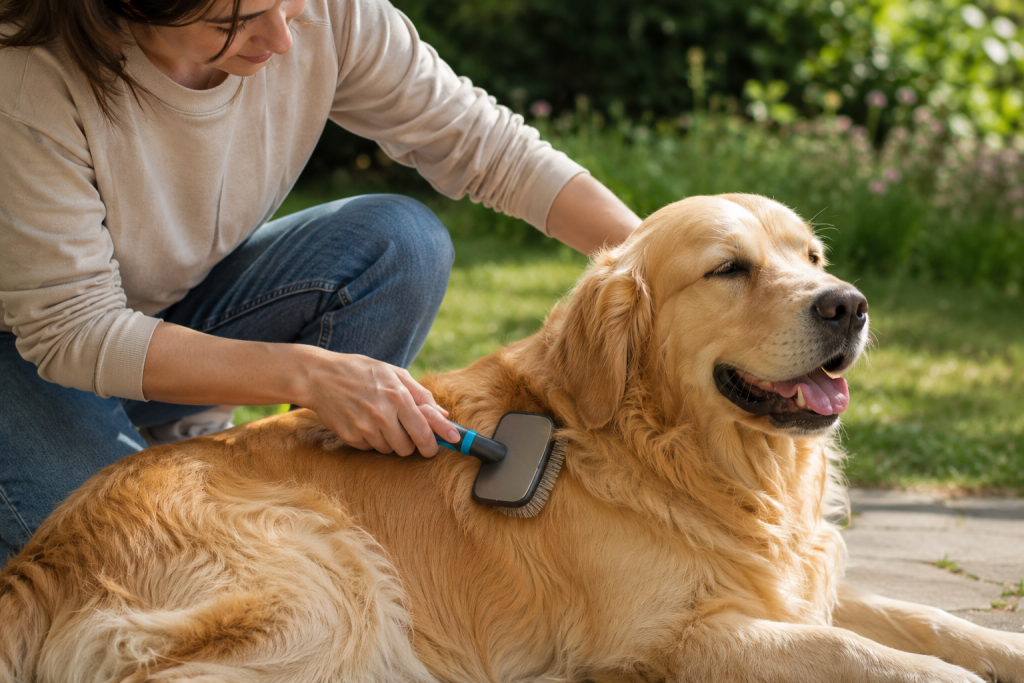
If you are searching for dog grooming and coat care basics, the essentials come down to five habits. These are regular brushing, appropriate bathing, nail trims, ear cleaning, and knowing your dog’s specific coat type. Getting these right keeps your dog comfortable and helps you catch health issues early.
Grooming is not just about appearance. It plays a real role in your dog’s comfort, skin health, and overall wellness. A consistent routine also gives you a chance to notice small changes before they become bigger problems.
This guide walks through everything you need to know about dog grooming and coat care. It covers understanding your dog’s coat type, building a workable routine, and knowing when to call in a professional.
Why Grooming Matters for Your Dog’s Health
Grooming does more than keep your dog looking tidy. Regular brushing removes loose hair and prevents painful mats from forming. Bathing removes dirt, allergens, and excess oil that can otherwise irritate the skin.
Nail trims prevent overgrown nails from affecting how your dog walks. Ear cleaning helps prevent infections, especially in breeds prone to ear problems. Each part of a grooming routine supports a different aspect of your dog’s health.
Grooming sessions also give you regular, hands-on time with your dog. This makes it easier to notice new lumps, skin changes, or signs of discomfort early, often before they become more serious.
A well-maintained coat also affects comfort in everyday life. Mats can pull painfully on the skin, overgrown nails can change how a dog walks, and dirty ears can lead to persistent itching. Staying on top of these basics prevents small issues from turning into bigger, more uncomfortable ones.
Understanding Coat Types
Not all dogs need the same grooming approach. Your dog’s coat type determines how often you should brush, bathe, and trim.
Short, Smooth Coats
Breeds like Beagles, Boxers, and Labrador Retrievers have short, smooth coats that lie close to the body. These coats shed consistently but require relatively low maintenance overall.
Weekly brushing with a rubber curry brush or grooming mitt usually keeps shedding manageable. These coats rarely mat, which makes them one of the easier coat types to care for.
Double Coats
Many breeds, including Golden Retrievers, Siberian Huskies, and German Shepherds, have a double coat. According to the American Kennel Club, a double coat includes a soft, insulating undercoat plus a longer, coarser topcoat.
Double coats shed heavily, especially during seasonal changes. Regular brushing, often several times a week, helps manage loose undercoat and prevents matting near the legs, chest, and tail.
Long or Silky Coats
Breeds like Yorkshire Terriers, Afghan Hounds, and Shih Tzus have long, silky coats prone to tangling. These coats generally need daily or near-daily brushing to prevent mats from forming close to the skin.
Without consistent attention, silky coats can mat quickly, sometimes within just a few days of missed brushing.
Curly or Wiry Coats
Poodles, Bichon Frises, and Wire Fox Terriers have curly or wiry coats that trap loose hair rather than shedding it onto the floor. This means regular brushing is essential, since trapped hair can mat close to the skin if ignored.
These coat types typically require professional grooming every four to six weeks to stay manageable and comfortable.
Hairless Breeds
Breeds like the Chinese Crested have little to no coat at all. While brushing needs are minimal, these dogs need regular skin care, including moisturizing and sun protection, since their skin is directly exposed.
Essential Grooming Tools and Supplies
Having the right tools on hand makes grooming easier and safer for both you and your dog. Most routines rely on a fairly small, consistent set of supplies.
A slicker brush works well for medium to long coats and helps remove loose hair close to the skin. An undercoat rake reaches deeper into double coats to pull out loose fur before it mats. A bristle brush suits short, smooth coats and helps distribute natural oils.
Nail clippers or a grinder are essential for regular trims. Keep styptic powder nearby in case you accidentally cut the quick. A dog-specific shampoo, ideally fragrance-free or formulated for sensitive skin, helps avoid irritation during baths.
For long-haired breeds, a detangling spray can make brushing far easier, especially around the ears and legs where mats tend to form first. Cotton balls and a vet-approved ear cleaning solution round out a basic ear care kit.
Finally, a grooming table or a non-slip mat placed in the bathtub can help your dog feel more secure during sessions. A secure footing often makes the entire process smoother for everyone involved.
Building a Grooming Routine
A complete grooming routine covers several distinct tasks, each on its own schedule. Brushing might happen several times a week, while bathing, nail trims, and ear cleaning happen less often.
Building a routine around your specific dog’s coat type and lifestyle makes the process far more manageable. A short-coated dog that rarely goes outdoors needs a very different schedule than a long-haired dog that hikes every weekend.
It also helps to think of grooming as several small habits rather than one big task. Breaking the routine into short, regular sessions tends to feel far less overwhelming than trying to tackle everything at once.
Brushing: The Foundation of Coat Care
Brushing is the single most important grooming task for most dogs. It removes loose hair, distributes natural skin oils, and prevents mats before they form.
How Often to Brush by Coat Type
Short-coated dogs generally need brushing once or twice a week. Double-coated dogs typically need two to three sessions weekly, increasing during heavy seasonal shedding. Long-haired and curly-coated dogs often need daily brushing to stay tangle-free.
Brushing Tools and Techniques
Different coats respond better to different tools. Slicker brushes work well for medium to long coats. Undercoat rakes help remove loose fur from double coats. Bristle brushes suit short, smooth coats.
Always brush in the direction of hair growth first, then check for any tangles close to the skin. Gentle, consistent pressure works better than rushing through a session, especially around sensitive areas like the belly and legs.
Preventing and Removing Mats
Mats form when loose hair tangles together, often in areas with friction, such as behind the ears, under the arms, and near the tail. Left alone, mats can pull on the skin and become genuinely painful.
For small tangles, gently work them out with your fingers before reaching for a brush. For larger or tighter mats, a detangling spray can help loosen the hair first. Severely matted areas sometimes require careful trimming, ideally done by a professional groomer to avoid injury.
Bathing Your Dog
Bathing removes dirt, allergens, and buildup that brushing alone cannot fully address.
How Often to Bathe
Most dogs do well with a bath every four to six weeks, though this varies by coat type, activity level, and skin condition. According to the ASPCA, overbathing can strip natural oils from the skin, so more frequent bathing is not always better.
Dogs with skin conditions may need a different schedule entirely, sometimes set by a veterinarian as part of a treatment plan.
Choosing the Right Shampoo
Always use a shampoo made specifically for dogs. Human shampoo can disrupt a dog’s skin pH and cause irritation. For dogs with sensitive skin, a fragrance-free or oatmeal-based formula is often gentler.
Bathing Step-by-Step
- Brush your dog thoroughly before bathing to remove loose hair and tangles
- Use lukewarm water, never hot, to avoid discomfort
- Apply shampoo, working from the neck down while avoiding the eyes and ears
- Rinse thoroughly, since leftover shampoo residue can irritate the skin
- Towel dry, then finish with a blow dryer on a low, cool setting if your dog tolerates it
Drying Properly
Thorough drying matters, especially for double-coated and long-haired dogs. Damp fur left close to the skin can lead to irritation or a musty odor over time. Focus extra attention on dense areas like the chest, legs, and tail.
Nail Care
Overgrown nails can affect how a dog walks and, over time, may even change the shape of the foot.
Why Nail Trimming Matters
Long nails can catch on surfaces, split painfully, or push against the ground with every step. According to VCA Animal Hospitals, overly long nails can eventually affect a dog’s posture and gait if left untrimmed for extended periods.
How Often to Trim
Most dogs need a nail trim every three to four weeks. Dogs that walk frequently on hard pavement may naturally wear their nails down faster and need trims less often.
Step-by-Step Nail Trimming
- Use a proper dog nail clipper or grinder, not human nail clippers
- Trim small amounts at a time, checking the angle as you go
- Stop well before the quick, the pink area visible in light-colored nails
- Keep styptic powder nearby in case of accidental bleeding
- Reward your dog throughout to build a positive association
Signs You’re Cutting Too Short
If your dog yelps, pulls away suddenly, or you see bleeding, you have likely cut into the quick. Apply styptic powder to stop the bleeding, then take a break. Trimming small amounts frequently is safer than attempting to cut a lot at once.
Ear Care
Ears require regular attention, especially in certain breeds prone to infection.
Why Ears Need Regular Attention
Floppy-eared breeds and dogs that swim often trap moisture inside the ear canal, creating conditions where bacteria and yeast can thrive. According to VCA Animal Hospitals, regular ear cleaning helps prevent the buildup of wax and debris that can lead to infection.
How to Clean a Dog’s Ears
- Use a vet-approved ear cleaning solution, never water alone
- Gently lift the ear flap and apply the solution as directed
- Massage the base of the ear for several seconds
- Let your dog shake their head, then wipe away debris with a cotton ball
- Never insert a cotton swab deep into the ear canal
Signs of Ear Infection
Watch for redness, odor, discharge, head shaking, or scratching at the ears. According to the American Kennel Club, catching these signs early can prevent a mild issue from developing into a more painful infection.
Breeds at Higher Risk
Breeds with floppy ears, such as Cocker Spaniels and Basset Hounds, tend to be more prone to ear infections due to reduced airflow. Dogs that swim regularly also face higher risk and may benefit from a post-swim ear check as part of their routine.
Dental Care as Part of Grooming
Dental health is closely tied to overall grooming, even though it is easy to overlook. Regular brushing with a dog-safe toothpaste, along with dental chews and routine veterinary checkups, helps prevent plaque buildup and bad breath.
Most dogs benefit from at least a few brushing sessions each week, ideally more. Building this habit alongside coat brushing and bathing helps make dental care feel like a natural part of the overall routine, rather than a separate chore.
Eye Area Care and Tear Stains
Some breeds, especially those with light-colored fur or prominent eyes, develop reddish-brown tear stains beneath the eyes. This discoloration usually comes from a pigment in tears called porphyrin, and it is mostly a cosmetic concern rather than a health issue.
Gently wiping the area daily with a damp cloth or a product made specifically for tear stains can help keep the area clean. Keeping the fur trimmed short around the eyes also reduces buildup and irritation.
Persistent redness, swelling, or discharge that looks different from typical tear staining is worth mentioning to a veterinarian. It can occasionally point to an underlying eye irritation or infection rather than simple staining.
Paw and Pad Care
Paws take a lot of daily wear, so they deserve regular attention as part of an overall grooming routine. Checking paws after walks helps you catch small issues, like debris or minor cuts, before they become bigger problems.
Trimming the fur between paw pads helps prevent matting and reduces the amount of debris that gets tracked inside. This is especially useful for long-haired breeds during muddy or snowy seasons.
Paw balm can help protect pads from hot pavement in summer and salted sidewalks in winter. Rinsing paws after walks on treated surfaces removes irritants before they cause dryness or cracking.
Anal Gland Care
Anal glands are small scent glands located near a dog’s rear that usually empty naturally during bowel movements. Some dogs, however, need occasional help if the glands do not empty on their own.
Signs that anal glands may need attention include scooting along the floor, excessive licking near the tail, or a strong, distinct odor. If you notice these signs, a veterinarian or professional groomer can safely express the glands.
This is generally not a task recommended for home care unless a veterinarian has specifically walked you through the proper technique. Improper handling can cause real discomfort or even minor injury.
Skin and Coat Health: What to Watch For
Grooming sessions are also a chance to monitor your dog’s skin and coat for changes worth tracking.
Normal or Common Signs
A healthy coat generally looks glossy and feels smooth, with even coverage across the body. Some shedding is normal for nearly every breed, and it often increases seasonally.
Possible Explanations
Dull coat texture or mild flaking can sometimes relate to diet, weather, or a recent bath with the wrong shampoo. These causes are usually temporary and improve with simple adjustments.
Warning Signs
Some changes deserve closer attention. Watch for:
- Bald patches or excessive hair loss
- Redness, scabs, or persistent scratching
- A strong, unusual odor from the skin
- Lumps, bumps, or growths that appear suddenly
- Dry, flaky skin that does not improve with basic care
When to Contact a Veterinarian
If you notice several warning signs together, or if a skin issue persists despite basic care, a veterinary visit is the appropriate next step. A veterinarian can identify whether the cause is allergies, parasites, or an underlying medical condition.
Trying to treat a persistent skin issue with grooming products alone can sometimes delay proper treatment, especially if the underlying cause is medical rather than cosmetic.
Seasonal Coat Care
Coat care needs shift throughout the year, especially for double-coated breeds.
Spring Shedding
Many dogs shed their winter undercoat heavily in spring. This process is sometimes called “blowing coat.” Increased brushing during this period helps manage the volume of loose hair and keeps the skin comfortable underneath.
Summer Coat Care
During warmer months, a healthy coat actually helps regulate body temperature and protect the skin from sun exposure. Shaving a double-coated breed is generally discouraged, since the coat provides natural insulation and sun protection year-round.
Winter Coat Care
Cold, dry air can lead to dry skin during winter months. Rinsing paws after walks on salted sidewalks and maintaining regular brushing helps keep the coat and skin healthy through the colder season.
Grooming Across Life Stages
Grooming needs shift as your dog grows and ages.
Puppies
Introducing grooming gently and early helps puppies build positive associations with brushing, bathing, and handling. Short, low-pressure sessions work best at this stage, since rushing can create lasting anxiety around grooming.
Adult Dogs
Adult dogs typically settle into a consistent grooming routine tied to their specific coat type and lifestyle. This is usually the most predictable stage for maintaining a steady schedule.
Senior Dogs
Older dogs may need gentler handling during grooming, especially around joints affected by arthritis. Nail trims can become more important at this stage too, since senior dogs may already have mobility changes that overgrown nails would only make worse.
Professional Grooming vs. At-Home Care
Both approaches have a place in most dogs’ grooming routines.
When to Use a Professional Groomer
Breeds with curly or wiry coats often need professional grooming every four to six weeks to manage trims and prevent matting. Professional groomers also have specialized tools and training for tasks that can be difficult to handle at home. Expressing anal glands and trimming very matted fur safely are two common examples.
What to Expect at a Grooming Appointment
A typical grooming appointment includes bathing, brushing, a haircut if needed, nail trimming, and ear cleaning. Many groomers will also flag skin issues or lumps they notice, which can serve as a helpful early alert for a veterinary visit.
What Grooming Costs and How to Budget for It
Professional grooming costs vary widely depending on your dog’s size, coat type, and location. Small dogs with simple coats often cost less per visit than large, heavily coated breeds that need extensive brushing and trimming.
Breeds requiring frequent professional visits, such as Poodles or Bichon Frises, add up over a year. Budgeting for this in advance, rather than treating each visit as a surprise expense, makes the routine easier to sustain long-term.
At-home grooming supplies represent a one-time cost that can reduce how often you need professional visits, especially for basic brushing and bathing. Investing in quality tools upfront often saves money over time, since cheap tools tend to wear out quickly or perform poorly on certain coat types.
Some owners choose a hybrid approach, handling routine brushing and nail trims at home while relying on a professional for haircuts and more difficult tasks. This balance often works well for busy households while still keeping costs manageable.
Grooming Considerations by Breed Group
Different breed groups tend to share similar grooming needs. Understanding these patterns can help you plan a realistic routine even before you fully learn your individual dog’s quirks.
Sporting breeds, like Golden Retrievers and Cocker Spaniels, often have longer ears and dense coats that need regular brushing and ear checks. Working breeds, like Siberian Huskies and Bernese Mountain Dogs, typically have heavy double coats that shed seasonally and need consistent brushing during those periods.
Toy breeds often have long or silky coats prone to tangling, requiring frequent brushing despite their small size. Terrier breeds frequently have wiry coats that benefit from a technique called hand-stripping. This method is traditionally used to maintain the coat’s texture, though clipping is a common and acceptable alternative for pet owners.
Herding breeds, including Border Collies and Australian Shepherds, usually have double coats requiring regular brushing. Mats tend to form most easily around the legs and chest on these breeds. Knowing your dog’s breed group, even in a mixed-breed dog, can offer a helpful starting point for building a grooming plan.
Common Grooming Mistakes to Avoid
A few common habits can undermine an otherwise good grooming routine.
- Shaving a double-coated breed, which can disrupt natural insulation and increase sunburn risk
- Using human shampoo or skincare products not made for dogs
- Skipping regular brushing until mats have already formed
- Cutting nails too short without proper tools or guidance
- Ignoring persistent skin changes instead of consulting a veterinarian
Avoiding these mistakes helps keep your dog comfortable and helps grooming stay a positive, low-stress part of their routine.
How to Help a Dog Who Resists Grooming
Some dogs tolerate grooming easily, while others need extra patience and practice. A dog who resists brushing, bathing, or nail trims usually benefits from a slow, positive approach rather than forcing the process.
Start with very short sessions, sometimes just a few seconds at first, paired with treats and calm praise. Gradually increase the length of each session as your dog becomes more comfortable. Ending on a positive note, before your dog becomes stressed, helps build trust over time.
Handling exercises outside of actual grooming sessions can also help. Gently touching paws, ears, and the mouth during calm moments, then rewarding your dog, builds tolerance for these areas. This preparation pays off later, when you actually need to trim nails or clean ears.
If a specific task, like nail trimming, consistently causes significant stress, a professional groomer or veterinarian can help. They can offer techniques suited to your individual dog, or handle the task directly to reduce stress for everyone involved.
Building a Grooming Schedule That Works
The best grooming schedule is one you can realistically maintain. Start by identifying your dog’s coat type. From there, build a simple weekly plan around brushing, with bathing, nail trims, and ear checks layered in on their own timelines.
Keeping supplies accessible and setting a recurring reminder can make a big difference. Consistency matters far more than perfection, and small, regular sessions are almost always easier on both you and your dog than occasional, lengthy grooming marathons.
Grooming and Bonding: The Overlooked Benefit
Beyond the practical health benefits, regular grooming sessions offer something else worth mentioning: a consistent, calm form of one-on-one time with your dog.
For many dogs, a gentle brushing session becomes a predictable, soothing routine. Some dogs visibly relax during brushing, much like a person enjoying a massage. This can be especially valuable for anxious dogs, since it offers a low-pressure way to build trust.
Over time, dogs who associate grooming with calm, positive attention tend to tolerate handling far better, not just during grooming but also at veterinary visits. This makes early, patient grooming practice a worthwhile investment well beyond just keeping your dog’s coat looking its best.
Frequently Asked Questions
How often should I bathe my dog?
Most dogs do well with a bath every four to six weeks, though this varies by coat type, activity level, and any existing skin conditions.
Is it okay to shave my double-coated dog in summer?
Generally, no. A double coat helps regulate body temperature and protect against sunburn, so shaving can do more harm than good, even in hot weather.
How do I know if my dog’s nails are too long?
If you hear clicking on hard floors, or the nails touch the ground when your dog stands normally, they are likely due for a trim.
What should I do if my dog hates being brushed?
Start with short sessions and plenty of positive reinforcement. Building tolerance gradually, rather than forcing a full session, usually works better over time.
Can grooming help me catch health problems early?
Yes. Regular grooming sessions give you a consistent chance to notice new lumps, skin changes, or signs of discomfort before they become more serious.
How often should professional grooming happen?
This depends heavily on coat type. Curly and wiry coats often need professional grooming every four to six weeks, while short-coated breeds may only need occasional professional visits.
Are ear infections preventable with regular cleaning?
Regular cleaning significantly reduces the risk, especially for floppy-eared breeds and dogs that swim often, though it cannot guarantee an infection will never happen.
What causes tear stains, and are they harmful?
Tear stains usually come from a natural pigment in tears. They are mostly cosmetic, though persistent redness or discharge that looks unusual is worth mentioning to a veterinarian.
Do all dogs need their anal glands expressed?
No. Most dogs empty their anal glands naturally during bowel movements. Only some dogs need occasional help, usually signaled by scooting or a strong odor near the tail.
Key Takeaway
Dog grooming and coat care come down to understanding your dog’s specific coat type. From there, building a consistent, manageable routine around brushing, bathing, nail trims, and ear care makes the biggest difference. Each part plays a distinct role in your dog’s comfort and health.
Grooming sessions also double as a valuable health check. Paying attention during these routine moments helps you catch changes early, whether that means adjusting your approach at home or scheduling a visit with your veterinarian.