
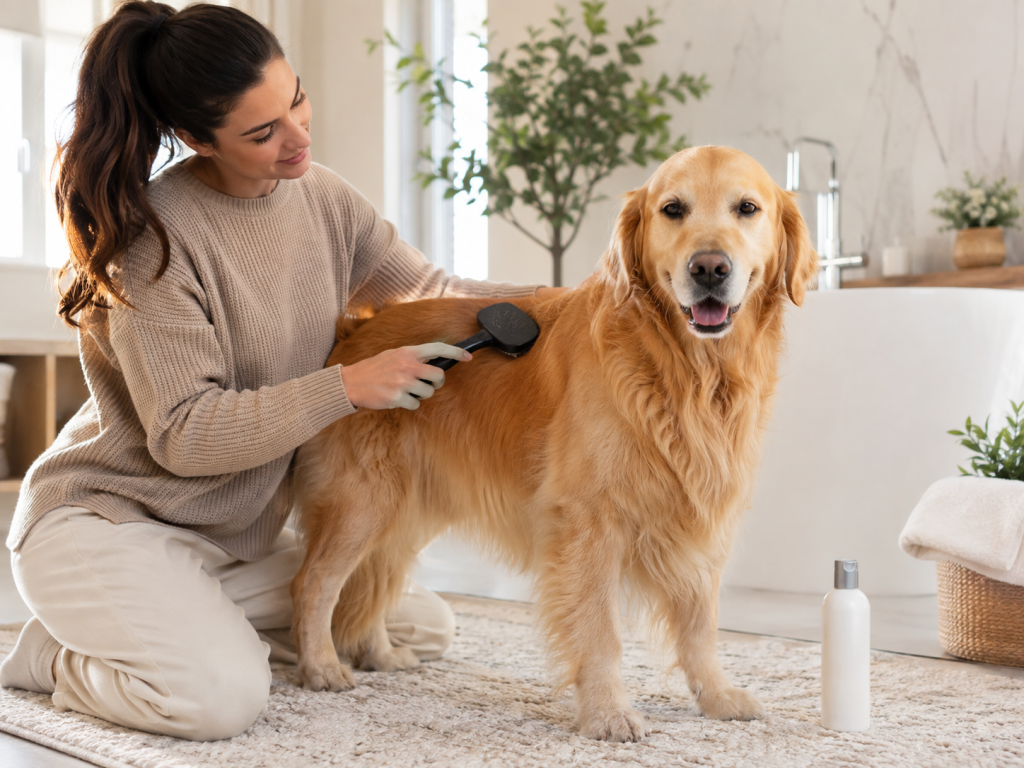
Good grooming and coat care for dogs helps keep the skin and coat clean, reduces loose hair, prevents painful mats, and gives owners a regular opportunity to notice lumps, wounds, parasites, or skin changes. Grooming needs vary considerably according to coat length, texture, density, age, lifestyle, and health. Dogs with long or dense coats generally need more frequent brushing than dogs with short, smooth coats.
A complete grooming routine can include brushing, bathing, coat trimming when appropriate, nail care, ear checks, paw inspection, and regular skin monitoring. However, more grooming is not always better. Excessive bathing, aggressive brushing, or using inappropriate products can irritate the skin.
The best routine is therefore one designed around your individual dog’s coat and health rather than a universal schedule.
Why Regular Grooming Matters
Brushing does much more than improve appearance. It removes loose hair and debris, helps prevent tangles and mats, and gives you direct access to the skin beneath the coat.
Merck Veterinary Manual recommends regular brushing, especially for dogs with thick or long fur, because matted hair can irritate the skin and contribute to infection.
Regular grooming also makes subtle changes easier to detect. You may notice a small lump, irritated patch of skin, tick, scab, painful area, or change in coat texture before it becomes obvious from a distance.
Make grooming part of routine preventive care rather than waiting until the coat becomes dirty or tangled.
How Often Should You Brush a Dog?
There is no single brushing frequency that works for every dog.
Dogs with short, smooth coats may need relatively little brushing, while dogs with long, curly, thick, or double coats can require several sessions each week or even daily attention in certain situations. AAHA notes that five to ten minutes of brushing two or three times per week can significantly reduce loose hair for many pets, while heavy shedders may benefit from daily brushing.
Dogs with longer or denser coats generally need particularly consistent brushing to prevent mats. AKC guidance recommends at least weekly brushing for many long or dense coats.
The coat itself will tell you whether your schedule is working. If tangles repeatedly appear between sessions, brushing probably needs to happen more frequently.
Choose the Right Brush for the Coat
Different grooming tools are designed for different coat types.
Rubber brushes can work well on many short coats, while slicker brushes are commonly used for denser coats. Combs can help with longer hair and areas where tangles are more likely to develop.
A tool that works beautifully for one dog may be uncomfortable or ineffective for another.
When brushing, use gentle pressure. The goal is to reach through the coat without repeatedly scraping or irritating the skin.
If you are unsure which tool is suitable, ask a professional groomer or veterinarian familiar with your dog’s coat type.
Brush All the Way Through the Coat
Running a brush only across the top layer may leave tangles hidden underneath.
This is especially important for dogs with long, thick, or double coats. Mats can develop close to the skin while the surface still appears relatively smooth.
AAHA recommends brushing through to the skin to remove loose undercoat and help distribute natural oils throughout the coat.
Work in small sections and stop if the dog becomes uncomfortable.
Grooming should not repeatedly pull on the skin.
Where Do Mats Usually Form?
Mats often develop in areas where hair experiences friction or movement.
Common locations include behind the ears, beneath the legs, around collars or harnesses, near the tail, and in longer hair around the body. AKC specifically identifies areas behind the ears and under the legs as locations where owners should watch for matting.
Check these areas even when the rest of the coat looks good.
Small tangles are much easier to manage than a large, tight mat that has already pulled close to the skin.
Why Matted Fur Is More Than a Cosmetic Problem
A tight mat can pull continuously on the skin and create discomfort.
Mats can also trap moisture, dirt, and debris against the body. Merck warns that matted fur can irritate the skin and potentially contribute to infection.
Severe matting may also hide wounds, parasites, or inflamed skin.
Do not leave large mats simply because the dog does not appear bothered. Dogs do not always communicate discomfort obviously.
Be Careful When Removing Mats
Never pull aggressively at a tight mat.
Merck advises against using scissors to cut mats because the skin can easily be pulled into the tangled hair and accidentally cut. Clippers designed for pet grooming are safer when significant mat removal is required.
If a mat is close to the skin, extensive, painful, or located in a sensitive area, let a professional groomer or veterinary team handle it.
Trying to save every strand of hair is not worth injuring the dog.
How Often Should You Bathe a Dog?
Bathing frequency depends on coat, lifestyle, medical needs, and how dirty the dog becomes.
Merck gives approximately once a month as a general starting point for routine bathing, depending on season and whether the coat becomes dirty or develops an odor.
However, another healthy dog may require less frequent bathing. Dogs receiving treatment for a skin condition may need much more frequent medicated baths under veterinary guidance.
There is no need to bathe a clean, healthy dog constantly simply because a certain number of days have passed.
Do Not Over-Bathe Your Dog
Frequent unnecessary bathing can dry or irritate the skin.
AAHA advises bathing as needed rather than excessively because over-bathing can remove natural skin oils and contribute to dryness or irritation.
Use products formulated specifically for dogs.
Human shampoo may not be appropriate for canine skin, and medicated products should be selected according to the dog’s condition and veterinary recommendations.
If your dog needs unusually frequent baths because the coat repeatedly becomes greasy, smelly, or itchy, investigate why instead of simply washing more often.
Brush Before Bathing
Removing loose hair and tangles before the dog becomes wet can make bathing easier.
AKC recommends brushing out dead hair and mats before a bath.
Water can make some tangles more difficult to manage once they tighten.
Check the coat carefully first, then wash the dog using appropriate shampoo and comfortably warm water.
Rinse Shampoo Thoroughly
Soap residue left in the coat can irritate the skin and attract dirt.
Work the shampoo through the coat without aggressively scrubbing sensitive skin, then rinse thoroughly.
Protect the eyes, mouth, and ears from unnecessary shampoo exposure.
Afterward, dry the dog according to coat type and environmental temperature. Long or dense coats can take much longer to dry completely than they appear to from the surface.
Double-Coated Dogs Need Special Attention
Double-coated dogs have an outer coat and a softer undercoat.
These coats can release substantial amounts of loose hair, especially during seasonal shedding. Regular brushing helps remove the loose undercoat before it collects around the home or becomes tangled.
AKC recommends approximately weekly brushing for many medium double coats to remove loose fur and help prevent mats.
During heavy shedding periods, more frequent brushing may be useful.
Do not assume shaving is the easiest solution for every double-coated dog. Discuss major coat removal with a knowledgeable groomer or veterinarian first.
What About Short-Haired Dogs?
Short-haired dogs may not develop dramatic mats, but they still benefit from coat care.
Regular brushing can remove loose hair, dirt, and debris while giving you an opportunity to examine the skin.
Rubber grooming tools are often useful for short coats.
Short hair also makes skin changes easier to see, so pay attention to redness, bumps, dandruff, hair loss, or unusual pigmentation.
A short coat does not make a dog immune to allergies, parasites, or skin disease.
Long-Haired Dogs Need More Consistency
Long coats require enough brushing to prevent tangles from progressing into tight mats.
Focus on areas where hair rubs against itself or equipment. Collars, harnesses, ears, legs, and the underside of the body can all need additional attention.
Divide the coat into manageable sections instead of brushing only the obvious outer surface.
Professional grooming may also be useful for breeds with continuously growing coats.
The appropriate haircut depends on breed, lifestyle, climate, coat condition, and individual needs.
Curly and Continuously Growing Coats
Some dogs have coats that continue growing and require regular trimming.
These dogs can appear to shed less around the house because loose hairs remain trapped within the coat. However, that can make consistent brushing even more important.
Without maintenance, tangles can form near the skin and become difficult to remove.
Establish a professional grooming schedule before severe matting develops rather than waiting until the coat becomes unmanageable.
Shedding Is Normal
All dogs lose some hair, although the amount varies enormously.
Breed, coat type, season, indoor environment, health, and individual biology can all influence shedding. AAHA notes that shedding is a normal process in which old or damaged hair is replaced by new growth.
Regular brushing can significantly reduce the amount of loose hair that ends up around the home.
However, normal shedding should not create clear bald patches or inflamed skin.
Seasonal Shedding
Some dogs shed much more heavily during seasonal coat changes.
Double-coated breeds can release large amounts of undercoat over a relatively short period. During these times, brushing frequency may need to increase.
Do not panic simply because your dog suddenly fills the brush more quickly if the skin looks healthy and the coat remains evenly distributed.
However, unusual hair loss outside the dog’s normal pattern deserves closer attention.
When Hair Loss Is Not Normal
Bald patches, thinning hair, broken hairs, excessive scratching, or abnormal coat loss can indicate a medical problem.
Parasites, allergies, bacterial or fungal infections, hormonal disease, excessive licking, and other conditions can all affect the coat.
A dog that suddenly begins losing hair should not simply receive more brushing.
The cause needs to be identified, especially when hair loss occurs with redness, odor, sores, itching, or behavioral changes.
Check the Skin While Grooming
Part the hair in several areas while brushing.
Look for redness, scabs, bumps, wounds, dandruff, parasites, unusual odor, darkened skin, moist patches, or areas that appear painful.
Grooming allows you to notice these changes sooner than you might otherwise.
If you find a new lump, note its location and approximate size. Veterinary evaluation can determine whether further testing is needed.
Persistent Itching Needs Attention
Occasional scratching is normal. Constant itching is not.
Allergies, fleas, mites, infection, and other skin problems can make dogs intensely uncomfortable. AAHA notes that allergy management may include veterinary-directed bathing and parasite prevention, while excessive bathing itself can worsen dryness.
Watch for repeated scratching, chewing the paws, rubbing the face, licking the skin, or recurrent ear irritation.
Do not rely on grooming alone when itching is persistent.
Fleas and Ticks Can Hide Under the Coat
Thick coats can make parasites difficult to see.
During grooming, inspect the skin closely, particularly after outdoor activities in environments where ticks are common.
Flea dirt may appear as small dark particles within the hair, while ticks can feel like small attached lumps.
Parasite prevention should be discussed with your veterinarian according to geographic and lifestyle risk.
Grooming can help you discover parasites, but it should not replace appropriate preventive products when they are needed.
Coat Odor Can Provide Useful Information
Dogs naturally have an individual smell, and becoming dirty after outdoor activity is normal.
A persistent strong, musty, or unpleasant odor can sometimes indicate skin or ear disease rather than simply poor grooming.
Repeated bathing may temporarily hide the smell without treating the cause.
If odor quickly returns after bathing or appears with greasy skin, itching, redness, or discharge, contact your veterinarian.
Medicated Shampoo Should Be Used Correctly
Dogs with certain skin conditions may receive medicated shampoo as part of veterinary treatment.
The schedule can be very different from ordinary bathing. For example, Merck notes that dogs with superficial pyoderma may initially require medicated bathing several times per week depending on veterinary instructions.
This does not mean healthy dogs should be bathed that frequently.
Follow the specific product, contact-time, rinsing, and frequency instructions provided by your veterinarian.
Nail Care Is Part of Grooming
Coat care often receives most of the attention, but nails also need monitoring.
Overgrown nails can interfere with comfortable movement and may eventually curl or break.
How frequently trimming is required depends on growth rate and how much the nails naturally wear on surfaces.
Introduce paw handling gradually and reward calm behavior.
If you are uncertain where the quick ends, ask a veterinary professional or groomer to demonstrate safe trimming.
Check the Paws
Inspect paw pads and the spaces between toes while grooming.
Small stones, plant material, burrs, cuts, redness, cracked pads, or other foreign material can become trapped around the feet.
Dogs with longer foot hair may need additional maintenance depending on coat type.
Persistent paw licking or chewing can also occur with allergies, pain, infection, or foreign material.
Do not assume it is simply a grooming habit.
Ear Care Should Be Gentle
Check the ears periodically for redness, swelling, odor, discharge, or sensitivity.
Some dogs require more regular ear cleaning than others, particularly when advised by a veterinarian.
However, healthy ears do not necessarily need aggressive cleaning.
Avoid inserting cotton swabs deeply into the ear canal. If your dog repeatedly shakes the head, scratches the ears, develops odor, or reacts painfully when touched, veterinary evaluation is appropriate.
Grooming Puppies
Early grooming experiences can shape how a dog responds to handling throughout life.
Introduce brushing, paw touching, ear checks, and bathing gradually. Keep initial sessions very short and reward calm behavior.
A puppy does not need to endure a long professional-style grooming session immediately.
The goal is to teach that being handled is predictable and safe.
This foundation can make nail trims, veterinary visits, and future grooming significantly easier.
Grooming Senior Dogs
Older dogs may need adjustments to their grooming routine.
Arthritis can make standing for long periods uncomfortable, while skin can become more sensitive. Senior dogs may also develop lumps, coat changes, or difficulty maintaining normal hygiene.
AAHA notes that grooming senior pets provides an opportunity to check for physical changes such as lumps, bumps, or discomfort.
Use shorter sessions, comfortable surfaces, and additional support when necessary.
A sudden change in grooming tolerance can also indicate pain.
Make Grooming a Positive Experience
Do not wait until your dog is severely tangled before introducing a brush.
Begin with short sessions while the dog is relaxed. Reward cooperation with treats, play, praise, or another positive experience.
Stop before frustration becomes intense.
If the dog repeatedly growls, snaps, or panics during grooming, forcing the process can create a stronger negative association.
A veterinarian, groomer experienced with fearful dogs, or qualified behavior professional may be able to create a safer handling plan.
When Professional Grooming Makes Sense
Professional grooming can be particularly useful for dogs with long, curly, continuously growing, dense, or easily matted coats.
A groomer can also help with trimming, bathing, drying, nail care, and coat maintenance.
Choose someone who handles dogs calmly and safely.
Professional grooming does not replace home maintenance. If a coat needs frequent brushing, waiting six or eight weeks between grooming appointments without any home care may still allow significant matting to develop.
When to See a Veterinarian
Grooming problems sometimes reveal medical problems.
Contact your veterinarian if you notice persistent itching, bald patches, sores, repeated skin infections, strong odor, unusual lumps, painful grooming reactions, extensive dandruff, severe redness, chronic ear problems, or unexplained coat changes.
Skin disease can require specific treatment. Merck notes that medicated shampoos and other therapies may be used for conditions such as pyoderma or seborrhea, but treatment depends on identifying the underlying problem.
Do not repeatedly cover symptoms with grooming products when the condition continues to return.
Building a Healthy Grooming Routine
Good grooming and coat care for dogs begins with understanding your dog’s individual coat.
Brush often enough to remove loose hair and prevent tangles before they become painful mats. Dogs with long or thick coats generally need more frequent maintenance, while short-haired dogs can still benefit from routine brushing and skin checks.
Bathe your dog when needed using an appropriate canine shampoo, but avoid unnecessary over-bathing because it can contribute to dryness and irritation.
Use grooming time to inspect the skin, paws, ears, nails, and body for anything unusual. Watch for parasites, redness, odor, wounds, lumps, excessive itching, or abnormal hair loss.
Most importantly, make grooming comfortable. Short, positive sessions are easier to maintain than stressful sessions that the dog learns to fear.
A healthy coat is not simply one that looks shiny. Good coat care protects the skin beneath it, improves comfort, supports hygiene, and helps you notice changes that may need veterinary attention.