
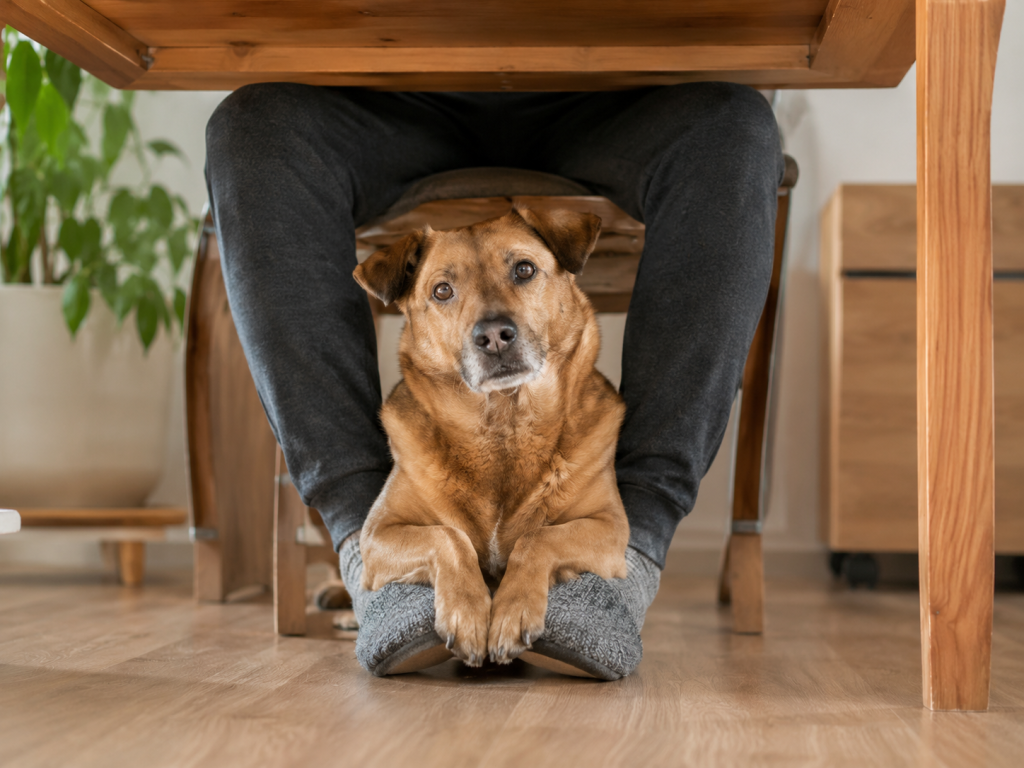
If you have ever asked, “why does my dog sit on my feet,” the short answer is closeness, security, and awareness of your movement. It is usually a sign of comfort and attachment. For most dogs, this is simply a low-key way of staying near a trusted person without demanding constant attention.
Occasionally, though, the behavior can lean more toward reassurance-seeking during uncertain moments. Looking at when and how often it happens will help you understand what your dog is telling you.
This guide walks through the most common reasons behind the habit, how it compares to related behaviors like leaning or following, and when it might be worth a closer look.
Why Dogs Sit on Their Owner’s Feet
A few overlapping reasons usually explain this common habit. Most dogs show a blend of them rather than a single cause, so it helps to consider several possibilities at once instead of picking just one.
Physical Closeness and Comfort
Sitting on your feet keeps a dog in constant physical contact with you. This closeness feels reassuring for many dogs, especially those with a strong bond to their owner. It requires little effort, so it becomes an easy default position during quiet moments.
Unlike more demanding behaviors, this one asks nothing of you in return. Your dog simply settles in and stays close, which is part of why it feels so effortless for both of you.
Many owners notice this happens most often while working, reading, or relaxing on the couch. The behavior fits naturally into calm, low-activity moments. It rarely appears during high-energy play, which supports the idea that it is primarily about comfort rather than excitement.
Instinctive Denning Behavior
Dogs descend from den-dwelling ancestors that valued small, enclosed, secure spaces. Some behaviorists suggest that resting against or on a person’s feet may tap into this same instinct. Your feet offer a stable, warm anchor point, similar to how a den once offered safety.
This does not mean every dog is acting on ancient instinct in the moment. It simply offers one reasonable explanation for why the position feels comforting. Many dogs also curl into a similar shape on their own bed, which supports this general idea.
Warmth
Feet generate noticeable body heat, especially through socks or bare skin. Dogs are drawn to warm spots, particularly during cooler months. For some dogs, sitting on your feet is simply the most comfortable heat source nearby.
This explanation is easy to test at home. If your dog’s interest in your feet increases in winter and fades in summer, warmth is likely playing a meaningful role.
Seeking Reassurance
Dogs sometimes seek extra contact during unfamiliar or mildly stressful situations. A new environment, an unexpected noise, or a change in routine can prompt a dog to sit closer than usual. In these cases, the behavior functions as a coping strategy.
This kind of reassurance-seeking is usually brief. Once the dog adjusts to the situation, the extra closeness typically fades on its own.
Staying Informed of Your Movement
Physical contact allows a dog to notice even small movements before you make them. Many dogs seem to anticipate when their owner is about to get up, and staying in contact with your feet makes that easier to detect. This can be especially common in dogs who dislike missing out on activity in the home. Some owners jokingly call this “keeping tabs” on the household.
Is This Behavior Normal?
Yes, in most cases. According to the American Kennel Club, dogs that sit on or lean against their owner’s feet are usually expressing comfort and affection rather than distress. This lines up with what most trainers and veterinarians observe in day-to-day practice.
This behavior is common enough that most dog owners report seeing it regularly. It rarely signals a problem on its own, especially when the dog appears relaxed. Trainers often list it alongside leaning and following as one of the clearer everyday signs of a secure attachment.
Signs the behavior is simply normal comfort-seeking include:
- Loose, relaxed body language while sitting
- The dog settles calmly rather than fidgeting
- No signs of trembling, panting, or restlessness
- The behavior happens mainly during calm, quiet moments
Sitting on Feet, Leaning, and Following: How They Differ
Many owners notice their dog shows several of these related behaviors at once. While they overlap, each one carries a slightly different flavor and often shows up in a different context.
Sitting on your feet usually reflects passive, low-effort closeness. Leaning tends to involve more direct physical pressure and often shows up during specific moments of reassurance. Following, meanwhile, is more active and involves movement from room to room.
None of these behaviors are mutually exclusive. A dog who follows you around the house may also lean briefly before settling onto your feet once you sit down. Together, they usually paint a picture of a securely attached, affectionate dog.
Owners sometimes worry when a dog shows all three behaviors at once. In most cases, this simply reflects a strong bond rather than a cause for concern, especially if the dog can still relax independently when needed.
When It Might Reflect Anxiety or Insecurity
Occasionally, this behavior points to something beyond simple comfort. Context and additional signals help clarify the difference.
Watch for these signs alongside the behavior:
- Trembling or excessive panting while sitting close
- Difficulty settling, even after sitting on your feet
- Increased frequency after a stressful event, like moving homes
- Signs of distress when physical contact is not possible
If several of these signs appear together, especially after a specific trigger, it may be worth adjusting your approach or discussing the pattern with a professional. Mild, occasional reassurance-seeking is normal. Frequent, intense clinginess is worth a closer look.
It also helps to think about timing. A dog who suddenly needs constant contact after a move, a new pet, or a household change is likely responding to that specific event rather than developing a permanent personality shift.
Does Breed or Size Matter?
Some dogs show this behavior more than others, and a few patterns tend to hold true across breeds. That said, individual personality often matters more than breed alone.
Smaller Breeds
Smaller dogs often find sitting on feet more physically comfortable and practical than larger breeds. Their size makes the position easy to maintain for long periods without discomfort.
Companion and Working Breeds
Breeds historically bred for close human partnership, including many companion breeds and herding dogs, often show a stronger tendency toward this kind of contact-seeking behavior.
Independent Breeds
More independent breeds may show affection differently, preferring to stay nearby without direct physical contact. This does not mean these dogs are less attached. They simply express comfort in other ways, such as choosing to nap in the same room rather than making direct contact.
Life Stage Differences
A dog’s tendency to sit on your feet can shift noticeably over time, much like other attachment behaviors.
Puppies
Puppies often stay close to a trusted person while building confidence in a new environment. This is a normal part of early development and typically becomes less constant as the puppy grows more independent.
Adult Dogs
Adult dogs usually settle into a consistent pattern shaped by routine and personality. Sudden increases in this behavior are worth noting, since they can reflect stress or a change at home.
Senior Dogs
Older dogs may seek more physical contact due to declining vision, hearing loss, or joint discomfort. Staying close to a trusted person can feel especially reassuring as these changes occur. A gradual increase over months is usually a normal part of aging, while a sudden change deserves a veterinary conversation.
Should You Discourage This Behavior?
In most cases, there is no need to discourage sitting on your feet. It is a harmless, low-effort way for your dog to stay close, and many owners genuinely enjoy the closeness. It can even become a comforting part of the daily routine for both of you.
That said, this habit can become impractical if you need to move quickly or if it causes trip hazards in a busy household. In these situations, teaching your dog to settle on a nearby mat or bed offers a similar sense of closeness with more practical boundaries.
How to Respond
A few simple habits help you respond appropriately, whether the behavior reflects comfort or mild stress.
- Allow the contact when it is convenient and safe to do so
- Provide an alternative resting spot nearby for practical situations
- Avoid scolding the behavior, since it is rarely a problem on its own
- Watch for context clues if the behavior suddenly increases
- Keep your household routine predictable to reduce stress-driven clinginess
Consistency in your response, rather than reacting differently each time, helps your dog understand what to expect. Small, predictable routines tend to work far better than occasional, inconsistent corrections.
When to Talk to a Vet
Most of the time, this behavior needs no intervention. However, a few patterns are worth mentioning to a veterinarian.
Consider reaching out if you notice:
- A sudden, dramatic increase in the behavior
- Signs of pain or stiffness when your dog sits or moves
- Clinginess paired with appetite or energy changes
- Visible anxiety that does not ease with reassurance
A veterinarian can help rule out pain, vision changes, or anxiety as underlying causes, especially in older dogs experiencing a sudden shift in behavior. Getting an early opinion is always better than waiting to see if the pattern resolves on its own.
Bring specific details to the appointment, such as when the behavior started and whether anything changed at home around that time. These details often help a veterinarian narrow down the likely cause more quickly.
Frequently Asked Questions
Is it bad to let my dog sit on my feet all the time?
No, this is generally harmless. As long as your dog can also settle calmly elsewhere when needed, there is no reason to stop the behavior.
Why does my dog only sit on my feet, not anyone else’s?
This usually reflects a stronger bond with you specifically. Dogs often direct this behavior toward the person they feel most secure around.
Can this behavior mean my dog is protective of me?
Some owners interpret it this way, though it is difficult to confirm. Comfort and attachment remain the most likely explanations for most dogs.
Does this behavior change if I get a second dog?
Sometimes. A second dog can reduce clinginess for some dogs by providing companionship, though personality plays a bigger role than the number of pets in the home.
Is sitting on my feet the same as resource guarding?
No. Resource guarding involves defensive behavior around food, toys, or space. Sitting on your feet is a passive, calm behavior with no defensive component involved.
Should I train my dog to stop this habit?
Only if it causes a practical problem, such as tripping hazards. Otherwise, most trainers consider this a harmless behavior that does not need correcting.
Key Takeaway
So, why does my dog sit on my feet? For most dogs, it is a simple, comforting way to stay physically close to someone they trust. Paying attention to body language and timing helps you tell everyday comfort-seeking apart from anxiety that may need extra support.
If the behavior changes suddenly or appears alongside other symptoms, a veterinarian is the best place to start. Most of the time, though, that familiar weight on your feet is simply your dog choosing to be near you.