
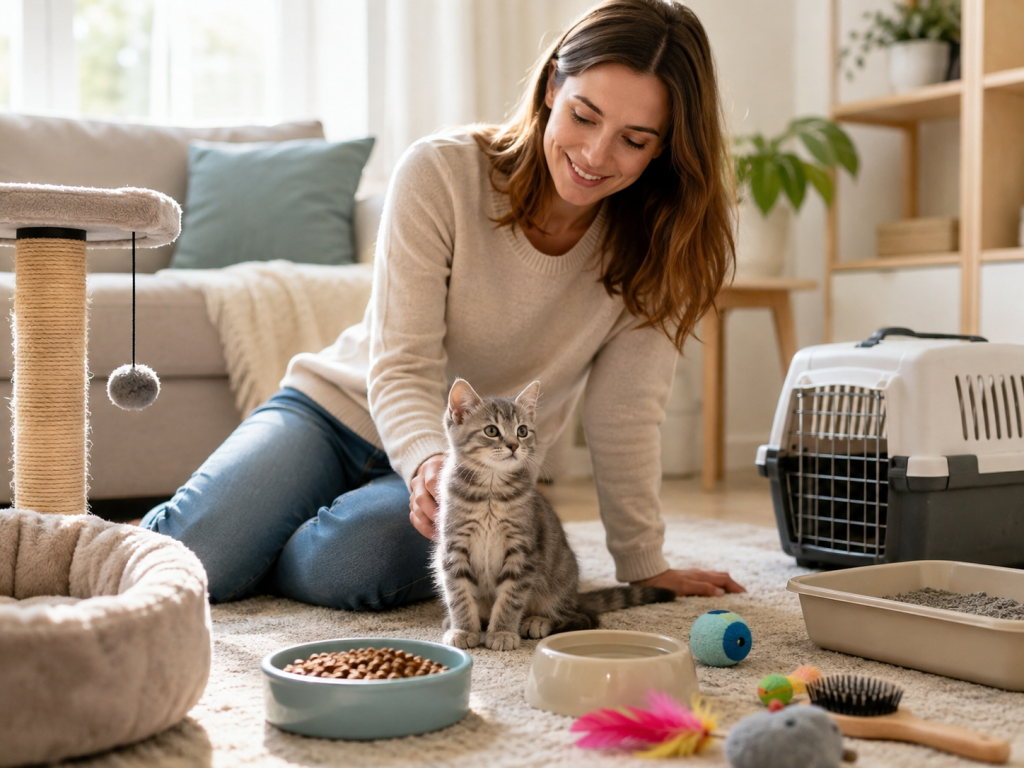
Kitten care essentials include proper nutrition, veterinary care, vaccinations, parasite prevention, litter box training, socialization, safe play, grooming, identification, and a secure home environment. Kittens grow rapidly during their first year and need more intensive care than healthy adult cats, particularly during their first months. Merck Veterinary Manual recommends repeated veterinary visits, kitten-specific nutrition, preventive healthcare, and careful monitoring throughout this developmental period.
A good kitten routine does not need to be complicated. Consistent meals, clean water, easy access to a litter box, several play sessions, comfortable sleeping areas, gentle handling, and safe opportunities to explore cover many everyday needs. The environment should also support normal feline behavior through hiding spaces, scratching surfaces, climbing opportunities, and positive interactions with people.
Starting these habits early can make veterinary visits, grooming, litter box use, feeding, and everyday handling much easier as the kitten grows.
Prepare a Safe Space Before Your Kitten Arrives
A new kitten does not need immediate access to an entire house.
Begin with a quiet room or manageable area containing food, water, a bed, hiding places, scratching surfaces, toys, and a litter box. This smaller environment makes it easier for the kitten to find essential resources while becoming accustomed to unfamiliar smells, sounds, and people.
Once the kitten appears confident, access to additional rooms can gradually increase.
Keep important resources separated when possible. Food and water should not be placed directly beside a dirty litter area, and the kitten should have more than one comfortable place to rest or hide.
Kitten-Proof the Home
Kittens are curious and capable of reaching surprisingly small spaces.
Secure human medications, cleaning products, batteries, electrical cords, string, thread, ribbon, rubber bands, small toys, and other swallowable objects. Check plants before bringing them into a home with cats, and make sure windows, balconies, and screens are secure.
Do not rely on your kitten automatically recognizing danger.
Young cats explore by climbing, biting, pawing, and squeezing into narrow spaces, so prevention is usually safer than correcting behavior after an accident.
Schedule a Veterinary Visit Early
Veterinary care should be arranged soon after bringing a kitten home, particularly when the kitten’s medical history is incomplete.
Merck states that kittens generally need veterinary visits every three to four weeks during their early months, with repeated appointments used for vaccination, parasite management, growth monitoring, and other preventive care.
Bring any available vaccination, deworming, medication, or microchip records.
The veterinarian can also review nutrition, litter box habits, behavior, dental care, grooming, reproductive planning, and any concerns you have noticed at home.
Keep Vaccinations on Schedule
Kittens need a series of vaccinations rather than one single injection.
Current preventive guidance places the initial FPV-FCV-FHV-1 series beginning around 6–8 weeks of age and repeating every few weeks through approximately 16–20 weeks, although the individual schedule should be determined by the veterinarian.
AAHA/AAFP vaccination guidance also recommends individualized risk assessment when determining which vaccines a cat needs.
Do not assume that a kitten is fully protected after the first vaccine.
Parasite Prevention Is Essential
Kittens can have intestinal parasites even when they look healthy.
Veterinarians may recommend stool testing, deworming, and preventive treatment according to age, body weight, location, and lifestyle. Flea and tick prevention may also be appropriate depending on exposure.
Only use parasite products specifically confirmed to be safe for kittens.
Never use a product intended for a different species or weight range simply because it is already available at home.
Feed a Complete Kitten Food
Growing kittens require more energy and nutrients than healthy adult cats.
Merck notes that kittens need additional calories, protein, fat, vitamins, and minerals to support rapid growth and should receive a nutritionally balanced food formulated specifically for kittens.
Continue growth nutrition until the kitten approaches adulthood, generally around 9–12 months, unless your veterinarian recommends otherwise.
Plain chicken, tuna, milk, or homemade combinations should not replace complete kitten food.
Feed Several Small Meals
Young kittens have high energy needs and relatively small stomachs.
Merck recommends approximately three to four meals per day for kittens younger than four months, with meal frequency gradually decreasing as they grow.
You can divide the kitten’s total daily allowance into several measured portions.
More meals should not mean unlimited calories. Monitor growth and body condition so the kitten receives enough nutrition without excessive weight gain.
Fresh Water Should Always Be Available
Provide fresh, clean water throughout the day.
Some kittens prefer wide bowls, while others may enjoy drinking from a pet fountain. Multiple water locations can be useful in larger homes.
Even kittens eating wet food should still have drinking water available.
Clean bowls regularly and learn what normal drinking looks like for your kitten.
Choose an Accessible Litter Box
A very young kitten may struggle to enter an adult-sized box with high sides.
Choose a low-sided box that is easy to access and place it in a quiet location where the kitten cannot easily become trapped or frightened.
As the kitten grows, transition to a larger box that provides enough room to turn and dig comfortably.
Keep the box clean because many cats are sensitive to heavily soiled litter areas.
Litter Training Is Usually Straightforward
Many kittens naturally prefer loose substrates for elimination.
Show the kitten where the litter box is when they first arrive. You can also place them nearby after eating, sleeping, or intense play when they may be more likely to eliminate.
Reward calm successful use through a comfortable environment rather than punishment.
If an accident happens, clean the area thoroughly and improve access or supervision.
Never Punish Litter Box Accidents
Punishment can make the kitten frightened without teaching where elimination should occur.
Do not yell, hit, spray water, or rub the kitten’s face near waste.
Instead, check whether the box is clean, accessible, appropriately sized, and easy to find.
Persistent accidents can also have medical causes and should not automatically be treated as a training problem.
Socialization Is One of the Most Important Essentials
Early experiences influence how comfortable kittens become around people and everyday situations.
FelineVMA states that the sensitive socialization period occurs roughly between 2 and 9 weeks of age and that positive interaction with people during this stage supports healthier cat-human relationships.
Expose your kitten gently to ordinary household sounds, different people, handling, carriers, grooming, and safe environments.
The objective is positive learning, not overwhelming exposure.
Let a Nervous Kitten Retreat
A frightened kitten should not be forced into interaction.
Provide hiding areas and allow the kitten to approach people voluntarily. A secure box, covered bed, or protected space can make adaptation much easier.
Feline environmental guidance emphasizes giving cats safe locations and appropriate control over interactions with people and other animals.
Confidence develops more effectively when the kitten learns that retreat is possible.
Introduce Handling Gradually
Kittens need to become comfortable with routine handling for grooming and veterinary care.
Briefly touch the paws, ears, mouth, body, and tail while the kitten remains relaxed. Pair the experience with food, play, or another reward.
Keep initial sessions short.
A few seconds of successful handling repeated frequently is more useful than restraining a frightened kitten through a long session.
Play Every Day
Play supports physical development, coordination, hunting behavior, and mental stimulation.
Use wand toys, balls, soft toys, and other objects that allow stalking, chasing, pouncing, and grabbing.
Rotate toys periodically to keep them interesting.
Short play sessions several times throughout the day often suit kittens better than one very long session.
Do Not Teach the Kitten to Attack Hands
Using fingers and feet as toys can be funny when a kitten is tiny but much less enjoyable as the cat grows.
Encourage the kitten to direct predatory play toward toys rather than skin.
Feline behavior guidance recommends avoiding hand and foot play because it can encourage biting and scratching during later interactions.
Redirect grabbing and biting toward a suitable toy instead of physically punishing the kitten.
Provide Scratching Surfaces
Scratching is normal feline behavior.
Offer sturdy vertical scratching posts and, if possible, horizontal scratching surfaces so the kitten can develop appropriate preferences.
Place scratchers near sleeping areas or locations where the kitten naturally tries to scratch.
Reward appropriate scratching instead of attempting to eliminate the behavior.
Provide Vertical Space
Kittens quickly become interested in climbing.
Stable cat trees, shelves, and safe elevated resting areas provide exercise, observation points, and additional usable territory.
Current feline environmental guidance emphasizes providing cats with opportunities to climb, hide, scratch, rest, and interact with their surroundings in ways that support normal feline behavior.
Make sure climbing structures cannot easily tip over.
Kittens Need Plenty of Sleep
Energetic play can make kittens appear constantly active, but young cats also need substantial rest.
Provide comfortable beds and quiet areas where the kitten can sleep without repeated interruption.
Children and other pets should be taught to leave sleeping kittens alone.
Sudden extreme lethargy is different from ordinary kitten sleep. A kitten that is unusually difficult to wake, weak, or uninterested in food may need veterinary attention.
Start Grooming Early
Introduce brushing during kittenhood even if the coat currently requires little maintenance.
Short-haired cats may need relatively little assistance, while long-haired kittens can require frequent brushing as their adult coat develops.
Gentle brushing also gives you an opportunity to inspect the skin for parasites, irritation, wounds, or unusual lumps.
Keep sessions positive so grooming remains manageable later in life.
Introduce Nail Trimming
Touch the paws regularly before attempting to trim the claws.
When the kitten is comfortable, introduce appropriate cat nail clippers and begin with only one or two nails if necessary.
Do not cut into the quick.
A veterinary professional or experienced groomer can demonstrate the correct technique if you are uncertain.
Start Dental Habits Early
Kittenhood is a good time to introduce mouth handling.
Gently touch the lips and gums, then gradually introduce a cat-specific toothbrush and toothpaste.
Never use ordinary human toothpaste unless a veterinarian specifically confirms that the product is safe for cats.
Early positive practice can make home dental care much easier during adulthood.
Introduce the Carrier as Furniture
A carrier should not appear only when something stressful is about to happen.
Leave it open in a familiar area when practical and place comfortable bedding or occasional treats inside.
Allow the kitten to enter voluntarily.
A cat that already considers the carrier a normal hiding or sleeping location may be easier to transport for future veterinary appointments.
Introduce Other Cats Slowly
Resident cats may need time to accept a new kitten.
Begin with separate spaces and resources rather than forcing immediate physical interaction.
Allow scent exchange first and progress toward controlled visual and physical contact when both cats remain comfortable.
Each cat should have access to food, water, litter boxes, resting locations, and hiding spaces without having to compete.
Introduce Dogs Carefully
A dog and kitten should never simply be placed together and expected to work things out.
Keep the dog controlled during early meetings and make sure the kitten has elevated escape routes and protected areas.
Prevent chasing even when it appears playful.
The goal is calm behavior around one another rather than immediate friendship.
Monitor Growth
Growing kittens should steadily gain size and body weight.
Regular veterinary visits provide opportunities to check growth and body condition. WSAVA recommends individualized nutritional assessment rather than relying on one feeding plan for every animal.
Weighing a kitten periodically at home can also help reveal an unexpected plateau or weight loss.
Failure to grow appropriately deserves attention.
Keep Treats Limited
Treats can be useful for training and bonding, but they should remain a small part of the diet.
WSAVA recommends that treats make up less than 10% of a cat’s daily calories and should never replace complete and balanced meals.
Very small pieces are usually sufficient for a kitten.
You can also reserve part of the kitten’s regular food for training.
Microchip Your Kitten
Even an indoor kitten can escape through a door, window, damaged screen, or during transportation.
Microchipping provides permanent identification. Merck includes microchipping among important kittenhood healthcare considerations.
Make sure the chip is registered with current contact information.
A chip without updated owner details is less useful if the cat becomes lost.
Discuss Spaying or Neutering
Talk with your veterinarian about reproductive care while the kitten is still young.
Cats can become sexually mature surprisingly early, with Merck noting sexual maturity around approximately six months in many cats.
The appropriate timing should be discussed with your veterinarian according to your kitten’s health and circumstances.
Planning early avoids making the decision only after reproductive behavior begins.
Monitor Appetite Every Day
Healthy growing kittens generally show consistent interest in food.
A sudden reduction in appetite can occur with stress, pain, parasites, infection, digestive disease, or other problems.
Because kittens are small and growing rapidly, prolonged poor intake deserves more attention than ordinary adult pickiness.
Contact your veterinarian when appetite loss persists or appears alongside other symptoms.
Watch for Vomiting and Diarrhea
Kittens can become dehydrated more quickly than healthy adult cats.
Repeated vomiting, persistent diarrhea, blood, abdominal discomfort, weakness, or inability to keep water down requires veterinary advice.
Diet changes and parasites can cause digestive problems, but serious infections and foreign-body ingestion are also possible.
Do not assume persistent diarrhea is simply caused by adjusting to a new home.
Respiratory Symptoms Need Attention
Kittens can develop respiratory infections.
Persistent sneezing, nasal discharge, eye discharge, appetite loss, lethargy, coughing, or breathing changes deserve attention.
Vaccination helps protect against several important infectious diseases, but young kittens are not immediately fully protected because the vaccine series takes time to complete.
Difficulty breathing should be treated as urgent.
Watch the Litter Box for Health Changes
Litter box habits provide valuable health information.
Notice diarrhea, constipation, blood, repeated straining, unusual urine frequency, or vocalization during elimination.
A kitten repeatedly attempting to urinate while producing little or no urine requires prompt veterinary assessment.
Sudden litter box avoidance should also be investigated rather than punished.
Watch for Signs of Parasites
Possible parasite signs include diarrhea, vomiting, a swollen abdomen, poor growth, visible worms, fleas, itching, or an unhealthy coat.
However, some kittens with parasites appear normal.
This is why preventive veterinary care and appropriate testing matter even when nothing obvious is wrong.
Know the Emergency Warning Signs
Seek urgent veterinary care if your kitten develops:
- Severe breathing difficulty
- Collapse or extreme weakness
- Repeated seizures
- Serious trauma
- Suspected poisoning
- Uncontrolled bleeding
- Repeated vomiting with inability to keep water down
- Severe diarrhea with weakness
- Inability to urinate
- A painful or swollen abdomen
- Suspected foreign-object ingestion
- Severe dehydration or unresponsiveness
Young kittens can deteriorate quickly, so severe or rapidly worsening symptoms should not be managed by simply waiting overnight.
Essential Kitten Supplies
A kitten does not need a huge collection of products.
A practical starter setup includes:
- Complete kitten food
- Food and water bowls
- Low-sided litter box
- Appropriate cat litter
- Comfortable bed
- Safe hiding area
- Secure carrier
- Scratching post
- Interactive toys
- Grooming brush
- Cat nail clippers
- Cat toothbrush and toothpaste
- Identification and microchip registration
Choose equipment that suits the kitten’s current size while planning to replace items such as litter boxes and carriers as they grow.
Create a Simple Daily Routine
A healthy day can be built around several small meals, fresh water, clean litter, multiple play periods, social interaction, exploration, grooming practice, and plenty of quiet sleep.
The exact clock times are less important than consistent access to essential resources.
Regular routines also help owners recognize changes.
If a kitten that usually eats, plays, and uses the litter box predictably suddenly stops doing one of those things, the difference becomes easier to notice.
Building Healthy Habits From Kittenhood
The most important kitten care essentials are good nutrition, preventive healthcare, safety, positive social experiences, and consistent everyday routines.
Feed a complete growth diet and offer several small meals while your kitten is young. Merck recommends three to four meals daily for kittens younger than four months and continued kitten-specific nutrition until approximately 9–12 months of age.
Keep veterinary appointments, vaccinations, and parasite prevention current. Kittens need repeated early checkups, and their main vaccine series generally extends through the first several months rather than ending after one injection.
Provide an environment where your kitten can hide, climb, scratch, play, eat, drink, rest, and use the litter box without unnecessary stress. Current FelineVMA environmental guidance emphasizes that these physical and social needs are central to feline wellbeing.
Use positive experiences to introduce handling, grooming, carriers, other people, and appropriate animals. Early socialization is particularly important because the sensitive period occurs during the first weeks of life.
Most importantly, learn your kitten’s normal appetite, body weight, energy, stool, urination, breathing, and behavior. Significant changes can provide early warning that veterinary attention is needed.
Consistent care during kittenhood creates the foundation for a healthier, more confident, and better-adjusted adult cat.