
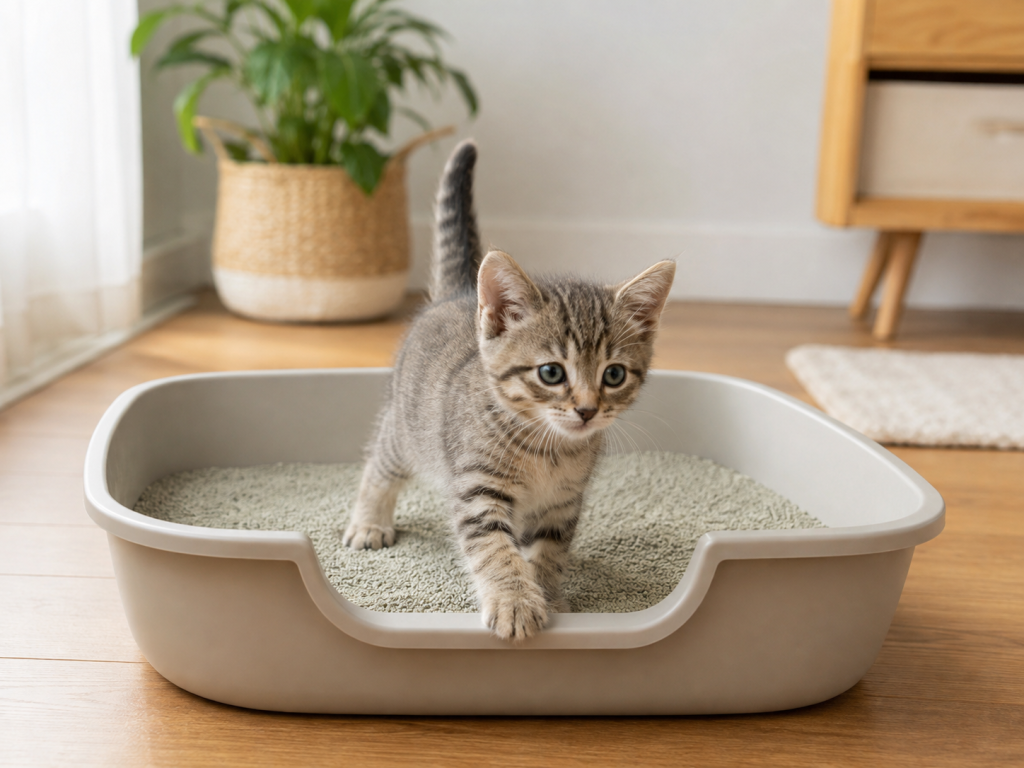
Learning how to litter train a kitten is usually easier than many new owners expect. Most kittens naturally prefer digging and eliminating in loose material, so your job is mainly to provide an accessible litter box, suitable litter, a quiet location, and consistent opportunities to use it.
Start your kitten in a manageable area of the home with a low-entry litter box nearby. Keep the box clean, use a fine-textured unscented litter, and gently place your kitten near the box after meals, naps, and active play. Cornell notes that small kittens benefit from boxes with low sides, while many cats prefer unscented litter and clean toileting areas.
Most importantly, never punish accidents. If your kitten repeatedly urinates or defecates outside the box despite a good setup, investigate the environment and speak with your veterinarian because house-soiling can sometimes indicate a medical problem.
Start With the Right Litter Box
A kitten should be able to enter and leave the litter box without climbing over a difficult barrier. Small kittens may struggle with the tall sides found on some adult litter boxes.
Cornell specifically recommends low-sided boxes for small kittens and cats with mobility limitations.
Choose a box large enough for your kitten to stand, turn around, dig, and position comfortably. Remember that your kitten will grow quickly, so a starter box may eventually need to be replaced with a larger one.
An open litter box is a useful starting option. Cornell veterinary guidance notes that many cats prefer uncovered boxes, although individual preferences vary.
Choose a Kitten-Friendly Litter
The texture and smell of the litter can influence whether your kitten wants to use the box.
Many cats prefer fine-textured, unscented litter. Cornell specifically recommends fine, unscented, clumping litter as a common feline preference when addressing litter box behavior.
Strong fragrances may smell clean to people while making the litter less appealing to a cat. Avoid repeatedly switching between different textures and scents when your kitten is still establishing a routine.
If the kitten was already using a particular litter before coming home, continuing with that substrate initially can make the transition easier.
Once your kitten consistently uses the box, any necessary litter changes can be introduced gradually.
Put the Litter Box in the Right Location
A good litter box can fail if it is placed somewhere your kitten does not want to visit.
Choose a quiet, accessible location where the kitten can enter and leave easily. Avoid positioning the box beside a washing machine, loud appliance, or busy doorway.
Merck recommends placing litter boxes in quiet, appealing locations away from food and water while ensuring easy access.
Do not hide the only box in a distant basement if your young kitten spends most of the day upstairs. A small kitten may not recognize the need to travel across a large home until it is too late.
Convenience matters from the kitten’s perspective, not only yours.
Keep Food and Water Away From the Litter Box
Your kitten’s food and water should not sit directly beside the toilet area.
Cornell recommends keeping food and water dishes well away from the litter box.
If you are introducing a kitten in one room, this does not mean you need a huge space. Simply separate sleeping, eating, drinking, and toileting areas as much as the room allows.
This creates a clearer environment and gives each resource its own location.
Make the Kitten’s First Area Small and Simple
Giving a new kitten immediate access to an entire house can make litter training harder.
Instead, begin with a comfortable room or section of the home containing everything the kitten needs. The litter box should always be easy to find from anywhere within that starting area.
Once your kitten uses the box consistently and becomes comfortable in the home, gradually increase access to additional rooms.
When opening a much larger area, consider adding another litter box rather than expecting a young kitten to travel a long distance every time.
This gradual approach also makes accidents easier to monitor and helps you learn your kitten’s normal bathroom routine.
Show Your Kitten Where the Box Is
You do not need to physically demonstrate how to dig or eliminate.
When your kitten first arrives, calmly place them beside or inside the clean litter box so they can investigate it. Avoid holding them there if they immediately want to leave.
You can repeat this introduction after the kitten wakes from a nap, finishes eating, or completes an energetic play session.
These moments can be useful because elimination often occurs around predictable daily activities.
The goal is to remind the kitten where the bathroom is located, not to force them to use it on command.
Watch for Signs Your Kitten Needs to Go
Recognizing early signals can prevent accidents.
A kitten that needs the litter box may suddenly stop playing, sniff the floor, circle an area, scratch at the ground, or move toward a quiet corner.
If you notice these behaviors, calmly guide the kitten toward the box.
Do not chase them or create excitement around the situation. You want the litter box to remain a safe and predictable place.
Over time, most kittens will begin going there independently.
Keep the Litter Box Very Clean
A kitten may avoid a box that contains too much waste.
Cornell warns that cats can avoid litter box areas that are not kept clean, while Merck recommends scooping litter boxes at least daily.
Scoop urine clumps and feces every day. In many households, checking the box morning and evening makes the routine even easier.
Regular cleaning also allows you to monitor your kitten’s health. You will notice more quickly if urine disappears, bowel movements become abnormal, or the kitten begins visiting the box much more frequently.
Do not try to compensate for a dirty box by adding strongly scented products.
How Many Litter Boxes Does a Kitten Need?
For a single kitten in a small area, one easily accessible litter box may initially work well. However, adding another box becomes useful as the kitten gains access to a larger home.
A common feline guideline is one litter box per cat plus one additional box. FelineVMA and Cornell both recommend this approach as a useful general starting point.
That would mean two boxes for one cat and three boxes for two cats.
The boxes should ideally be distributed rather than placed directly beside each other. Separate locations give cats more genuine choices and can reduce access problems.
What Should You Do When Your Kitten Uses the Box?
Keep your response calm and positive.
You can offer quiet praise, gentle attention, or a small appropriate reward immediately after your kitten leaves the box if that helps establish a positive routine.
Avoid interrupting the kitten while they are actively eliminating. Reaching into the box, picking the kitten up, or creating excitement can make the experience less comfortable.
Over time, successful litter box use should become an ordinary part of daily life rather than something requiring constant rewards.
What Should You Do After an Accident?
Accidents happen, especially during the first days in a new home.
Clean the area thoroughly and consider why the accident occurred. Perhaps the litter box was too far away, the door to the room was closed, the box was dirty, or the kitten simply did not recognize where to go in time.
Do not yell at the kitten or rub their nose in urine or feces.
Punishment does not explain where the appropriate toilet is and may make your kitten more fearful around you or the elimination process.
Instead, improve access to the litter box and supervise more closely until the routine becomes reliable.
Clean Accident Areas Thoroughly
Cats have a much stronger sense of smell than people, so an accident location may still smell like a bathroom even after you can no longer detect anything.
Use a pet-safe cleaning product appropriate for the surface and remove as much odor as possible.
Avoid cleaning only the visible stain while leaving urine deeper inside carpet or fabric.
If your kitten repeatedly returns to the same location, temporarily limit access while reinforcing use of the litter box elsewhere.
Do not place a food bowl directly over a heavily contaminated area until it has been properly cleaned.
Do Not Constantly Move the Litter Box
Once your kitten knows where the box is, consistency helps.
Moving it from the bathroom to the hallway, then to another room several days later can make training unnecessarily confusing.
If you need to relocate the box permanently, gradually moving it toward the new location can be easier than making a dramatic change overnight.
Another option is to add a second box in the preferred location before removing the original one.
Make changes around your kitten’s successful habits instead of repeatedly forcing the kitten to adapt to changing rules.
What If Your Kitten Keeps Using the Same Wrong Spot?
Repeated accidents in one location can indicate that the kitten has developed a preference for that surface or area.
First, clean the location thoroughly. Then make the intended litter box more appealing by checking its size, litter, cleanliness, and accessibility.
You can also temporarily place an additional box near the location where accidents happen. Once the kitten uses that box reliably, it may later be moved gradually if necessary.
Merck notes that cats avoiding litter may be responding to the litter itself, the box, or its location.
The repeated accident is therefore useful information about what your kitten currently prefers.
What If Your Kitten Does Not Like the Litter?
Offer another appropriate option instead of repeatedly placing the kitten into a substrate they dislike.
A fine-textured, unscented litter is a reasonable alternative because many cats prefer that combination.
If you know what the kitten used before adoption, try matching that litter first.
Avoid changing five things at the same time. If you replace the litter, box, location, and cleaning product together, you will not know which change helped.
Giving two boxes with different litter types can sometimes reveal a clear preference.
Litter Training in a Multi-Cat Home
A new kitten should not have to compete with an established cat for the only litter box.
Provide several boxes in different locations. FelineVMA recommends one more litter box than the number of cats in the household as a general rule.
Watch interactions carefully. An older cat does not need to physically attack the kitten to make access uncomfortable. Sitting near the box, staring, chasing afterward, or blocking a doorway can be enough.
Cornell specifically identifies conflict between cats as a possible factor in house-soiling problems and recommends separate litter box locations.
How Long Does It Take to Litter Train a Kitten?
Many kittens begin using an appropriate litter box very quickly, sometimes from the first day in a new home.
However, there is no exact training period that applies to every kitten. Age, previous experience, home size, litter preference, stress, and health can all influence progress.
A kitten already accustomed to a litter box with their mother may need very little guidance. A rescued kitten with an uncertain background may take longer to develop a consistent routine.
Focus on improvement rather than expecting perfection immediately.
Why Is My Kitten Suddenly Having Accidents?
A kitten that used the litter box reliably and suddenly stops should not simply be considered poorly trained.
Changes in litter, location, cleanliness, access, or household stress can all contribute. Medical problems can also cause inappropriate urination or defecation.
FelineVMA house-soiling guidelines recommend addressing both litter box conditions and possible medical or environmental factors.
If accidents suddenly become frequent, especially when accompanied by diarrhea, constipation, blood, straining, crying, or changes in appetite or energy, contact your veterinarian.
Straining in the Litter Box Can Be Serious
Watch what your kitten actually does when entering the litter box.
Repeated trips with straining, discomfort, or little urine are not normal litter-training problems. Merck states that urinating outside the box can occur with lower urinary tract disease and that straining can indicate a serious urinary problem.
A cat that repeatedly attempts to urinate but produces little or no urine needs urgent veterinary attention.
Do not wait for the kitten to “learn” the litter box if the real problem appears to be difficulty eliminating.
Common Litter Training Mistakes
One common mistake is placing the box too far from a young kitten. Another is using a high-sided tray that is difficult to enter.
Dirty litter, strong fragrances, noisy locations, and changing the setup repeatedly can also make learning harder.
Punishment is another major mistake. The kitten should never learn that eliminating near a person leads to fear or shouting.
Finally, do not assume that every accident is behavioral. Sudden or persistent house-soiling can require veterinary investigation.
The Easiest Litter Training Routine
A simple routine works well for many kittens. Keep the kitten initially in a manageable area with an easy-to-enter, clean litter box containing unscented litter.
After waking, eating, or vigorous play, make sure the box is available and gently direct the kitten toward it if needed. Watch for sniffing, circling, or searching for corners.
Scoop the box every day and reward successful habits calmly. Clean accidents thoroughly without punishment.
As your kitten becomes reliable, gradually allow access to more of the home while keeping enough litter boxes available.
Helping Your Kitten Develop Reliable Litter Box Habits
Learning how to litter train a kitten is mostly about making the correct behavior easy. Provide a low-entry box, use an appealing unscented litter, keep the tray clean, and place it somewhere quiet and accessible. Cornell and Merck both emphasize box accessibility, cleanliness, appropriate litter, and location as important parts of successful feline elimination behavior.
Give your kitten time to learn the home. Introduce additional rooms gradually and add litter boxes when distances become greater.
When accidents happen, respond by adjusting the environment rather than punishing your kitten. A missed box is usually information that something about access, cleanliness, substrate, location, stress, or health needs attention.
Most kittens can establish reliable habits quickly when their needs are met consistently. If your kitten suddenly stops using the box, repeatedly strains, develops diarrhea or constipation, or seems painful while eliminating, contact your veterinarian.
A clean, accessible litter box combined with patience and consistency gives your kitten the strongest foundation for reliable litter habits throughout adulthood.