
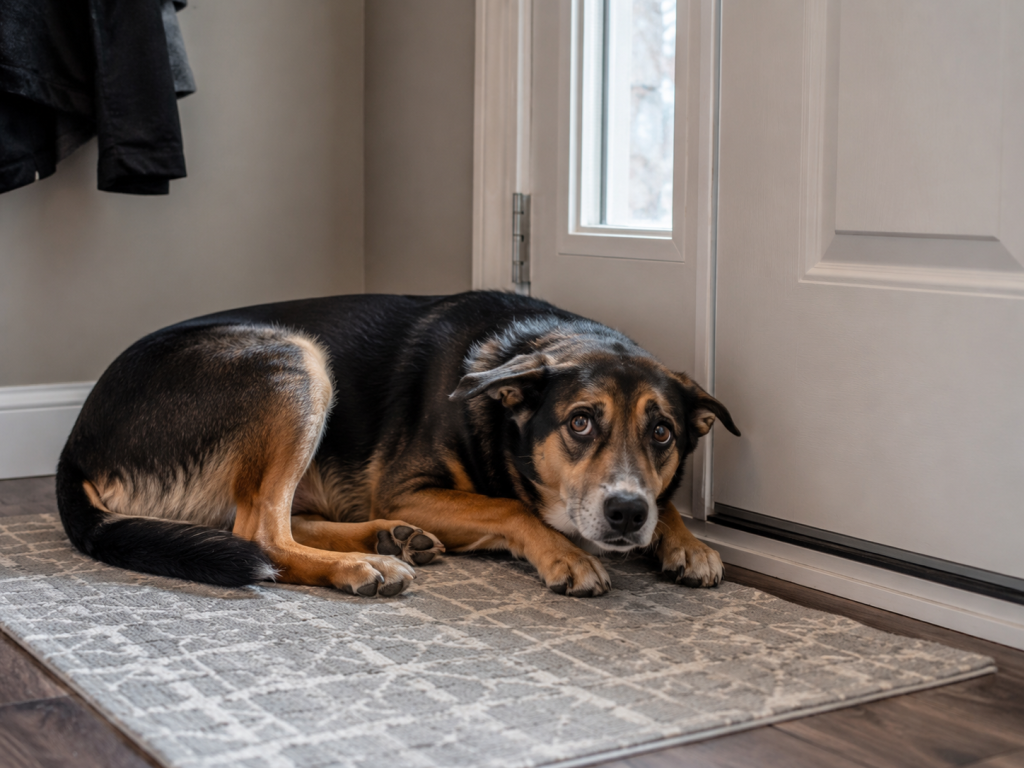
The most common signs of separation anxiety in dogs include destructive chewing, excessive barking or howling, restless pacing, and accidents despite being house-trained. These behaviors typically happen only when a dog is left alone. They usually start soon after the owner leaves, not hours later.
Not every dog who dislikes being alone has separation anxiety. This guide explains the difference, walks through the most common signs, and covers when professional support may help.
Because this is a behavioral health topic, it helps to separate normal alone-time behavior from genuine warning signs early on. That distinction shapes everything else in this guide.
What Is Separation Anxiety in Dogs?
Separation anxiety is a recognized behavioral condition. It involves genuine distress tied specifically to being separated from a person, not simple boredom or mild preference for company. Understanding this distinction is the first step toward responding appropriately.
According to VCA Animal Hospitals, dogs with separation anxiety often show signs of panic once they realize their owner is leaving or has left. The condition can range from mild to severe, and it affects dogs of any age, breed, or background, regardless of how well-trained they otherwise are.
This is different from a dog who simply prefers company. A securely attached dog can usually settle down once left alone. A dog with separation anxiety often cannot.
The distinction matters because the right response depends on which situation you are dealing with. A dog who simply prefers company usually needs patience and gradual practice. A dog with true separation anxiety often needs a more structured approach, sometimes with professional guidance.
Common Signs of Separation Anxiety
These signs typically appear only when a dog is alone, or anticipates being left alone soon. Most dogs with separation anxiety show a combination of the following, rather than just one isolated behavior.
Destructive Behavior
Chewing furniture, scratching doors, or destroying household items are common signs. This behavior usually targets exit points, like doors and windows, rather than random objects around the house.
This pattern matters. A dog who chews a toy out of boredom is behaving differently than a dog who claws repeatedly at a door frame. The location and intensity of the damage often tell you which situation you are facing.
Excessive Barking or Howling
Dogs with separation anxiety often vocalize persistently while alone. Neighbors sometimes report this before an owner even notices it themselves, since it happens only after departure.
The vocalization often sounds distressed rather than simply attention-seeking. It may continue for long stretches, rather than settling after a few minutes like typical alone-time whining.
Pacing
Some dogs pace in fixed patterns, such as walking in straight lines or circles. This restless movement often continues for extended periods rather than settling after a few minutes.
Pacing paired with heavy panting or drooling often signals a higher level of distress. This combination is worth noting closely if you can observe it through a camera or a trusted neighbor.
Accidents Despite House-Training
A fully house-trained dog may still urinate or defecate indoors when experiencing separation anxiety. This is not a training failure. It reflects genuine physiological stress.
This sign is often the most confusing for owners, since the dog behaves normally with house-training the rest of the time. The key clue is that accidents happen only during alone time, not throughout the day.
Attempts to Escape
Some dogs try to physically escape through doors, windows, or crates. This can lead to serious injury, including broken teeth or damaged nails, making it one of the more urgent signs to address.
If your dog shows this sign, safety becomes the immediate priority. Preventing access to windows or reinforcing a crate is a reasonable short-term step while you address the underlying anxiety.
Drooling and Panting
Excessive drooling or panting, especially without heat or exercise involved, often accompanies other signs. This reflects the physical stress response happening alongside the visible behaviors.
Owners sometimes notice this sign first, since it leaves visible evidence, such as a wet floor or damp bedding, even without a camera to confirm the behavior directly.
Pre-Departure Anxiety: Signs Before You Even Leave
Many dogs with separation anxiety react to cues that predict departure, not just the departure itself. Grabbing keys, putting on shoes, or picking up a bag can trigger pacing, whining, or clinginess well before you actually leave the house.
This pattern is a useful clue. According to the American Kennel Club, recognizing pre-departure cues can help owners understand the scope of a dog’s anxiety, since it shows the response is tied to anticipation, not just isolation itself.
Normal Alone-Time Behavior vs. Separation Anxiety
It helps to know what typical alone-time behavior looks like before assuming true anxiety is actually involved.
Normal alone-time behavior usually includes:
- Settling down within a few minutes of departure
- Sleeping or resting calmly for most of the time alone
- Mild whining that fades quickly
- No property damage or accidents
Signs that may point toward separation anxiety instead include:
- Persistent barking, howling, or crying throughout the absence
- Ongoing destructive behavior, especially near exits
- Accidents despite reliable house-training
- Escape attempts or self-injury
- Anxiety that appears well before you actually leave
If several of these signs appear consistently, it is worth taking a closer look rather than assuming your dog will simply adjust over time.
Keeping a simple log of when the signs happen can also help. Noting the day, duration, and what preceded your departure often reveals patterns that are easy to miss otherwise.
What Causes Separation Anxiety?
The exact cause is not always clear, and it can vary quite a bit between individual dogs. A few common contributing factors include:
- A sudden change in routine or schedule
- Moving to a new home
- The loss of a family member or companion animal
- A history of rehoming or time spent in a shelter
- Little prior experience being left alone
None of these guarantee that a dog will develop separation anxiety, and some dogs develop it without any clear trigger at all. This condition is best understood as a genuine anxiety response, not a training issue or a sign of poor behavior. Understanding this distinction can also ease some of the frustration owners feel when the behavior seems to appear out of nowhere.
It also helps to remember that separation anxiety is not caused by “spoiling” a dog with affection. This outdated idea is not supported by how modern behavior science understands anxiety in dogs.
Mild vs. Severe Separation Anxiety
Separation anxiety exists on a spectrum, much like anxiety in general. Recognizing where your dog falls helps guide the right response.
Mild cases often involve occasional whining or brief restlessness that fades within a short time. Moderate cases may include more consistent barking or minor destructive behavior. Severe cases often involve intense panic, self-injury, or extreme destruction, and these cases usually need professional guidance rather than home management alone.
Knowing where your dog falls on this spectrum helps set realistic expectations. A mild case may resolve with a few consistent changes at home, while a severe case usually requires a longer, more structured plan.
How Is Separation Anxiety Diagnosed?
There is no single test for separation anxiety. Instead, diagnosis relies on a combination of history, observed behavior, and ruling out other possible causes.
A veterinarian will typically ask about when the behavior started, what it looks like, and whether it happens only during alone time. Video recordings of your dog while you are away can be extremely helpful for this process, since owners rarely witness the behavior directly.
Even a short recording from a phone propped up near the door can reveal a lot. It shows exactly when the distress begins and how it changes over the course of your absence.
It is also important to rule out medical causes. Conditions such as urinary tract issues, gastrointestinal problems, or cognitive changes in older dogs can sometimes resemble or worsen anxiety-related symptoms.
This is why a veterinary visit is a useful starting point, even if you feel confident the cause is behavioral. Ruling out physical causes first ensures the treatment plan actually addresses the right underlying issue, rather than treating the wrong problem.
What You Can Do to Help
For mild cases, a few consistent strategies can make a real difference, especially when applied patiently over several weeks.
- Practice short, low-pressure departures and gradually increase the time away
- Avoid dramatic greetings or goodbyes, since these can heighten emotional intensity
- Provide mental stimulation, such as puzzle toys, before you leave
- Create a consistent, predictable daily routine
- Consider a comfortable, safe space your dog associates with calm
These strategies work gradually, step by step. Progress often looks like shorter episodes of distress, rather than the behavior disappearing overnight.
It also helps to avoid making a big deal out of leaving or returning. Calm, low-key departures and arrivals teach your dog that these moments are not something to fear.
When to Seek Professional Help
Mild, occasional stress during alone time often improves with consistency at home. However, certain signs call for professional support instead, rather than more time and patience alone.
Consider reaching out to a veterinarian or a certified veterinary behaviorist if you notice:
- Escape attempts that risk injury
- Intense, prolonged distress that does not ease over time
- Self-harm, such as excessive licking or chewing at the skin
- No improvement despite consistent effort at home
A veterinarian can rule out medical causes and may discuss additional options, including working with a certified behaviorist. In some cases, medication prescribed by a veterinarian can support behavior modification for more severe anxiety.
Medication is never a standalone fix. It typically works best alongside a structured behavior plan, not as a replacement for one.
Frequently Asked Questions
Can separation anxiety develop suddenly in an adult dog?
Yes. It can appear after a major life change, such as a move or the loss of a companion, even in a dog who previously tolerated being alone without issue.
Does getting a second dog fix separation anxiety?
Not usually. Since the anxiety is tied to a specific person, another pet often does not resolve it, though it may help with general loneliness in some cases.
Is punishment an effective way to stop the behavior?
No. Punishing anxiety-driven behavior does not address the underlying fear, and it can make the anxiety worse. A calm, structured approach works far better.
How long does it take to improve?
This varies widely depending on severity. Mild cases may improve within weeks, while more severe cases often take months of consistent, professional-guided support.
Can puppies have separation anxiety?
Yes, though it can be harder to distinguish from normal puppy adjustment. Gradual, positive alone-time practice early on helps prevent the pattern from becoming more serious later.
Is crate training helpful or harmful for separation anxiety?
It depends on the dog. Some dogs find a crate calming, while others find it distressing, especially if they associate it with panic. A gradual, positive introduction matters more than the crate itself.
Key Takeaway
Recognizing the signs of separation anxiety in dogs early makes a real difference. Watching for consistent patterns, like destructive behavior, vocalizing, or accidents that happen only when your dog is alone, helps you catch the condition before it worsens. This reflects genuine distress, not simple misbehavior or a training failure.
If your dog shows several of these signs, a veterinarian is the right place to start. With the right support, most dogs can learn to feel safer, even when they are home alone.