
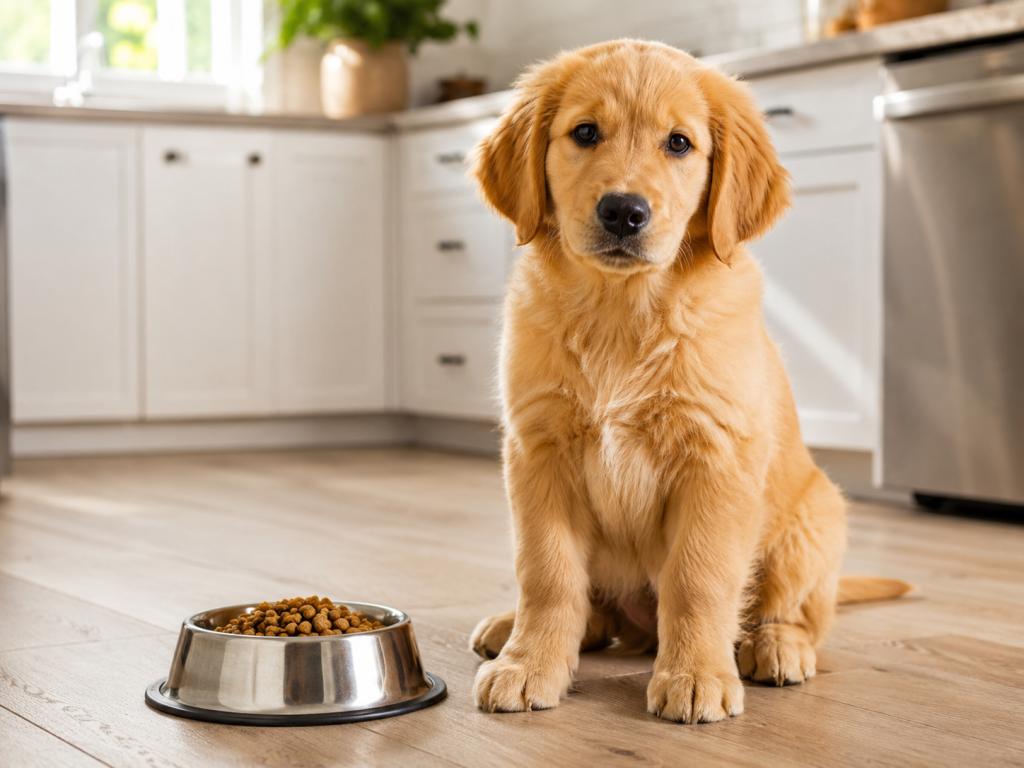
How often should you feed a puppy? Most young puppies need several measured meals each day because they are growing quickly and have relatively small stomachs. A common schedule is four meals daily from about 6 to 12 weeks, three meals from 3 to 6 months, and two meals from 6 to 12 months. Individual needs can still vary by breed, size, health, and development.
Feeding frequency matters because puppies need enough energy and nutrients to support growth without receiving too much food at once. Regular meals also make it easier to monitor appetite, control portions, and build a predictable routine for potty training.
Puppy Feeding Schedule by Age
A puppy’s feeding schedule should gradually change as they grow. Merck Veterinary Manual provides a general schedule of four daily meals from 6 to 12 weeks, three meals from 3 to 6 months, and two meals from 6 to 12 months.
That schedule works as a useful starting point, but it should not be treated as a strict rule for every puppy. Breed size, calorie requirements, body condition, health, and the specific food being fed can all affect the ideal routine.
A simple general guide is:
- 6–12 weeks: about four meals per day
- 3–6 months: about three meals per day
- 6–12 months: about two meals per day
- After 12 months: many dogs transition to one or two adult meals, depending on individual needs
Large and giant breeds may continue growing beyond their first birthday. Therefore, their transition from puppy food to adult food may happen later than it does for smaller breeds.
Why Do Young Puppies Need More Frequent Meals?
Young puppies are growing rapidly and have different energy needs from adult dogs. Their bodies are developing muscle, bones, organs, and other tissues while they are also spending energy on play, exploration, and learning.
At the same time, a young puppy cannot comfortably eat a huge portion in one sitting. Dividing the daily food into several smaller meals allows the puppy to receive the necessary calories without overloading the stomach.
Merck Veterinary Manual recommends feeding puppies several times each day when they are young, then reducing meal frequency as they mature.
Regular feeding also provides another advantage: you can recognize appetite changes more easily. If your puppy normally eats enthusiastically at predictable times and suddenly refuses a meal, you are more likely to notice quickly.
How Often Should You Feed an 8-Week-Old Puppy?
An 8-week-old puppy will usually benefit from approximately four meals spread throughout the day. At this age, puppies are still very young and are adjusting to eating regular solid meals away from their mother.
Try to distribute the total daily food fairly evenly rather than making one meal much larger than the others. Morning, midday, late afternoon, and evening meals can create a practical routine.
Feeding at consistent times can also support potty training. Puppies often need to eliminate shortly after eating, so predictable meal times make bathroom needs easier to anticipate.
Avoid leaving a large bowl of food available all day unless your veterinarian has specifically recommended free feeding. Measured meals make it much easier to know how much your puppy actually consumes.
How Often Should You Feed a 3-Month-Old Puppy?
Around three months of age, many puppies can begin eating three meals each day. Merck’s general puppy feeding schedule recommends three meals daily from approximately 3 to 6 months old.
Breakfast, lunch, and dinner can work well for many households. The exact times matter less than maintaining reasonable consistency.
Do not reduce meal frequency by simply removing one meal without redistributing the puppy’s daily food appropriately. The puppy still needs enough total nutrition for healthy growth.
Watch your puppy’s body condition as the schedule changes. A veterinarian can help you adjust portions if your puppy is gaining too much weight, growing poorly, or seems unusually thin.
How Often Should You Feed a 6-Month-Old Puppy?
By around six months, many puppies can transition to two meals each day. Merck recommends twice-daily feeding as a general guideline for puppies between 6 and 12 months.
Breakfast and dinner are convenient for many owners and can continue into adulthood. However, some puppies may continue with three meals for longer depending on size, health, routine, or veterinary advice.
Meal frequency and food type are separate decisions. A six-month-old puppy that begins eating twice per day usually still needs puppy food rather than automatically switching to an adult diet.
Growth continues well beyond six months in many breeds, especially larger dogs. Keep using a complete and balanced growth diet until the appropriate transition point for your individual puppy.
How Much Food Should a Puppy Eat at Each Meal?
Meal frequency tells you how often to feed, but it does not tell you how much food your puppy needs. The daily amount should depend on the calorie density of the food, your puppy’s age, expected adult size, body condition, growth rate, and activity.
Start with the feeding directions for the specific puppy food as a practical guide, then adjust according to your puppy’s development. VCA notes that some puppies need slightly more or less than the amount shown on food packaging, which is why monitoring body condition is important.
Once you know the approximate daily amount, divide it between the day’s meals. For example, a puppy eating three times daily should receive the total daily allowance divided into roughly three portions.
Do not repeatedly add extra food because your puppy appears hungry. Many puppies are extremely food-motivated and may happily continue eating beyond their actual calorie needs.
Should Puppies Have Food Available All Day?
Free feeding means leaving food available so the puppy can eat whenever they choose. While this may seem convenient, measured meals offer several practical advantages for most puppies.
Portion-controlled feeding allows you to track exactly how much food your puppy eats. VCA recommends measured feeding because portions can be adjusted as the puppy grows and because it helps reduce the risk of excessive weight gain.
Scheduled meals also help with house training. If eating occurs at predictable times, bowel movements often become easier to anticipate.
In addition, appetite can provide useful information about health. It is easier to notice that your puppy has stopped eating when meals normally occur at specific times.
What Type of Food Should Puppies Eat?
Growing puppies should eat a complete and balanced diet designed for growth. Puppies have different nutrient requirements from adult dogs, so simply feeding smaller portions of adult maintenance food may not provide appropriate nutrition.
Merck Veterinary Manual explains that dogs require different nutrient concentrations depending on their life stage.
Check the nutritional adequacy statement on the food and make sure it is appropriate for growth. Large and giant breed puppies require particular attention because their diets need to support controlled skeletal development.
Merck specifically recommends complete and balanced growth diets formulated appropriately for large-size dogs when feeding large and giant breed puppies.
If you are unsure whether your puppy’s food is appropriate, bring the package or a photograph of the label to your next veterinary visit.
Should Small-Breed Puppies Eat More Often?
Very small puppies may sometimes benefit from more frequent meals, particularly when they are young. Their small body size means they have less capacity to eat large portions at once.
Some toy-breed puppies can also be more vulnerable to problems associated with inadequate food intake. For that reason, your veterinarian may recommend a schedule tailored specifically to your puppy rather than following a generic chart.
Do not simply increase the total daily amount because you increase feeding frequency. More meals usually means dividing the same appropriate daily quantity into smaller portions.
If a very small puppy becomes weak, unusually sleepy, shaky, disoriented, or refuses food, seek veterinary advice promptly.
What About Large-Breed Puppies?
Large and giant breeds require careful nutrition because rapid growth can place additional demands on their developing skeleton.
The goal should not be to make a large-breed puppy grow as quickly as possible. Instead, controlled growth and appropriate body condition are more important.
Use a diet specifically appropriate for large-breed growth when recommended. Merck notes that large- and giant-breed puppies should receive complete and balanced growth diets whose nutritional adequacy statement confirms suitability for large-size dogs.
Do not add calcium or other mineral supplements unless your veterinarian specifically recommends them. Adding nutrients to an already balanced diet can disturb the intended nutritional balance.
How Do Treats Affect Your Puppy’s Feeding Schedule?
Training usually means puppies receive extra food throughout the day. Treats may appear tiny, but dozens of rewards can add a meaningful number of calories.
You can reduce this problem by using very small training treats or reserving part of the puppy’s measured daily kibble for training sessions.
Remember to consider edible chews, food-filled toys, table scraps, and treats from other household members as part of the overall feeding plan.
A puppy’s main nutrition should come from an appropriate complete and balanced growth diet rather than from snacks.
Should You Feed a Puppy Before or After Exercise?
There is no need to create an overly complicated meal schedule around ordinary puppy play. However, consistent meal times can help create a stable daily routine.
Avoid encouraging intense activity immediately around large meals. Puppies should have opportunities for normal play and exploration, but feeding and exercise routines may need individual adjustment depending on breed and health.
If your puppy has a medical condition or your veterinarian has discussed specific concerns about meal timing, follow those recommendations.
For most healthy puppies, the bigger priority is keeping portions controlled and feeding at predictable times.
When Should You Reduce the Number of Meals?
Do not change meal frequency simply because the calendar reaches a particular date. Age guidelines are useful, but individual development matters too.
A common progression is moving from four meals to three at around three months, then from three meals to two at around six months. Merck’s published puppy feeding schedule follows this general pattern.
Make the change gradually if your puppy is accustomed to a particular routine. Redistribute the same appropriate daily food allowance rather than accidentally reducing total nutrition.
If your puppy struggles with the new schedule, ask your veterinarian whether staying with an additional meal for longer would be appropriate.
When Should Puppies Switch to Adult Food?
Meal frequency and the switch to adult food do not necessarily happen at the same time. A puppy may eat twice daily for months while continuing to receive a growth diet.
Smaller breeds often mature earlier than large and giant breeds. AAHA notes that large dogs can continue growing well beyond the point at which smaller dogs reach adulthood, so growth diets may need to continue longer.
Ask your veterinarian when your individual puppy should transition. Expected adult size, current growth, body condition, breed, and health can all influence the recommendation.
When you do change food, avoid an abrupt switch unless there is a medical reason. Gradually introducing the new diet can reduce the chance of digestive upset.
What If Your Puppy Does Not Finish a Meal?
A puppy occasionally leaving some food behind is not automatically an emergency. Appetite can vary slightly from one meal to another.
However, young puppies deserve closer attention than healthy adult dogs when they suddenly stop eating. A significant appetite change can accompany digestive problems, infection, pain, parasites, or other medical conditions.
Look at your puppy’s overall behavior. A puppy who eats slightly less but remains energetic and otherwise normal is different from one who refuses food and also has vomiting, diarrhea, weakness, or unusual sleepiness.
Contact your veterinarian when appetite loss persists or appears with other signs of illness.
What If Your Puppy Always Seems Hungry?
Many puppies behave as though every meal should be larger. Strong interest in food does not necessarily mean the puppy needs additional calories.
Check whether you are feeding an appropriate amount for the food being used and monitor your puppy’s growth and body condition. AAHA emphasizes that puppy calorie needs are higher during growth, but food still needs to be adjusted to the individual rather than given without limits.
Persistent extreme hunger alongside poor growth, weight loss, diarrhea, or other symptoms deserves veterinary attention.
Parasites and other health problems can sometimes influence appetite and growth, so simply increasing portions may not address the real cause.
How Often Should You Feed a Puppy at Night?
Once a healthy weaned puppy is eating regular solid meals, normal daily meals usually do not need to continue throughout the night.
Young puppies may still wake for bathroom breaks, but that is different from needing a full meal every few hours.
An evening meal can be part of the normal daily schedule. Keep meal times relatively consistent so that bathroom needs and bedtime routines become easier to predict.
Very young orphaned puppies are a different situation. They require specialized milk-replacement feeding schedules and veterinary guidance, so standard feeding schedules for weaned household puppies do not apply.
Building a Healthy Puppy Feeding Routine
Knowing how often you should feed a puppy becomes much easier when you follow their stage of development. Young puppies generally need more frequent meals, while older puppies can gradually move toward the twice-daily routine commonly used in adult dogs.
A practical starting schedule is four meals between 6 and 12 weeks, three meals from approximately 3 to 6 months, and two meals from around 6 to 12 months.
However, feeding frequency is only one part of good puppy nutrition. Choose a complete and balanced growth diet, measure portions, monitor body condition, limit excessive treats, and adjust the plan as your puppy grows.
Most importantly, pay attention to the puppy in front of you rather than following a chart blindly. Breed size, expected adult weight, health, activity, and growth rate can all influence nutritional needs.
Your veterinarian can help you adjust both meal frequency and portion size during routine puppy visits. With a consistent schedule and appropriate nutrition, you can support steady growth while establishing feeding habits that will carry into adulthood.