
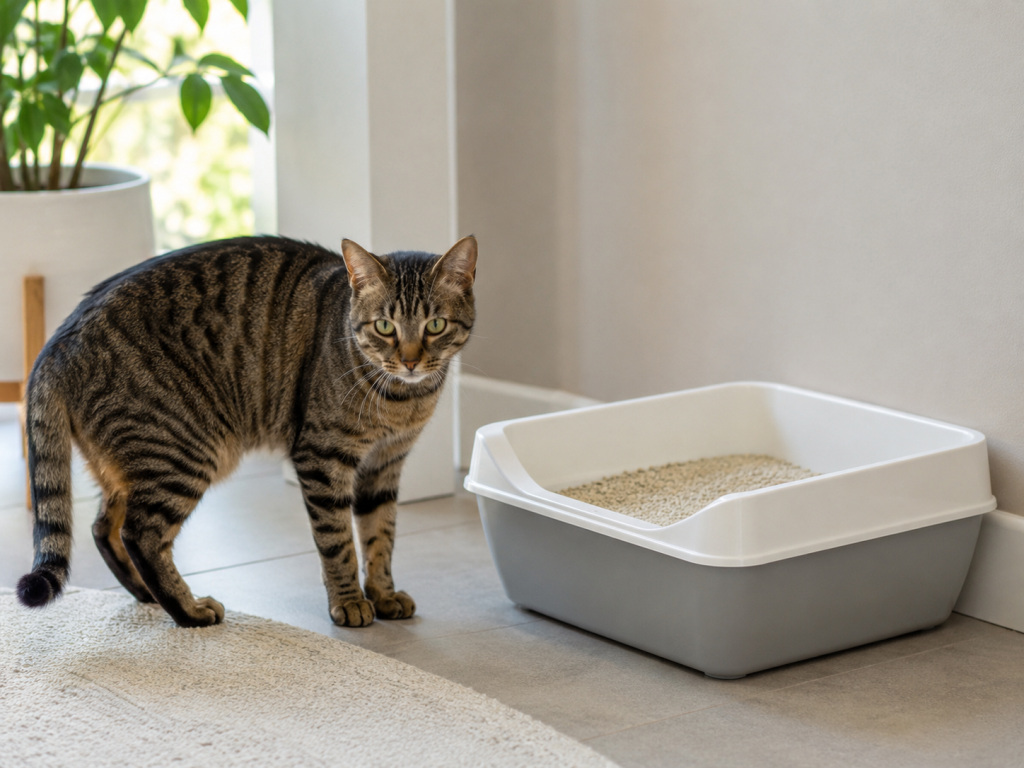
Why is my cat suddenly avoiding the litter box? A sudden change can happen because of urinary or digestive problems, pain, stress, conflict with another pet, a dirty box, disliked litter, or difficulty reaching the tray. When a previously reliable cat stops using the litter box, medical causes should be considered before assuming the behavior is deliberate.
Cats can develop negative associations with their litter box surprisingly quickly. For example, a painful episode of urination inside the box may cause a cat to connect that location with discomfort. Even after the immediate problem changes, the cat may start searching for another place to eliminate.
For this reason, sudden litter box avoidance deserves attention rather than punishment. Look at your cat’s health and the litter box environment together, because physical and behavioral factors can sometimes occur at the same time.
Start by Ruling Out a Medical Problem
When a cat suddenly urinates or defecates outside the litter box, veterinary evaluation is an important first step. Merck Veterinary Manual recommends excluding medical problems because conditions that change urine volume, frequency, control, bowel movements, or the ability to reach the box can all contribute to house-soiling.
Urinary discomfort is particularly important. Cats with lower urinary tract problems may urinate more frequently, strain, cry while urinating, produce blood in the urine, or begin urinating outside their normal box.
Digestive problems can also change litter box habits. Diarrhea can create urgency, while constipation or painful defecation may make a cat reluctant to use the box normally. Older cats can also develop mobility problems that make climbing into a high-sided tray difficult.
A sudden change should therefore never be dismissed as stubbornness. Your cat may be communicating discomfort in the only way available to them.
Urinary Problems Can Cause Litter Box Avoidance
Urinary tract problems are among the most important medical possibilities when a cat suddenly stops using the litter box. Feline lower urinary tract disease can cause painful urination, increased frequency, blood in the urine, and elimination outside the box.
A cat experiencing pain inside the litter box may begin associating the box with that unpleasant sensation. Cornell explains that urinary inflammation can create pain and urgency, leading cats to eliminate elsewhere and sometimes develop an aversion to the litter box itself.
Watch carefully for repeated trips to the box, straining, vocalization, excessive licking around the genital area, or unusually small amounts of urine. These symptoms should not be treated as a behavioral training issue.
Urinary problems can become especially dangerous if your cat cannot pass urine at all.
Straining With Little or No Urine Is an Emergency
A cat repeatedly entering the litter box and straining without producing normal urine needs urgent veterinary attention. A complete urinary obstruction prevents urine from leaving the body and can become life-threatening without immediate treatment. Male cats are at particularly high risk because of their narrower urethra.
Do not assume your cat is constipated simply because they appear to be pushing in the litter box. Urinary straining can look similar, especially when only tiny amounts of urine are produced.
Merck specifically warns that straining in the litter box can indicate a life-threatening emergency, particularly in male cats.
If your cat repeatedly strains, cries, becomes weak, vomits, or cannot produce urine, seek emergency veterinary care immediately.
Your Cat May Dislike the Litter
Sometimes the explanation is environmental rather than medical. Cats can have strong preferences about litter texture and smell, and suddenly switching products can make a familiar box feel completely different.
Many cats prefer fine-textured, unscented litter. Strong perfumes that smell fresh to humans can make a box less appealing to a cat. Cornell recommends fine, unscented litter as a useful general starting point when addressing litter box problems.
Think about whether anything changed shortly before the problem began. Perhaps you switched from clumping litter to pellets, bought a strongly scented version, changed the depth, or introduced a liner.
If possible, return to the previous setup. When you genuinely need to change litter, introducing the new substrate gradually may be easier than replacing everything overnight.
The Litter Box May Be Too Dirty
Cats generally prefer clean toileting areas. A litter box containing too much urine or feces may become undesirable enough that the cat chooses another location.
Cornell specifically notes that cats may avoid litter box areas that are not clean. Regular scooping also gives you a valuable opportunity to monitor changes in urine and stool.
Clean the box frequently rather than trying to hide odors with perfume. Strongly scented products do not replace waste removal and may introduce another smell your cat dislikes.
If the box suddenly becomes much wetter than usual, pay attention rather than simply scooping more often. Increased urine production can accompany medical conditions such as chronic kidney disease.
The Box Could Be Too Small or Difficult to Enter
Your cat needs enough room to enter, turn around, dig, eliminate, and leave without feeling cramped. A small commercial box may become uncomfortable as a kitten grows into an adult cat.
Entry height matters as well. A young healthy cat may climb over high sides without hesitation, while a senior cat with arthritis may eventually find the same box painful to enter.
Cornell recommends low-sided boxes and easier access for older cats experiencing mobility limitations. Some senior cats may even enter a box to urinate but struggle with the positioning required to defecate.
If your cat hesitates at the entrance, stands partly outside, or eliminates next to the box, offer a larger tray with easier access while also considering whether pain may be involved.
Location Can Suddenly Become a Problem
A litter box that worked for years can become undesirable if something around it changes.
Perhaps a new washing machine creates sudden loud noises. Maybe construction has started outside the window, or a new dog regularly walks past the box. A previously quiet hallway can also become busy after household routines change.
Cats need to feel that they can enter and leave safely. Feline veterinary guidance recommends placing litter boxes in different accessible locations and avoiding setups where another animal can block the route.
Consider the entire path to the box, not just the tray itself. If your cat needs to pass another cat, climb difficult stairs, or enter a noisy room, the location may no longer feel comfortable.
Another Cat May Be Blocking Access
Conflict between cats is not always obvious. You may never see a dramatic fight, yet one cat can still make another reluctant to use a particular resource.
Blocking can involve staring, sitting in a doorway, chasing after the other cat leaves the box, or repeatedly occupying the pathway. Veterinary feline behavior guidance specifically recommends separating litter box locations to reduce the risk that one animal controls access.
This is one reason multiple cats should have multiple toileting options. Cornell recommends providing one box per cat plus one additional box as a general guideline.
Those boxes should not all sit side by side. Distributing them around the home gives a cautious cat another option if one area becomes stressful.
Stress Can Change Litter Box Habits
Cats often depend on predictable environments, so changes in routine can affect behavior. Merck notes that inconsistent routines can contribute to stress-related behaviors, including house-soiling.
Possible triggers include moving home, introducing another cat or dog, welcoming a baby, changing work schedules, having frequent visitors, or rearranging important parts of the environment.
Stress should not be assumed until medical causes have been considered. However, once health problems have been addressed, improving environmental security can become an important part of resolving the problem.
Keep essential resources predictable and easy to access. Provide hiding areas, resting places, scratching surfaces, play opportunities, food, water, and litter boxes without forcing cats to compete.
Is Your Cat Avoiding the Box or Spraying?
Urinating outside the litter box and urine marking are different behaviors, although both deserve attention.
A cat emptying a larger amount of urine while squatting on a bed, floor, or carpet may be choosing another toileting location. Spraying more often involves depositing a smaller amount of urine onto a vertical surface as a form of communication.
Cornell recommends distinguishing between house-soiling and spraying because different factors may contribute, while still ruling out underlying medical problems in either situation.
Look at where the urine appears and how your cat positions their body. However, avoid diagnosing the cause yourself solely from posture. A veterinary examination remains useful when the behavior starts suddenly.
Why Is My Cat Pooping Outside the Box?
When feces rather than urine appear outside the box, consider both environmental and medical explanations.
Constipation, diarrhea, gastrointestinal discomfort, or difficulty climbing into the box can affect where a cat defecates. Merck notes that medical conditions affecting normal elimination or access to the box can cause house-soiling.
The location can provide clues. A cat consistently defecating immediately beside the box may still want to use that area but find something about the tray uncomfortable.
Senior cats deserve particular attention because arthritis may make the posture required for defecation difficult inside a high-sided or cramped box.
Persistent constipation, diarrhea, blood in the stool, vomiting, appetite loss, or obvious discomfort should be discussed with your veterinarian.
Do Not Punish Your Cat
Punishment does not solve pain, urinary disease, constipation, arthritis, fear, or litter aversion. Yelling or physically placing a frightened cat into the box can increase stress and make the litter area feel even less safe.
Instead, treat every accident as information. Ask what changed medically or environmentally and make it easier for your cat to succeed.
Clean accident areas thoroughly with a pet-safe product so lingering odors do not encourage repeated use of the same location. Avoid relying on strong fragrances because cats may dislike them.
Most importantly, do not rub your cat’s nose in waste or try to make them understand that they have behaved badly. Veterinary house-soiling guidelines focus on identifying the cause, optimizing litter boxes, and meeting feline environmental needs rather than punishment.
How to Make the Litter Box More Appealing Again
Once urgent medical issues have been ruled out, review the complete litter box setup.
Offer a large, easily accessible box in a quiet area. Fine-textured, unscented litter works well as a starting point for many cats, and uncovered boxes are preferred by many individuals.
Scoop frequently and provide enough boxes for the household. If several cats live together, distribute boxes in genuinely separate locations rather than creating one litter-box station.
Avoid making several changes simultaneously. If you replace the box, litter, location, and cleaning product on the same day, you will not know which change helped or made matters worse.
Give your cat choices whenever possible. Offering two different box styles or litter types temporarily can help reveal a preference.
When Should You Call a Veterinarian?
Contact your veterinarian when a previously reliable cat suddenly begins avoiding the litter box, particularly if the change persists or appears with physical symptoms. Both Merck and Cornell recommend investigating medical causes when house-soiling develops.
Pay particular attention to:
- Frequent trips to the litter box
- Straining or crying
- Blood in urine
- Very small urine amounts
- Increased thirst or urination
- Vomiting
- Diarrhea or constipation
- Loss of appetite
- Difficulty jumping or walking
- Sudden hiding or lethargy
- Excessive genital licking
A cat repeatedly straining while producing little or no urine requires immediate care. Complete urinary obstruction is an emergency and can become fatal without prompt treatment.
Helping Your Cat Return to Normal Litter Box Habits
So, why is your cat suddenly avoiding the litter box? The answer can range from a simple dislike of new litter to a painful urinary problem. That is why sudden avoidance deserves investigation rather than punishment.
Start with your cat’s health, particularly when urination habits have changed. Urinary inflammation, pain, digestive problems, increased urine production, and mobility limitations can all interfere with normal litter box use.
Then examine the environment. Keep boxes clean, large, accessible, and positioned in quiet areas where another animal cannot easily block access. Offer enough boxes for all cats and avoid strongly scented litter if your cat appears sensitive to it.
Most cats are not abandoning the litter box to punish their owners. Something about using it has become uncomfortable, difficult, frightening, or less appealing.
Finding that reason is the key to solving the problem. When you combine veterinary evaluation with a thoughtful litter box setup, you give your cat the best chance of returning to comfortable and predictable bathroom habits.