
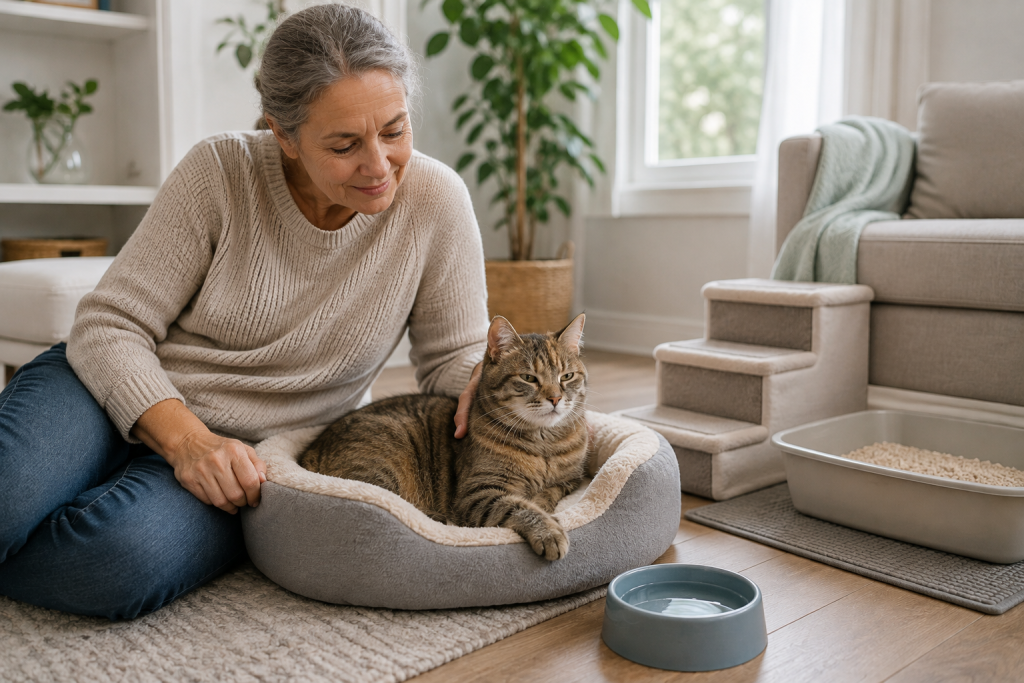
Senior cat wellness focuses on preserving comfort, mobility, healthy body weight, muscle condition, mental wellbeing, and quality of life as a cat ages. Current feline guidelines generally consider cats over 10 years old to be seniors, although every cat ages differently.
Aging itself is not a disease. However, older cats have an increased risk of chronic kidney disease, hyperthyroidism, arthritis, dental problems, high blood pressure, muscle loss, and other health changes. Cornell specifically advises owners not to assume that behavioral or physical changes are simply an unavoidable result of old age.
Good senior care combines more frequent veterinary examinations with careful observation at home. Small changes in weight, appetite, thirst, litter box habits, jumping, grooming, sleep, or behavior can sometimes provide the earliest warning that a senior cat needs additional care.
When Is a Cat Considered Senior?
Feline life-stage guidelines generally classify cats older than 10 years as senior.
However, chronological age is only part of the picture.
Genetics, previous health problems, nutrition, body condition, lifestyle, and individual biology can all influence how quickly a cat shows age-related changes.
One 11-year-old cat may remain extremely active, while another of the same age may already need help with mobility or chronic disease management.
The goal is not to treat a cat as fragile simply because of age. Instead, senior status should encourage closer monitoring and preventive care.
Senior Cats Need More Frequent Veterinary Checkups
Veterinary examinations become increasingly important as cats age.
FelineVMA senior-care guidance recommends veterinary examinations at least every six months for senior cats between 10 and 15 years old. Healthy cats over 15 may benefit from examinations approximately every four months, while cats with chronic conditions may need even more frequent monitoring.
Merck similarly recommends veterinary visits twice yearly or more often for many senior cats.
These appointments allow veterinarians to compare weight, muscle condition, dental health, mobility, blood pressure, heart and lung function, and other changes over time.
Preventive Testing Becomes More Important
A senior cat can appear healthy while early disease is developing.
Veterinarians may recommend bloodwork, urine testing, blood pressure measurement, thyroid testing, or other diagnostic screening depending on age and health history.
FelineVMA recommends blood-pressure screening every six months during senior-cat checkups.
The exact tests should be individualized rather than performed according to one rigid schedule for every cat.
Preventive testing does not guarantee that disease will be found early, but it can reveal changes that would otherwise remain hidden until symptoms become more obvious.
Monitor Body Weight Carefully
Weight changes are especially important in senior cats.
Some older cats become overweight as activity decreases, while others begin losing body weight because of chronic disease, reduced nutrient absorption, dental discomfort, or other problems.
A thick coat can hide significant weight loss.
Weigh your cat periodically when possible and compare trends rather than relying only on visual appearance.
Unexplained weight loss should never automatically be dismissed as normal aging.
Muscle Loss Matters Too
Senior cats can lose muscle even when the number on the scale does not change dramatically.
You may notice that the spine, hips, or shoulders feel more prominent or that the hind legs appear thinner.
Muscle condition and body-fat condition are not the same thing. An overweight cat can still lose important lean muscle.
Reduced muscle can affect strength, jumping ability, balance, and overall resilience.
Discuss visible or progressive muscle loss with your veterinarian.
Feed According to the Individual Cat
There is no single senior-cat food that is ideal for every older cat.
AAHA senior-care guidance notes that healthy senior cats may sometimes benefit from more calorie-dense, highly digestible, palatable diets with adequate or higher-quality protein to help maintain body weight and lean muscle.
Merck also notes that older cats may digest fat less efficiently than younger adults, which can influence nutritional requirements in some geriatric cats.
A senior cat with kidney disease, obesity, hyperthyroidism, diabetes, or another medical condition may need a very different diet.
Do not choose food based only on the word “senior” on the package.
Do Not Restrict Protein Automatically
Older cats often need support for maintaining muscle.
Reducing dietary protein simply because a cat has reached a certain age is not appropriate for every healthy senior.
Medical conditions can sometimes require specific nutrient adjustments, but these decisions should be based on diagnosis and veterinary guidance.
The nutritional goal is to preserve healthy body weight and muscle while managing any existing disease.
Monitor Appetite Closely
Changes in appetite can provide valuable health information.
A senior cat may eat less because of dental disease, nausea, kidney disease, digestive problems, pain, or other illness.
Increased appetite can also be important.
Hyperthyroidism commonly affects older cats, and Cornell lists weight loss combined with increased appetite, thirst, and urination among its most common signs.
Any persistent change from your cat’s normal appetite deserves attention.
Weight Loss With a Strong Appetite Is Important
A cat that is eating enthusiastically but continuing to lose weight should be evaluated.
Hyperthyroidism is one possible cause and is a common endocrine disease of mature and senior cats.
Other illnesses can also cause weight loss.
Do not simply increase food repeatedly while ignoring the underlying trend.
Track the cat’s weight and tell your veterinarian whether appetite has increased, decreased, or remained unchanged.
Watch for Increased Thirst and Urination
Changes in water consumption become particularly important in older cats.
You may notice that the water bowl empties faster or that litter clumps become larger and more frequent.
Kidney disease, diabetes, and hyperthyroidism can all contribute to increased drinking and urination.
Cornell notes that kidney and thyroid disease as well as diabetes can contribute to changes in litter box behavior because affected cats may drink and urinate more frequently.
Never restrict water because your senior cat appears to be drinking too much.
Kidney Health Is Especially Important
Kidney disease is common in older cats.
Cornell notes that feline kidneys undergo age-related changes and that kidney failure is a common disease in senior cats.
Possible signs can include increased thirst, increased urination, weight loss, reduced appetite, vomiting, dehydration, or reduced energy.
Early kidney disease may produce only subtle changes.
Routine veterinary screening becomes useful because some abnormalities can be identified before owners notice dramatic symptoms.
Hyperthyroidism in Senior Cats
Hyperthyroidism is another important condition in older cats.
The thyroid gland produces excessive thyroid hormone, increasing metabolic activity.
Cornell lists common signs including weight loss, increased appetite, increased thirst and urination, vomiting, diarrhea, hyperactivity, and an unkempt or greasy coat.
Not every cat develops every symptom.
Veterinary testing is necessary to determine whether thyroid disease is responsible.
High Blood Pressure
Hypertension can occur in senior cats, particularly alongside conditions such as kidney disease or hyperthyroidism.
High blood pressure may not produce obvious symptoms until complications occur.
This is why routine blood-pressure measurement becomes useful during senior checkups. FelineVMA recommends screening senior cats every six months.
Sudden vision changes can sometimes be associated with serious blood-pressure problems and deserve prompt veterinary attention.
Mobility Changes Are Easy to Miss
Cats often hide joint discomfort differently from dogs.
Instead of obvious limping, they may simply stop jumping onto favorite furniture, hesitate before using stairs, sleep in lower locations, or climb objects in several smaller steps.
Cornell notes that arthritis is common in older cats and may make it harder for them to reach litter boxes, food, or water when jumping or climbing is required.
Do not assume reduced jumping is simply laziness.
Arthritis Is Common in Older Cats
Degenerative joint disease becomes increasingly common with age.
Merck reports that osteoarthritis may affect a large proportion of older cats.
Cats often adapt quietly around pain, which means the condition may be more advanced than owners realize before obvious signs appear.
Watch for difficulty grooming the back, reduced climbing, reluctance to play, stiffness, changes in litter box use, or irritability when touched.
Veterinary assessment can help determine whether pain management or environmental changes are appropriate.
Make Litter Boxes Easier to Reach
A senior cat should not need to climb stairs or jump over a high wall every time they need to use the litter box.
Provide at least one box with a low entrance if mobility becomes limited.
Place boxes near areas where the cat spends most of the day.
AAHA senior-care recommendations highlight environmental changes such as lower-sided litter boxes and improved accessibility as ways to support older pets.
Keep boxes clean so the cat does not need to search for an alternative location.
Litter Box Changes Can Be Medical
A previously reliable cat that begins having accidents may not have forgotten their training.
Arthritis can make access painful, while kidney disease, thyroid disease, diabetes, urinary disease, and digestive problems can change elimination patterns.
Observe whether your cat is urinating more, producing larger clumps, straining, having diarrhea, or struggling to enter the box.
Sudden house-soiling in a senior cat deserves investigation before being treated as a behavioral problem.
Provide Non-Slip Surfaces
Older cats may become less stable on smooth floors.
Rugs, runners, and other secure non-slip surfaces can improve traction in areas the cat uses frequently.
AAHA senior-care guidance includes rugs or similar traction surfaces among practical environmental modifications for aging pets.
Focus on routes between sleeping areas, food, water, and litter boxes.
Make sure rugs cannot slide and create another hazard.
Use Steps or Ramps for Favorite Places
Senior cats may still want access to beds, sofas, windows, or favorite observation areas.
Small stable steps or ramps can allow them to reach these areas without one large jump.
Position equipment carefully and use surfaces with good traction.
If your cat suddenly stops using a favorite location, investigate mobility rather than assuming their preferences have simply changed.
Keep Essential Resources Accessible
Food, water, sleeping areas, scratching surfaces, and litter boxes should be easy to reach.
A cat with arthritis should not need to travel up two flights of stairs for every resource.
Keep important items on the same floor when possible.
This becomes especially useful in homes where the cat has spent years relying on high furniture or distant litter areas.
Environmental adjustments can preserve independence while reducing discomfort.
Provide Comfortable Resting Areas
Senior cats often appreciate warm, supportive, quiet sleeping locations.
Beds should be easy to enter and placed away from cold drafts.
Some older cats enjoy heated pet beds designed for safe use, but they must be able to move away from the heat freely.
A cat that suddenly sleeps much more than usual or appears reluctant to leave the bed should still be monitored for illness or pain.
Normal senior rest should not be confused with persistent lethargy.
Dental Health Remains Important
Dental disease becomes increasingly important as cats age.
Painful teeth or gums may cause reduced appetite, dropping food, chewing differently, drooling, bad breath, or reluctance to eat harder foods.
Cats can continue eating despite significant oral discomfort.
Routine veterinary examinations should include evaluation of the mouth.
Do not assume that dental treatment is automatically inappropriate simply because a cat is old. Decisions should consider the individual cat’s health and the potential benefits and risks.
Grooming Changes Can Reveal Problems
Healthy cats normally groom themselves frequently.
A senior cat may groom less effectively because of arthritis, obesity, dental discomfort, weakness, or illness.
The coat may become greasy, tangled, matted, or generally less well maintained.
Hyperthyroidism can also be associated with an unkempt or greasy coat.
Changes in coat quality deserve attention when they appear alongside weight loss, appetite changes, or altered behavior.
Help With Grooming When Needed
Regular gentle brushing can help older cats that no longer groom every part of the body effectively.
Focus especially on areas that are difficult to reach, such as the back and hindquarters.
Keep sessions short if standing or handling becomes uncomfortable.
While grooming, feel for new lumps, wounds, mats, painful areas, or changes in muscle condition.
A cat that suddenly resists being touched in one location may be experiencing discomfort.
Check the Nails
Senior cats may scratch less vigorously and can develop overgrown claws.
Inspect the nails periodically to make sure they are not becoming excessively long or curving toward the paw pads.
Some older cats need more frequent nail trimming than they did when younger.
Introduce handling gently and ask a veterinary professional or groomer for assistance when needed.
Vision Changes
Vision problems can affect confidence and navigation.
A senior cat may hesitate around stairs, bump into objects, become reluctant to jump, or appear more easily startled.
Cornell emphasizes regular examinations because several feline diseases can affect vision, and early diagnosis of some underlying conditions may reduce the risk of permanent damage.
Sudden blindness or dramatic changes in vision require prompt veterinary attention.
Avoid constantly rearranging furniture for a cat that already has significant visual impairment.
Hearing Changes
Older cats can also experience hearing decline.
A cat may stop responding to familiar sounds or become startled when touched because they did not hear someone approaching.
Approach sleeping cats gently and make your presence visible before touching them.
Do not automatically interpret failure to respond as stubbornness.
Sensory changes can also affect behavior and confidence.
Senior Cats Can Experience Cognitive Changes
Some older cats develop changes in memory, orientation, sleep patterns, or social behavior.
Possible signs include nighttime vocalization, confusion, staring into space, altered interactions, disrupted sleep, or changes in litter box habits.
These symptoms should not automatically be diagnosed as cognitive decline.
Pain, hyperthyroidism, kidney disease, high blood pressure, sensory loss, neurological disease, and other medical problems can sometimes produce similar behavioral changes.
Veterinary evaluation is important before assuming that a cat has dementia.
Nighttime Vocalization
Older cats sometimes begin meowing or crying more frequently at night.
Possible causes include disorientation, hearing or vision changes, pain, hunger, hyperthyroidism, anxiety, or other medical problems.
Track when the vocalization occurs and whether it happens with wandering, increased thirst, appetite changes, or litter box activity.
A dramatic new pattern deserves veterinary assessment.
Keep the Mind Active
Senior cats still benefit from mental stimulation.
Short interactive play sessions, scent exploration, easy food puzzles, window views, and gentle training can keep everyday life interesting.
Adapt activities to the cat’s physical ability.
A cat that no longer wants to leap several feet into the air may still enjoy batting at a toy along the floor.
Wellness means preserving enjoyable experiences rather than removing activity entirely.
Encourage Safe Physical Activity
Older cats need movement within comfortable limits.
Gentle daily activity can support muscle, joint mobility, weight control, and mental wellbeing.
Instead of one intense play session, several shorter sessions may be easier.
Never force an arthritic or weak cat to jump or run intensely.
If movement causes obvious discomfort, ask your veterinarian how activity should be modified.
Senior Cats Still Need Scratching Opportunities
Scratching remains a normal feline behavior throughout life.
However, a tall vertical scratching post may become harder to use when arthritis develops.
Offer horizontal or angled scratching surfaces as alternatives.
Place them near resting areas where the cat can access them easily.
Environmental resources should evolve as physical abilities change.
Appetite Should Be Easy to Monitor
Measured feeding becomes particularly useful in senior cats because it makes changes easier to detect.
If food is continuously available, you may not realize that the cat has been gradually eating less.
Observe not only how much is eaten but how the cat approaches the bowl.
A cat that appears hungry but repeatedly walks away may be experiencing dental pain, nausea, or another health problem.
Smaller, More Frequent Meals May Help Some Seniors
Some older cats may maintain intake more easily with smaller meals offered more frequently.
AAHA senior-care guidance notes that healthy senior cats may sometimes benefit from highly digestible, palatable diets provided in smaller, more frequent meals.
The total daily calories still matter.
More meals should usually divide the same nutritional plan rather than automatically adding extra food.
Encourage Hydration
Keep fresh water easily accessible.
Some cats may drink more when several bowls are available or when water is placed away from food and litter boxes.
Wet food can also contribute moisture when appropriate for the individual cat.
Clean, fresh water should remain available at all times. Merck identifies water as an essential nutrient and recommends constant access.
Never intentionally restrict water unless specifically directed by a veterinarian.
Senior Cats Need Stable Routines
Older cats may cope less comfortably with major environmental changes.
Keep feeding, litter box maintenance, social interaction, and resting areas reasonably predictable.
Merck notes that establishing a routine can help reduce anxiety in cats.
When changes are unavoidable, introduce them gradually whenever possible.
Preserve familiar beds, scents, and hiding areas during transitions.
Respect Changes in Social Preferences
Some senior cats become more affectionate.
Others seek additional quiet time because interaction or handling has become tiring or painful.
Respect those preferences while noticing major changes.
A cat that suddenly hides from familiar people or becomes aggressive when touched may need medical evaluation.
Behavioral changes should never be separated completely from physical health.
Keep the Home Warm and Comfortable
Older cats may seek warm areas more frequently.
Provide comfortable bedding away from cold floors or drafts.
Make sure resting places are easy to enter without a difficult jump.
If your cat chooses unusually warm locations constantly or appears unable to stay comfortable, mention the change during veterinary care because medical conditions can influence temperature preference and behavior.
Keep Parasite Prevention Current
Senior age does not automatically remove parasite risk.
Fleas, ticks, intestinal parasites, and other exposures depend on lifestyle, climate, travel, and contact with other animals.
Continue discussing appropriate prevention with your veterinarian.
Only use products specifically confirmed as safe for cats.
Vaccination Still Matters
Senior cats still require individualized vaccination assessment.
Previous vaccination history, health, lifestyle, outdoor exposure, travel, and local disease risk all influence the appropriate schedule.
Do not stop vaccination automatically because your cat is old.
Likewise, not every senior cat needs exactly the same protocol.
Your veterinarian can balance infectious-disease risk with the cat’s overall health.
Watch for Vomiting
Occasional vomiting can occur in cats, but repeated vomiting should not automatically be accepted as normal aging or hairballs.
Cornell notes that vomiting can be associated with gastrointestinal disease as well as metabolic conditions including kidney disease, diabetes, and hyperthyroidism.
Persistent vomiting, especially with appetite loss, weight loss, dehydration, or lethargy, deserves veterinary assessment.
Monitor Stool and Constipation
Older cats may become more prone to constipation for several reasons, including reduced activity, dehydration, pain, or other disease.
Watch for repeated straining, small hard stools, reduced frequency, or discomfort.
Do not assume straining in the litter box is definitely constipation because urinary difficulty can sometimes look similar.
If your cat cannot urinate normally, treat the situation as urgent.
Signs That Your Senior Cat Needs Veterinary Attention
Contact your veterinarian when you notice persistent or meaningful changes such as:
- Unexplained weight loss
- Muscle loss
- Increased or reduced appetite
- Increased thirst
- Larger or more frequent urine clumps
- Difficulty jumping or walking
- Reduced grooming
- Persistent vomiting
- Constipation or diarrhea
- Dental pain or severe bad breath
- Nighttime vocalization
- Confusion or disorientation
- Sudden hiding
- New aggression
- Vision changes
- New or changing lumps
Cornell specifically warns owners not to assume changes in an older cat’s behavior or physical condition are simply untreatable consequences of aging.
Know the Emergency Warning Signs
Some symptoms require immediate veterinary attention regardless of age.
Seek urgent care for severe breathing difficulty, collapse, repeated seizures, major trauma, uncontrolled bleeding, suspected poisoning, extreme weakness, or inability to urinate.
Sudden blindness also deserves prompt veterinary assessment.
Do not delay urgent treatment because a cat is old.
Senior cats can still benefit substantially from appropriate medical care.
Quality of Life Matters
The purpose of senior care is not simply to extend life at any cost.
Good wellness care aims to preserve comfort, dignity, mobility, appetite, social interaction, normal elimination, and enjoyable activities.
Ask whether your cat can eat comfortably, move around the home, access the litter box, groom adequately, rest peacefully, and continue engaging with things they enjoy.
Feline senior-care guidelines place quality of life, pain management, nutrition, disease management, and end-of-life planning among the central areas of senior care.
Quality of life should be considered continuously rather than only during a crisis.
Supporting Senior Cat Wellness Every Day
Good senior cat wellness combines more frequent preventive veterinary care with practical changes at home.
Cats over 10 years are generally considered senior, and current FelineVMA guidance recommends checkups at least every six months for cats between 10 and 15 years old. Healthy cats older than 15 may benefit from even more frequent examinations.
Monitor body weight and muscle condition carefully. Feed according to the individual cat’s nutritional needs rather than automatically choosing a restrictive diet because of age. Healthy senior cats may need highly digestible, palatable nutrition that helps maintain muscle and body weight.
Make the home easier to navigate with low-sided litter boxes, non-slip surfaces, accessible food and water, comfortable bedding, and steps or ramps where needed. Arthritis is common in older cats and may affect access to essential resources even without obvious limping.
Watch especially for weight loss, appetite changes, increased thirst or urination, reduced jumping, coat changes, vomiting, dental discomfort, nighttime vocalization, confusion, or new litter box problems. Kidney disease and hyperthyroidism are particularly important conditions in older cats and can initially produce relatively subtle changes.
Most importantly, do not dismiss meaningful changes as “just old age.” Aging changes what a cat needs, but pain, disease, poor mobility, and discomfort often deserve investigation and may be manageable.
Thoughtful preventive care can help senior cats remain comfortable, independent, active, and engaged throughout their later years.