
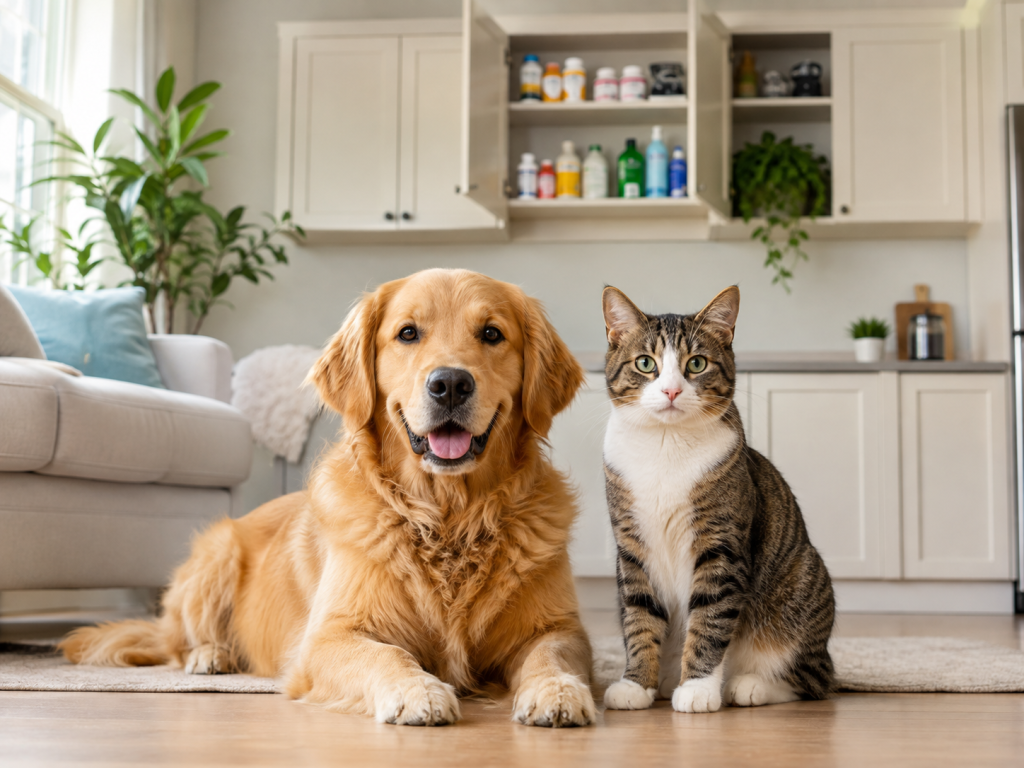
Many common household items are dangerous for dogs and cats, including human medications, chocolate, xylitol, grapes and raisins, onions and garlic, toxic plants, cleaning chemicals, antifreeze, pesticides, batteries, string, and small objects that can be swallowed. Some exposures cause mild digestive upset, while others can lead to organ failure, neurological problems, internal injuries, or death.
The ASPCA Animal Poison Control Center regularly receives cases involving medications, foods, plants, household products, and other substances found in ordinary homes. In its most recent published annual ranking, human over-the-counter medications, food products, prescription medications, chocolate, plants, and household toxicants were among the leading categories of pet poison exposures. (aspca.org)
The safest approach is prevention. Store dangerous products securely, check ingredients before sharing human food, choose pet-safe plants, and never assume that something harmless to people is safe for a dog or cat.
Human Medications Can Be Extremely Dangerous
One of the biggest household risks is medication intended for people.
Common pain relievers such as ibuprofen, naproxen, acetaminophen, and aspirin can cause serious poisoning in pets. Merck Veterinary Manual warns that human over-the-counter drugs are commonly involved in accidental exposures and should not be given to dogs or cats unless specifically directed by a veterinarian. (merckvetmanual.com)
Cats are especially sensitive to certain medications because they process some drugs differently from people and dogs.
Never give your pet medication based on a human dose. Even a single tablet can be dangerous depending on the drug, animal, and body weight.
Keep medicine bottles inside closed cabinets, and immediately pick up any pills dropped on the floor.
Chocolate Is Dangerous for Dogs and Cats
Chocolate contains methylxanthines, including theobromine and caffeine, that pets can metabolize poorly.
The ASPCA lists chocolate among common human foods that should not be fed to pets. (aspca.org)
Dogs are particularly likely to eat chocolate because they often consume food opportunistically. Dark chocolate, baking chocolate, and cocoa products generally create greater concern because they contain higher concentrations of theobromine than many milk chocolate products.
Signs can include vomiting, diarrhea, restlessness, abnormal heart rate, tremors, seizures, and other serious problems.
Do not wait for symptoms if your dog or cat eats a significant amount of chocolate. Contact a veterinarian or animal poison service with information about the type, amount, and approximate time of ingestion.
Xylitol Is Especially Dangerous for Dogs
Xylitol is a sugar substitute found in some sugar-free gum, candy, baked goods, toothpaste, mouthwash, and certain peanut butters.
The FDA warns that xylitol can cause a rapid release of insulin in dogs, producing dangerously low blood sugar. Signs can begin quickly and may include vomiting, weakness, difficulty walking, collapse, seizures, liver failure, and bleeding problems. (fda.gov)
Always check ingredient labels before sharing products such as peanut butter.
Do not assume something labeled “sugar-free” is safer for your dog. It may be considerably more dangerous.
If a dog consumes xylitol, treat the exposure as an emergency and contact a veterinarian immediately.
Grapes and Raisins Can Harm Dogs
Grapes and raisins should not be offered to dogs.
The FDA includes grapes and raisins among potentially dangerous foods for pets. (fda.gov)
In dogs, ingestion can cause serious kidney injury. The amount that causes toxicity is unpredictable, which means one dog may become sick after an amount another dog previously tolerated.
Raisins can appear in cereals, baked goods, trail mix, and other foods, so accidental exposure does not always involve eating them directly from a package.
If your dog eats grapes or raisins, contact a veterinarian rather than waiting to calculate whether the amount seems small enough to be safe.
Onions and Garlic Can Damage Red Blood Cells
Onions, garlic, chives, and related plants belong to the Allium family.
Merck states that raw, cooked, or concentrated forms of onion and garlic can cause oxidative damage to red blood cells and hemolytic anemia in both dogs and cats. (merckvetmanual.com)
Concentrated powders can be particularly easy to overlook because they appear in soups, sauces, seasoning mixes, baby foods, and prepared meals.
Signs of anemia may not appear immediately. Weakness, lethargy, pale gums, rapid breathing, or other symptoms can develop later.
Avoid sharing seasoned leftovers unless you know every ingredient is pet-safe.
Alcohol Is Unsafe for Pets
Alcoholic drinks and foods containing alcohol should be kept away from dogs and cats.
The FDA includes alcoholic drinks and alcohol-containing foods among potentially dangerous items for pets. (fda.gov)
Pets are much smaller than people, so an amount that seems insignificant can create a much greater exposure relative to body size.
Alcohol can affect the nervous system, breathing, blood sugar, and body temperature.
Clean spills promptly and do not leave unattended glasses where pets can reach them.
Coffee, Tea, and Caffeine Can Cause Poisoning
Coffee, tea, energy drinks, caffeine tablets, and some supplements contain stimulants that pets should not consume.
The FDA identifies caffeine-containing drinks as potentially dangerous to pets. (fda.gov)
Coffee grounds and tea bags can create significant exposure because they contain concentrated amounts of caffeine.
Signs may include restlessness, rapid heart rate, tremors, abnormal behavior, and seizures.
Keep used coffee grounds, pods, supplements, and drinks out of reach rather than focusing only on unopened products.
Cleaning Products Need Careful Storage
Bleach, detergents, disinfectants, drain cleaners, toilet products, and other household chemicals can injure pets when swallowed or when concentrated products contact the skin or eyes.
Merck notes that detergents, soaps, and shampoos commonly cause nausea, vomiting, and diarrhea after exposure, while more corrosive cleaners can cause more severe injuries. (merckvetmanual.com)
Store cleaning chemicals behind closed doors.
Keep pets away while you are cleaning and until treated surfaces are safe and dry according to the product directions.
Never intentionally mix cleaning products, and do not transfer chemicals into food or drink containers where they could later be mistaken for something harmless.
Antifreeze Can Be Deadly
Automotive antifreeze containing ethylene glycol is a serious poisoning hazard.
Merck explains that dogs and cats are among the animals most often affected and that relatively small quantities can be lethal. Ethylene glycol can cause severe kidney damage after ingestion. (merckvetmanual.com)
Exposure can occur from leaking vehicles, open containers, garage floors, or improperly discarded fluid.
Clean spills immediately and keep containers tightly closed.
Suspected antifreeze ingestion is an emergency. Treatment is highly time-sensitive, so do not wait for obvious symptoms before seeking veterinary care.
Batteries Can Cause Chemical Burns
Households often contain button batteries, rechargeable batteries, and standard alkaline batteries in remote controls, toys, watches, and electronics.
A pet may chew a battery rather than swallowing it whole. Damaged batteries can leak corrosive material capable of injuring the mouth, esophagus, or digestive system.
Swallowed batteries can also act as foreign objects.
Keep spare batteries and battery-powered devices where chewing animals cannot access them.
If your pet damages or swallows a battery, contact a veterinarian promptly.
String, Ribbon, and Thread Are Dangerous for Cats
Cats are naturally attracted to long moving objects, which makes string toys entertaining but also potentially hazardous.
If a cat swallows string, thread, yarn, ribbon, fishing line, or dental floss, the material can become trapped in the gastrointestinal tract. This type of linear foreign body can cause severe intestinal injury.
Needles attached to thread create an additional danger.
Always supervise play with string-like toys and put them away afterward.
If you see string protruding from your cat’s mouth or anus, do not pull it. Contact a veterinarian because the other end may be anchored internally.
Socks, Toys, and Small Objects Can Block the Intestines
Dogs are more likely than many cats to swallow objects that are not food.
Socks, underwear, pieces of toys, balls, corn cobs, children’s items, and food packaging can become gastrointestinal foreign bodies.
Cats may swallow hair ties, rubber bands, foam, small toy pieces, or similar objects.
An intestinal obstruction can cause vomiting, appetite loss, abdominal pain, lethargy, or difficulty passing stool.
Choose toys that are appropriate for your pet’s size and remove damaged toys before pieces can be swallowed.
Toxic Plants Can Be a Serious Risk
Many popular houseplants can cause poisoning.
Merck Veterinary Manual maintains extensive information on toxic ornamental plants and notes that toxicity varies widely depending on the plant. (merckvetmanual.com)
Before bringing a plant into a pet household, identify it by its scientific name and verify whether it is safe for dogs and cats.
The ASPCA also maintains a searchable toxic and non-toxic plant database for pet owners. (aspca.org)
Do not assume placing a plant on a table will keep it away from a determined cat.
Lilies Are Particularly Dangerous for Cats
True lilies and daylilies deserve special attention in cat households.
Even small exposures can be dangerous. Cats may be exposed by chewing leaves or flowers, contacting pollen that is later groomed from the coat, or drinking water from a vase.
Because severe kidney injury can develop, suspected lily exposure in a cat should be treated as an emergency.
The safest option is not to keep dangerous lily species inside a home with cats.
When receiving flowers, identify every plant before placing the arrangement where your cat can access it.
Essential Oils Require Caution
Essential oils are highly concentrated plant extracts, and concentrated does not mean harmless.
Exposure can occur through ingestion, direct application, spills, or grooming oil from contaminated fur.
Cats can be particularly vulnerable to certain chemicals because of differences in metabolism.
Never apply concentrated essential oils directly to a pet unless a veterinarian has specifically instructed you to use an approved product.
Diffusers should also be used cautiously in pet households, especially around animals with respiratory problems.
Flea and Tick Products Can Be Dangerous When Misused
Parasite-control products should be used only according to species, age, weight, and label instructions.
A product intended for dogs should never automatically be applied to a cat. Certain insecticides used safely in some dog products can be highly toxic to cats.
Keep treated animals separated when required by product instructions so another pet cannot lick a freshly applied topical medication.
If a cat is accidentally exposed to a dog flea product and begins twitching, drooling, trembling, or having seizures, seek emergency veterinary care.
Rodenticides Can Poison Pets
Rat and mouse poisons are intentionally toxic, and pets can also be exposed.
Different rodenticides work through different mechanisms. Some interfere with blood clotting, while others can affect the nervous system or other organs.
Because treatment depends on the active ingredient, keep the packaging if exposure occurs.
Place rodent bait only where pets cannot access it, and remember that determined dogs may open or break containers that appear secure.
If your pet eats any rodenticide, contact a veterinarian immediately.
Insecticides and Slug Bait Can Be Dangerous
Garden and pest-control products can create serious risks both inside and outside the home.
Metaldehyde, an ingredient used in some slug and snail baits, can cause severe neurological signs. Merck reports that affected dogs can develop anxiety, tremors, difficulty coordinating movement, rapid heart rate, and dangerously high body temperature. (merckvetmanual.com)
Store garden chemicals securely and follow label instructions regarding pets.
Do not assume a product is harmless simply because it is sold for garden use.
Mothballs Should Be Kept Away From Pets
Mothballs contain chemicals designed to kill insects and can cause poisoning when chewed or swallowed.
Merck notes that mothball exposure can cause gastrointestinal signs such as vomiting, reduced appetite, abdominal discomfort, and lethargy. (merckvetmanual.com)
Store mothballs in secure containers where pets cannot reach them.
Loose mothballs under furniture or inside open closets are especially easy for curious pets to discover.
Trash Cans Can Contain Multiple Hazards
The kitchen garbage can combine many risks in one location.
Cooked bones, chocolate wrappers, spoiled food, coffee grounds, onions, medication packaging, string, fatty leftovers, and plastic can all end up in household trash.
A dog that tips over the garbage may therefore encounter several dangerous substances at once.
Use a secure lid or keep garbage inside a closed cabinet.
Outdoor trash should also remain inaccessible, particularly when it contains food waste.
Cooked Bones Can Cause Injuries
Cooked bones can splinter or break into sharp pieces.
They may damage the mouth, become stuck in the esophagus, cause gastrointestinal obstruction, or injure the digestive tract.
Bones taken from the trash can also carry substantial amounts of fat and seasoning.
Do not assume that a large dog can safely handle any bone simply because it is strong enough to chew it.
Use appropriately designed pet chews instead and supervise chewing.
Plastic Bags and Food Packaging Can Be Dangerous
Pets often investigate packaging because it smells like food.
Plastic bags can create a suffocation risk, while wrappers and packaging may be swallowed and become foreign bodies.
Snack bags can be especially hazardous when an animal places its head inside while trying to reach crumbs.
Discard packaging securely and do not leave empty food containers on counters, floors, or open trash cans.
Electrical Cords Can Cause Burns and Shock
Puppies and kittens may chew electrical cords while exploring or teething.
A live electrical cable can cause burns inside the mouth, electrical shock, and potentially serious complications.
Cover or secure exposed cables and unplug unnecessary devices when they are not in use.
If your pet receives an electrical shock, seek veterinary advice even when external injuries appear small because internal complications may not be immediately obvious.
Human Cosmetics and Personal Care Products Need Safe Storage
Toothpaste, mouthwash, creams, lotions, perfumes, and other personal-care items can contain ingredients that pets should not ingest.
Some sugar-free dental products contain xylitol, which creates a particularly serious risk for dogs. The FDA specifically identifies toothpaste and mouthwash among products that may contain xylitol. (fda.gov)
Store toiletries behind closed doors rather than leaving them on accessible bathroom counters.
Clean spills before allowing pets back into the area.
What Are the Signs of Poisoning?
Symptoms depend on the substance involved, so there is no single sign that confirms poisoning.
Possible warning signs include:
- Vomiting or diarrhea
- Excessive drooling
- Weakness or collapse
- Tremors or seizures
- Difficulty walking
- Unusual agitation or severe lethargy
- Difficulty breathing
- Abnormal heart rate
- Pale or discolored gums
- Loss of appetite
- Excessive thirst or urination
- Bleeding
- Abdominal pain
Some toxins can cause serious internal damage before obvious symptoms develop.
If you know your pet has consumed something potentially toxic, do not wait for signs before seeking professional advice.
What Should You Do if Your Pet Eats Something Dangerous?
Remove your pet from the source and prevent additional exposure.
Identify the product if possible and save the packaging, ingredient list, plant sample, or photograph. Try to estimate how much was eaten and when the exposure occurred.
Then contact your veterinarian, an emergency veterinary hospital, or an appropriate animal poison-control service.
The ASPCA Animal Poison Control Center advises owners to seek help when a pet may have consumed a poisonous substance. (aspca.org)
Do not delay because your pet still appears normal.
Do Not Make Your Pet Vomit Unless Told to Do So
Inducing vomiting is not appropriate for every poisoning.
Some corrosive chemicals can cause additional injury when vomited back through the esophagus. Other substances can be aspirated into the lungs, and vomiting may be dangerous in an animal that is weak, unconscious, having seizures, or having difficulty swallowing.
Do not use home remedies simply because they appear online.
Contact a veterinarian or animal poison expert first and follow instructions for the specific substance involved.
How to Make Your Home Safer
Walk through the home from your pet’s perspective.
Check countertops, nightstands, purses, backpacks, bathroom floors, garages, trash cans, low cabinets, balconies, gardens, and under furniture.
Medication should be stored securely. Dangerous food should remain inaccessible. Cleaning products and automotive chemicals belong behind closed doors.
Check every plant before bringing it into the home and inspect toys regularly for damage.
Prevention takes less effort than managing an emergency poisoning.
Pet-Proofing Needs to Change Over Time
A puppy may begin reaching countertops that were impossible to access several weeks earlier. A kitten may suddenly learn to climb shelves or open lightweight cabinets.
Older pets can also develop new behaviors. Medication may become more common in homes with senior animals, and pets with cognitive changes may investigate things they previously ignored.
Review household safety periodically rather than pet-proofing only on adoption day.
Changes in your pet’s mobility, curiosity, or behavior can create new risks.
Keeping Dogs and Cats Safe From Household Hazards
Many common household items that are dangerous for dogs and cats are products people use every day. Human medications, chocolate, xylitol, grapes, onions, toxic plants, cleaning products, antifreeze, pesticides, batteries, string, and small objects can all create serious problems.
The ASPCA’s poison-control data consistently show that ordinary household products and foods account for a large number of pet exposures. (aspca.org) Merck Veterinary Manual also identifies cleaners, chemicals, medications, plants, and antifreeze among important household poisoning hazards. (merckvetmanual.com)
Store medications and chemicals securely, keep unsafe foods inaccessible, supervise potentially dangerous toys, and verify that household plants are pet-safe.
Most importantly, act quickly after a suspected exposure. Do not wait for symptoms and do not induce vomiting unless a veterinary professional specifically recommends it.
A pet-safe home does not require removing every household product. It requires understanding which items can cause harm and storing them where curious dogs and cats cannot reach them.