
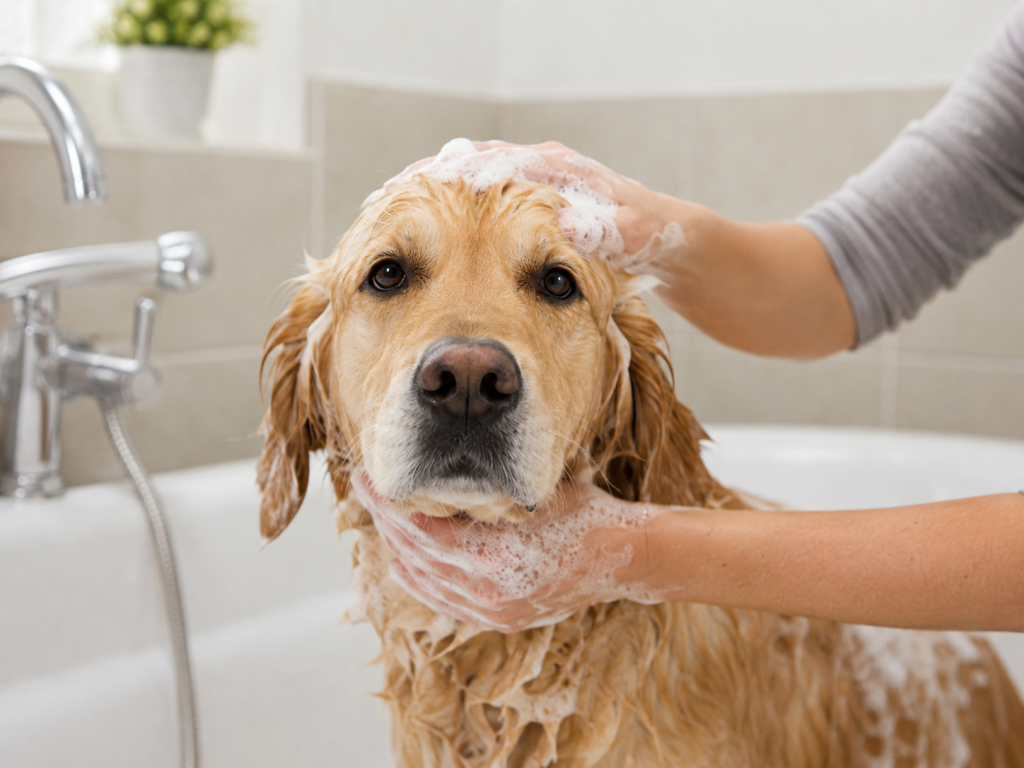
If you have been asking, “how often should you bathe a dog,” most dogs do well with a bath every four to six weeks. The right frequency depends on several factors. Coat type, activity level, skin condition, and how much time your dog spends outdoors all play a role.
Bathing too often can strip natural oils from the skin. Bathing too rarely can allow dirt, allergens, and odor to build up. Finding the right balance matters more than following one fixed rule.
Every dog is a little different, even within the same breed. Two dogs with identical coats can still need different bathing schedules based on how much time they spend outdoors and how their individual skin responds.
This guide walks through the factors that affect bathing frequency. It also covers how to tell if you are bathing your dog too much or too little, and how to build a routine that works for your dog specifically.
The General Guideline for Bathing Frequency
For most dogs, a bath every four to six weeks strikes a good balance. According to VCA Animal Hospitals, regular bathing helps keep the skin and coat healthy. The exact frequency, though, should be adjusted to fit each individual dog.
This guideline is simply a starting point. Some dogs genuinely need more frequent baths, while others do better with longer stretches in between. Paying attention to your own dog’s coat and skin will always tell you more than a general rule.
Factors That Affect How Often Your Dog Needs a Bath
Several individual factors shape the ideal bathing schedule for your specific dog.
Coat Type
Short-coated dogs often need less frequent bathing, since dirt does not cling as easily to their fur. Double-coated and long-haired breeds may need more frequent baths. This is especially true during heavy shedding seasons, when loose fur and skin debris build up faster.
Curly-coated breeds, like Poodles, often follow a different pattern. Their bathing schedule is usually tied closely to professional grooming appointments, typically every four to six weeks.
Activity Level and Lifestyle
Dogs who spend a lot of time outdoors, swim regularly, or roll in dirt understandably need more frequent baths than dogs who mostly stay indoors. An active dog that hikes every weekend may need a bath every two to three weeks. A mostly indoor dog, by contrast, might comfortably go six to eight weeks between baths.
Skin Conditions and Allergies
Dogs with allergies or certain skin conditions sometimes need more frequent bathing as part of a treatment plan. In these cases, a veterinarian may recommend a specific shampoo and schedule designed to manage the underlying issue. This targeted approach usually works better than following a general guideline alone.
Time of Year
Seasonal factors can shift bathing needs. Dogs may get muddier during rainy months or pick up more pollen during high-allergy seasons. Adjusting the schedule slightly during these periods can help keep skin comfortable.
Odor and Visible Dirt
Sometimes the simplest guide is your dog’s actual condition. Noticeable odor, visible dirt, or a greasy-feeling coat are practical signs that a bath is due. This holds true regardless of how much time has passed since the last one.
Is Frequent Bathing Normal, or a Sign of a Problem?
Understanding what counts as typical bathing frequency helps you know when a change might be worth a closer look.
Normal or Common Patterns
A bath every four to six weeks, adjusted for coat type and lifestyle, is a normal routine for most dogs. Some variation from month to month, especially around seasonal changes, is also completely typical.
Possible Explanations
An increased need for baths during muddy seasons or high-shedding periods is a normal, temporary shift. This usually settles back into a regular pattern once the season changes.
Warning Signs
Some patterns suggest something more than a simple lifestyle factor. Watch for these patterns:
- A strong odor returning within just a day or two of bathing
- Excessive itching, redness, or flaking between baths
- Oily, greasy skin that seems to worsen quickly
- Hair loss or visible skin irritation
When to Contact a Veterinarian
If bathing does not resolve odor or skin issues, a veterinary visit is the appropriate next step. The same is true if your dog seems to need baths far more often than usual. A veterinarian can check for allergies, infections, or other underlying causes that a change in bathing habits alone will not fix.
Risks of Bathing Too Often
Bathing more frequently than necessary can strip natural oils from the skin and coat. According to the American Kennel Club, overbathing can lead to dry, irritated skin, especially when combined with the wrong shampoo.
Dry skin can also trigger increased scratching, which sometimes creates a frustrating cycle. The dog scratches, the skin becomes irritated, and the owner bathes more often trying to help. This well-meaning response can unintentionally make the underlying dryness worse.
Risks of Bathing Too Rarely
On the other end, bathing too rarely allows dirt, allergens, and dead skin cells to accumulate. This can contribute to odor, matting, and skin irritation over time, particularly in dogs with allergies or long, dense coats.
Infrequent bathing can also make it easier to miss early skin issues. A dog that rarely gets a close bathing inspection may go longer without anyone noticing a new lump, hot spot, or patch of irritation.
Choosing the Right Shampoo for Your Dog’s Schedule
The shampoo you use can matter as much as how often you bathe. A gentle, dog-specific formula helps protect the skin barrier, especially if your dog needs more frequent baths due to lifestyle or allergies.
Fragrance-free and oatmeal-based shampoos tend to be gentler for dogs with sensitive skin. Dogs prone to dry skin may benefit from a moisturizing formula, while dogs with a tendency toward oily coats may do better with a light clarifying shampoo.
Always rinse thoroughly, regardless of which shampoo you choose. Leftover residue can cause itching and irritation, sometimes creating the exact skin problems a good bathing routine is meant to prevent.
Bathing Frequency by Coat Type
Different coat types generally call for different bathing schedules. Short-coated breeds, like Beagles or Boxers, often do well with a bath every six to eight weeks. Double-coated breeds, like Golden Retrievers or Huskies, typically fall in the four-to-six-week range, with more frequent brushing between baths.
Curly and wiry-coated breeds, like Poodles or Wire Fox Terriers, are often bathed alongside professional grooming visits, usually every four to six weeks. Hairless breeds are a notable exception. Their exposed skin often needs more frequent gentle cleansing, sometimes as often as weekly.
Puppies: How Often Should They Be Bathed?
Puppies generally need fewer baths than adult dogs. Their skin is more sensitive, and frequent bathing can cause irritation. Bathing a puppy roughly once a month, using a gentle puppy-specific shampoo, is usually sufficient. More frequent bathing is only needed if they get into something messy.
It is also worth waiting until a puppy has received appropriate vaccinations before exposing them to public bathing areas, like self-serve dog wash stations. This precaution helps reduce exposure to illness during a vulnerable stage.
Senior Dogs and Bathing Frequency
Senior dogs may need a gentler bathing approach. Aging skin can become thinner and more prone to dryness. A milder shampoo and slightly less frequent bathing sometimes works better as a result.
Mobility issues can also make bathing more physically challenging for older dogs. A non-slip mat and a calm, unhurried approach can make the process safer and less stressful for a senior dog. A handheld sprayer, rather than lifting a dog in and out of standing water, can also ease the process considerably.
Medicated Shampoo Baths: A Different Schedule
Dogs being treated for skin conditions sometimes follow a completely different bathing schedule, often set by a veterinarian. Medicated shampoos can require more frequent bathing, sometimes twice a week, to manage conditions like bacterial or fungal skin infections.
These schedules should always follow veterinary guidance rather than general bathing rules, since the goal is treatment, not routine maintenance.
Signs Your Dog Needs a Bath Right Now
Several clear signs suggest it is time for a bath, regardless of your usual schedule.
- A noticeable, unpleasant odor
- Visible dirt, mud, or debris in the coat
- A greasy or dull-looking coat
- Rolling in something outdoors, like feces or a dead animal
- Excessive shedding paired with a dusty-feeling coat
How to Bathe Your Dog the Right Way
A few consistent habits help make bath time effective and comfortable.
- Brush your dog thoroughly before bathing to remove loose hair and tangles
- Use lukewarm water and a dog-specific shampoo
- Avoid getting water or shampoo in the eyes and ears
- Rinse thoroughly, since leftover shampoo residue can cause irritation
- Dry completely, especially for double-coated and long-haired breeds
What Not to Do
These common habits can undermine an otherwise healthy bathing routine.
- Do not bathe more often than necessary without a clear reason
- Avoid human shampoo, which can disrupt a dog’s skin pH
- Do not skip rinsing thoroughly, since residue can cause itching
- Avoid cold water, which can make baths stressful and uncomfortable
Frequently Asked Questions
Is it bad to bathe my dog every week?
For most healthy dogs, weekly bathing is more frequent than necessary and can dry out the skin over time. Exceptions include dogs on a veterinarian-prescribed medicated shampoo schedule.
Can I bathe my dog too little?
Yes. Going too long between baths can lead to odor, matting, and a buildup of dirt and allergens. This is especially true for dogs with longer or denser coats.
What if my dog has sensitive skin?
Dogs with sensitive skin often benefit from a gentle, fragrance-free shampoo and a slightly less frequent bathing schedule. A veterinarian can help identify the right approach for persistent sensitivity.
Do indoor dogs need fewer baths?
Often, yes. Dogs who spend most of their time indoors and stay relatively clean typically need less frequent bathing. Dogs who spend a lot of time outdoors usually need baths more often.
Should I bathe my dog before or after a professional grooming appointment?
This depends on the groomer’s preference and your dog’s coat condition. Many groomers prefer to bathe the dog themselves as part of the appointment, so it helps to ask in advance.
Can allergies affect how often I should bathe my dog?
Yes. Some dogs with environmental allergies benefit from more frequent bathing to rinse allergens off the skin and coat. Ideally, though, this schedule should be guided by a veterinarian.
Is it okay to bathe my dog outside in a yard or driveway?
Yes, outdoor bathing can work well in warm weather, as long as the water is comfortably warm and the area is safe and secure. Just be sure to rinse thoroughly and dry your dog well afterward.
How can I tell if I’m overbathing my dog?
Signs of overbathing include dry, flaky skin, a dull coat, and increased scratching that seems to follow shortly after bath time. Spacing out baths and switching to a gentler shampoo often helps.
Key Takeaway
So, how often should you bathe a dog? For most dogs, a bath every four to six weeks works well, adjusted for coat type, activity level, and skin condition. Still, watching your dog’s actual condition matters more than following one fixed number.
If bathing does not resolve odor or skin issues, or your dog seems to need baths unusually often, a veterinarian can help. They can identify the underlying cause and recommend the right schedule going forward.