
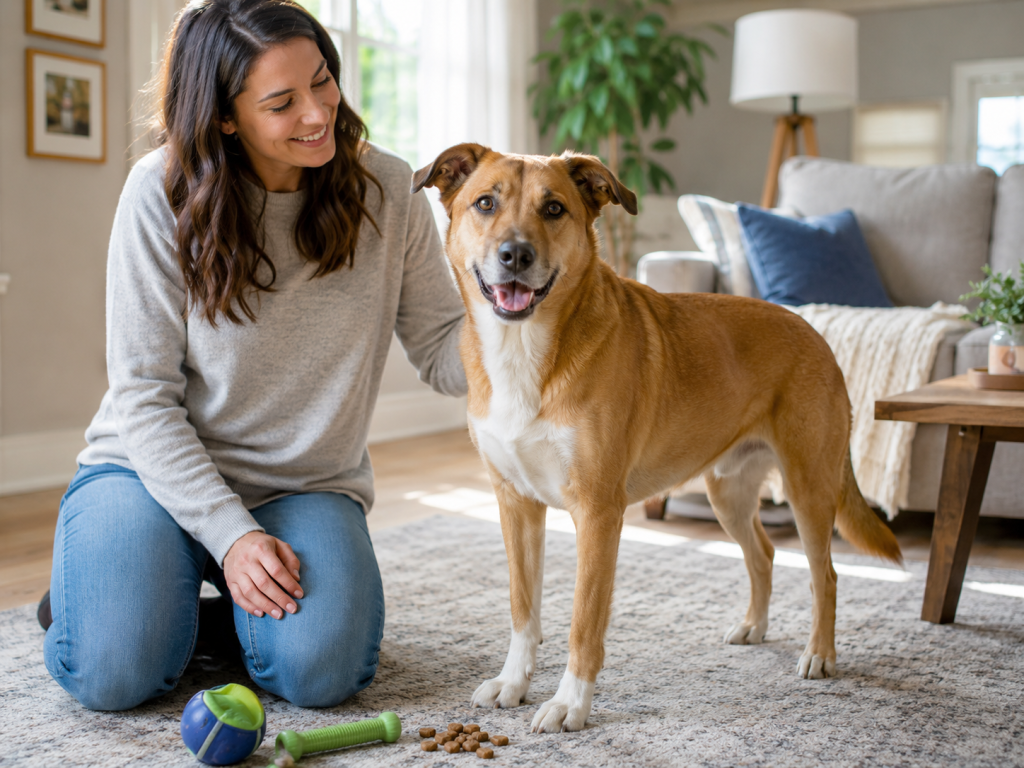
Dog behavior is shaped by genetics, early development, learning, environment, health, and previous experiences. Dogs communicate through body posture, facial expressions, tail movement, vocalizations, movement, and behavior rather than relying on one signal alone. Understanding these signals can help owners recognize whether a dog is relaxed, excited, fearful, frustrated, uncomfortable, or potentially preparing to defend themselves.
Behavior also changes throughout life. Puppies are learning how the world works, adolescent dogs may become more impulsive or energetic, adults develop established routines, and senior dogs can experience physical or cognitive changes that affect behavior. AAHA recommends including behavioral evaluation throughout routine veterinary care because behavior can be influenced by both experience and health.
Learning how to interpret your dog’s behavior can improve training, reduce misunderstandings, and help you recognize when a behavioral change may require veterinary attention.
Understanding Dog Body Language
Dogs constantly communicate through their bodies. Looking at the entire dog is more useful than focusing on one feature such as the tail.
A relaxed dog often has loose body movement, a natural posture, soft facial muscles, and the ability to look away or move around normally. A tense dog may become stiff, freeze, close the mouth, stare, lower the body, or shift weight away from something uncomfortable.
AKC guidance emphasizes that canine communication involves combinations of body language, vocalizations, and context. Even tail wagging is not automatically a sign of happiness because faster or tighter wagging can indicate higher emotional arousal.
Always consider what happened immediately before the behavior and how the rest of the dog’s body looks.
What Does a Wagging Tail Mean?
A wagging tail does not have one universal meaning.
Dogs may wag when excited, uncertain, socially engaged, highly aroused, or preparing to interact. The speed, height, stiffness, and movement of the entire body provide additional information.
AKC notes that broad, loose tail movement accompanied by relaxed body motion generally differs from a fast, tight wag displayed by a highly aroused dog.
Instead of asking whether the tail is moving, ask whether the dog’s whole body appears loose or tense.
What Do a Dog’s Ears Tell You?
Ear position can provide useful clues, although breed and ear shape change how obvious these signals appear.
Relaxed ears often sit naturally. Ears directed toward a sound may indicate attention, while ears pulled backward can occur during fear, uncertainty, appeasement, or social interaction.
Do not interpret ears in isolation.
A dog with ears back, a loose body, and relaxed facial expression may be experiencing something very different from a dog with ears back, a tucked body, and repeated attempts to escape.
Eye Contact and Staring
Dogs use their eyes as part of social communication.
Soft eyes and the ability to look away often accompany relaxed interactions. A prolonged hard stare combined with body stiffness can indicate tension or intense focus.
Some uncomfortable dogs avoid direct eye contact, turn their head away, or display the whites of their eyes.
These signals should encourage you to reduce pressure rather than move closer.
Giving a dog space when they request it can prevent an uncomfortable interaction from escalating.
Lip Licking and Yawning
Dogs sometimes lick their lips because food is nearby or yawn because they are tired. In other situations, these behaviors can occur during stress or social uncertainty.
AKC describes lip licking, yawning, head turning, paw lifting, and similar actions as behaviors that can appear when a dog is experiencing conflict or stress.
Context is therefore essential.
One yawn after waking is normal. Repeated yawning and lip licking while a stranger leans over the dog may mean the dog is uncomfortable.
Why Do Dogs Bark?
Barking is a normal form of communication.
Dogs may bark because they are excited, alerting to something, seeking attention, frustrated, afraid, bored, or responding to another dog. AKC notes that frequent barking can reflect excitement, boredom, alertness, or attention-seeking depending on the context.
The solution depends on the cause.
A bored dog may benefit from more enrichment. A fearful dog needs help feeling safer. An attention-seeking dog may have learned that barking reliably makes people respond.
Trying to stop all barking without understanding its function is unlikely to work well.
Attention-Seeking Barking
Dogs quickly learn which behaviors produce attention.
Merck gives the example of a puppy that barks when ignored and then receives attention from the owner. Even yelling can reinforce the behavior because the dog successfully caused the person to engage.
Instead of repeatedly reacting after barking begins, reinforce calm behavior before the dog becomes demanding.
Make sure the dog also receives enough exercise, interaction, rest, and enrichment so genuine needs are being met.
Why Do Dogs Whine?
Whining can occur for several reasons.
A dog may whine because they are excited, frustrated, frightened, uncomfortable, seeking attention, or anticipating something they want.
Look at what the dog is doing at the same time. A dog whining beside the door may need a bathroom break, while a dog whining and hiding may be experiencing fear or pain.
Sudden persistent vocalization in a normally quiet dog deserves closer attention, especially when accompanied by physical changes.
Growling Is Important Communication
Growling is often misunderstood as behavior that should immediately be punished.
In many situations, growling functions as a warning that the dog is uncomfortable and wants more space. AKC specifically describes stress growling as a warning signal that can help prevent escalation when people respond appropriately.
Punishing a growl can suppress the warning without changing the fear, pain, or conflict that caused it.
Instead, calmly increase distance and determine why the dog felt threatened.
A dog that frequently growls or shows escalating aggression should be evaluated by a qualified professional.
Why Do Dogs Jump on People?
Jumping often begins because dogs are excited and want social contact.
The behavior can become stronger when people touch, talk to, or push the dog away. From the dog’s perspective, jumping successfully caused interaction.
Teach and reinforce an alternative behavior such as keeping four paws on the floor or sitting for greetings.
Everyone interacting with the dog should respond consistently.
A dog that is rewarded for jumping by some people but corrected by others receives mixed information.
Why Do Dogs Chew Things?
Chewing is normal, especially in puppies.
Young dogs explore objects with their mouths and may chew more during teething. Adult dogs can chew because of boredom, enjoyment, stress, or insufficient access to appropriate chew items.
Management is important. Remove dangerous objects, supervise young dogs, and provide safe items designed for chewing.
Repeatedly punishing a dog after discovering damaged furniture does not teach them what they should chew instead.
Make appropriate choices easier than inappropriate ones.
Destructive Chewing When Alone
Chewing that happens mainly when the owner leaves may have a different explanation from ordinary puppy chewing.
Some dogs damage doors, windows, furniture, or household objects because of separation-related distress.
Other signs can include vocalization, pacing, escape attempts, urination, defecation, or intense distress around departure.
Do not assume every destroyed sofa means separation anxiety. The pattern, timing, and emotional state of the dog matter.
A veterinarian or qualified behavior professional can help distinguish boredom from a more serious separation-related problem.
Why Do Dogs Dig?
Digging can be a normal canine behavior.
Dogs may dig to investigate smells, hide objects, seek cooler ground, escape an enclosure, or simply because digging is rewarding.
Some breeds may be especially motivated to perform this behavior.
Rather than relying only on punishment, consider why the digging occurs. More exercise, enrichment, supervision, secure fencing, or a designated digging area may help depending on the cause.
Why Do Dogs Chase?
Movement can trigger chasing behavior.
Dogs may chase toys, wildlife, bicycles, runners, cars, or other animals. The strength of this behavior varies significantly between individuals.
Because chasing vehicles or animals can be dangerous, management is essential.
Use secure leashes, fences, and controlled environments while teaching reliable responses around distractions.
Do not assume that a friendly dog will automatically stop chasing when called.
Why Do Dogs Sniff Everything?
Sniffing is one of the primary ways dogs explore their environment.
Smells provide information about other animals, food, territory, and recent events. Walks that allow appropriate sniffing can therefore provide mental stimulation rather than serving only as physical exercise.
Constantly pulling a dog away from every smell can remove much of the information they are trying to collect.
Allow safe sniffing while still maintaining boundaries around dangerous or inappropriate objects.
Why Do Dogs Roll Over?
Rolling onto the back can mean different things.
Some dogs do it because they enjoy belly rubs. Others may expose the underside of the body during play or social interaction.
A fearful dog can also roll over while appearing tense, avoiding eye contact, tucking the tail, or freezing.
Do not assume every dog showing their belly wants to be touched.
Look at whether the dog remains loose and voluntarily seeks more contact.
Why Do Dogs Lick People?
Licking can be social behavior, attention-seeking, exploration, or a response to interesting tastes and smells.
Dogs may also learn that licking reliably produces attention.
Occasional licking is usually harmless. Constant licking of people, objects, or the dog’s own body may deserve more attention.
Persistent self-licking can occur with skin disease, pain, anxiety, or compulsive behavior.
AAHA has highlighted that physical discomfort, including dermatologic disease, can be associated with behavioral changes such as irritability and repetitive behavior.
Why Do Dogs Follow Their Owners Everywhere?
Dogs are social animals, and following a familiar person can simply reflect companionship and interest.
A dog may follow you because meals, walks, play, and attention usually come from you. Some dogs are naturally more socially dependent than others.
Following becomes more concerning when the dog cannot relax without constant proximity.
A dog that panics when you leave, destroys exits, vocalizes continuously, or cannot settle alone may need help with separation-related distress.
Why Do Dogs Sleep So Much?
Dogs naturally spend substantial periods resting.
Sleep requirements vary according to age, activity, health, and individual temperament. Puppies and senior dogs often rest more than healthy young adults.
The important factor is change.
A dog that has always enjoyed long naps but still becomes energetic for walks and meals is different from a normally active dog that suddenly spends the entire day sleeping.
Sudden lethargy deserves veterinary attention when accompanied by other changes.
Fearful Dog Behavior
Fear can appear in obvious or subtle ways.
A frightened dog may attempt to escape, hide, freeze, lower the body, tuck the tail, bark, growl, tremble, or avoid contact.
Other signs such as yawning, lip licking, head turning, and displacement behaviors may appear before more obvious defensive behavior.
Do not force a fearful dog closer to whatever frightens them.
AVMA recommends allowing animals to withdraw when uncomfortable and using positive experiences during gradual socialization.
Socialization Helps Prevent Fear
Puppies benefit from positive exposure to people, animals, environments, sounds, surfaces, and routine experiences.
AVMA’s review of puppy socialization notes that puppies are particularly responsive to learning from unfamiliar dogs during early development.
Socialization should remain safe and positive.
A frightened puppy should not be forced into intense exposure. Merck recommends introducing potentially frightening stimuli gradually at a nonthreatening intensity while pairing them with enjoyable experiences.
The goal is confidence, not simply maximum exposure.
Aggression Is a Behavior, Not a Personality
Aggression includes behaviors such as growling, snapping, lunging, or biting.
Dogs may behave aggressively because of fear, pain, resource concerns, frustration, territorial behavior, social conflict, or other motivations.
Merck emphasizes that canine social relationships should not be reduced to simplistic dominance explanations. Conflict aggression can occur when dogs feel anxious, uncertain, or conflicted during interactions.
Labeling a dog as “dominant” or “bad” does not explain why the behavior occurs.
Identifying triggers and emotional context is essential for safe management.
Resource Guarding
Some dogs become tense when people or animals approach food, toys, chews, beds, or other valued resources.
Signs can include freezing, eating faster, staring, growling, snapping, or moving away with the item.
Do not repeatedly take valuable objects simply to prove that you can.
Teach safe exchanges using rewards and manage situations so conflict is less likely.
Seek professional help if guarding is intense or has already resulted in bites.
Why Dogs Mount People or Other Dogs
Mounting is not always sexual behavior.
Dogs may mount during excitement, play, stress, frustration, or social interaction.
Neutering can influence some hormonally driven behavior, but it does not automatically eliminate every form of mounting.
Redirect excessive mounting calmly and consider whether the dog is becoming overstimulated.
Persistent changes in genital behavior can also warrant veterinary evaluation.
Why Dogs Eat Grass
Many dogs occasionally eat grass.
Some do so and continue behaving normally, while others may eat plants when experiencing gastrointestinal discomfort.
The behavior itself does not provide a diagnosis.
Contact your veterinarian if grass eating becomes excessive or occurs with repeated vomiting, diarrhea, appetite changes, abdominal pain, or lethargy.
Also make sure lawns and plants have not been treated with unsafe chemicals.
Why Dogs Eat Poop
Coprophagia, or eating feces, can occur in dogs.
Puppies may investigate feces out of curiosity, while some dogs develop a persistent habit.
Management usually involves quickly removing feces, supervising bathroom breaks, providing appropriate enrichment, and preventing access.
A veterinarian can help determine whether dietary, gastrointestinal, or other medical factors should be investigated in persistent cases.
Why Dogs Steal Food
Dogs repeat behaviors that successfully produce rewarding outcomes.
If stealing food from counters results in a delicious meal, the behavior can become highly persistent.
Management is often easier than punishment. Keep food away from edges, secure garbage, and prevent unsupervised access to tempting surfaces.
Teach alternative behaviors such as settling on a mat while people prepare food.
Do not intentionally create opportunities for the dog to fail and then punish them.
Dogs Learn From Consequences
Learning is happening throughout a dog’s life.
Behaviors followed by rewarding outcomes are more likely to happen again. This is why attention can accidentally reinforce barking, jumping, or demanding behavior.
The same principle can be used constructively.
Reward sitting instead of jumping, calm behavior instead of barking, and voluntary attention instead of leash pulling.
Training becomes clearer when owners focus on teaching what they want rather than only reacting to mistakes.
Reward-Based Training
Reward-based training uses things the dog values to strengthen desirable behavior.
Food is convenient, but rewards can also include toys, access to sniffing, play, praise, or going through a doorway.
Modern veterinary behavior guidance warns that techniques causing pain or fear can contribute to persistent fear, anxiety, and aggression.
Training should therefore focus on building useful behaviors and changing emotional responses rather than intimidating the dog.
Do Not Use Fear to Stop Behavior
Punishment can suppress behavior temporarily without solving the reason it occurs.
For example, punishing a dog for growling at strangers may reduce growling while leaving the dog equally afraid of strangers.
This can remove an important warning signal.
Merck notes that behavior techniques involving pain or fear can worsen emotional problems and aggression.
A safer approach is to identify triggers, prevent dangerous situations, and teach alternative responses.
Exercise Can Affect Behavior
Dogs that receive too little physical activity may become restless, demanding, or destructive.
However, simply exhausting a dog physically is not the solution to every behavior problem.
Mental stimulation, predictable routines, training, sleep, social interaction, and opportunities to perform normal behaviors also matter.
The right amount of exercise depends on age, breed, health, and individual needs.
A dog with orthopedic pain should not be pushed into extreme activity because they appear restless.
Enrichment Helps Dogs Behave Naturally
Enrichment gives dogs safe ways to perform behaviors that are naturally rewarding.
Food puzzles, scent games, sniffing walks, chewing, digging areas, retrieving, training, and exploration can all provide useful outlets.
Rotate activities so the environment remains interesting.
Enrichment does not need to be complicated or expensive. Even scattering part of a dog’s normal meal in a safe grassy area can turn feeding into a scent-based activity.
Behavior Changes Can Have Medical Causes
A sudden behavior change should not automatically be treated as a training problem.
Pain can make dogs irritable or reluctant to move. Skin disease can increase restlessness or repetitive licking. Neurological, hormonal, sensory, and other medical conditions can also affect behavior.
AAHA emphasizes that behavior has both genetic and experiential influences and that behavioral evaluations should be incorporated into veterinary care.
Merck similarly recommends ruling out underlying medical causes when evaluating behavior problems.
Sudden Aggression Needs Attention
If a previously friendly dog suddenly growls, snaps, or bites when touched, consider pain or illness.
Dental disease, arthritis, injuries, ear problems, skin inflammation, and other painful conditions can reduce tolerance.
Do not repeatedly touch the painful area to test the dog’s reaction.
Give the dog space and arrange veterinary evaluation.
A sudden personality change is valuable medical information.
Senior Dog Behavior Can Change
Behavioral changes become increasingly important as dogs age.
Senior dogs may experience pain, hearing or vision loss, altered sleep, increased anxiety, house-soiling, or cognitive changes.
AAHA recommends monitoring age-associated cognitive and physiological changes as dogs become older, with timing varying according to size.
An older dog suddenly wandering at night or becoming confused should not automatically be dismissed as normal aging.
A veterinarian can evaluate possible medical and cognitive causes.
When Should You Get Professional Behavior Help?
Professional help is appropriate when behavior creates a safety risk or significantly affects quality of life.
Seek help if your dog repeatedly bites, attacks other animals, guards resources aggressively, panics when left alone, displays severe fear, develops compulsive behavior, or becomes difficult to manage safely.
A veterinarian should be involved when the behavior is new, severe, or potentially related to pain or illness.
Veterinary behaviorists and qualified reward-based behavior professionals can create structured plans for complex problems.
Avoid trainers who rely heavily on intimidation, pain, or fear.
Understanding Your Dog Instead of Fighting the Behavior
Good dog behavior does not mean having a dog that never barks, digs, chews, runs, sniffs, growls, or becomes excited. Many behaviors that frustrate owners are normal canine behaviors expressed in inconvenient situations.
Understanding why the behavior occurs gives you much more useful information than simply trying to stop it.
Dog behavior is influenced by genetics, learning, environment, health, and experience. AAHA notes that both genetics and experience contribute significantly to behavioral development.
Learn to read the whole body, pay attention to context, and respect communication such as growling or attempts to move away. Use reward-based training to teach useful alternatives and provide enough exercise, enrichment, rest, and social interaction.
Most importantly, notice changes. A sudden increase in aggression, fear, vocalization, house-soiling, inactivity, or repetitive behavior may indicate something beyond training.
The better you understand what your dog is communicating, the easier it becomes to build a safe, predictable, and positive relationship.