
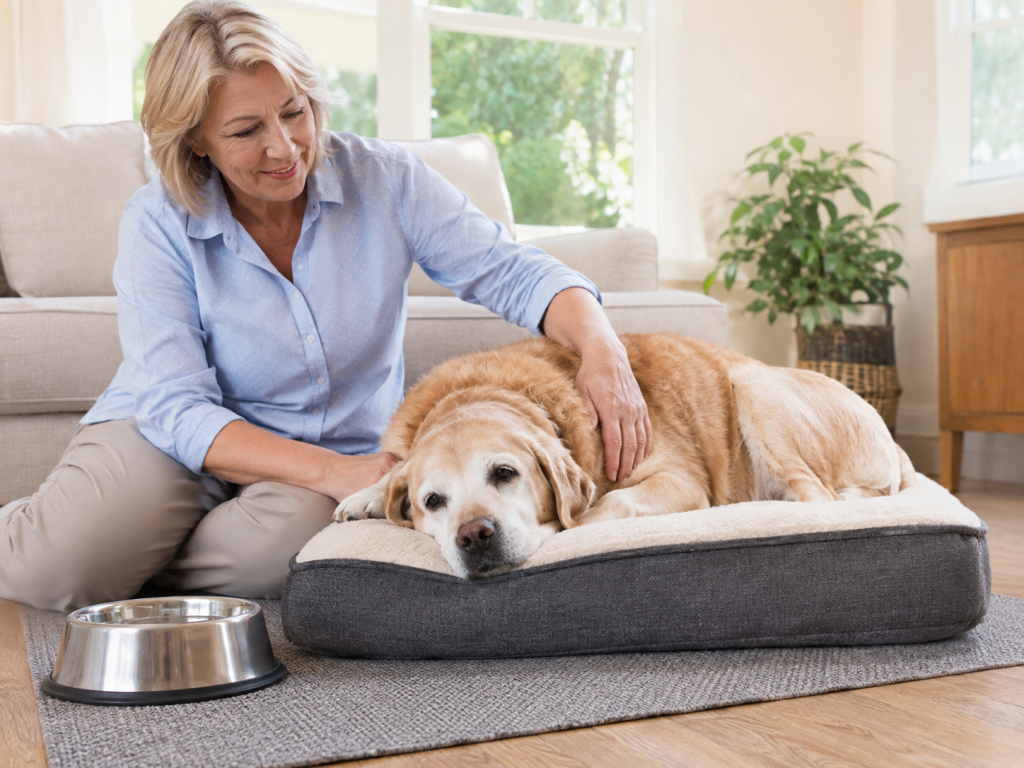
Senior dog wellness focuses on maintaining comfort, mobility, healthy body condition, mental wellbeing, and quality of life as a dog ages. Older dogs have a greater risk of chronic disease, dental problems, arthritis, sensory decline, muscle loss, and cognitive changes, which makes preventive veterinary care increasingly important. AAHA defines the senior stage according to the final 25% of a dog’s estimated lifespan rather than one universal age for every dog.
Large dogs can enter their senior years earlier than smaller breeds. Some large dogs may be considered seniors around 7 or 8 years old, while smaller dogs may not reach this stage until closer to 12.
Aging itself is not a disease. However, changes that are often blamed on old age, such as difficulty standing, increased thirst, weight loss, confusion, or reduced activity, can sometimes indicate treatable medical problems. Good senior care combines regular veterinary examinations with careful monitoring at home.
When Is a Dog Considered Senior?
There is no single birthday that turns every dog into a senior.
Dogs age at different rates depending partly on their size, breed, genetics, and overall health. AAHA defines the senior stage as approximately the final quarter of the dog’s estimated lifespan.
This means a giant-breed dog may require senior-focused care several years earlier than a small companion breed.
Instead of waiting for a specific age, begin discussing senior wellness with your veterinarian as your dog approaches the later part of their expected lifespan.
Senior Dogs Need More Frequent Veterinary Checkups
Preventive veterinary visits become increasingly important with age.
Merck Veterinary Manual recommends veterinary examinations approximately twice yearly or more often for senior dogs over about 7 to 8 years, depending on the individual dog. AAHA similarly recommends that senior dogs receive a physical examination at least twice a year, along with routine bloodwork and additional screening when appropriate.
More frequent visits make it easier to compare body weight, muscle condition, dental health, mobility, heart and lung function, and other changes over time.
A dog does not need to appear sick for these appointments to be useful. Preventive screening is specifically designed to identify problems that may not yet be obvious at home.
Pay Attention to Weight Changes
Body weight can provide valuable information about senior health.
Some older dogs gain excessive weight because activity decreases while calorie intake remains unchanged. Others begin losing weight because of dental disease, digestive problems, metabolic disease, cancer, or other health conditions.
Do not assume weight loss is automatically a normal consequence of aging.
Weigh your dog periodically and ask your veterinarian to assess body condition. A thick coat can hide gradual changes that are difficult to see visually.
Muscle Loss Is Different From Weight Loss
Senior dogs can lose muscle even when their total body weight does not change dramatically.
Muscle loss may become noticeable around the spine, hips, shoulders, and hind legs. WSAVA recommends evaluating muscle condition separately from body condition because even overweight animals can experience significant muscle loss.
You may also notice that your dog struggles more with stairs, rises slowly, or becomes less powerful when jumping into the car.
Mention these changes during veterinary visits rather than simply assuming your dog is becoming weak because of age.
Feed According to Your Senior Dog’s Individual Needs
There is no single diet that is best for every senior dog.
Some dogs need fewer calories because they become less active, while others need nutritional support to maintain muscle and body weight. Medical conditions can create additional dietary requirements.
WSAVA recommends individually tailored nutrition based on factors such as age, breed, health, and body condition.
Merck also notes that older dogs may require adequate dietary protein to maintain protein reserves and support normal turnover.
Do not automatically switch to a low-protein or low-calorie senior food simply because your dog has reached a certain age. Discuss the dog’s actual condition with your veterinarian.
Monitor Appetite Closely
Changes in appetite become increasingly important in older dogs.
A senior dog may eat less because of dental pain, nausea, digestive disease, kidney problems, pain, or other illness. Increased hunger can also accompany certain medical disorders.
Pay attention to how your dog eats, not only whether the bowl eventually becomes empty.
A dog that approaches food but repeatedly walks away, drops kibble, chews differently, or suddenly refuses favorite foods may be experiencing discomfort.
Persistent appetite changes deserve veterinary attention.
Watch How Much Your Dog Drinks
Learn your senior dog’s normal drinking habits.
A sudden increase in thirst can occur with several medical conditions. Diabetes, for example, can cause increased drinking and urination together with changes in appetite and weight.
You may notice that the water bowl needs refilling more often or that your dog begins waking during the night to drink.
Never restrict water because your dog appears to be drinking too much.
Instead, report the change to your veterinarian so the underlying reason can be investigated.
Mobility Changes Deserve Attention
One of the most common signs owners notice in aging dogs is reduced mobility.
Your dog may hesitate before climbing stairs, struggle to rise after sleeping, walk more slowly, stop jumping onto furniture, or become reluctant to enter the car.
These changes can occur with arthritis, muscle loss, pain, neurological disease, or other conditions.
A dog does not need to limp dramatically to be uncomfortable.
Record subtle changes and discuss them during veterinary appointments. Early management may help preserve movement and independence.
Modify Exercise Instead of Eliminating It
Becoming older does not automatically mean a dog should stop exercising.
Appropriate movement can help support muscle condition, mobility, mental stimulation, and healthy body weight.
The exercise routine may simply need to change. Long intense outings can sometimes be replaced with shorter, more frequent walks at a comfortable pace.
Allow plenty of opportunities to sniff and explore.
Dogs with arthritis, heart disease, respiratory problems, or other medical conditions should have exercise plans tailored by their veterinarian.
Make Floors Easier to Walk On
Smooth floors can become difficult for dogs with weak hind legs or painful joints.
A senior dog may slip on tile, laminate, or polished wood even if those surfaces caused no difficulty earlier in life.
Place non-slip mats or rugs along frequently traveled routes, especially near beds, food bowls, stairs, and doorways.
Keep nails appropriately trimmed as well.
Improving traction can make ordinary movement less stressful and may reduce the risk of falls.
Make Favorite Places Easier to Reach
Senior dogs may still want to sleep on the sofa or travel in the car even when jumping becomes uncomfortable.
Ramps or stable steps can provide easier access when appropriate.
Choose equipment with good traction and make sure it is strong enough for your dog’s body weight.
Do not force a dog onto a steep ramp without introducing it gradually.
If your dog suddenly stops using stairs or jumping altogether, investigate the cause before treating the problem only as an environmental inconvenience.
Provide a Comfortable Bed
Older dogs often appreciate soft, supportive resting areas.
A bed should be easy to enter and large enough for your dog to change position comfortably.
Place it somewhere warm and quiet but still close enough to family activity if your dog enjoys social contact.
Senior dogs may spend more time resting than younger adults. However, a major sudden increase in sleep or reluctance to get up can indicate illness or pain rather than ordinary aging.
Dental Health Becomes Increasingly Important
Dental disease can cause significant discomfort in senior dogs.
Bad breath, drooling, dropping food, bleeding gums, pawing at the mouth, chewing on one side, or refusing hard foods can indicate oral problems.
Veterinary senior examinations may include more detailed attention to dental health, and AVMA notes that senior-pet examinations may include dental care and additional diagnostic evaluation.
Do not assume your dog would stop eating completely if their teeth hurt. Dogs can continue eating despite considerable dental pain.
Continue Grooming Your Senior Dog
Regular grooming remains important throughout old age.
Brushing helps remove loose hair and gives you a chance to examine the skin for lumps, wounds, parasites, irritation, and coat changes.
Older dogs may need shorter grooming sessions because standing for long periods becomes uncomfortable.
Be gentle around painful joints and sensitive areas.
A dog that suddenly dislikes being brushed or touched in a particular location may be communicating discomfort.
Check for New Lumps and Bumps
Older dogs commonly develop skin masses, but appearance alone cannot reliably determine whether a lump is harmless.
Run your hands gently over your dog’s body during grooming.
If you find a new lump, note its location and approximately how large it is. Changes in size, shape, color, texture, or ulceration should also be mentioned.
Your veterinarian may recommend sampling a mass rather than simply watching it indefinitely.
Vision Can Change With Age
A senior dog may become less confident in dark rooms, hesitate around stairs, bump into objects, or become startled more easily.
Gradual vision changes can sometimes be subtle because dogs learn the layout of familiar environments.
Avoid frequently rearranging furniture when a dog has significant visual impairment.
Use gates around dangerous stairs or other hazards when necessary.
Sudden vision loss is different from gradual age-related decline and deserves prompt veterinary assessment.
Hearing Loss Can Change Behavior
Older dogs may gradually lose hearing.
Merck notes that age-related hearing loss can cause dogs to stop responding normally to sounds or commands and may contribute to behavioral changes such as confusion or increased barking.
A dog that no longer comes when called may therefore not be ignoring you intentionally.
Use visual signals and gentle touch when appropriate, but avoid suddenly grabbing a sleeping dog that cannot hear you approaching.
Consistent hand signals learned earlier in life can become particularly useful.
Cognitive Changes Can Affect Senior Dogs
Some senior dogs experience cognitive decline.
Possible signs include confusion, altered sleep, house-soiling, changes in social interaction, repetitive behavior, nighttime wandering, or becoming stuck in familiar areas.
These behaviors should not automatically be labeled dementia without veterinary evaluation.
Pain, sensory loss, urinary disease, metabolic disorders, neurological conditions, and other medical problems can sometimes create similar changes.
If your older dog begins acting confused or significantly changes normal routines, arrange a veterinary assessment.
Keep Your Senior Dog Mentally Engaged
Mental stimulation remains valuable even when physical activity decreases.
Short training sessions, sniffing walks, simple food puzzles, gentle games, and opportunities to explore can keep daily life interesting.
Choose activities that match your dog’s physical abilities.
A dog with arthritis may not be able to chase a ball repeatedly, but they may still enjoy searching for pieces of their normal food around a room.
Senior wellness should preserve enjoyable activities whenever possible rather than simply removing them.
Maintain Social Interaction
Older dogs still need companionship according to their individual preferences.
Some become more affectionate, while others may want additional quiet time.
Respect both patterns.
If children or energetic pets live in the household, give the senior dog protected areas where they can rest without being constantly disturbed.
A sudden withdrawal from family interaction can also indicate pain or illness and should not automatically be attributed to personality changes.
Bathroom Habits Can Change
Senior dogs may need more frequent bathroom opportunities.
Reduced bladder control, mobility problems, increased thirst, cognitive changes, or urinary disease can contribute to accidents inside the home.
Do not punish a previously house-trained senior dog for sudden accidents.
Instead, offer easier access to outdoor toileting and discuss new changes with your veterinarian.
Urinary incontinence and abnormal urination can result from several medical problems and may be manageable once the cause is identified.
Watch for Changes in Breathing
Older dogs have a greater chance of developing conditions that affect the heart or lungs.
Persistent coughing, reduced exercise tolerance, unusual breathing effort, or difficulty settling comfortably should be discussed with a veterinarian.
Some heart diseases become more common with age and breed. For example, Merck notes that certain acquired heart disorders occur more commonly in older small-breed dogs.
Difficulty breathing, collapse, or blue or very pale gums can indicate an emergency.
Senior Dogs Still Need Parasite Prevention
Age does not automatically eliminate the risk of fleas, ticks, intestinal parasites, or other parasite exposure.
The appropriate prevention plan depends on location, lifestyle, travel, health, and other risk factors.
Continue discussing parasite prevention during senior veterinary visits.
Do not stop preventive medication simply because your dog is less active without first considering whether meaningful exposure remains possible.
Vaccination Plans May Change
Senior dogs still need appropriate protection against infectious disease.
However, vaccination decisions should be individualized according to previous vaccination history, lifestyle, health, and exposure risk.
Your veterinarian can determine which vaccines remain appropriate and how frequently they should be administered.
Older age by itself does not mean vaccination should automatically stop.
Keep an Eye on Sleep Patterns
Some senior dogs naturally sleep more than younger adults.
However, dramatic changes can be important.
A dog that begins wandering throughout the night, sleeping through normal daytime activities, repeatedly waking the household, or appearing unable to settle may have pain, anxiety, cognitive changes, or another health problem.
Track when the behavior happens and discuss persistent changes with your veterinarian.
Watch for Pain That Dogs May Hide
Dogs do not always cry when they are uncomfortable.
Pain may appear as slower movement, irritability, reduced appetite, difficulty getting comfortable, panting, trembling, reluctance to be touched, or loss of interest in normal activities.
A senior dog that suddenly growls when lifted may be experiencing discomfort rather than becoming aggressive because of age.
Never give human pain medication unless a veterinarian specifically instructs you to do so.
Several common human medications can be dangerous to dogs.
When Does a Senior Dog Need Veterinary Attention?
Contact your veterinarian when you notice a persistent or significant change from your dog’s normal behavior or health.
Important warning signs include:
- Unexplained weight loss
- Loss of muscle
- Persistent appetite changes
- Increased thirst or urination
- Difficulty standing or walking
- New or worsening coughing
- Vomiting or diarrhea
- Sudden house-soiling
- Confusion or nighttime wandering
- New lumps or rapidly changing masses
- Significant dental pain
- Major personality changes
- Persistent lethargy
Older dogs are more likely to develop disease, which is why Merck recommends more frequent veterinary examinations during the senior years.
Know the Emergency Warning Signs
Some symptoms need immediate veterinary attention.
Seek urgent care if your senior dog experiences severe breathing difficulty, collapse, repeated seizures, uncontrolled bleeding, serious trauma, suspected poisoning, extreme weakness, or inability to urinate.
A swollen painful abdomen accompanied by repeated unsuccessful attempts to vomit can also represent a life-threatening emergency.
Do not assume severe symptoms are simply part of being old.
Age does not make emergency conditions less urgent.
Quality of Life Matters
Senior dog wellness is ultimately about preserving a good quality of life.
Consider whether your dog can eat comfortably, move without severe distress, rest well, interact with family, enjoy favorite activities, maintain hygiene, and experience more good days than difficult ones.
AAHA’s senior-care guidance emphasizes maintaining quality of life and adjusting medical care as older pets develop chronic conditions.
Your veterinarian can help you evaluate changes objectively when you are unsure whether pain or illness is beginning to interfere substantially with daily life.
Supporting Senior Dog Wellness Every Day
Good senior dog wellness combines preventive veterinary care with thoughtful adjustments at home.
Schedule veterinary examinations more frequently as your dog ages. Merck recommends approximately twice-yearly examinations for many senior dogs, while AAHA similarly recommends at least two physical examinations each year with appropriate diagnostic screening.
Monitor body weight and muscle condition, and choose nutrition according to your dog’s individual health rather than automatically selecting food based only on age. Keep your dog physically active within comfortable limits and continue providing opportunities to sniff, learn, play, and interact.
Make the home easier to navigate with supportive beds, non-slip surfaces, ramps or steps when appropriate, and accessible food and water.
Most importantly, do not dismiss meaningful changes as normal aging. Reduced mobility, increased thirst, weight loss, dental discomfort, confusion, appetite changes, and sudden behavioral differences can all deserve veterinary attention.
Growing older changes what your dog needs, but it does not mean comfort, activity, curiosity, and enjoyment have to disappear. Thoughtful preventive care can help senior dogs continue enjoying meaningful daily life throughout their later years.