
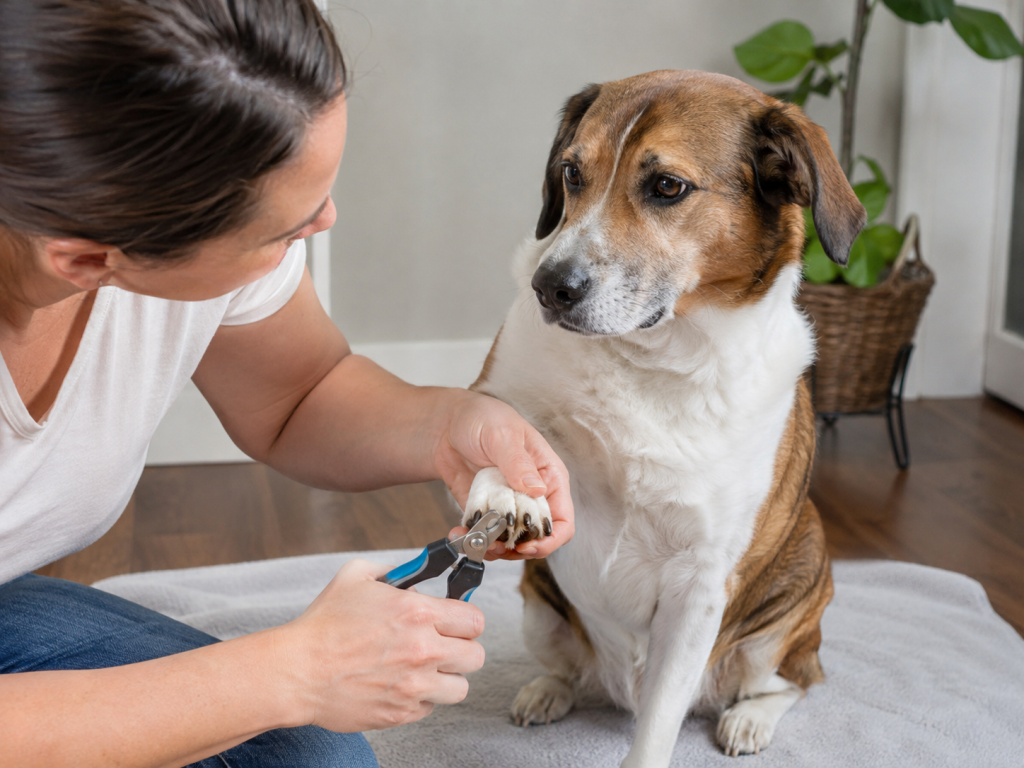
If you have been asking, “how often should you trim a dog’s nails,” most dogs need a trim every three to four weeks. The right frequency depends on a few factors. Activity level, the surfaces your dog walks on, and how quickly their individual nails grow all play a role.
Overgrown nails are not just a cosmetic issue. They can affect how a dog walks and, over time, may even change the shape of the foot. Keeping up with regular trims is one of the simplest ways to prevent this.
This guide covers how often to trim nails and how to tell when a trim is overdue. It also walks through how to do the job safely at home.
The General Guideline for Nail Trimming Frequency
For most dogs, a nail trim every three to four weeks keeps length in a healthy range. According to VCA Animal Hospitals, regular trims help prevent the nails from becoming overly long. Over time, overly long nails can even affect a dog’s posture and gait.
This timeline is a helpful starting point, not a strict rule. Some dogs need trims more often, while others naturally wear their nails down and need less frequent attention. Checking your dog’s nails regularly, rather than relying solely on the calendar, is the most reliable approach.
Factors That Affect How Often Nails Need Trimming
Several individual factors shape the right trimming schedule for your specific dog.
Activity Level and Surface Type
Dogs who walk frequently on concrete or asphalt naturally wear down their nails through everyday activity. Dogs who spend most of their time on grass, carpet, or soft ground do not get this natural filing effect. Their nails, as a result, tend to grow longer between trims.
Breed and Nail Growth Rate
Nail growth rate varies somewhat between individual dogs, similar to how human nails grow at different speeds between people. Larger breeds sometimes have thicker nails that grow more slowly, while some smaller breeds may need more frequent attention.
Age and Life Stage
Puppies often need more frequent, gentler trims since their nails grow quickly during this stage. Senior dogs may also need closer attention, since reduced activity can mean less natural wear.
Indoor vs. Outdoor Lifestyle
Primarily indoor dogs usually need more frequent trims than dogs who spend significant time walking on hard outdoor surfaces. Even a daily walk around the block on pavement can make a real difference in how often trims are needed.
Signs Your Dog’s Nails Are Too Long
A few clear signs suggest a trim is overdue. Listen for clicking sounds when your dog walks across hard floors. Look at your dog’s paw while standing normally. If the nails touch the ground, they are likely too long.
Nails that curl under are another clear sign. So is any noticeable change in how your dog stands or walks, since either one suggests a trim should not wait any longer.
Understanding the Quick
Every nail contains a blood vessel called the quick, which runs partway down the length of the nail. Trimming too close to the quick causes bleeding and discomfort.
In dogs with light-colored nails, the quick is often visible as a pink area. In dogs with dark nails, the quick is harder to see, which makes small, careful trims especially important.
Frequent, gentle trims tend to encourage the quick to recede slightly over time. This is one reason a consistent, regular schedule is often safer and more effective than infrequent, aggressive trims.
Is an Overgrown Nail Normal, or a Warning Sign?
Understanding what counts as a typical nail length helps you know when to simply schedule a trim. It also helps you recognize when something more may be going on.
Normal or Common Patterns
Nails that grow a bit long between scheduled trims are a normal, manageable part of a regular grooming routine. This is true as long as there is no change in walking or posture.
Possible Explanations
A missed trim or two, especially during a busy season, is a common and easily corrected situation. Getting back on a consistent schedule usually resolves it without any lasting issue.
Warning Signs
Some patterns suggest more than a simple missed trim. Watch for these patterns:
- Nails that have curled into a full circle
- A nail growing into the paw pad
- Limping or noticeable reluctance to walk
- Swelling, redness, or bleeding around a nail
- A broken or split nail
When to Contact a Veterinarian
If a nail has curled into the pad, appears broken, or your dog seems to be in pain, a veterinary visit is the appropriate next step. Severely overgrown nails sometimes need professional trimming. Cutting them safely at that length can be genuinely difficult without the right experience.
Risks of Letting Nails Grow Too Long
Overly long nails can force a dog’s toes into an unnatural position with every step. Over time, this can affect the alignment of the foot and put extra strain on the joints.
Long nails are also more prone to snagging and splitting, which can be a painful injury. In severe cases, nails can curl around and grow directly into the paw pad, causing pain and infection.
Nail Length and Overall Foot Health
Nail length affects more than comfort during walks. Over months and years, consistently overgrown nails can gradually change how weight is distributed across a dog’s foot.
This altered posture can put extra strain on the toes, wrists, and even the shoulders over time. Dogs with existing joint issues, such as arthritis, may be especially sensitive to this added strain.
Keeping nails at a healthy length is a small, manageable habit that supports a dog’s overall mobility and comfort, especially as they age.
How to Trim Your Dog’s Nails Safely
A calm, methodical approach makes nail trimming safer and less stressful for both of you.
- Choose a quiet time when your dog is relaxed
- Use a proper dog nail clipper or grinder, never human nail clippers
- Trim small amounts at a time, checking the angle as you go
- Stop well before the visible quick in light-colored nails
- For dark nails, trim in thin slices and watch for a small dark dot, which signals you are getting close
- Keep styptic powder within reach in case of accidental bleeding
Tools: Clippers vs. Grinders
Both clippers and grinders can work well, and the right choice often comes down to your dog’s comfort level. Guillotine-style and scissor-style clippers cut quickly, which some dogs prefer since the process is brief.
Nail grinders file the nail down gradually. Some dogs find the vibration or sound stressful at first, though many adjust with practice. Grinders can also make it easier to avoid cutting the quick, since you can check progress continuously as you go.
What to Do If You Cut the Quick
Accidentally cutting the quick happens even to experienced owners. Stay calm, since a stressed reaction can make your dog more anxious about future trims.
Apply styptic powder directly to the tip of the nail and hold gentle pressure for about thirty seconds. If bleeding does not stop within a few minutes, or seems excessive, contact your veterinarian.
Nail Trimming Across Life Stages
Nail care needs shift somewhat as your dog grows and ages.
Puppies
Puppy nails grow quickly and are often sharp. Starting gentle, frequent handling early helps build comfort with the process for the years ahead. This is worth doing even before nails actually need a trim.
Adult Dogs
Adult dogs typically settle into a fairly predictable trimming schedule, often every three to four weeks. This pattern is largely based on their activity level and the surfaces they regularly walk on.
Senior Dogs
Senior dogs may need more frequent trims if their activity level has decreased. Thicker, more brittle nails are also common with age, so a bit of extra patience and care often helps.
How to Help a Dog Who Hates Nail Trims
Some dogs tolerate nail trims easily, while others need extra practice. Start with very short sessions. Sometimes this means just touching the paws, or trimming a single nail, paired with treats and calm praise.
Gradually build up to a full trim over several sessions rather than rushing the process. According to VCA Animal Hospitals, regular, positive handling exercises outside of actual trimming sessions can help. Over time, this practice makes the whole process considerably less stressful.
If your dog remains highly stressed despite a gradual approach, a professional groomer or veterinary technician can help. They can often handle trims more quickly and with less struggle.
What Not to Do
A few common habits can make nail trimming more difficult or unsafe.
- Do not use human nail clippers, which can crush or splinter a dog’s nail
- Avoid rushing through a trim just to get it over with
- Do not punish a dog for pulling away, since this increases fear around future trims
- Avoid waiting until nails are severely overgrown before addressing the issue
When to See a Veterinarian or Professional Groomer
While most nail trims can be done safely at home, certain situations call for professional help.
Consider reaching out to a veterinarian or professional groomer if you notice:
- Nails that are severely overgrown or curling into the pad
- Consistent bleeding or pain during home trims
- A dog who becomes extremely distressed despite gradual practice
- Uncertainty about where the quick is located
Frequently Asked Questions
How do I know if I’m trimming too often?
Trimming every one to two weeks is generally unnecessary for most dogs and increases the risk of accidentally cutting the quick. Every three to four weeks is typically sufficient.
Can I trim my dog’s nails myself, or do I need a professional?
Many owners trim nails safely at home with practice and the right tools. If you feel uncertain, a veterinarian or groomer can demonstrate the technique before you try it alone.
Why does my dog’s nail bleed even with a small trim?
This usually means the cut was close to, or into, the quick. Applying styptic powder and trimming more conservatively next time can help prevent this.
Do active dogs still need nail trims?
Yes, though possibly less often. Dogs who walk regularly on hard surfaces may wear their front nails down naturally. Back nails and dewclaws, however, often still need regular trimming.
What is a dewclaw, and does it need trimming too?
A dewclaw is the small nail higher up on the leg that does not touch the ground. Since it gets no natural wear, it often needs more frequent trimming than the other nails.
Is it normal for one nail to grow faster than the others?
Some variation between nails is normal. However, a nail growing unusually fast, thick, or oddly shaped compared to the others is worth mentioning to a veterinarian.
Can I use a nail file instead of clippers?
A nail file or emery board can help smooth sharp edges after a trim, but it is usually too slow to be a practical primary method for most dogs’ regular nail care.
Key Takeaway
So, how often should you trim a dog’s nails? Most dogs do well with a trim every three to four weeks, adjusted for activity level and the surfaces they walk on regularly. Still, watching your dog’s actual nail length matters more than following one fixed number.
If nails become severely overgrown, painful, or difficult to manage at home, a veterinarian or professional groomer can help. They can safely bring nails back to a healthy length.
KEYPHRASE: how often should you trim a dog’s nails
SEO TITLE: How Often Should You Trim a Dog’s Nails?
SLUG: how-often-should-you-trim-a-dogs-nails
META DESCRIPTION: Find out how often to trim a dog’s nails, signs they’re too long, and safe trimming tips to keep your dog comfortable.