
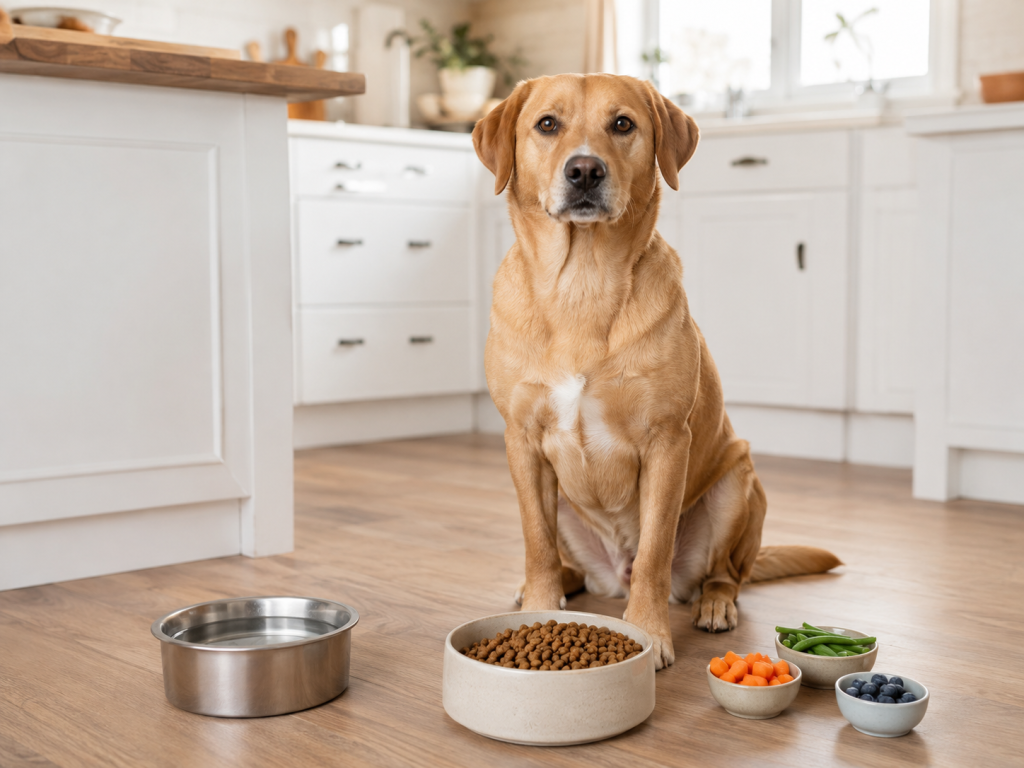
Healthy feeding habits for dogs combine a complete and balanced diet with measured portions, a consistent routine, limited treats, fresh water, and careful choices about human foods. Most healthy adult dogs do well with portion-controlled feeding, and Merck Veterinary Manual recommends premeasured meals at regular times as a useful way to reduce the risk of overfeeding and obesity.
Human food can occasionally be offered in small amounts when the specific ingredient is safe, plain, and appropriate for the individual dog. However, extras should never replace a nutritionally complete diet. Commercial complete and balanced dog foods are formulated to provide all required nutrients in suitable amounts without excessive levels of any one nutrient.
The most important feeding habit is consistency. Know how much your dog normally eats, control extras, avoid toxic foods, and pay attention when appetite suddenly changes.
Why Feeding Habits Matter
What you feed matters, but how you feed also influences health.
A nutritionally appropriate food can still contribute to weight gain when portions are consistently too large. Treats and table scraps can also add substantial calories without owners realizing how much the dog receives throughout the day.
Structured feeding makes food intake easier to track. It can also help you notice quickly when your dog suddenly begins leaving meals unfinished.
For many healthy adult dogs, two measured meals at regular times provide a practical routine. Merck specifically describes portion-controlled feeding with two premeasured meals as an appropriate regimen for many adult dogs.
Feed a Complete and Balanced Main Diet
Human foods should never become the foundation of an ordinary dog’s diet simply because the ingredients appear wholesome.
Dogs require specific amounts and ratios of protein, fat, vitamins, minerals, essential fatty acids, and other nutrients. Complete commercial diets are formulated specifically to meet those nutritional requirements.
A bowl containing chicken, rice, and vegetables may look healthy but is not automatically nutritionally complete for long-term feeding.
If you want to prepare your dog’s entire diet at home, work with a veterinarian or veterinary nutrition specialist rather than improvising recipes.
How Often Should Adult Dogs Eat?
Many healthy adult dogs can be fed twice per day.
Breakfast and an evening meal work well for many households, but the exact clock time is less important than consistency and appropriate total calories.
Some dogs may eat more comfortably when the daily food allowance is divided into three smaller meals. Medical conditions can also change the ideal schedule.
The important point is that additional meals should divide the same daily ration rather than unintentionally multiplying it.
Should Dogs Have Food Available All Day?
Some dogs naturally graze, but many will continue eating whenever food remains available.
Merck notes that although some dogs graze, portion-controlled meals are generally preferable for preventing obesity in most adult dogs.
Free feeding can also make appetite harder to monitor. If food is continuously available, you may not immediately notice that the dog has eaten much less than usual.
Measured feeding gives you a clearer picture of intake and makes weight management easier.
Measure Every Meal
A consistent portion is easier to manage than repeatedly pouring food until the bowl looks full.
The amount your dog needs depends on body weight, food calorie density, activity, age, reproductive status, metabolism, and health.
Measure food with the same method each day. A digital kitchen scale provides more precision than estimating by volume when close calorie control is important.
Then monitor body condition and adjust the amount if your dog steadily gains or loses weight.
Treats Count as Calories
Treats can be useful for training, enrichment, and bonding, but they are still food.
VCA recommends that treats should not exceed about 10% of a pet’s total calorie intake, noting that aiming closer to 5% can provide an even greater nutritional margin.
This matters because treats are generally not formulated to replace complete meals.
If you use a large number of rewards during training, consider using part of your dog’s measured daily kibble instead of continuously adding extra calories.
Table Scraps Should Stay Limited
Dogs often learn that sitting beside the dining table produces food.
Repeated sharing can quickly become both a nutritional and behavioral habit.
Merck recommends keeping table scraps below 10% of a dog’s daily calorie intake. Large amounts of rich table food can also contribute to digestive problems, and Merck identifies eating trash or large quantities of table scraps as a recognized risk factor associated with pancreatitis in dogs.
Avoid using leftover human meals as a routine replacement for dog food.
Which Human Foods Can Dogs Eat Safely?
Several plain foods can be offered in small amounts to many healthy dogs.
ASPCA identifies vegetables such as carrots, celery, broccoli, green beans, cauliflower, and plain cooked pumpkin as possible pet-safe snacks when prepared without seasonings and cut into manageable pieces.
Other small amounts of plain foods may also be suitable depending on the dog.
However, “safe” does not mean unlimited. Even nutritious human foods add calories and can cause digestive upset when introduced suddenly or fed excessively.
Carrots
Plain carrots are a simple low-calorie snack for many dogs.
They can be served raw in appropriately sized pieces or cooked without butter, salt, garlic, onion, or sauces. ASPCA includes carrots among pet-safe vegetable options.
Large hard pieces can create a choking risk for some dogs, especially those that swallow food quickly.
Adjust the size and texture to the individual dog.
Green Beans
Plain green beans can also work as an occasional treat.
ASPCA includes them among dog-friendly vegetable choices.
Serve them without butter, salt, sauces, or seasoning.
Do not use green beans to replace a large proportion of a nutritionally complete diet simply because they are lower in calories.
Pumpkin
Plain cooked or canned pumpkin can be safely offered in modest amounts to many dogs.
ASPCA lists cooked pumpkin as a suitable snack option.
Choose plain pumpkin rather than pie filling containing sugar, spices, or other added ingredients.
If you are using pumpkin because your dog has persistent diarrhea or constipation, discuss the underlying digestive problem with your veterinarian rather than relying indefinitely on home feeding adjustments.
Blueberries and Other Fruit
Some fruits can be offered as occasional small treats.
ASPCA has included blueberries among pet-friendly snack options.
Remove pits, seeds, cores, and any unsafe components from fruit before sharing it.
Remember that grapes and raisins are exceptions and should not be given to dogs because they can cause serious toxicity.
Plain Cooked Eggs
Cooked egg can be offered occasionally to many healthy dogs.
ASPCA includes cooked egg among foods dogs may enjoy in moderation.
Serve it plain without butter, oil, salt, onion, garlic, or sauces.
A little egg can be a treat, but it should not replace a complete canine diet.
What Foods Should Dogs Never Eat?
Several ordinary human foods can be toxic or dangerous to dogs.
ASPCA specifically warns against chocolate, coffee and caffeine, alcohol, grapes and raisins, onions and related ingredients, raw or undercooked products, and other potentially harmful foods.
Xylitol is another major concern because it can appear in sugar-free products and certain spreads.
The safest habit is to check ingredients before sharing anything unfamiliar.
Chocolate
Chocolate should not be given to dogs.
Different chocolate products contain different concentrations of methylxanthines such as theobromine and caffeine, which can cause poisoning.
Dark chocolate and baking chocolate are generally more concerning than small amounts of milk chocolate, but any meaningful exposure deserves appropriate veterinary advice.
Keep chocolate desserts, cocoa powder, baking ingredients, and candy securely stored.
Grapes and Raisins
Grapes and raisins should be considered unsafe for dogs.
They can cause serious kidney injury, and the amount required to cause toxicity is unpredictable.
Raisins can also appear in cereal, baked goods, trail mix, and desserts.
If your dog eats grapes or raisins, contact a veterinarian promptly rather than waiting for symptoms.
Onions and Garlic
Dogs should not receive foods containing meaningful amounts of onion, garlic, chives, or related ingredients.
These ingredients can damage red blood cells and contribute to anemia.
Powders deserve particular attention because onion and garlic powder can appear in sauces, seasonings, soups, and processed foods.
Plain meat from your plate may therefore become unsafe once it has been heavily seasoned.
Xylitol
Xylitol is a sugar substitute that can cause a medical emergency in dogs.
It can appear in sugar-free gum, sweets, toothpaste, baked goods, and certain peanut or nut butters.
Always read the ingredient list before sharing products such as peanut butter.
If your dog consumes a xylitol-containing product, seek immediate veterinary help.
Alcohol and Caffeine
Dogs should not consume alcohol, coffee, energy drinks, caffeine tablets, or other strongly caffeinated products.
ASPCA identifies both alcohol and caffeine-containing products as unsafe for pets.
Coffee grounds and concentrated caffeine products can be particularly hazardous.
Do not intentionally offer even small amounts as a novelty.
Cooked Bones
Cooked bones are not a safe treat simply because dogs naturally enjoy chewing.
They can splinter, damage the mouth, become stuck, or cause gastrointestinal obstruction or injury.
ASPCA includes bones among foods that create important health risks.
Choose chews specifically designed for dogs and appropriate for your dog’s size and chewing style.
Fatty Leftovers
Rich leftovers can cause vomiting or diarrhea and may increase the risk of pancreatitis in susceptible dogs.
Merck identifies large amounts of table scraps and inappropriate food as common risk factors associated with pancreatitis.
Fat trimmed from meat, greasy leftovers, skin, sauces, and holiday meals should therefore be handled carefully.
A dog does not need a plate of the family’s dinner to feel included.
Can Dogs Eat Peanut Butter?
Plain peanut butter can sometimes be used in small amounts, particularly for treats or enrichment.
The critical safety step is checking that it contains no xylitol.
Peanut butter is also calorie-dense, so large servings can quickly use a significant percentage of a dog’s daily calorie allowance.
Use small amounts rather than filling toys with unlimited quantities.
Can Dogs Eat Cheese?
Some dogs tolerate small amounts of plain cheese, while others develop digestive upset.
Cheese is calorie-dense and can be high in fat and salt.
It can occasionally be useful for hiding medication when your veterinarian confirms that food administration is appropriate.
Avoid cheese containing garlic, onion, herbs, or other unsafe ingredients.
Can Dogs Drink Milk?
Milk is not necessary for an adult dog’s diet.
Some dogs can tolerate small amounts, while others develop diarrhea or gastrointestinal discomfort because they digest lactose poorly.
Fresh water should remain the primary drink.
Do not use milk as a substitute for proper hydration or complete food.
Raw Meat and Raw Eggs
Raw feeding introduces food-safety concerns for dogs and for people living in the household.
Raw meat and eggs can carry harmful bacteria, and an improvised raw diet may also be nutritionally unbalanced.
ASPCA advises against raw or undercooked meat and eggs as routine pet foods.
If you want to feed a home-prepared diet, veterinary nutritional guidance is safer than assembling meals from individual raw ingredients.
Avoid Feeding From the Table
Giving food directly from your plate can reinforce begging.
The dog learns that staring, pawing, whining, or waiting beside the table sometimes results in a reward.
If you want to share an appropriate food, place a tiny portion aside and offer it later in the dog’s normal feeding area.
This separates the treat from begging behavior and makes total intake easier to monitor.
Feeding Habits in Multi-Dog Homes
Multiple dogs can complicate portion control.
A fast eater may finish quickly and steal another dog’s food. A nervous dog may eat too quickly because they expect competition.
Feed dogs separately when necessary and remove bowls after meals.
Individual feeding becomes especially important when one dog is overweight, underweight, taking medication with food, or eating a veterinary therapeutic diet.
What If Your Dog Eats Too Fast?
Rapid eating is common in some dogs.
Divide the daily ration into smaller meals or use an appropriate slow-feed bowl, puzzle feeder, or food-dispensing toy.
The goal is to slow consumption without creating frustration or preventing the dog from eating enough.
Supervise new feeding devices until you know your dog uses them safely.
Picky Eating
Some dogs genuinely have strong food preferences, but repeated special treatment can also teach selective eating.
If refusing kibble immediately results in cheese, meat, or another highly desirable food, the dog may learn to wait for the upgrade.
Maintain a predictable routine for healthy dogs rather than repeatedly changing meals after every hesitation.
However, a sudden appetite change is different from long-standing pickiness and may require veterinary attention.
Sudden Appetite Loss
A dog that suddenly stops eating may have dental pain, nausea, gastrointestinal disease, stress, infection, pain, or another medical problem.
Look for vomiting, diarrhea, lethargy, drooling, difficulty chewing, abdominal discomfort, weight loss, or unusual thirst.
Do not assume a normally enthusiastic eater has simply become picky overnight.
Persistent appetite loss should be discussed with your veterinarian.
Increased Hunger Can Also Matter
Suddenly eating much more than usual can also be medically significant.
Some hormonal or metabolic disorders can increase appetite while causing other changes such as weight loss, thirst, or urination.
Monitor patterns rather than focusing on one unusually hungry day.
If increased appetite becomes persistent, particularly with weight or thirst changes, arrange a veterinary examination.
Switching Foods
When changing your dog’s regular diet, a gradual transition is often easier on the digestive system.
Start with mostly the familiar food and a small amount of the new diet. Increase the new food gradually over several days while reducing the old food.
Monitor stool, vomiting, appetite, and comfort.
If your veterinarian recommends an immediate change because of a medical condition, follow those instructions instead.
Food Allergies Require Proper Diagnosis
Itching or gastrointestinal problems do not automatically mean your dog has a food allergy.
Merck states that properly diagnosing food allergy involves a nutritionally complete elimination or hydrolyzed diet trial and notes that blood and skin tests are not reliable for diagnosing food allergy.
Randomly rotating between different meats or grain-free products can make diagnosis harder.
Follow a structured veterinary diet trial when food allergy is genuinely suspected.
Safe Foods Still Need Portion Control
Carrots, green beans, pumpkin, blueberries, and other suitable snacks are safer choices than chocolate or heavily seasoned leftovers, but they are not calorie-free.
Even safe extras can gradually displace nutritionally complete food if they become too large a part of the diet.
Keep total treats and extras below approximately 10% of daily calorie intake.
The remaining calories should come primarily from the dog’s complete and balanced diet.
When to Contact a Veterinarian
Feeding changes become more important when they occur with other symptoms.
Contact your veterinarian if your dog:
- Stops eating normally
- Loses weight unexpectedly
- Becomes constantly hungry while losing weight
- Vomits repeatedly
- Develops persistent diarrhea
- Has difficulty chewing or swallowing
- Drinks or urinates much more than usual
- Appears painful after eating
- Develops a swollen abdomen
- Eats a potentially toxic food
If your dog has consumed something known to be dangerous, do not wait for symptoms before seeking advice.
Building Healthy Feeding Habits for Life
Good feeding habits and safe foods for dogs begin with a complete and balanced main diet and a predictable feeding routine.
For many healthy adults, portion-controlled meals offered at regular times are an effective way to manage food intake and reduce the risk of overfeeding. Measure portions, monitor body condition, and remember that treats, chews, table scraps, and training rewards all contribute calories.
Safe human foods such as plain carrots, green beans, broccoli, cauliflower, and cooked pumpkin can occasionally be offered in small portions. Keep extras limited so they do not replace balanced nutrition.
Avoid dangerous foods such as chocolate, grapes, raisins, onions, garlic, alcohol, caffeine, and other known toxic ingredients. Be especially careful with unfamiliar packaged foods because ingredients such as xylitol may not be obvious from the product name.
Finally, pay attention to appetite. A consistent feeding routine makes it much easier to recognize when something changes. Sudden refusal to eat, persistent excessive hunger, weight loss, vomiting, diarrhea, or difficulty chewing can all provide useful clues that your dog needs veterinary attention.