
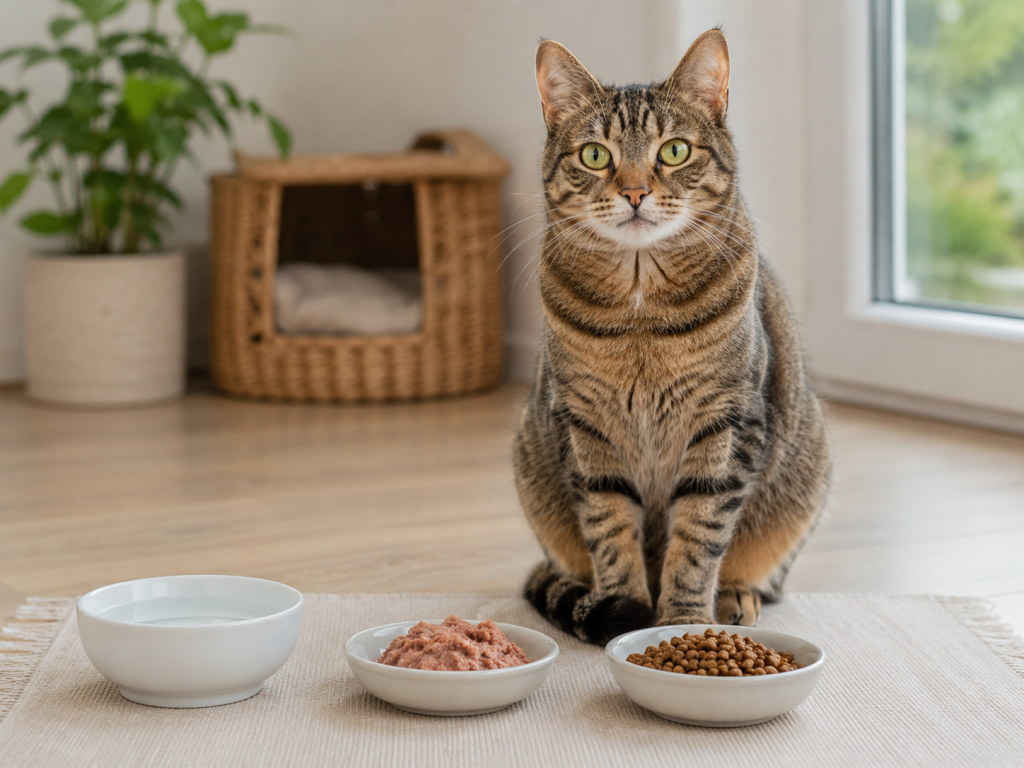
Good cat nutrition and feeding starts with one basic principle: cats need a complete and balanced diet that matches their life stage, health, body condition, and individual needs. The right diet provides appropriate amounts and proportions of protein, fat, vitamins, minerals, essential fatty acids, amino acids, and other nutrients while supplying enough energy to maintain a healthy body condition. AAFCO defines “complete” as containing all required nutrients and “balanced” as supplying those nutrients in appropriate ratios.
However, choosing cat food is only one part of good nutrition. How much you feed, how often meals are offered, how treats are used, whether your cat drinks enough water, and how their weight changes over time can all affect long-term health. Kittens, adults, pregnant or nursing cats, seniors, and cats with medical conditions may also have very different nutritional requirements.
There is no single food format or feeding method that works perfectly for every cat. Wet and dry foods can both provide complete nutrition when properly formulated, while some cats benefit from combining the two. The goal is to choose a nutritionally appropriate diet and then adjust portions and feeding habits according to the individual cat.
This complete guide explains what cats need from their food, how to read labels, how much and how often to feed, the differences between wet and dry food, healthy weight management, treats, hydration, feeding through every life stage, and when veterinary nutrition guidance becomes especially important.
Understanding What Cats Need From Their Diet
Cats have specific nutritional requirements that distinguish them from many other household animals. Their diet must provide essential nutrients in appropriate amounts, and simply feeding ingredients that sound healthy does not guarantee nutritional adequacy.
A food may contain meat, vegetables, oils, and supplements yet still be improperly balanced if the proportions are wrong. This is why the complete nutritional formulation matters more than judging a food from one attractive ingredient on the front of the package.
Merck Veterinary Manual emphasizes that feeding a complete and balanced diet for the appropriate life stage is critical to overall health. AAFCO similarly identifies growth, adult maintenance, gestation and lactation, and all life stages as recognized nutritional categories used on pet food labels.
For most healthy household cats, choosing a reputable commercial food labeled as complete and balanced for the correct life stage provides a practical foundation.
Cats Are Obligate Carnivores
Cats are often described as obligate carnivores because their biology is adapted to obtaining important nutrients from animal tissues. They have dietary requirements for nutrients such as taurine and certain vitamins and fatty acids that make appropriate formulation essential.
This does not mean that every ingredient in cat food must be meat. Commercial diets can contain carbohydrates, fiber sources, vitamins, minerals, and other ingredients while still meeting feline nutritional needs.
The important question is whether the final diet provides all required nutrients in the appropriate quantities and ratios. Evaluating a food only by whether meat appears first on the ingredient list can therefore be misleading.
A nutritionally complete formulation is more meaningful than choosing food according to marketing language alone.
What Does “Complete and Balanced” Cat Food Mean?
One of the most useful pieces of information on a cat food package is the nutritional adequacy statement. AAFCO explains that “complete” means the food contains all required nutrients, while “balanced” means those nutrients are supplied in appropriate proportions.
The statement should also identify which life stage the diet is designed to support. A food may be formulated for growth, adult maintenance, gestation and lactation, or all life stages.
This distinction matters because a kitten has different nutritional requirements from a healthy adult cat. Feeding a diet intended only for adult maintenance to a growing kitten would not provide the same nutritional assurance as a diet formulated for growth.
Treats and complementary foods may not be complete and balanced. Those products are intended to supplement the primary diet rather than replace it.
How to Read a Cat Food Label
Pet food packaging contains a large amount of information, but not every statement is equally useful. Start with the nutritional adequacy statement and intended life stage rather than focusing only on advertising terms.
Next, look for calorie information and feeding directions. AAFCO requires feeding directions on foods labeled complete and balanced, although those directions are starting estimates rather than perfect prescriptions for every individual cat.
You can also review the guaranteed analysis, ingredient list, manufacturer information, and product form. However, remember that ingredient lists are ordered by weight before processing and cannot independently tell you whether the entire formulation is nutritionally superior.
Your cat’s actual response matters too. A suitable food should support healthy body condition, normal stool, an appropriate coat, good appetite, and overall health.
How Much Food Should You Feed a Cat?
There is no single correct portion for every cat. Calorie needs vary according to body weight, age, activity, reproductive status, body condition, health, and individual metabolism.
The feeding guide on the package can provide a starting point, but Cornell notes that label recommendations are based on average animals and may provide more food than some less active cats actually need.
Measure your cat’s daily food rather than estimating portions by eye. Cups and scoops can vary, so using a kitchen scale can provide more consistent measurements when precision is important.
Most importantly, monitor the outcome. If your cat gradually gains excessive fat, the portion may be too large even if you are following the package exactly. If they lose weight unexpectedly, do not simply increase food without considering whether a medical problem could be responsible.
Calories Matter More Than the Size of the Portion
Two foods can look similar in volume while containing very different numbers of calories. A small portion of an energy-dense food may provide as many calories as a much larger portion of another diet.
This is why changing brands without adjusting quantity can unexpectedly cause weight gain or loss.
Check the calorie content of the food and consider every source of calories throughout the day. Treats, table food, food used to administer medication, and snacks from different family members all count.
Merck provides calorie formulas for estimating feline energy requirements, but it also emphasizes that these calculations are estimates rather than exact needs for every individual animal.
Your veterinarian can help establish an appropriate daily calorie target when weight control or a medical condition makes accurate feeding especially important.
How Often Should You Feed an Adult Cat?
Many healthy adult cats do well with measured meals offered at consistent times. The exact number of meals can depend on your schedule, your cat’s preferences, and any medical considerations.
Cornell notes that cats from about six months to maturity can often be fed twice daily, while once- or twice-daily feeding may work for many adults after maturity.
However, some cats prefer several smaller meals. Dividing the same daily calories into three or four portions can be useful for cats that beg frequently or eat too quickly.
Meal frequency should not accidentally increase total calories. Four meals should generally mean dividing the daily allowance into four portions rather than giving four full-sized meals.
Is Free Feeding Good for Cats?
Free feeding means leaving food available for the cat to eat whenever they choose. This is most practical with dry food because wet food should not remain at room temperature indefinitely.
Some cats regulate their intake well. Others repeatedly return to the bowl and consume more calories than they need.
Cornell warns that unlimited access to dry food can contribute to excessive calorie intake in some cats and recommends controlled meal feeding as a useful approach to weight management.
If your cat is overweight or steadily gaining weight, measured meals are usually much easier to monitor. You can still provide several small portions throughout the day without leaving an unlimited supply available.
Wet Food vs. Dry Food
Both wet and dry commercial cat foods can provide complete and balanced nutrition when appropriately formulated. One format is not automatically healthy while the other is automatically unhealthy.
Wet food contains substantially more moisture. Cornell reports that canned cat food contains at least 75% moisture, making it an important dietary source of water.
Dry food is convenient, stores easily after opening, and can work well in puzzle feeders or automatic feeders. However, it contains much less water and can be calorie-dense, making portion measurement particularly important.
The best choice depends on the individual cat. Some households feed primarily wet food, others use dry food successfully, and many combine both.
Benefits of Wet Cat Food
One of the clearest benefits of wet food is its water content. Cats eating canned diets receive a meaningful portion of their daily fluid intake directly from food.
Wet food can also be highly palatable, which may help some cats with reduced appetite. Its soft texture can be useful in certain situations, although dental disease still requires veterinary treatment rather than simply switching to softer food.
Because wet food is generally served in individual meals, it can also make portion control easier for households that would otherwise leave dry food available continuously.
However, wet food still contains calories. Feeding unlimited cans simply because a food is moist can cause excessive calorie intake.
Benefits of Dry Cat Food
Dry food can be convenient and cost-effective, particularly in multi-cat homes or when automatic feeding devices are used.
Its structure also works well with food puzzles and activity feeders, allowing part of a cat’s daily ration to become enrichment rather than appearing instantly in a bowl.
However, dry food should still be measured. A small extra handful can represent a meaningful number of calories when repeated every day.
Do not assume ordinary dry kibble will prevent dental disease simply because it is crunchy. Dental health requires its own preventive plan, and therapeutic dental diets are different from standard dry foods.
Can You Feed Wet and Dry Food Together?
Yes. Many cats can eat a combination of wet and dry foods as long as the total diet remains nutritionally appropriate and calorie intake is controlled.
Combining formats can offer flexibility. Wet food contributes additional moisture, while dry food can be used for puzzle feeders or timed meals.
The common mistake is feeding a full daily portion of wet food and a full daily portion of dry food at the same time. That can effectively provide two diets’ worth of calories.
Instead, calculate the combined daily amount. If you add calories from one food, reduce calories from the other accordingly.
How Much Water Should a Cat Drink?
Water requirements vary according to diet, environment, health, body size, and activity. A cat eating mostly wet food may drink relatively little from a bowl because much of their water comes from food.
A cat eating dry food generally needs to obtain more fluid by drinking.
Instead of focusing only on an exact number, become familiar with your cat’s normal pattern. Provide fresh water every day and make it easily accessible.
A sudden increase in thirst can be medically important. Conditions such as diabetes, kidney disease, and hyperthyroidism can alter thirst and urination, so persistent changes deserve veterinary attention.
How to Encourage a Cat to Drink More Water
Offer fresh water in clean bowls and consider providing multiple drinking locations. Some cats prefer water bowls away from food, while others enjoy fountains or moving water.
Wide bowls may be more comfortable for cats that dislike touching the sides with their facial whiskers, although individual preferences differ.
Wet food can also increase dietary water intake. Cornell identifies the high moisture content of canned food as one of its major nutritional characteristics.
Never intentionally restrict water because your cat appears to be drinking too much. Increased thirst should be investigated rather than controlled by limiting access.
How Many Treats Can a Cat Have?
Treats can be useful for training, enrichment, bonding, and administering medication. The problem develops when extras become a large percentage of the diet.
Treats may not be complete and balanced, so excessive amounts can both add calories and displace nutritionally complete food.
Keep treats modest and include them when considering total daily calorie intake. If several people in the household give treats, communicate clearly so the cat does not receive multiple hidden portions throughout the day.
You can also use a small amount of the cat’s normal food as a reward. This allows you to provide frequent positive reinforcement without automatically adding extra calories.
Should Cats Eat Human Food?
A small amount of some plain human foods may occasionally be safe, but table scraps should not become an important part of a cat’s diet. Merck advises avoiding table scraps and consulting a veterinarian before adding supplements.
Human meals may contain excessive fat, salt, seasonings, sauces, bones, or ingredients that are unsafe for cats. Foods prepared with onions or garlic, for example, should not be offered.
Regular table feeding can also encourage begging and make calorie intake difficult to control.
If you want to share a small food item with your cat, check that the specific ingredient is safe and keep the amount very small.
Foods Cats Should Never Eat
Some human foods can be dangerous to cats even in relatively small quantities. Avoid giving foods containing onions, garlic, alcohol, chocolate, caffeine, or other known toxic ingredients.
Do not allow cats to chew cooked bones. Bones can splinter, damage the mouth or digestive tract, or create an obstruction.
Foods containing unknown sweeteners, seasonings, or concentrated ingredients should also be treated cautiously.
If your cat consumes something potentially toxic, contact a veterinarian or appropriate animal poison service promptly rather than waiting for symptoms to develop.
Do Cats Need Carbohydrates?
Cats do not require carbohydrates in the same way they require certain essential nutrients, but appropriately processed carbohydrate ingredients can still be used in nutritionally complete commercial foods.
The presence of rice, corn, wheat, peas, or another carbohydrate source does not automatically make a diet poor quality.
Likewise, a food marketed as grain-free is not automatically healthier simply because grains are absent.
Focus on the complete formulation, nutritional adequacy, calorie density, manufacturing standards, and how well the food suits the individual cat rather than categorizing foods according to a single ingredient.
What About High-Protein Cat Food?
Protein is an important part of feline nutrition, but more is not always automatically better.
A healthy cat needs adequate high-quality protein as part of a complete and balanced diet. However, nutritional requirements depend on life stage and health, and some medical conditions may require specifically formulated diets.
Do not compare percentages between wet and dry food without considering moisture. A wet food naturally appears to have lower percentages on an “as fed” label because much of the product is water.
If comparing nutrient concentrations between dramatically different food formats, a veterinarian or veterinary nutritionist can help interpret them correctly.
Does Ingredient Order Determine Food Quality?
Not by itself. Ingredients are generally listed according to weight before processing, which means water content can heavily influence their position.
Fresh meat may appear high on the list partly because it contains substantial moisture. Meanwhile, a dried ingredient contains much less water and may contribute differently to the finished diet.
Merck also notes that ingredient lists can sometimes be misleading because similar ingredients can appear separately in a practice known as ingredient splitting.
Use the ingredient list as one piece of information, not as the sole method of judging nutritional quality.
Are Grain-Free Diets Better for Cats?
A grain-free label does not guarantee a more nutritious food. The absence of grains says little about whether the diet supplies appropriate calories, protein, vitamins, minerals, essential fatty acids, and amino acids.
Grain-free foods generally replace grains with other carbohydrate-containing ingredients rather than eliminating all carbohydrate sources.
Unless your veterinarian has identified a specific reason to avoid a particular ingredient, there is little benefit in treating “grain-free” as a universal requirement.
Nutritional adequacy for the correct life stage remains more important than marketing categories.
Raw Diets for Cats
Raw diets are sometimes promoted as more natural, but they introduce important nutritional and food-safety considerations.
A home-prepared raw diet can become nutritionally unbalanced when it is not carefully formulated. Raw meat can also carry bacteria and other pathogens that may affect pets or people.
Merck recognizes both commercial and home-prepared raw meat-based diets as a distinct feeding category requiring specific consideration.
If you are considering a raw diet, discuss it with your veterinarian rather than improvising recipes from social media. Households containing young children, older adults, pregnant people, or immunocompromised individuals should be particularly careful about foodborne pathogen exposure.
Are Homemade Cat Diets Healthy?
A home-prepared diet can theoretically meet feline nutritional requirements, but creating one correctly is much more difficult than combining meat, vegetables, and supplements.
Cats require specific amounts and ratios of essential nutrients. A recipe can look wholesome while still being deficient or excessive in important nutrients.
If you want to feed a home-cooked diet long term, work with a veterinarian who has advanced training in nutrition or a board-certified veterinary nutrition specialist.
Follow the formulation precisely. Substituting ingredients or changing supplement quantities can alter the nutrient profile.
Should You Give Your Cat Supplements?
A healthy cat eating an appropriate complete and balanced commercial diet generally should not need random vitamin or mineral supplementation.
Merck specifically advises owners not to give supplements without veterinary approval.
Adding nutrients unnecessarily can disturb the nutritional balance of the main diet. More of a vitamin or mineral is not automatically healthier.
Supplements can still have legitimate veterinary uses. The important distinction is whether there is a specific evidence-based reason for the product rather than adding it “just in case.”
Feeding Kittens
Kittens have higher nutritional demands because they are supporting rapid growth and development. Merck notes that growing kittens require additional calories, protein, fat, vitamins, and minerals compared with adult cats.
Choose food labeled complete and balanced for growth or an appropriate all-life-stages diet rather than adult-maintenance food.
Young kittens also benefit from multiple meals throughout the day. Merck recommends multiple daily feedings during kittenhood and notes that feeding frequency can gradually decrease as kittens mature.
Continue monitoring growth and body condition. A kitten needs enough calories to develop properly, but unnecessary overfeeding can still promote excessive body fat.
How Often Should You Feed a Kitten?
Very young kittens generally need to eat more frequently than adults because their stomachs are small while their energy requirements are high.
Merck advises approximately three to four meals per day for younger kittens, with frequency gradually decreasing as they mature.
By later kittenhood, many cats transition toward an adult-style meal schedule.
Use the feeding guide and veterinary advice as starting points, then adjust according to growth and body condition.
Do not intentionally restrict a growing kitten’s food simply to keep them extremely lean unless your veterinarian has recommended a specific plan.
When Should a Kitten Switch to Adult Food?
Most kittens transition from growth food to adult maintenance nutrition around the time they reach physical maturity. Merck places this transition at approximately 9 to 12 months for many cats.
However, development varies between individuals and breeds. Large-bodied cats may mature differently, and health conditions can also affect the appropriate timing.
Make the transition gradually unless your veterinarian advises otherwise.
Changing both the food and feeding schedule at the same time can create unnecessary digestive disruption, so gradual adjustments are generally easier to monitor.
Feeding Adult Cats
Adult nutrition should focus on maintaining an appropriate body condition and supporting long-term health.
Use measured portions rather than assuming an empty bowl always needs to be refilled. Adult energy needs can fall after neutering or as activity changes, and Merck’s energy guidelines reflect different estimates for intact, neutered, and obesity-prone cats.
Monitor weight rather than waiting until obesity becomes obvious. Small annual gains can accumulate gradually.
Also review the feeding plan after major lifestyle changes. A highly active young cat may require more energy than the same animal after becoming calmer and more sedentary.
Feeding Senior Cats
There is no single senior-cat diet that is perfect for every older cat.
Some cats gain weight as activity decreases, while others lose body weight or muscle as they age. Cornell notes that older cats can become either overweight or excessively thin and recommends veterinary guidance when these changes occur.
Senior cats may also develop kidney disease, hyperthyroidism, diabetes, dental disease, or other conditions that change nutritional priorities.
Do not assume that every older cat needs lower-calorie food. An underweight senior with muscle loss may have very different needs from an overweight senior with reduced activity.
Monitor weight, muscle condition, appetite, drinking, and food preferences closely.
Why Maintaining a Healthy Weight Matters
Excess body fat is not simply an appearance issue. Obesity can affect mobility and metabolic health and is associated with increased risk of conditions such as insulin resistance and diabetes.
Merck identifies obesity as a factor that predisposes cats to insulin resistance. Cornell likewise emphasizes controlled meal feeding as an important tool when managing feline obesity.
Weight management works best before severe obesity develops. Ask your veterinarian to show you how to assess body condition at home.
Regular weighing can also reveal subtle changes hidden beneath a thick coat.
How to Tell if Your Cat Is Overweight
Do not evaluate weight solely by comparing your cat with photographs online. Breed, frame, muscle mass, and coat length can dramatically change appearance.
Veterinarians commonly assess body condition by examining the ribs, waist, abdomen, and fat distribution.
You should generally be able to feel the ribs without pressing through a thick layer of fat, although they should not be sharply prominent in a healthy cat.
If you are unsure, ask your veterinarian for a body condition score and target weight. This gives you something more objective to monitor over time.
Safe Weight Loss for Cats
Never place an overweight cat on a severe crash diet.
Cats that stop eating or undergo excessive nutritional restriction can develop serious medical complications. Weight loss should be gradual and carefully managed.
Start with an accurate assessment of current calorie intake, including treats. Your veterinarian can then recommend an appropriate calorie target or weight-management diet.
Cornell emphasizes controlled weight reduction under veterinary supervision for overweight cats, particularly when medical conditions such as diabetes are present.
Regular weigh-ins can confirm whether the plan is working without causing overly rapid loss.
What If Your Cat Is Underweight?
Unexplained weight loss deserves investigation before you simply offer unlimited food.
Dental disease, gastrointestinal problems, kidney disease, hyperthyroidism, diabetes, cancer, and other illnesses can change weight or appetite.
Pay particular attention to senior cats. Cornell notes that older cats may become excessively thin because of medical problems and may need specialized nutritional management.
If your cat is losing weight despite eating normally or appears hungry while becoming thinner, contact your veterinarian.
A successful feeding plan depends on understanding why weight is being lost.
Puzzle Feeders and Enrichment
Feeding can provide mental and physical activity instead of happening only in a bowl.
Puzzle feeders require cats to manipulate, roll, paw, or investigate an object to access food. They can slow rapid eaters and make part of the daily ration more engaging.
Use food from the measured daily allowance rather than adding extra calories specifically for enrichment.
Start with an easy puzzle so your cat learns how it works. You can gradually increase difficulty as confidence develops.
For multi-cat homes, make sure each cat can access food without competition or intimidation.
Multi-Cat Feeding
Feeding several cats from one large bowl can make it difficult to know how much each individual actually eats.
One cat may consume too much while another is pushed away or eats too quickly because of competition.
Separate feeding locations can help you monitor intake and reduce social pressure. This becomes particularly important when one cat requires a prescription diet or controlled calorie intake.
Microchip-activated feeders can be useful in some households because they restrict access to the intended cat.
Watch the cats rather than assuming peaceful-looking meals mean everyone receives an appropriate amount.
Why Cats Suddenly Become Picky
Cats can develop food preferences based on texture, smell, temperature, and previous experiences. However, sudden refusal of a familiar food should not automatically be dismissed as fussiness.
Dental pain, nausea, respiratory congestion, gastrointestinal disease, stress, and many other problems can reduce appetite.
If your cat approaches food but repeatedly walks away, seems hungry yet struggles to eat, or suddenly refuses several favorite foods, consider veterinary evaluation.
A gradual preference change in an otherwise healthy cat is different from abrupt appetite loss accompanied by lethargy, vomiting, weight loss, or another symptom.
How to Change Cat Food Safely
When there is no urgent medical reason for an immediate change, transitioning gradually can make a new diet easier to accept and reduce digestive disruption.
Start by mixing a small amount of the new food with the familiar diet. Gradually increase the proportion while reducing the old food over several days.
Some sensitive cats need a slower transition.
If your veterinarian prescribes a diet for a specific disease, follow their instructions because the timing and method of transition may differ.
Stop and seek advice if the change produces significant vomiting, diarrhea, refusal to eat, or another concerning reaction.
Prescription and Therapeutic Diets
Some diets are formulated specifically to help manage medical conditions such as kidney disease, obesity, urinary disorders, gastrointestinal disease, allergies, or diabetes.
Merck notes that specialty diets can form part of the management of conditions including obesity and kidney disease.
These foods are not simply premium versions of ordinary cat food. Their nutrient profiles may be deliberately modified for a particular medical purpose.
Do not feed another cat’s therapeutic diet long term simply because it appears healthier. A diet designed for one medical condition may not be appropriate for a healthy animal or a cat with a different disease.
Feeding Cats With Diabetes
Diet can be an important part of feline diabetes management. Merck recommends a high-protein, low-carbohydrate nutritional approach as part of treatment, while Cornell also discusses low-carbohydrate therapeutic diets for diabetic cats.
However, diabetic feeding should be coordinated with insulin treatment and veterinary monitoring.
Do not dramatically change a diabetic cat’s diet, meal schedule, or calorie intake without discussing it with the veterinarian managing the condition.
Weight loss may also be needed when a diabetic cat is overweight, but it should occur gradually and under professional supervision.
Feeding Cats With Kidney Disease
Cats with chronic kidney disease may benefit from specifically formulated therapeutic diets as part of their medical management.
However, kidney disease varies in severity, and maintaining adequate calorie intake can become particularly important in cats that lose weight or appetite.
Do not independently put a healthy senior cat on a kidney diet because of age alone.
Your veterinarian should determine whether kidney disease is present and whether nutritional modification is appropriate for the individual cat.
Food Allergies and Elimination Diets
Food allergy is sometimes suspected when cats develop chronic itching, skin problems, or gastrointestinal symptoms. However, identifying a genuine food reaction requires a structured diagnostic process.
Randomly moving from chicken to salmon to grain-free food does not reliably diagnose an allergy.
Veterinarians may recommend a carefully controlled elimination diet using a novel or hydrolyzed protein formulation. During a true diet trial, unapproved treats and flavored extras can interfere with interpretation.
Follow the prescribed diet exactly for the recommended period rather than repeatedly changing products.
When a Cat Stops Eating
A cat that suddenly refuses food should be taken seriously, especially if the loss of appetite persists or occurs with vomiting, lethargy, pain, dehydration, or weight loss.
Cats need regular nutrition, and significant periods without adequate food can become medically dangerous. Liver disease can become an important complication when cats, particularly overweight cats, experience prolonged inadequate calorie intake.
Do not force food into a struggling or nauseated cat unless a veterinarian has specifically shown you how to provide nutritional support safely.
Contact your veterinarian when appetite loss is persistent, severe, or accompanied by other symptoms.
Vomiting After Eating
An isolated episode of vomiting does not always indicate a food problem. Cats can vomit for many reasons, including eating too quickly, gastrointestinal disease, foreign material, parasites, or systemic illness.
If vomiting repeatedly follows meals, examine the pattern. Note what your cat eats, how quickly they eat, what the vomit contains, and whether weight or appetite has changed.
A slow feeder or smaller meals can help some cats that consume food too rapidly, but persistent vomiting deserves veterinary investigation.
Repeatedly switching diets without identifying the cause can make the situation more difficult to interpret.
Diarrhea After Changing Food
A sudden diet change can sometimes contribute to digestive upset. This is one reason gradual transitions are useful when changing food for a healthy cat.
However, diarrhea has many possible causes beyond diet.
Persistent diarrhea, blood, vomiting, weight loss, dehydration, appetite loss, or illness in a kitten or senior cat deserves veterinary attention.
Do not repeatedly withhold food for long periods as a home treatment without veterinary advice. Cats have different nutritional considerations from humans and some other animals.
Does Your Cat Need Milk?
Adult cats do not need cow’s milk as part of a balanced diet.
Many cats also have difficulty digesting significant quantities of lactose after kittenhood, which can contribute to gastrointestinal upset.
Fresh water should remain the primary drink.
Special cat milk products may be marketed as treats, but they still provide additional calories and are not nutritionally necessary for a cat already eating a complete diet.
Feeding Pregnant and Nursing Cats
Pregnancy and lactation create much greater nutritional demands than ordinary adult maintenance.
AAFCO recognizes gestation and lactation as a distinct nutritional life stage. Merck notes that diets formulated for growth can be used to meet the high energy and nutrient needs of pregnant and lactating queens.
Nursing queens can require substantially more energy because milk production is demanding.
Work with your veterinarian to monitor body condition and determine an appropriate food and feeding schedule throughout pregnancy and nursing.
Common Cat Feeding Mistakes
One of the most common mistakes is estimating portions without knowing how many calories the cat actually receives. Small daily overages can gradually lead to substantial weight gain.
Another mistake is assuming all products labeled natural, premium, grain-free, or high-protein are automatically nutritionally superior. Marketing language should not replace assessment of nutritional adequacy.
Feeding too many treats and table scraps can also dilute the balanced main diet while increasing calorie intake.
Finally, abrupt diet changes and unnecessary supplementation can create avoidable problems. Consistency and evidence-based nutrition are usually more useful than constantly chasing new food trends.
Frequently Asked Questions About Cat Nutrition and Feeding
Is Wet Food Better Than Dry Food for Cats?
Not automatically. Both wet and dry foods can provide complete and balanced nutrition when appropriately formulated.
Wet food has a clear advantage in moisture content. Cornell reports that canned food contains at least 75% water.
Dry food can still be appropriate for many healthy cats when portions and hydration are managed properly.
How Many Times a Day Should I Feed My Cat?
Many healthy adult cats can be fed twice daily, although several smaller meals may also work well. Cornell describes twice-daily feeding as appropriate for many cats after kittenhood.
The total daily calories matter more than whether those calories are divided into two, three, or four meals.
Can Cats Eat the Same Food Their Whole Lives?
Nutritional needs change with growth, reproduction, aging, body condition, and health.
Kittens need food suitable for growth, while healthy adults generally need maintenance nutrition. Medical conditions may require further changes.
Review the feeding plan periodically instead of assuming one product will remain ideal forever.
Should Cats Have Food Available All Day?
Some cats can regulate free access to food, but others overeat. Unlimited dry food can make calorie intake difficult to monitor.
Measured meals provide much clearer control, particularly for overweight or food-motivated cats.
Can Cats Live on Dry Food Only?
A complete and balanced dry food can meet nutritional requirements for many healthy cats, provided they maintain appropriate hydration and body condition.
Fresh water must always be available.
Individual medical conditions can change the recommendation, so your veterinarian may suggest a different feeding strategy for certain cats.
Can Cats Live on Wet Food Only?
Yes, if the wet food is labeled complete and balanced for the cat’s appropriate life stage.
Do not assume every canned product is a complete diet. Some products are intended only for supplemental feeding or treats.
Check the nutritional adequacy statement.
Why Is My Cat Always Hungry?
Some cats beg because they have learned that begging produces food, while others may not feel satisfied by their current feeding routine.
Persistent increased appetite can also accompany medical conditions. Hyperthyroidism, for example, can cause weight loss despite excessive appetite.
If hunger increases dramatically or occurs with weight loss, increased thirst, vomiting, or behavioral changes, contact your veterinarian.
How Do I Know if My Cat Is Eating Enough?
Monitor body weight, body condition, muscle condition, appetite, and general health rather than relying only on whether the bowl becomes empty.
A stable healthy adult maintaining ideal body condition is usually receiving an appropriate amount of energy.
Growing kittens, pregnant cats, seniors, and cats with medical conditions require more individualized assessment.
Are Expensive Cat Foods Always Better?
No. Price alone does not determine nutritional quality.
A more useful approach is to consider whether the food is complete and balanced, appropriate for the life stage, produced by a manufacturer with strong nutritional expertise and quality control, and suitable for your individual cat.
WSAVA’s nutrition guidance emphasizes individualized nutrition and evidence-based evaluation rather than making decisions based solely on marketing.
When Should You Talk to Your Veterinarian About Diet?
Nutrition should be discussed during routine veterinary visits, especially when your cat changes life stage or body condition.
Seek more specific guidance if your cat becomes overweight or underweight, stops eating normally, develops persistent vomiting or diarrhea, drinks much more, develops urinary problems, or is diagnosed with a chronic illness.
Kittens, pregnant or nursing cats, senior cats, and animals receiving therapeutic diets also benefit from closer nutritional monitoring.
WSAVA’s Global Nutrition Guidelines emphasize that nutrition should be individually tailored rather than treated as identical for every pet.
Building a Healthy Feeding Routine for Life
Good cat nutrition and feeding does not require chasing every new pet-food trend. Start with a complete and balanced diet appropriate for your cat’s life stage, then feed an amount that maintains healthy body condition. AAFCO’s nutritional adequacy framework and veterinary nutrition guidance both emphasize the importance of matching a complete diet to the animal’s specific stage and needs.
Measure portions and include treats in the daily calorie total. Provide fresh water at all times, and remember that wet food can contribute substantially to hydration because of its high moisture content.
Kittens need growth nutrition and more frequent meals. Healthy adults generally need carefully controlled maintenance calories, while senior cats should be monitored closely for weight, muscle, appetite, and health changes. Cats with medical conditions may require therapeutic diets designed for their specific disease.
Most importantly, evaluate the cat rather than the advertising on the package. A suitable feeding plan should support healthy body condition, normal energy, good digestion, an appropriate coat, and long-term health.
If your cat’s weight, appetite, thirst, digestion, or normal feeding behavior changes significantly, talk with your veterinarian. Nutrition is one of the foundations of feline health, but the best diet is always the one that safely meets the needs of the individual cat.