
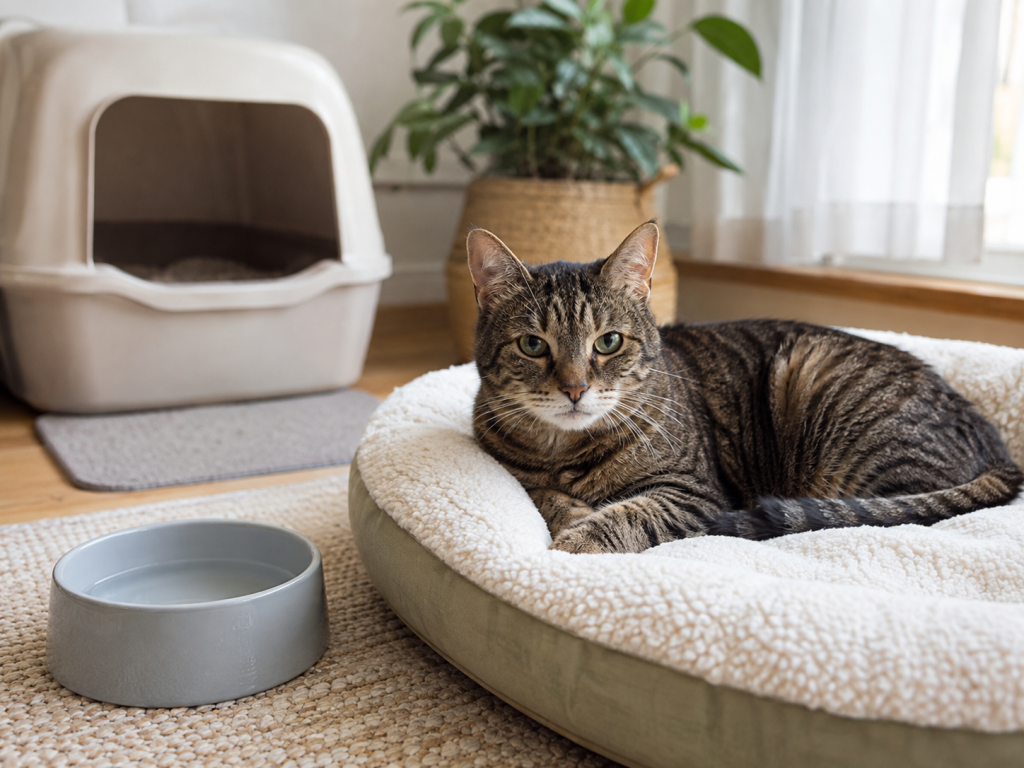
Signs your senior cat may need extra care include unexplained weight loss, difficulty jumping, changes in appetite or thirst, poor grooming, litter box problems, increased vocalization, hiding, and changes in sleep or behavior. These changes should not automatically be dismissed as normal aging. Older cats have a higher risk of chronic disease, pain, dental problems, mobility issues, and cognitive changes that can develop gradually.
Cats are particularly good at hiding discomfort, so the first signs of a problem may be subtle. A senior cat may simply stop jumping onto a favorite chair, sleep somewhere different, or become less interested in interaction. Feline veterinary guidance emphasizes that behavioral changes can be important indicators of pain or illness.
Paying attention to these small changes can help you recognize when your senior cat needs additional support or veterinary care.
Your Senior Cat Is Losing Weight
Unexplained weight loss is one of the most important changes to notice in an older cat. Even gradual loss can indicate that your cat is losing fat, muscle, or both.
Weight loss can occur with many different health problems, including digestive disease, kidney disease, diabetes, hyperthyroidism, dental problems, and cancer. For example, diabetes can cause weight loss despite an increased appetite, while digestive disorders can cause weight loss with either reduced or increased food intake.
Because cats have thick coats, gradual weight loss can be surprisingly difficult to see. Gently feeling along the spine, shoulders, and hips can sometimes reveal muscle loss before it becomes visually obvious.
Weighing your senior cat periodically can also help identify trends. If your cat is losing weight without an intentional diet change, schedule a veterinary examination rather than assuming that becoming thinner is a normal part of aging.
Your Cat Is Eating More or Less Than Usual
Changes in appetite deserve attention at any age, but they become particularly important in senior cats.
A cat that suddenly eats much less may be experiencing dental pain, nausea, digestive problems, kidney disease, or another illness. Older cats can also develop conditions that cause increased appetite while their body weight continues to fall.
Hyperthyroidism is one example commonly seen in older cats. Cornell notes that affected cats may experience weight loss and other physical changes.
Do not judge appetite only by whether food eventually disappears from the bowl. Notice whether your cat approaches meals enthusiastically, eats more slowly, drops food, walks away repeatedly, or seems hungry but struggles to eat.
A persistent change from your cat’s normal eating pattern deserves veterinary attention.
Your Cat Is Drinking Much More Water
An empty water bowl may seem reassuring because your cat is staying hydrated, but a sudden increase in thirst can be an important medical sign.
Diabetes, for example, commonly causes increased thirst and urination alongside weight loss. Kidney problems can also affect hydration and urine production in older cats.
You may notice that your cat visits the water bowl repeatedly, spends longer drinking, or begins using water sources they previously ignored.
The litter box can provide another clue. Larger or more numerous urine clumps may suggest increased urine production.
Never restrict access to water because your senior cat is drinking more than usual. Instead, tell your veterinarian about the change so the underlying cause can be investigated.
Your Senior Cat Is Having Trouble Jumping
A cat that stops jumping onto the sofa may not simply be becoming lazy.
Joint discomfort can cause subtle changes in movement. Cornell notes that cats with joint problems may become slower or more withdrawn, and FelineVMA pain guidance highlights reluctance to climb stairs, difficulty jumping, and altered grooming as potential pain-related changes.
Your cat may pause before jumping, use intermediate furniture as steps, climb instead of jumping, or completely stop visiting high resting places.
Because cats can hide pain well, these behavioral changes may appear before obvious limping.
A veterinary assessment can help determine whether arthritis, another painful condition, weakness, or a neurological problem is affecting mobility.
Your Cat Is Struggling With Stairs
Stairs can become increasingly difficult for cats with joint pain, muscle loss, or reduced balance.
You may notice your cat moving more slowly, stopping halfway, or avoiding a floor of the home entirely. Some cats begin sleeping downstairs because reaching their previous bedroom becomes uncomfortable.
This can affect more than recreation. If food, water, or the litter box is located on another floor, mobility problems may prevent your cat from reaching important resources easily.
Place essential resources where your senior cat spends most of their time. Adding additional water bowls, beds, and litter boxes can reduce unnecessary movement while you investigate the underlying problem.
Your Cat’s Grooming Has Changed
A healthy cat normally spends time maintaining the coat. When a senior cat suddenly looks greasy, matted, or unkempt, something may be making normal grooming more difficult.
Joint discomfort can make it painful to bend around and reach the lower back or hindquarters. Dental disease, obesity, weakness, or illness can also interfere with grooming.
Changes can occur in the opposite direction as well. Excessive licking of one particular area may indicate discomfort.
Look for matting, dandruff, greasy fur, bald areas, or parts of the coat that no longer look like the rest.
Helping with gentle brushing may improve comfort, but a major grooming change deserves investigation rather than being treated only as a cosmetic problem.
Your Cat’s Litter Box Habits Have Changed
Suddenly missing the litter box is not something you should automatically blame on age.
Cornell lists litter box changes among behaviors that can appear in older cats and advises veterinary attention for changes in health or behavior.
Mobility can contribute. A high-sided litter box that was easy to enter at age five may become difficult when a cat develops joint discomfort. Cornell recommends low-sided boxes for elderly cats and cats with mobility problems.
Urinary or digestive disease can also cause accidents.
If your senior cat suddenly urinates or defecates outside the box, consider both the physical setup and the possibility of an underlying medical condition.
Your Senior Cat Is Sleeping Much More
Cats naturally sleep for many hours, and sleep patterns can change with age. However, a noticeable increase in inactivity deserves attention when it represents a major change from your cat’s normal routine.
A painful cat may choose to remain in one comfortable position rather than walking around the home. Illness can also reduce energy and interest in normal activities.
Ask yourself whether your cat is simply sleeping longer or whether they have stopped participating in activities they previously enjoyed.
A cat that sleeps more but still wakes enthusiastically for meals and interaction presents a different picture from one that remains withdrawn, weak, or difficult to engage.
Your Cat Is Hiding More Often
Cats often seek privacy, but suddenly spending most of the day hidden can be an important change.
Cornell lists avoiding favorite resting places and hiding elsewhere among behavioral changes that may appear in older cats.
Hiding can occur with pain, illness, stress, or fear. Cats may move to quiet locations when they do not feel well because those areas provide greater security.
Look at what has changed. Has your social cat stopped greeting you? Are they spending hours under the bed when they previously slept on the sofa?
Persistent withdrawal deserves closer attention, especially when it appears with appetite loss, weight changes, reduced grooming, or lower activity.
Your Cat Has Become More Vocal
Some senior cats begin meowing more frequently, particularly at night. Cornell lists increased vocalization among changes that owners may notice in older cats.
Several different causes are possible. Pain, increased hunger, sensory decline, medical disease, anxiety, or cognitive changes can all influence vocal behavior.
Do not assume your cat is simply becoming more talkative because of age.
Pay attention to when the vocalization happens and whether your cat appears confused, distressed, hungry, or uncomfortable.
Recording unusual episodes can be useful if the behavior does not happen during the veterinary appointment.
Your Cat Seems Confused or Disoriented
Cognitive changes can occur in older cats. Cornell notes that signs of cognitive dysfunction tend to become more noticeable in cats aged 10 years and older.
You may notice your cat appearing lost in a familiar room, staring at walls, becoming trapped behind furniture, vocalizing at unusual times, or forgetting established routines.
However, cognitive dysfunction should not be diagnosed simply because an older cat behaves strangely.
Vision loss, hearing changes, pain, hypertension, neurological disease, and other medical problems can sometimes produce similar behavior.
A veterinary evaluation is important when confusion or disorientation appears.
Your Cat No Longer Wants to Be Touched
A senior cat that suddenly becomes irritable during petting may be experiencing discomfort.
Pain-related behavioral changes can be subtle, and FelineVMA guidance identifies changes in normal behavior as an important indicator of pain.
Your cat may move away when you touch the back, bite when lifted, or stop climbing onto your lap. These behaviors do not necessarily mean their personality has changed.
Pay attention to the location and situation. If touching a particular area consistently causes a reaction, tell your veterinarian.
Never give human pain medication without veterinary instructions. Many medications commonly used by people can be dangerous for cats.
Your Cat’s Teeth or Mouth Seem Painful
Dental disease is common in cats and can significantly affect comfort. Cornell identifies gingivitis, periodontitis, and tooth resorption among common feline dental diseases.
Signs can include bad breath, drooling, dropping food, chewing differently, pawing at the mouth, or reluctance to eat harder foods.
Cats may continue eating despite dental pain, so normal appetite does not guarantee that the mouth is comfortable.
Regular veterinary examinations are important because some dental problems are difficult for owners to see.
If your senior cat approaches food but repeatedly walks away or appears interested yet reluctant to chew, oral discomfort should be considered.
Your Cat Is Losing Muscle
Weight alone does not tell the whole story. Senior cats can lose muscle even when their overall body weight does not initially change dramatically.
Muscle loss may become noticeable along the spine, shoulders, hips, and hind legs. You may also notice weaker jumping or more difficulty standing.
Feline senior-care guidelines specifically include nutrition and weight management among important concerns in aging cats.
Regular veterinary examinations can track both body condition and muscle condition.
Do not attempt to solve unexplained muscle loss simply by feeding much more food. The cause should be investigated first.
Make the Home Easier for Your Senior Cat
Environmental changes can make daily life significantly easier for an aging cat.
Provide low-entry litter boxes, comfortable beds, easily accessible food and water, and steps or ramps to favorite resting areas if jumping becomes difficult. Cornell specifically recommends lower-sided litter boxes for elderly cats with mobility limitations.
Place resources on multiple floors if your cat still uses different areas of the home. Non-slip surfaces can also help cats that struggle on smooth flooring.
Warm resting areas may become particularly attractive to older cats.
These adjustments support comfort, but they should not replace veterinary care when mobility changes are new or significant.
How Often Should a Senior Cat See the Vet?
Older cats benefit from more frequent veterinary monitoring because chronic conditions become increasingly common with age.
Merck Veterinary Manual recommends veterinary examinations around twice yearly for senior cats, with additional appointments when health problems require closer monitoring.
These examinations can assess weight, muscle condition, dental health, mobility, heart and lung function, blood pressure, and other health indicators.
Your veterinarian may also recommend blood or urine testing depending on age, previous results, medications, and individual risk.
Preventive visits are particularly valuable because several senior-cat diseases develop gradually.
When Does a Senior Cat Need Veterinary Attention?
Any persistent change from your cat’s normal behavior deserves attention, even when it seems small. Cornell specifically advises that acute or gradual changes in the health or behavior of an older cat warrant veterinary evaluation.
Important warning signs include unexplained weight loss, appetite changes, excessive thirst, abnormal urination, persistent vomiting or diarrhea, difficulty moving, breathing changes, lethargy, and rapidly growing swelling.
Seek prompt care if symptoms are severe. Difficulty breathing, collapse, inability to urinate, severe weakness, or major trauma should never be treated as routine signs of aging.
Giving Your Senior Cat the Extra Care They Need
The most important signs your senior cat may need extra care are often changes from their own normal routine. Weight loss, difficulty jumping, increased thirst, litter box accidents, poor grooming, hiding, increased vocalization, confusion, and altered appetite can all provide useful clues.
Aging itself is not a disease. However, the risk of chronic pain and age-related medical conditions increases as cats live longer, making closer monitoring increasingly valuable.
Make your home easier to navigate, keep essential resources accessible, monitor body weight and litter box habits, and pay attention to subtle behavioral changes.
Most importantly, do not assume that a senior cat is simply slowing down when something changes significantly. Cats can hide discomfort extremely well, and apparently minor changes may be the first sign that additional care is needed.
Regular veterinary examinations combined with thoughtful home adjustments can help your senior cat remain comfortable, active, and engaged for as long as possible.