
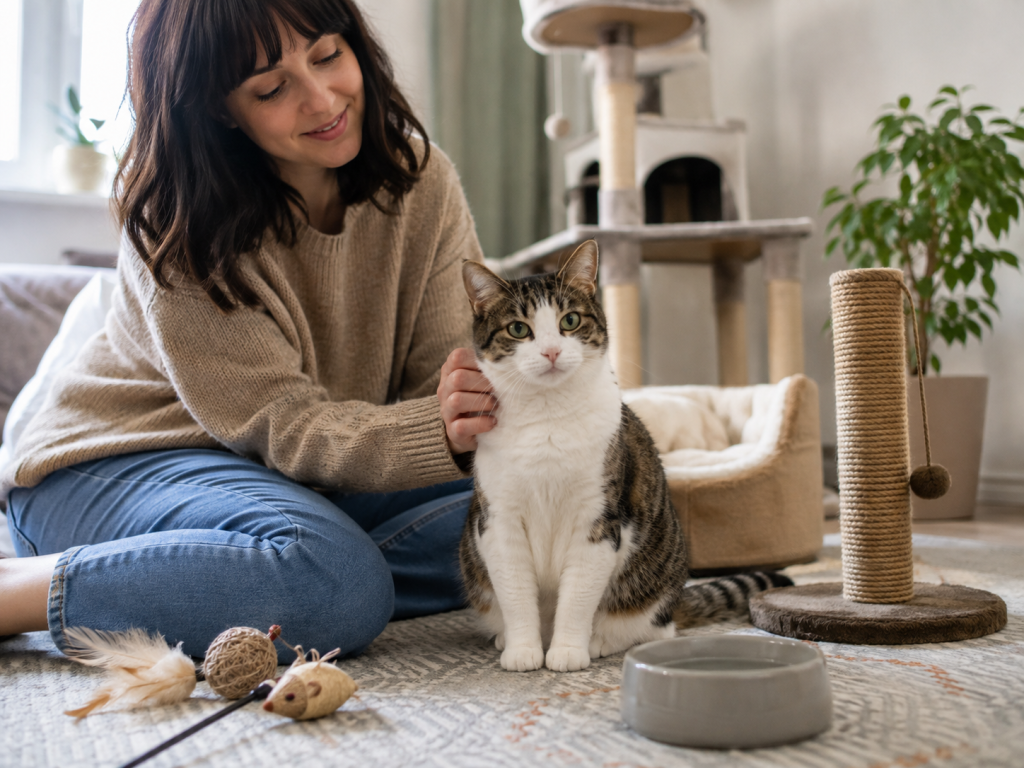
Cats are intelligent, social, highly adaptable companion animals with specific nutritional, environmental, behavioral, and health needs. Good cat care involves much more than providing food and a litter box. Cats need preventive veterinary care, appropriate nutrition, clean water, safe resting and hiding areas, opportunities to climb and scratch, mental stimulation, suitable litter boxes, grooming, dental care, and an environment that allows them to feel secure.
Cats can also be subtle when something is wrong. Changes in appetite, thirst, urination, bowel movements, movement, grooming, sleep, or behavior may provide important early clues about illness. Regular observation at home therefore plays an important role in maintaining feline health throughout life.
Understanding what cats naturally need makes it easier to create a home in which they can remain healthy, comfortable, active, and emotionally secure.
Understanding Cats
Domestic cats have retained many behaviors connected to hunting, territorial awareness, climbing, hiding, scratching, and scent communication.
Even an indoor cat that has never hunted outdoors may stalk toys, crouch before pouncing, scratch objects, investigate small movements, or seek elevated locations from which to observe the room. These behaviors are not automatically behavioral problems. They are part of normal feline behavior.
A good home gives cats safe and appropriate ways to express these natural tendencies rather than trying to eliminate them completely.
Cats Need a Safe Environment
Feeling secure is one of the foundations of feline wellbeing.
FelineVMA environmental guidelines emphasize that a cat’s physical surroundings and social environment are closely connected to physical health, emotional wellbeing, and behavior.
Cats should have places where they can rest without being disturbed. This can include beds, boxes, covered areas, shelves, cat trees, or quiet rooms.
A cat that cannot escape unwanted interaction may experience chronic stress even when food, water, and shelter are available.
Cats Benefit From Vertical Space
Cats do not experience a home only at floor level.
Shelves, window perches, sturdy furniture, and cat trees can give them elevated observation points and additional usable territory.
Vertical space is particularly valuable in multi-cat homes because it allows cats to move around without constantly passing close to one another.
Make sure climbing structures are stable and provide safe routes up and down.
Hiding Is Normal Cat Behavior
Cats often seek enclosed spaces when resting or when they feel uncertain.
A cardboard box, covered bed, space beneath furniture, or dedicated hiding area can provide security.
Do not repeatedly pull a frightened cat out of hiding unless there is an immediate safety or medical reason.
Allowing the cat to emerge voluntarily can reduce pressure and help preserve trust.
Feed a Complete and Balanced Cat Food
Cats have specialized nutritional requirements.
They require nutrients including appropriate protein, fats, vitamins, minerals, and specific amino acids such as taurine. Merck notes that cats need nutritionally balanced food and should not be maintained on dog food or casually assembled human-food diets.
Choose a complete diet appropriate for the cat’s life stage.
Kittens need nutrition formulated for growth, while most healthy adults require maintenance nutrition. Health conditions can create additional requirements.
Cats Are Not Small Dogs Nutritionally
Cats and dogs cannot simply eat the same food long term.
Cats have specific nutritional requirements that are different from those of dogs, including a dietary need for taurine.
A cat stealing a few pieces of dog food is not usually the same as feeding dog food as the primary diet.
Long-term feeding should rely on food specifically formulated to meet feline nutritional needs.
Measure Food Portions
Free access to unlimited food can make calorie intake difficult to monitor in some cats.
Measure portions according to the food’s calorie content, your cat’s weight, body condition, activity, and veterinary recommendations.
A feeding guide provides a starting point rather than an exact prescription for every cat.
Regularly reassess portions as activity and body weight change.
Monitor Body Weight
Weight changes are important health information.
Gradual weight gain can be difficult to notice because you see your cat every day. Likewise, thick fur can conceal weight or muscle loss.
Weigh your cat periodically when possible and ask your veterinarian to assess body condition during routine examinations.
Unexplained weight loss deserves particular attention, even when appetite appears normal.
Provide Fresh Water
Cats should have reliable access to fresh, clean water.
Some cats prefer multiple water stations around the home, while others may drink more readily from wide bowls or fountains.
Keep water away from dirty litter areas and clean bowls regularly.
A sudden increase in drinking can be medically important and should be discussed with a veterinarian when persistent.
Wet Food and Dry Food Can Both Be Appropriate
Both wet and dry cat foods can provide complete nutrition when properly formulated.
Wet food contains substantially more moisture, while dry food is convenient and can work well in puzzle feeders or measured portions.
Some cats eat one type exclusively, while others receive a combination.
The most important factors are nutritional adequacy, appropriate calorie intake, individual preference, and health needs.
Cats Need Appropriate Litter Boxes
Litter box setup is an important part of everyday feline care.
Cats generally prefer clean, accessible toileting areas where they do not feel trapped or threatened.
Place litter boxes in areas that are easy for the cat to reach but not surrounded by excessive noise or household activity.
Multi-level homes may benefit from boxes on more than one floor, particularly for kittens and older cats.
Keep Litter Boxes Clean
Many cats are sensitive to dirty litter boxes.
Remove urine and feces regularly and replace litter according to the type being used.
Strong fragrances may be unpleasant to some cats.
A sudden refusal to use a previously acceptable litter box can reflect environmental preferences, conflict with another pet, stress, mobility problems, or medical disease.
Urinary Changes Can Be Serious
Pay close attention to litter box behavior.
Repeated trips to the box, straining, crying, blood in the urine, or producing only tiny amounts of urine can indicate urinary disease.
A cat that repeatedly attempts to urinate but produces little or no urine may have a potentially life-threatening obstruction and requires urgent veterinary attention.
Do not assume straining is constipation without professional assessment.
Scratching Is Normal
Cats scratch for several reasons.
Scratching helps maintain claws, stretches the body, and leaves visual and scent signals in the environment.
Provide sturdy scratching surfaces rather than expecting a cat to stop scratching entirely.
Some cats prefer vertical posts, while others prefer horizontal cardboard or floor-level scratchers.
Place scratching resources near areas the cat already chooses to scratch.
Play Supports Physical and Emotional Health
Cats benefit from regular opportunities to stalk, chase, pounce, and capture toys.
Interactive wand toys can simulate parts of a hunting sequence without encouraging the cat to attack human hands.
Short sessions often work well because feline play may naturally occur in bursts.
Rotate toys so the environment remains interesting and store string-like toys safely when they are not being supervised.
Food Puzzles Can Provide Enrichment
Feeding does not always need to happen from a standard bowl.
Puzzle feeders and food-dispensing toys can encourage searching, manipulation, and problem-solving.
Use part of the cat’s normal measured food allowance rather than adding unnecessary extra calories.
Start with easy puzzles so the cat learns how they work before increasing difficulty.
Cats Need Opportunities to Rest
Cats naturally spend large portions of the day resting and sleeping.
Provide several comfortable options so the cat can choose between social areas and quieter locations.
Do not repeatedly disturb sleeping cats, especially children who may want constant interaction.
A healthy cat should still show normal interest in food, movement, grooming, and preferred activities when awake.
Grooming Is Part of Cat Health
Most healthy cats groom themselves extensively, but human assistance can still be useful.
Brushing removes loose hair, helps prevent tangles, and gives you an opportunity to examine the skin and body.
Long-haired cats typically require more frequent grooming than short-haired cats.
Merck includes grooming as part of routine feline health care and preventive monitoring.
Watch for Changes in Grooming
Changes in grooming can provide useful health information.
A cat that suddenly stops grooming may be painful, sick, overweight, or physically unable to reach certain areas.
Excessive licking can also occur with itching, pain, parasites, skin disease, or stress.
Bald patches, inflamed skin, wounds, or persistent overgrooming deserve veterinary attention.
Nail Care
Cats naturally maintain their claws through scratching, but some still require occasional trimming.
Senior cats, less active cats, or cats with abnormal claws may need additional help.
Check the nails periodically to make sure they are not becoming excessively long or growing toward the paw pads.
Introduce paw handling gradually and use appropriate nail clippers.
Dental Health Matters
Dental disease can cause significant discomfort without making a cat stop eating completely.
Bad breath, drooling, dropping food, chewing differently, pawing at the mouth, or avoiding hard food can indicate oral pain.
Routine veterinary examinations include evaluation of the mouth and can help identify dental problems before they become more advanced. Preventive dental care is part of routine feline healthcare.
Home tooth brushing with cat-safe toothpaste can be useful when introduced gradually.
Regular Veterinary Care Is Essential
Cats need veterinary care even when they appear healthy.
Routine preventive healthcare includes health monitoring, vaccination, parasite control, nutrition, behavioral wellbeing, and other age-appropriate care.
Regular examinations give veterinarians an opportunity to monitor weight, body condition, mouth, heart, lungs, eyes, ears, skin, mobility, and other health indicators.
They also create baseline information that can make later changes easier to recognize.
Vaccinations
Vaccination can protect cats against important infectious diseases.
The exact schedule depends on age, previous vaccination, lifestyle, geographic location, exposure to other cats, and health.
Indoor cats are not automatically excluded from vaccination decisions because exposure risks can still exist through escape, travel, new animals, or veterinary visits.
Your veterinarian can recommend an individualized vaccination plan.
Parasite Prevention
Cats can be exposed to fleas, ticks, intestinal parasites, and other parasites depending on lifestyle and location.
Even indoor cats may occasionally encounter parasites.
Use only products specifically confirmed as safe for cats.
Some substances used in canine parasite products can be dangerous to cats, making species-specific selection extremely important.
Kittens Need Additional Care
Kittens require more frequent feeding, veterinary visits, vaccination, parasite management, socialization, play, and supervision than healthy adult cats.
Merck notes that kittens commonly visit a veterinarian every three to four weeks during the early months for vaccination and parasite treatment.
Their environment should also be carefully kitten-proofed because small objects, cords, plants, gaps, and unstable furniture can create hazards.
Positive early experiences with carriers, handling, grooming, and veterinary visits can make future care easier.
Adult Cat Care
Healthy adult cats usually settle into more predictable routines.
Continue monitoring weight, food intake, litter box habits, dental health, grooming, activity, and behavior.
Do not stop preventive veterinary care simply because kitten vaccinations are complete.
Many chronic conditions begin developing during adulthood and may initially cause subtle changes rather than obvious illness.
Senior Cats Need Closer Monitoring
As cats age, the risk of chronic disease and changes in mobility, nutrition, cognition, and sensory function increases.
Older cats may lose weight or muscle, become less willing to jump, drink more, groom less effectively, or change sleeping and social patterns.
Merck notes that older cats may have reduced ability to digest protein and fat compared with younger adults, which can influence individual nutritional planning.
Significant changes should be discussed with a veterinarian rather than automatically labeled normal aging.
Cats Can Hide Pain
Cats may not cry or limp dramatically when they are uncomfortable.
Instead, pain may appear as hiding, irritability, reduced jumping, altered grooming, decreased play, unusual sleeping positions, appetite changes, or avoiding touch.
A cat that suddenly stops jumping onto a favorite surface may be communicating more than simple laziness.
Behavioral changes can provide important health clues.
Understand Cat Body Language
Cats communicate through posture, eyes, ears, tail position, movement, vocalizations, scent, and physical contact.
Relaxed cats often have soft eyes, neutral ears, and loose body posture.
A frightened or defensive cat may crouch, flatten the ears, dilate the pupils, hiss, growl, or attempt to escape.
Do not interpret one signal in isolation. Context and the entire body matter.
Purring Does Not Always Mean Happiness
Cats commonly purr while relaxed or receiving affection.
However, purring alone does not prove that a cat is comfortable or healthy.
A cat experiencing stress or discomfort may sometimes purr as well.
Look at appetite, posture, facial expression, movement, and the surrounding situation before deciding what the purring means.
Hissing Is Communication
Hissing generally indicates that a cat is uncomfortable and wants more distance.
Punishing the cat does not remove the fear or conflict causing the behavior.
Instead, reduce pressure and allow escape.
Repeated defensive behavior deserves investigation, particularly when it appears suddenly or occurs in situations that were previously tolerated.
Cats Have Different Social Preferences
Some cats actively seek laps and frequent physical contact.
Others prefer sitting nearby without being picked up.
Both can form strong bonds with people.
Respect the cat’s choice to leave an interaction rather than repeatedly restraining them.
Feline wellbeing guidance emphasizes giving cats control, predictable interaction, and an environment in which they can feel secure.
Multi-Cat Homes Need Enough Resources
Living with another cat does not automatically guarantee companionship.
Some cats form close social relationships, while others simply tolerate sharing the same home.
Provide enough litter boxes, feeding areas, water stations, scratching surfaces, resting places, hiding spots, and elevated spaces to reduce competition.
The ability to access essential resources without being blocked by another cat is important for emotional wellbeing.
Stress Can Affect Cat Health and Behavior
Cats may experience chronic stress when resources are inadequate, routines are unpredictable, or interactions with people or animals feel threatening.
Merck notes that inconsistent routines can contribute to stress-related behaviors and house-soiling in cats.
Feline environmental guidelines similarly emphasize that unmet environmental needs can contribute to stress and associated health or behavioral problems.
Providing predictable resources and safe places is therefore part of health care, not simply entertainment.
Keep Cats Away From Household Hazards
Many common household items can harm cats.
Secure medications, cleaning chemicals, string, thread, electrical cords, batteries, small swallowable objects, and unsafe foods.
Houseplants deserve special attention because some species are toxic.
Lilies are particularly dangerous to cats and should not be accessible in a feline household.
Check unfamiliar plants before bringing them into the home.
Indoor Cats Still Need Enrichment
Living indoors can protect cats from several outdoor hazards, but the indoor environment must still meet feline behavioral needs.
Provide climbing areas, scratching surfaces, hiding spaces, window views, play, food puzzles, and social interaction according to the cat’s preferences.
FelineVMA’s current guidance emphasizes meeting both physical and emotional environmental needs for indoor cats.
An indoor lifestyle should be safe without becoming empty or monotonous.
Carriers Should Be Part of Normal Life
Many cats only see their carrier immediately before a stressful veterinary visit.
Instead, leave the carrier accessible at home with comfortable bedding when practical.
Treats or toys can help create positive associations.
A cat that already considers the carrier a familiar resting place may be easier to transport when medical care is needed.
Microchips and Identification
Even indoor cats can escape through doors, windows, damaged screens, or during emergencies.
Microchipping provides permanent identification.
Make sure registration information remains current after moving or changing telephone numbers.
Visible identification may also be appropriate for cats that safely tolerate a breakaway-style collar.
Appetite Changes Matter
Know how much and how enthusiastically your cat normally eats.
Sudden appetite loss can occur with dental pain, nausea, gastrointestinal disease, kidney problems, stress, infection, and many other conditions.
Cats should not be allowed to go for prolonged periods without eating while owners simply wait for hunger to return.
Contact your veterinarian when appetite loss is persistent, especially when accompanied by vomiting, lethargy, weight loss, or other changes.
Monitor Drinking and Urination
Changes in thirst and urination can provide early clues about disease.
You may notice larger litter clumps, more frequent water-bowl visits, or the need to refill water more often.
Do not restrict water because you think the cat is drinking too much.
Persistent increases in thirst or urination deserve veterinary evaluation.
Watch for Vomiting and Diarrhea
An isolated episode may occasionally happen without serious disease, but repeated vomiting or persistent diarrhea is different.
Monitor appetite, hydration, energy, stool appearance, and frequency.
Contact your veterinarian when symptoms continue, contain blood, or occur with pain, weakness, appetite loss, or weight changes.
Repeated vomiting should not automatically be accepted as normal simply because a cat has hairballs occasionally.
Sudden Behavior Changes Can Be Medical
Behavior and physical health are closely connected.
Merck recommends establishing what is behaviorally normal for an individual cat because meaningful changes can help identify problems.
A friendly cat that suddenly hides, a cat that becomes aggressive when touched, or an active cat that stops jumping may be experiencing discomfort or illness.
Medical causes should be considered before treating every sudden behavioral change as a training issue.
When Should You Contact a Veterinarian?
Arrange veterinary advice when you notice persistent or significant changes such as:
- Loss of appetite
- Unexplained weight loss
- Increased thirst
- Changes in urination
- Repeated vomiting or diarrhea
- Difficulty jumping or walking
- Persistent hiding
- Sudden aggression
- Reduced grooming
- Excessive licking
- Significant dental odor or pain
- Eye or ear problems
- New lumps
- Major changes in activity or sleep
Close observation of appetite, thirst, elimination, movement, and general behavior is an important part of recognizing health changes early.
Know the Emergency Signs
Some symptoms require urgent veterinary care.
Seek immediate help for severe breathing difficulty, collapse, repeated seizures, major trauma, suspected poisoning, uncontrolled bleeding, extreme weakness, or inability to urinate.
Repeated straining in the litter box with little or no urine can be particularly dangerous.
When symptoms are severe or rapidly worsening, do not wait for a normal wellness appointment.
Building a Healthy Life for Cats
Good care for cats combines physical health, emotional wellbeing, preventive medicine, and an environment designed around normal feline behavior.
Feed complete feline nutrition rather than relying on dog food or improvised human-food diets. Cats require specific nutrients such as taurine, making species-appropriate nutrition essential.
Provide fresh water, clean litter boxes, comfortable hiding and resting areas, scratching opportunities, vertical space, play, and mental enrichment. Feline environmental guidelines emphasize that meeting these environmental needs is closely linked to physical health, emotional wellbeing, and behavior.
Maintain regular veterinary care, including appropriate vaccination, parasite prevention, dental monitoring, nutrition assessment, and health surveillance.
Most importantly, learn what normal looks like for your individual cat. Changes in eating, drinking, urination, bowel movements, movement, grooming, sleep, or behavior can all provide valuable clues that something needs attention.
Cats may be independent in many ways, but they still depend on their owners to provide a safe environment, appropriate healthcare, good nutrition, and opportunities to express normal feline behavior. Meeting those needs consistently gives them the best chance of remaining healthy and comfortable throughout every stage of life.