
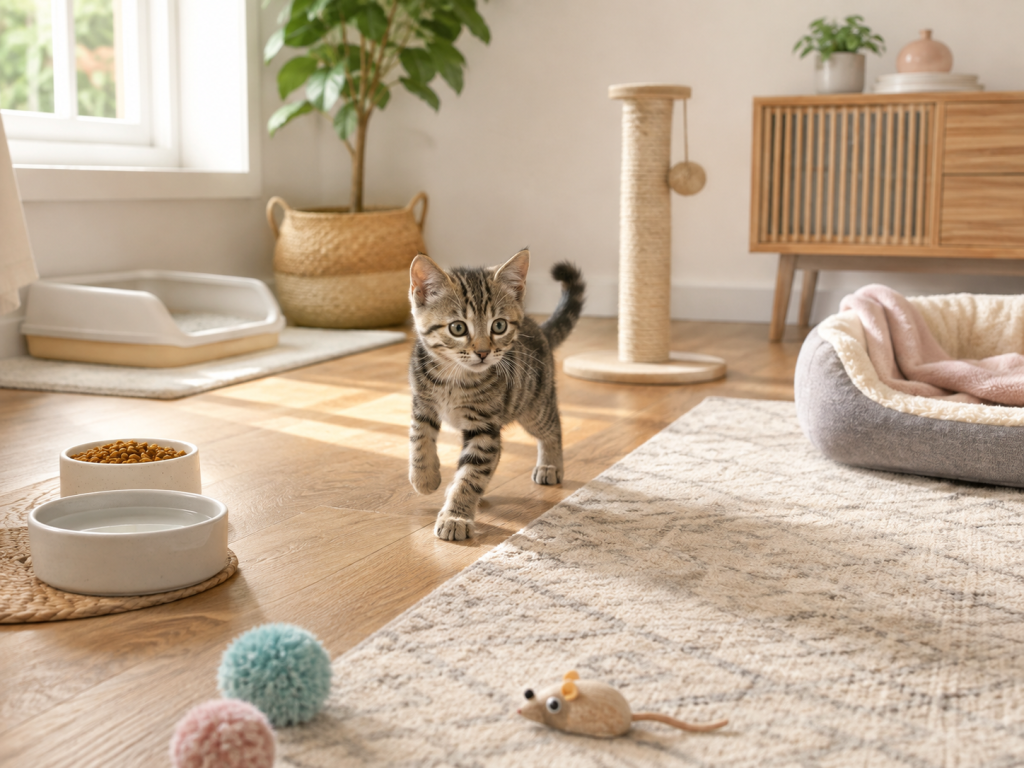
The first year of a kitten’s life is a period of rapid growth, learning, and physical development. Good kitten care during the first year includes appropriate nutrition, veterinary visits, vaccinations, parasite prevention, litter box training, socialization, play, grooming, household safety, and careful monitoring of behavior and health.
Veterinary life-stage guidelines classify cats from birth through 1 year of age as kittens. During this period, preventive care needs change quickly, so kittens usually need more frequent veterinary attention than healthy adult cats. (catvets.com)
A kitten that receives good care early has an opportunity to develop healthy routines that can continue into adulthood. However, there is no single schedule that fits every kitten perfectly. Age, health, vaccination history, lifestyle, living environment, and whether the kitten was orphaned or raised with its mother can all affect individual needs.
This complete guide explains what to expect throughout the first year and how to support your kitten as they grow from a tiny dependent animal into a young adult cat.
The First Year Is a Major Developmental Period
A kitten changes dramatically during the first 12 months. Early kittenhood involves rapid physical growth, while later months bring increasing coordination, independence, confidence, and adult-like behavior.
The AAHA/AAFP Feline Life Stage Guidelines define kittenhood as birth through 1 year. After that, cats enter the young adult stage, which extends from 1 through 6 years. (catvets.com)
Nutrition, vaccination, parasite prevention, behavior, and reproductive development all evolve during this period. This is one reason the first veterinary visit should happen early rather than waiting until the kitten appears fully grown.
Your veterinarian can create a schedule that matches your kitten’s age and previous medical history.
Bringing a New Kitten Home
The first few days in a new home can be overwhelming. Your kitten suddenly encounters unfamiliar smells, people, sounds, rooms, and routines.
Start with a calm, manageable area containing food, water, a litter box, a comfortable bed, hiding places, toys, and an appropriate scratching surface. Allow the kitten to explore gradually instead of immediately giving unrestricted access to a large home.
A smaller starting area can also make litter box training easier because the kitten does not need to travel far to find the tray.
Keep food and water away from the litter box. Give your kitten somewhere to retreat when they want to rest or observe without being touched.
Schedule an Early Veterinary Examination
A veterinary examination should be arranged soon after bringing a kitten home, especially when the medical history is incomplete.
Merck Veterinary Manual notes that kittens commonly require veterinary visits every three to four weeks until approximately six months of age. These appointments allow vaccination, parasite control, growth monitoring, and other preventive care to progress as the kitten develops. (merckvetmanual.com)
Bring any records provided by the breeder, shelter, rescue, or previous caregiver. Dates of vaccines, deworming, medications, previous illnesses, and the current diet can all help the veterinarian understand what has already been done.
The first visit is also a good opportunity to discuss microchipping, spaying or neutering, dental development, feeding, behavior, and household safety.
What Happens at a Kitten’s First Vet Visit?
The exact examination varies, but the veterinarian will generally assess overall condition and development.
Body weight, eyes, ears, mouth, heart, lungs, abdomen, skin, coat, and general mobility may all be checked. The veterinarian may also discuss stool testing, parasites, vaccination history, and whether additional screening is appropriate.
Young kittens change quickly, so weight and growth trends become useful information.
This appointment is also the time to ask practical questions. Feeding amounts, litter habits, scratching, biting, sleep, and socialization can all be discussed before small concerns become established problems.
Kitten Vaccinations
Vaccination is an important part of preventive kitten health.
The 2020 AAHA/AAFP Feline Vaccination Guidelines recommend a series of vaccines for kittens because maternal antibodies can interfere with early vaccination. For the core combination protecting against feline herpesvirus, calicivirus, and panleukopenia, kittens generally receive doses every two to four weeks through approximately 16 to 18 weeks of age. (aaha.org)
The same guidelines identify vaccines against feline herpesvirus, calicivirus, panleukopenia, rabies, and feline leukemia virus for cats younger than 1 year among core recommendations for pet cats, with timing depending on vaccine type and individual circumstances. (aaha.org)
Your veterinarian should determine the exact schedule because previous vaccination history, geography, lifestyle, and exposure risk matter.
Why Kittens Need More Than One Vaccine Appointment
One injection early in life does not necessarily provide reliable protection throughout kittenhood.
Antibodies received from the mother can help protect young kittens initially, but they can also reduce the effectiveness of some vaccines. Because the timing at which these maternal antibodies decline varies between kittens, vaccination is repeated during the early months. (aaha.org)
This is why skipping later appointments can leave gaps in protection.
Follow the full vaccination plan your veterinarian recommends rather than assuming that your kitten is finished after the first dose.
Parasite Prevention During the First Year
Kittens can carry intestinal parasites even when they appear healthy. Fleas, ear mites, worms, and other parasites may also occur depending on the kitten’s history and environment.
Veterinary care during kittenhood commonly includes parasite control. Merck identifies parasite management as one of the important preventive needs during the kitten life stage. (merckvetmanual.com)
Your veterinarian may recommend fecal testing, deworming, flea prevention, or other treatment according to risk.
Never use a dog flea product on a kitten unless a veterinarian specifically confirms that the product is safe. Age and weight restrictions also matter, so products should be chosen for the individual animal.
Feeding a Growing Kitten
Nutrition is especially important during kittenhood because growth requires substantial energy and nutrients.
Merck Veterinary Manual explains that kittens require additional calories, protein, fat, vitamins, and minerals compared with adult cats. They should eat a nutritionally balanced food formulated for growth until they reach adulthood, generally around 9 to 12 months of age. (merckvetmanual.com)
Look for a food labeled complete and balanced for growth or an appropriate all-life-stages formulation.
Adult maintenance food should not be used as the primary diet for a young growing kitten unless your veterinarian recommends it for a specific reason.
How Often Should You Feed a Kitten?
Young kittens benefit from several smaller meals because they have small stomachs but high energy demands.
Merck recommends feeding kittens younger than about four months three to four times per day. Meal frequency can gradually decrease as the kitten matures. (merckvetmanual.com)
Older kittens may transition toward two or three measured meals depending on their diet and individual needs.
Always consider total daily calories. Several meals should divide the daily food allowance rather than multiplying it.
Regular weighing and veterinary body-condition checks can help determine whether your kitten is growing appropriately.
Wet Food or Dry Food for Kittens?
Both wet and dry kitten foods can provide complete nutrition when properly formulated for growth.
Wet food has a high moisture content and can contribute substantially to daily water intake. Dry food is convenient and can be used in puzzle feeders or measured feeding routines.
Some owners combine both formats. This can work well as long as the total food remains nutritionally complete and calories are appropriate.
Do not feed a full recommended portion of each format at the same time unless the combined calories have been calculated. Doing so can result in overfeeding.
Fresh Water Should Always Be Available
Kittens should always have access to fresh drinking water.
Place bowls in quiet, accessible locations and keep them clean. Some cats prefer wide bowls or multiple water stations, while others show interest in moving water.
Do not rely entirely on milk. After weaning, water should become the normal drink.
Cow’s milk is not necessary and may cause digestive upset in cats that cannot tolerate lactose well.
Monitor Your Kitten’s Growth
A growing kitten should gradually gain size and weight, but growth should still be monitored rather than assumed.
Your veterinarian can assess body condition at repeated kitten visits. This helps determine whether the kitten is growing appropriately or becoming underweight or overweight.
A visible failure to grow, unexplained weight loss, persistent diarrhea, repeated vomiting, poor appetite, or low energy deserves veterinary attention.
Very young kittens have fewer reserves than adults, so illness can become serious more quickly.
Litter Box Training Usually Starts Naturally
Many kittens learn to use a litter box with relatively little formal training because digging and eliminating in loose substrate are natural behaviors.
Provide a clean, easily accessible tray with a low enough entrance for the kitten to climb into comfortably.
Place the box somewhere quiet but easy to reach. A kitten should not need to cross an entire large house or climb several flights of stairs every time they need to eliminate.
If the kitten is new to the home, keeping them initially in a smaller area with a nearby litter box can make successful use more likely.
Choose an Appropriate Litter Box
A kitten’s first litter box should be large enough for comfortable movement while still having an easy entrance.
As the kitten grows, the original tray may eventually become too small. Plan to upgrade rather than expecting a tiny starter box to remain suitable throughout adulthood.
Keep the box away from food and water and avoid positioning it beside noisy appliances.
If several cats live in the home, provide multiple litter boxes in separate useful locations so the kitten is not forced to compete for access.
Keep the Litter Box Clean
Young cats can develop preferences about litter box cleanliness just like adults.
Remove feces and urine-soiled litter frequently. Regular scooping also allows you to monitor bowel movements and urination.
Diarrhea, constipation, blood, repeated straining, or frequent trips to the litter box deserve attention.
A kitten repeatedly attempting to urinate while producing little or no urine needs urgent veterinary assessment.
Never Punish Litter Box Accidents
Accidents are not improved by yelling, rubbing a kitten’s nose in waste, or frightening them around the box.
Instead, clean the area thoroughly and investigate why the accident happened.
The kitten may not have reached the box in time, the tray may be difficult to enter, another pet may have interfered, or illness may be affecting elimination.
Provide additional boxes if needed and keep the environment easy to understand.
Socialization Matters During Early Kittenhood
Early social experiences can influence how a kitten responds to people, handling, animals, noises, transportation, and unfamiliar environments later.
The AVMA notes that socialization helps cats become comfortable with people, other animals, places, and activities. Well-managed kitten socialization classes can provide controlled exposure to new experiences. (avma.org)
FelineVMA identifies roughly 2 to 9 weeks of age as a particularly sensitive socialization period for kittens. (catvets.com)
Socialization should be positive rather than overwhelming. The goal is to create safe experiences, not force frightened kittens to endure situations they cannot escape.
Help Your Kitten Become Comfortable With Handling
Gentle handling can make future grooming and veterinary care easier.
Briefly touch the paws, ears, face, and body when your kitten is relaxed. Reward calm behavior with play, food, or another positive experience.
Do not restrain the kitten aggressively if they struggle. Short positive sessions are usually more useful than one long stressful session.
Handling practice can eventually help with nail trimming, brushing, dental care, carrier use, and veterinary examinations.
Introduce the Carrier Early
Many cats only see a carrier immediately before a stressful trip to the veterinarian. That can create a strong negative association.
Instead, leave the carrier accessible in the home with comfortable bedding inside. Allow the kitten to investigate, sleep, and receive treats around it.
Occasional short car rides can also help some kittens become more comfortable with transportation when introduced carefully.
Merck notes that car rides and veterinary visits can provide opportunities for habituation when handled appropriately. (merckvetmanual.com)
Play Is Essential for Kitten Development
Kittens learn and exercise through play. Chasing, pouncing, stalking, grabbing, climbing, and wrestling all form part of normal development.
Provide several short interactive play sessions throughout the day.
Wand toys are especially useful because they allow your kitten to chase and pounce without learning that human hands are toys.
Balls, lightweight toys, tunnels, climbing structures, and food puzzles can add variety.
Rotate toys periodically so the environment remains interesting.
Do Not Teach Your Kitten to Attack Hands
A tiny kitten biting fingers can seem harmless, but the same behavior becomes less enjoyable when the cat is larger.
Avoid intentionally wrestling with your kitten using bare hands.
If the kitten bites or scratches during play, calmly stop the interaction and redirect future play toward an appropriate toy.
Consistency matters. If some family members encourage hand attacks while others discourage them, the kitten receives conflicting information.
Scratching Is Normal Behavior
Scratching is not a bad habit that kittens need to eliminate. Cats scratch to maintain their claws, stretch, mark areas, and perform normal feline behavior.
Provide appropriate scratching surfaces from the beginning.
Some kittens prefer vertical scratching posts, while others like horizontal cardboard surfaces. Offering both helps you discover individual preferences.
Place scratching surfaces near sleeping areas and locations where your kitten already tries to scratch.
Reward appropriate scratching rather than punishing natural behavior.
Provide Safe Climbing Opportunities
Kittens often enjoy vertical space.
Cat trees, shelves designed for pets, stable furniture, and window perches can give them opportunities to climb and observe the home from above.
Make sure structures are secure. A lightweight unstable cat tree can tip when an energetic kitten launches onto it.
Young kittens may also climb higher than they can confidently descend, so supervise access to difficult locations at first.
Kitten-Proof Your Home
Kittens investigate with their paws and mouths, which can turn ordinary household objects into hazards.
Secure electrical cords where possible and remove small items that could be swallowed. Hair ties, string, thread, ribbon, rubber bands, and similar objects can be particularly dangerous if ingested.
Check washing machines, dryers, cabinets, recliners, and other enclosed spaces before closing or operating them.
Window and balcony safety also matters. Screens should be secure enough to prevent a curious kitten from pushing through.
Be Careful With String and Ribbon Toys
String can be entertaining when used interactively, but it should not be left where a kitten can chew or swallow it unsupervised.
Linear objects can cause serious gastrointestinal problems when ingested.
Store fishing-pole toys, thread, sewing supplies, ribbon, and dental floss securely after use.
If you see string hanging from your kitten’s mouth or anus, do not pull it forcefully. Contact a veterinarian because part of the material may be trapped internally.
Household Plants Can Be Dangerous
Some common household plants are toxic to cats.
Lilies deserve particular caution because true lilies and daylilies can cause severe kidney injury in cats even after relatively small exposures.
Keep potentially toxic plants completely inaccessible rather than assuming a kitten will ignore them.
Before bringing a new plant into the home, confirm whether it is safe for cats.
If your kitten chews a potentially toxic plant, contact a veterinarian or animal poison service promptly.
Human Medications Must Be Secured
Kittens can chew packaging, knock bottles from counters, or swallow dropped pills.
Human medication should always be stored securely.
Never give a kitten human pain medication unless a veterinarian specifically instructs you to do so. Cats metabolize many drugs differently from people, and medications commonly used by humans can be dangerous.
The same caution applies to supplements, essential oils, and topical products.
Grooming Your Kitten
Regular grooming helps your kitten become comfortable with being handled and allows you to inspect the skin and coat.
Short-haired kittens may need only occasional brushing, while longer coats often require more frequent attention to prevent tangles and mats.
Introduce grooming gently. Stop before your kitten becomes frustrated and reward calm behavior.
Look for fleas, scabs, bald patches, wounds, redness, or excessive scratching while grooming.
Nail Trimming
Kittens can learn to tolerate nail trimming when introduced gradually.
Start by gently handling the paws without cutting anything. Once the kitten remains comfortable, trim only the sharp tip of one or two nails.
Avoid cutting into the quick, which contains blood vessels and nerves.
If you are unsure where to cut, ask your veterinary team to demonstrate.
Regular scratching surfaces should still be provided even if nails are trimmed.
Start Dental Care Early
Dental habits are easier to introduce before a cat develops years of resistance to mouth handling.
Begin by helping your kitten become comfortable with gentle facial and lip handling. Veterinary-approved toothbrushes and feline toothpaste can eventually be introduced gradually.
Never use human toothpaste.
Early dental routines do not guarantee that professional dental care will never be needed, but they can become one useful part of preventive oral health.
Your veterinarian should also check your kitten’s developing teeth during routine examinations.
Spaying or Neutering
Spaying or neutering should be discussed with your veterinarian during kittenhood.
Cats can reach sexual maturity surprisingly early. Merck notes that cats can become sexually mature at approximately six months of age. (merckvetmanual.com)
The appropriate timing can depend on health, body size, veterinary recommendations, and individual circumstances.
Discuss the procedure before sexual maturity rather than waiting until unwanted reproductive behavior or pregnancy becomes possible.
Microchipping and Identification
Microchipping provides permanent identification that can help reunite a lost cat with an owner.
Even indoor kittens can escape through open doors, damaged screens, or during emergencies.
Ask your veterinarian when microchipping is appropriate. Once implanted, register the chip and keep your contact information updated.
A collar and identification tag can provide another layer of identification if your cat safely tolerates an appropriate breakaway collar.
Introducing a Kitten to Another Cat
Do not assume that two cats should immediately become friends because one is young.
Begin with separation and allow both cats time to become familiar with each other’s scent. Gradual visual contact can follow once both animals appear comfortable.
Provide separate food, water, litter boxes, beds, hiding areas, and scratching resources.
Never force the cats together to “work it out.” Fear or aggressive conflict during an early meeting can make future introductions more difficult.
Introducing a Kitten to a Dog
Initial dog-kitten interactions should be carefully controlled.
The dog should remain calm and under control, while the kitten must have easy escape routes and elevated areas.
Never allow chasing, even if it initially appears playful. A frightened kitten may quickly develop a strong negative association with the dog.
Keep sessions short and positive.
Some dogs and cats become excellent companions, but successful introductions depend more on individual behavior and management than species alone.
Sleep Is Important for Growing Kittens
Kittens often sleep for substantial periods because growth and activity are demanding.
It is normal for a kitten to alternate bursts of energetic play with deep sleep.
Provide quiet sleeping locations where the kitten can rest without constant handling.
However, excessive lethargy is different from normal sleep. A kitten that is difficult to wake, suddenly stops playing, refuses food, or appears weak may be ill.
Always compare behavior with your kitten’s usual pattern.
Why Kittens Get the Zoomies
Sudden bursts of running, jumping, climbing, and chasing are normal for many healthy kittens.
These episodes allow the kitten to release energy and practice movement.
Provide safe opportunities for vigorous play rather than trying to suppress every burst of activity.
If zoomies consistently occur during the night, additional interactive play before bedtime may help shift some activity earlier.
Normal energetic play should not include collapse, breathing difficulty, or obvious pain.
Biting and Teething
Kittens explore with their mouths and may bite during play.
Young cats also undergo dental development during the first months, which can contribute to increased chewing.
Provide safe toys and redirect biting away from hands, cords, household objects, and clothing.
If biting becomes intense, examine what triggers it. Overstimulation, rough play, fear, and frustration can all influence biting.
Do not hit or shout at the kitten. Calm redirection and consistent boundaries are more useful.
Adolescence: Around 4 Months to 1 Year
Later kittenhood often brings greater confidence and independence.
Feline behavior guidance describes adolescence as beginning around 17 weeks and continuing through approximately 1 year. Sexual maturity may also develop during this stage if the cat has not been sterilized. (catvets.com)
An adolescent kitten may test household boundaries, become more athletic, play more intensely, and show stronger hunting-related behavior.
Continue providing enrichment instead of assuming the cat has outgrown toys or social training.
This stage often determines whether early good habits continue into adulthood.
Feeding During Later Kittenhood
As growth slows, food requirements gradually change.
Continue feeding a complete growth diet until approximately 9 to 12 months unless your veterinarian recommends another schedule. Merck identifies this general period as the transition toward nutritional adulthood. (merckvetmanual.com)
Do not automatically continue unlimited kitten food once physical growth has slowed.
Monitor body condition. Adolescents can gain excess weight if calorie-dense kitten food is offered freely despite declining energy needs.
Your veterinarian can help determine when and how to transition to adult maintenance food.
Transitioning to Adult Cat Food
The change from kitten food to adult food should usually happen gradually.
Mix a small amount of the new food with the familiar kitten diet, then slowly increase the proportion over several days.
A gradual transition allows your kitten to adjust to the new taste and texture while reducing the chance of digestive upset.
Check portion recommendations again because adult food may have a different calorie density.
Once your kitten reaches adulthood, feeding should focus on maintaining ideal body condition rather than supporting rapid growth.
Establish a Healthy Adult Feeding Routine
The end of kittenhood is a good time to move toward structured adult feeding habits.
Measure food rather than continuously filling an empty bowl. Treats should remain a small part of total calorie intake.
Continue offering fresh water every day and monitor body weight.
If your cat was accustomed to several small kitten meals, you can maintain multiple smaller meals as long as total calories remain appropriate.
Continue Preventive Veterinary Care
The first year may contain many veterinary appointments, but care does not stop once the vaccination series is complete.
Adult cats should continue receiving regular veterinary examinations. Future vaccination and parasite-prevention schedules depend on lifestyle, local disease risk, previous vaccination, and health.
Keep medical records organized and remember when boosters or follow-up appointments are due.
Preventive care works best when it continues throughout life rather than being concentrated entirely in kittenhood.
Common Kitten Health Problems to Watch For
Kittens can develop many of the same diseases as adult cats, but their small size can make dehydration or loss of appetite more serious.
Watch for persistent diarrhea, vomiting, coughing, sneezing with discharge, eye problems, poor appetite, failure to gain weight, excessive scratching, abnormal litter box behavior, or low energy.
Feline panleukopenia is particularly dangerous in young kittens. Merck notes that kittens younger than five months are at especially high risk of death from this infection. (merckvetmanual.com)
This is another reason vaccination and early veterinary care matter.
When Diarrhea Needs Veterinary Attention
A single soft stool can occur after stress or dietary change, but repeated diarrhea in a young kitten deserves closer attention.
Small kittens can become dehydrated more quickly than healthy adults.
Contact your veterinarian if diarrhea is persistent, severe, contains blood, or appears with vomiting, appetite loss, weakness, or weight loss.
Do not repeatedly change foods without guidance because frequent dietary changes can complicate the picture.
Bring a fresh stool sample if your veterinarian requests one.
When Vomiting Is Concerning
Kittens occasionally vomit, but repeated vomiting is not something to ignore.
Contact your veterinarian if vomiting continues, your kitten cannot keep water down, refuses food, becomes lethargic, or may have swallowed a foreign object.
String, ribbon, small toys, and other household materials can cause serious gastrointestinal obstruction.
Do not induce vomiting at home unless a veterinarian or animal poison professional specifically instructs you to do so.
Sneezing and Eye Discharge
Respiratory infections can occur in kittens, particularly those coming from shelters, rescues, breeders, or multi-cat environments.
Occasional isolated sneezing may simply reflect irritation, but frequent sneezing combined with nasal discharge, watery or inflamed eyes, low appetite, or lethargy deserves veterinary assessment.
Congestion can reduce appetite because cats rely strongly on smell when eating.
Young kittens should be monitored closely because they can become dehydrated or weak more quickly.
Watch for Ear Problems
Repeated head shaking, scratching at the ears, dark debris, bad odor, redness, or pain can indicate an ear problem.
Merck notes that ear disease can cause scratching and head shaking in cats. (merckvetmanual.com)
Ear mites are one possibility in kittens, but infections and other conditions can cause similar signs.
Do not insert cotton swabs deeply into the ear canal or apply medication without knowing what the problem is.
Watch Your Kitten’s Appetite Closely
Kittens need regular nutrition to support growth.
A young kitten that refuses food deserves faster attention than a healthy adult cat missing a single meal.
If your kitten stops eating, becomes weak, vomits repeatedly, develops severe diarrhea, or appears unusually sleepy, contact your veterinarian promptly.
Do not wait several days hoping appetite will return on its own.
Emergency Signs in a Kitten
Some symptoms require urgent veterinary care rather than routine monitoring.
Seek prompt veterinary attention if your kitten:
- Has difficulty breathing
- Collapses or becomes severely weak
- Has repeated seizures
- Cannot urinate
- Experiences serious trauma
- Swallows a dangerous object
- May have been exposed to a toxin
- Has severe persistent vomiting
- Develops heavy bleeding
- Becomes extremely lethargic or unresponsive
Young kittens can deteriorate quickly, so erring on the side of professional advice is appropriate when symptoms appear severe.
A Month-by-Month View of the First Year
Every kitten develops at an individual pace, but a general timeline can help owners know what to expect.
Around 2 to 3 Months
Many kittens enter new homes during this period. Veterinary care, vaccination, parasite management, socialization, litter training, multiple daily meals, and safe exploration are major priorities.
This is also an important time to build positive associations with handling, carriers, scratching posts, and grooming.
Around 3 to 4 Months
Coordination and confidence increase rapidly. Play often becomes more intense, and kittens begin exploring more of the home.
Continue the veterinary vaccination schedule and maintain frequent meals with growth-formulated food.
Household safety becomes increasingly important because kittens can now climb and reach areas that were previously inaccessible.
Around 4 to 6 Months
Adolescent behavior begins emerging. Kittens become stronger, faster, and increasingly independent.
Discuss spaying or neutering if it has not already occurred because sexual maturity can develop around six months. (merckvetmanual.com)
Continue structured play and reinforce calm handling and appropriate scratching.
Around 6 to 9 Months
Many kittens begin looking physically close to adult size, but behavioral development continues.
Monitor body condition carefully because energy requirements begin changing as growth slows.
Keep using toys and enrichment rather than reducing activity simply because the cat appears almost grown.
Around 9 to 12 Months
Many cats transition from kitten growth food to adult maintenance nutrition during this period. Merck identifies approximately 9 to 12 months as the usual nutritional transition into adulthood. (merckvetmanual.com)
By the first birthday, your cat should ideally have established predictable feeding, litter box, grooming, play, scratching, and veterinary-care routines.
Common Kitten Care Mistakes
One mistake is allowing a kitten to play directly with hands. What seems harmless at eight weeks can turn into painful biting and scratching later.
Another mistake is waiting too long for veterinary care because the kitten appears healthy. Preventive care should begin before obvious illness.
Overfeeding is another concern. Kittens need significant energy, but rapid excessive weight gain is not the goal.
Finally, owners sometimes overwhelm kittens in the name of socialization. Positive exposure is valuable, but forcing a frightened kitten into intense experiences can produce the opposite result.
Creating a Daily Kitten Routine
Kittens benefit from predictable patterns even if the exact clock time changes slightly.
A simple daily routine can include measured meals, fresh water, litter box cleaning, several play sessions, rest, gentle handling, and brief grooming practice.
The kitten should also have periods when they can explore or rest independently.
Predictability can help the home feel safe while allowing enough variety for mental stimulation.
What Supplies Does a Kitten Need?
You do not need an enormous collection of products, but a few basic items make care easier.
A new kitten should have appropriately formulated food, food and water bowls, one or more litter boxes, suitable litter, a carrier, comfortable beds, scratching surfaces, toys, and basic grooming equipment.
A secure cat tree or climbing structure can add vertical space.
Choose supplies according to safety and usefulness rather than buying every product marketed specifically for kittens.
When Does a Kitten Become a Cat?
Under the AAHA/AAFP life-stage framework, kittenhood lasts from birth through the first year. A cat becomes a young adult at approximately 1 year of age. (catvets.com)
Nutritionally, many kittens transition toward adult food between approximately 9 and 12 months. (merckvetmanual.com)
Behavioral maturity can continue developing after the first birthday.
Therefore, adulthood is a gradual transition rather than a dramatic overnight change.
Frequently Asked Questions About Kitten Care
How Often Should a Kitten Go to the Vet?
Merck recommends veterinary visits approximately every three to four weeks until around six months of age, largely because kittens require repeated preventive care during early development. (merckvetmanual.com)
The exact schedule depends on vaccination history, health, and individual risk.
How Many Times a Day Should a Kitten Eat?
Kittens younger than approximately four months generally benefit from three to four daily meals. Frequency can gradually decrease as the kitten gets older. (merckvetmanual.com)
Keep feeding a complete growth diet until your veterinarian recommends transitioning to adult nutrition.
When Can a Kitten Eat Adult Cat Food?
Many cats transition to adult maintenance food around 9 to 12 months. (merckvetmanual.com)
Individual timing can vary, so consider breed, growth, body condition, and veterinary advice.
When Should a Kitten Be Spayed or Neutered?
The appropriate timing should be discussed with your veterinarian. Cats can reach sexual maturity at around six months, so the conversation should happen well before then. (merckvetmanual.com)
Do Indoor Kittens Need Vaccinations?
Yes. Indoor status does not automatically eliminate exposure risk, and core vaccination recommendations still apply. Exact vaccines and timing should be determined according to veterinary guidelines and individual risk. (aaha.org)
How Much Should a Kitten Sleep?
Kittens naturally sleep for substantial periods, particularly between bursts of play.
Rather than focusing on a specific number of hours, watch whether your kitten wakes normally, eats, plays, and behaves energetically while awake.
A sudden major increase in lethargy combined with appetite loss or illness is different from normal kitten sleep.
Should You Let a Kitten Sleep in Your Bed?
This is primarily a personal choice once the kitten can safely access and leave the bed.
Very small kittens can be vulnerable to accidental injury, so providing a secure nearby bed may be safer initially.
Regardless of sleeping location, your kitten should always have comfortable independent resting options.
How Long Can a Kitten Be Left Alone?
The safe duration depends heavily on age, health, environment, and individual behavior.
Very young kittens need more frequent feeding, supervision, and social contact than older adolescents. AVMA also notes that kittens require additional time for feeding, litter training, socialization, and supervision compared with adult cats. (avma.org)
If you regularly spend long periods away, arrange the environment so the kitten has safe food, water, litter access, enrichment, and appropriate care.
Building a Healthy Foundation for Your Kitten’s Future
The best kitten care during the first year combines preventive health care with good nutrition, safe exploration, social learning, enrichment, and predictable routines.
During the early months, veterinary appointments and vaccinations occur frequently. The AAHA/AAFP vaccination guidelines recommend repeated kitten vaccination during the period when maternal antibodies are declining, while Merck notes that kittens commonly see a veterinarian every three to four weeks until approximately six months of age. (aaha.org)
Nutrition should support growth throughout kittenhood. Feed a complete diet formulated for growth, provide several meals during the younger months, monitor body condition, and transition toward adult maintenance nutrition around 9 to 12 months when appropriate. (merckvetmanual.com)
Behavioral development deserves just as much attention. Provide positive social experiences, teach that hands are not toys, offer appropriate scratching surfaces, introduce grooming and carriers gradually, and allow your kitten to develop confidence without overwhelming them. Controlled socialization can help kittens become more comfortable with people, animals, places, and routine experiences. (avma.org)
Finally, learn your kitten’s normal behavior. Appetite, energy, weight, stool, urination, grooming, breathing, and play provide valuable clues to health. Young kittens can become seriously ill more quickly than healthy adult cats, so significant changes deserve prompt veterinary attention.
The first year moves quickly. By combining good veterinary care with safe routines and appropriate enrichment, you can help your kitten enter adulthood with a strong foundation for long-term health, confidence, and well-being.