
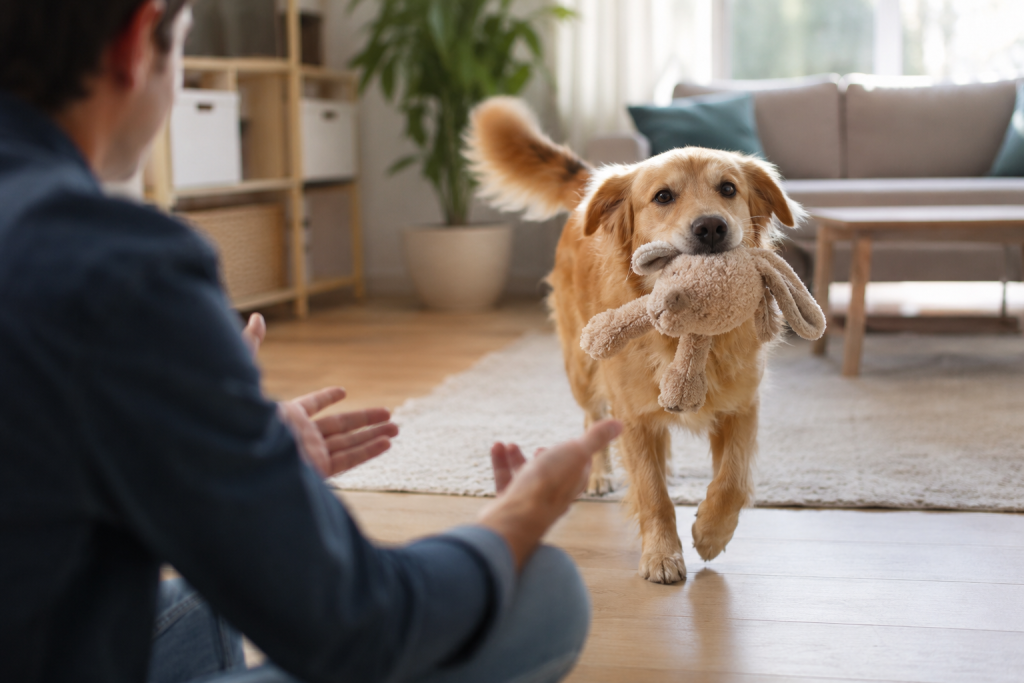
If you have ever wondered, “why does my dog bring me his toys,” the short answer is play, excitement, and connection. For many dogs, this is also a natural extension of instinctive retrieving behavior. In most cases, it is simply a friendly, engaging way for your dog to connect with you.
Some dogs do this constantly, while others only bring toys during specific moments, like greetings. Understanding the different reasons behind the behavior can help you respond in a way your dog enjoys.
This guide covers the most common reasons behind toy bringing, how to tell playful sharing apart from guarding, and what to do if your dog suddenly stops or starts the habit.
Why Dogs Bring Their Toys to You
Several overlapping motivations usually explain this behavior. Most dogs show a mix of them, rather than just one, so it helps to consider more than one explanation at a time.
Instinct to Retrieve
Many dogs carry a strong, deeply rooted instinct to pick up and carry objects around. This trait was intentionally strengthened in certain breeds through many generations of careful, selective breeding. Retrieving behavior often extends naturally to everyday toys, even without formal training.
This instinct explains why some dogs seem almost compelled to carry something in their mouth. It is not misbehavior. It is simply how these dogs are wired.
Some dogs even carry a toy around the house with no clear goal in mind. This is often just a comforting, low-stakes way to satisfy that same underlying instinct.
Inviting You to Play
For many dogs, bringing a toy is a clear invitation. It signals excitement and a desire for interaction. This is one of the more direct, easy-to-read forms of canine communication, and most owners recognize it immediately without needing to think twice.
A dropped toy at your feet, paired with a wagging tail, is rarely subtle. Your dog is asking you to engage, plain and simple. Some dogs even follow up with a play bow or a quick bark if you do not respond right away.
Seeking Attention or Connection
Sometimes the toy itself matters less than the interaction it creates. Dogs quickly learn that carrying a toy toward you reliably gets a reaction. Over time, this becomes an easy, effective way to start a moment of connection.
This is especially common in dogs who crave regular engagement throughout the day. For these dogs, the toy acts almost like a social invitation rather than an object of real interest.
Excitement and Greeting Behavior
Many dogs grab a toy the moment their owner walks through the door. This burst of excitement often has nowhere else to go after a long day apart, so the dog channels it into carrying something exciting to share. It is less about the object and more about the emotional moment. Almost any object nearby, not just a favorite toy, can end up serving this purpose.
A Learned Habit That Gets Rewarded
If bringing a toy has ever led to praise, play, or affection, your dog has learned that the behavior works. Because it succeeds, even occasionally, it tends to stick around and repeat. Even a brief smile or a few words of praise can be enough to reinforce it.
ALT TEXT: Dog bringing a toy to its owner as an invitation to play.
Is This “Gift Giving” or Something Else?
Many owners describe this behavior as their dog “giving gifts,” and it is easy to see why the idea feels appealing. While this framing is charming, the underlying motivation is usually simpler. According to Dogster, a veterinarian-reviewed pet publication, dogs typically bring toys to invite interaction rather than to offer a genuine gift in the human sense.
That said, the behavior still reflects something meaningful. It shows trust, comfort, and a desire to include you in the dog’s world. The label matters less than the connection behind it.
It also explains why dogs rarely bring toys to strangers. The behavior is usually reserved for people the dog already feels comfortable and familiar with.
Toy Bringing vs. Guarding: An Important Difference
Bringing a toy to share is very different from guarding a toy defensively. Recognizing the difference matters for safety and training, especially in households with children.
Signs of healthy toy-sharing behavior include:
- Loose, wiggly body language while approaching
- Willingness to drop the toy or let you touch it
- A relaxed tail and open mouth
- No stiffening when you reach toward the toy
Signs of possible guarding behavior include:
- Stiffening or freezing when you approach
- Growling or lip curling near the toy
- Reluctance to release the toy, paired with tension
- Snapping or quick, sharp movements
If guarding behavior appears, avoid forcing the toy away. Instead, trade for a treat or a different toy, and consider consulting a trainer if the pattern continues. Resource guarding can escalate if it is ignored.
It also helps to avoid punishing a dog for guarding. A harsh reaction can make the dog more defensive next time, rather than resolving the underlying insecurity.
Why Some Dogs Do This More Than Others
Not every single dog brings toys with quite the same level of enthusiasm. A few factors help explain the difference, and knowing them can help you set realistic expectations for your own dog.
Breed Tendencies
Retrieving breeds, including Labrador Retrievers, Golden Retrievers, and other sporting breeds, were historically developed over generations to carry game gently in their mouths. According to the American Kennel Club, these breeds were bred for a soft, careful grip, which likely contributes to their strong tendency to carry and deliver objects.
Personality
Playful, people-oriented dogs generally bring toys more often than independent or reserved dogs. This reflects personality more than intelligence or affection level. A quieter dog may show the same love in calmer, less demonstrative ways.
Early Experiences
Dogs who were regularly rewarded for bringing objects as puppies often continue the habit into adulthood. Early, positive reinforcement plays a real role in how consistent the behavior becomes. This is one reason the habit can look quite different from one dog to the next, even within the same household raised under similar conditions.
What It Means When Your Dog Won’t Let Go of the Toy
Sometimes a dog brings a toy but refuses to release it. This usually reflects excitement about a game of tug or keep-away, rather than guarding. It can look confusing at first, since the dog is technically approaching you rather than avoiding you.
The key difference almost always lies in body language, not in the toy itself. A playful dog holding onto a toy typically has loose, bouncy movement and an inviting posture. A guarding dog, by contrast, appears tense and still. Watching the whole body, not just the toy, usually clarifies which situation you are dealing with.
If your dog invites a game of tug, gentle back-and-forth play is generally fine. Just make sure to teach a reliable release cue so the game ends calmly rather than in a standoff.
Should You Always Play When Your Dog Brings a Toy?
Not necessarily, and that is completely fine to accept. While playing reinforces the bond between you and your dog, you do not need to respond every single time your dog approaches with a toy.
A calm acknowledgment, such as a gentle pat or a few kind words, is often enough when you are busy. Consistently ignoring the behavior, however, may cause a persistent dog to escalate with barking or pawing instead.
Setting aside a few minutes for a proper play session later in the day can also help, especially for dogs who bring toys frequently. This gives the behavior a reliable, predictable outlet.
How to Respond in a Way Your Dog Understands
A few simple habits help keep this behavior enjoyable and predictable for both of you.
- Engage briefly, even if you cannot play a full game right away
- Use a consistent word, like “drop it,” to build a reliable release cue
- Reward gentle delivery rather than jumping or grabbing motions
- Avoid chasing your dog if they resist letting go, since this can turn into an unintended game
- Redirect overly persistent toy-bringing with a short training exercise instead
These small habits shape the behavior into something predictable and pleasant, rather than something that becomes overwhelming for you or frustrating for your dog.
Life Stage Differences
This behavior can shift as your dog grows and ages.
Puppies
Puppies often mouth and carry objects while exploring the world and easing teething discomfort. Toy bringing at this age is a normal part of development and early bonding. Gently rewarding calm delivery, rather than grabbing the toy back, helps build good habits early.
Adult Dogs
Adult dogs typically settle into a consistent pattern, often tied closely to daily routines like greetings or evening playtime. This pattern usually stays fairly stable unless something meaningful in the household changes.
Senior Dogs
Older dogs may bring toys less often as energy levels decline. A sudden drop in interest, especially if paired with reduced activity overall, is worth mentioning at a veterinary visit. A gradual decline over the years, though, is a normal part of aging.
When It Might Signal Something Else
Occasionally, a sudden change in this behavior points to something beyond normal variation.
Consider mentioning it to a veterinarian if you notice:
- A sudden stop in a previously consistent habit
- Increased frequency paired with restlessness or anxiety
- Reluctance to engage with toys at all, especially in a young dog
- Guarding behavior that intensifies over time
These changes are not common, but they can occasionally reflect stress, discomfort, or an underlying health issue that deserves attention. A veterinarian can help rule out pain or illness as a contributing factor, especially if other habits change at the same time.
Frequently Asked Questions
Why does my dog bring me a toy every time I come home?
This usually reflects excitement and a desire to share the moment with you. It is one of the most common greeting behaviors among playful dogs.
Is it bad if my dog never brings me toys?
No. Many dogs show affection in other ways, such as leaning, following, or simply staying nearby. Toy bringing is just one of several normal expressions of connection.
Should I train my dog to stop bringing toys?
Only if the behavior becomes disruptive, such as constant pawing or barking for attention. Otherwise, most trainers consider it a harmless, even endearing, habit.
Can toy bringing turn into guarding over time?
It can in some dogs, especially without early guidance. Teaching a reliable “drop it” cue early on helps prevent this shift.
Why does my dog only bring toys to certain people?
This usually reflects comfort and familiarity with that person. Dogs often reserve this playful behavior for the people they trust most.
Is it okay to let my dog “win” during tug of war?
Yes, occasionally letting your dog keep the toy is generally fine. Playing this way does not encourage guarding, as long as your dog also releases the toy calmly when asked.
Key Takeaway
So, why does my dog bring me his toys? For most dogs, it is a joyful way to invite connection, share excitement, or ask for play. Watching body language helps you tell healthy sharing apart from guarding behavior that may need extra attention.
If the behavior changes suddenly or shows signs of tension, a veterinarian or trainer is a good next step. Most of the time, though, that toy at your feet is simply your dog’s way of asking you to join in.