
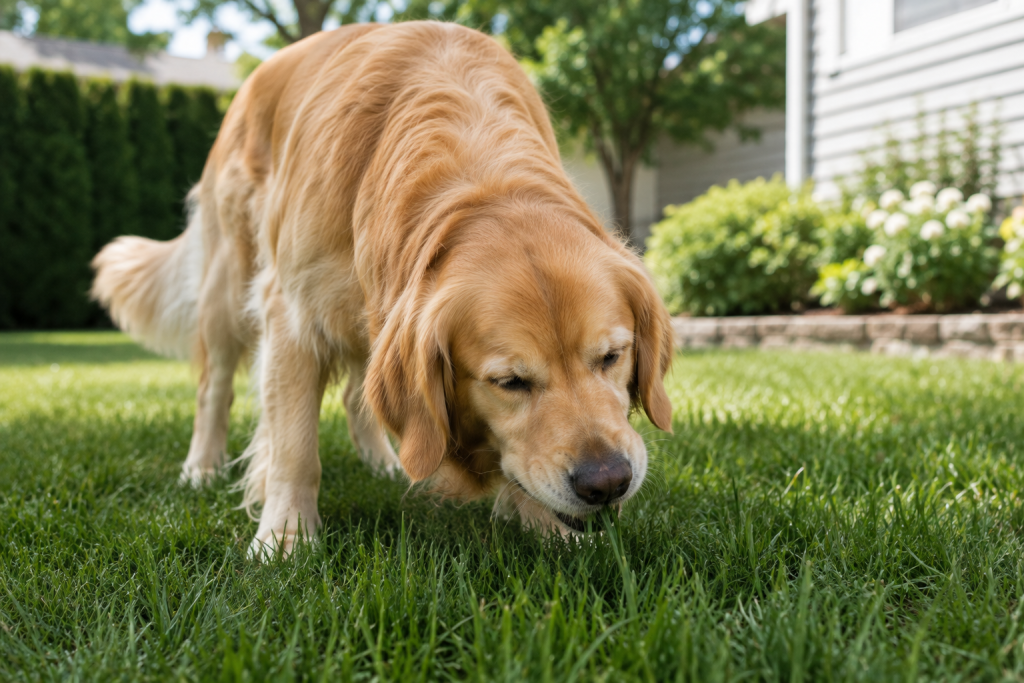
Why does my dog eat grass? In many cases, grass eating is a normal behavior and does not mean your dog is sick. Dogs may eat grass because they like the taste or texture, because they are exploring, or because the behavior has become part of their routine. Some dogs also seek grass when they feel nauseous or have an upset stomach.
Occasional grass eating is usually not a reason to panic if your dog otherwise seems healthy. However, frequent or frantic grass eating combined with vomiting, diarrhea, appetite changes, weight loss, or other unusual symptoms deserves more attention. The behavior itself is often harmless, but the pattern around it can tell you when something else may be going on.
Is It Normal for Dogs to Eat Grass?
Eating grass is a common behavior in dogs, and many healthy dogs do it from time to time. Some may nibble a few blades during a walk, while others seem to have a favorite patch in the yard that they regularly visit.
Grass eating is sometimes described as a form of pica, which refers to eating non-food material. However, a dog that occasionally eats grass is not automatically experiencing a behavioral or medical disorder. VCA notes that dogs may eat grass because they enjoy the taste, seek attention, feel nauseous, or simply develop the behavior as a habit.
The most useful question is not simply whether your dog eats grass. Instead, look at how often it happens, how intensely your dog seeks it, and whether other symptoms appear at the same time.
A dog that calmly chews a little grass during an otherwise normal walk is very different from a dog that suddenly rushes outside, frantically eats large amounts, and then repeatedly vomits.
Dogs May Simply Like the Taste and Texture
One of the simplest explanations is that some dogs enjoy eating grass. Fresh grass has a distinctive smell, texture, and moisture level that may appeal to a curious dog.
Dogs explore the world heavily through their noses and mouths. During walks, they investigate leaves, soil, sticks, plants, and many other scents. Grass can become another interesting part of that environment.
Some dogs also seem more interested in young, fresh grass than dry or coarse grass. If your dog regularly selects certain patches and otherwise behaves normally, the habit may simply be something they enjoy.
There is no need to force a healthy dog to stop every time they nibble a few blades. However, you should still pay attention to where the grass comes from because pesticides, herbicides, parasites, or other contaminants can make the environment more important than the grass itself.
Does Eating Grass Mean a Dog Has an Upset Stomach?
Sometimes it can. Dogs that feel nauseous may suddenly seek grass, especially when the behavior appears together with stomach noises, vomiting, diarrhea, drooling, reduced appetite, or restlessness.
VCA notes that some dogs eat grass when they have gastrointestinal discomfort and advises contacting a veterinarian when grass eating occurs with signs of an upset stomach.
However, the connection is not as simple as saying every dog eats grass because it wants to vomit. Many dogs eat grass without becoming sick afterward, and some may eat it for completely different reasons.
Pay attention to the sequence of events. If your dog regularly becomes restless, asks to go outside urgently, eats large amounts of grass, and then vomits, that pattern is more meaningful than occasional grazing during a walk.
Repeated nausea deserves veterinary attention because many different issues can affect the digestive system. Grass eating may be one clue, but it does not identify the underlying cause by itself.
Does Grass Make Dogs Vomit?
Grass can sometimes be followed by vomiting, but eating grass does not guarantee that a dog will throw up. A dog may graze and continue the day normally without showing any signs of illness.
When vomiting does occur, the grass may irritate the stomach or simply have been eaten because the dog already felt nauseous. This makes it difficult to know whether the grass caused the vomiting or whether the digestive discomfort came first.
If your dog vomits once but quickly returns to normal, continues eating and drinking, and behaves normally, monitor them closely. Repeated vomiting, however, should not be dismissed as a normal consequence of eating grass.
Vomiting can occur with many digestive and medical problems. Merck Veterinary Manual notes that vomit may contain food, bile, foam, grass, or other ingested material, so the presence of grass alone does not explain why vomiting occurred.
Is My Dog Eating Grass Because of a Nutritional Deficiency?
This is a common assumption, but grass eating does not automatically mean your dog is missing a vitamin or mineral. VCA notes that although eating non-food items can sometimes be associated with nutritional issues, many dogs that eat grass are otherwise healthy.
If your dog eats a complete and balanced diet appropriate for their life stage, occasional grass eating alone is not strong evidence that the food is nutritionally inadequate.
Avoid adding supplements simply because your dog likes grass. Giving unnecessary vitamins or minerals can disturb an otherwise balanced diet and may create new problems.
If grass eating becomes excessive and you are concerned about nutrition, discuss your dog’s complete diet with a veterinarian. Bring the name of the food, the amount fed each day, treats, supplements, and any other foods your dog receives.
That information is much more useful than trying to diagnose a deficiency based on grass eating alone.
Could Boredom Be the Reason?
Some dogs may eat grass because they are bored or looking for something to do. A dog left alone in a yard with little stimulation may begin chewing grass, digging, licking objects, or developing other repetitive habits.
The behavior can also become self-reinforcing. If chewing grass feels interesting or immediately gets your attention, your dog may learn that it is worth repeating.
Consider what happens before the grass eating starts. If your dog only grazes during quiet periods in the backyard but rarely does it during engaging walks or play sessions, boredom may be contributing.
Providing more appropriate activities can help. Regular walks, sniffing opportunities, food puzzles, training sessions, and interactive play can make the dog’s environment more interesting.
Do not assume boredom is the cause if your dog shows digestive symptoms, weight changes, or a sudden dramatic increase in grass eating. Behavioral and medical explanations can sometimes look similar from the outside.
Can Anxiety or Stress Cause Grass Eating?
Stress can influence many behaviors, including chewing, licking, pacing, and eating unusual objects. Therefore, some dogs may graze more when they feel anxious or overstimulated.
Look at the full context. A dog may begin eating grass during unfamiliar situations, after changes in routine, or when another stressful event occurs. However, grass eating alone is not enough to diagnose anxiety.
Other signs may include pacing, trembling, hiding, increased vocalization, inability to settle, or changes in normal social behavior. VCA describes several physical and behavioral changes that can occur when dogs experience stress.
If you suspect anxiety, focus on identifying the situations that trigger the behavior rather than only preventing access to grass. A veterinarian or qualified behavior professional can help when stress becomes frequent or begins affecting daily life.
Is Eating Grass Dangerous for Dogs?
A small amount of clean grass is unlikely to cause trouble for most dogs. However, several risks are worth considering.
Grass may have been treated with herbicides, pesticides, fertilizers, or other lawn products. Dogs should not be allowed to graze in areas where you do not know what chemicals have been applied.
Outdoor grass can also expose dogs to material contaminated by feces or parasites. VCA notes that dogs foraging in grass can potentially encounter intestinal parasites.
Eating a very large amount of grass may also create digestive problems. VCA reports that, although uncommon, large quantities of grass can accumulate in the gastrointestinal tract and potentially contribute to an obstruction.
The safest approach is to allow only occasional grazing in clean areas while preventing your dog from swallowing large mouthfuls or eating plants you cannot identify.
What If My Dog Eats Grass Every Day?
Daily grass eating is not automatically dangerous if your dog only nibbles small amounts and remains completely healthy. Some dogs simply develop a regular grazing habit.
However, frequency should be considered together with intensity and other symptoms. A dog that calmly eats a little grass every morning may have a different situation from a dog that obsessively searches for grass several times each day.
Watch for changes in appetite, weight, stool, vomiting, energy, thirst, and general behavior. If the grass eating suddenly becomes much more frequent or intense, there may be a reason for the change.
It can help to keep a simple record for several days. Note when your dog eats grass, whether it happens before or after meals, whether vomiting follows, and whether any other symptoms appear.
Patterns like these can give your veterinarian useful information if an examination becomes necessary.
Should You Stop Your Dog From Eating Grass?
You do not necessarily need to stop every instance of grass eating. A healthy dog calmly nibbling a small amount of untreated grass may not require intervention.
Instead, focus on preventing unsafe situations. Do not allow grazing where lawn chemicals have recently been applied or where toxic plants may be present. You should also interrupt the behavior if your dog is rapidly swallowing large amounts.
If you want to reduce habitual grazing, redirect your dog toward another activity rather than repeatedly punishing them. Call them away, reward attention, continue the walk, or provide an appropriate enrichment activity.
Punishment may create unnecessary stress without addressing why the dog wants to eat grass.
Why Does My Dog Eat Grass and Then Vomit?
If your dog specifically eats grass before vomiting, nausea is one possible explanation. Some dogs appear to seek grass when their stomach already feels uncomfortable.
A single episode does not necessarily indicate a serious illness. Dogs occasionally experience minor digestive upset just as people do.
Repeated episodes are different. If your dog frequently eats grass and vomits afterward, or if vomiting occurs with diarrhea, weight loss, weakness, reduced appetite, or abdominal discomfort, contact your veterinarian.
Do not rely on grass as a home treatment for digestive problems. Persistent vomiting requires investigation because many different conditions can cause it.
Why Does My Dog Eat Grass but Not Vomit?
This is also very common. The dog may simply enjoy the grass or have developed a normal grazing habit.
Not vomiting after eating grass actually helps demonstrate why the idea that dogs always eat grass to make themselves sick is too simplistic. VCA notes that dogs can eat grass for several reasons, including taste and attention-seeking behavior, and they do not necessarily have an illness.
If your dog is energetic, maintains a healthy weight, eats normal meals, has normal stools, and only occasionally grazes, there may be little reason for concern.
Continue monitoring the behavior, especially if its frequency changes.
When Is Grass Eating a Sign of a Problem?
The behavior deserves more attention when it appears together with other physical or behavioral changes.
Contact your veterinarian if grass eating is associated with:
- Repeated vomiting
- Persistent diarrhea
- Loss of appetite
- Unexplained weight loss
- Significant lethargy
- Abdominal discomfort
- Excessive drooling
- Difficulty passing stool
- Frantic or compulsive grass eating
- Eating many other non-food objects
- A sudden major change in behavior
Persistent ingestion of non-food objects can be associated with pica and may require evaluation for medical or behavioral causes.
Seek prompt veterinary care if your dog repeatedly tries to vomit without producing anything, has a swollen or painful abdomen, collapses, appears severely weak, or develops another serious symptom.
How Can You Reduce Excessive Grass Eating?
Start by looking for the reason behind the behavior rather than simply removing access to every lawn.
Make sure your dog receives an appropriate complete and balanced diet and a consistent feeding schedule. Provide enough exercise, sniffing opportunities, training, play, and other forms of mental stimulation for their individual needs.
During walks, keep your dog moving if they become fixated on grazing. Reward them for responding to you and redirect them toward sniffing, walking, or another safe activity.
If the behavior tends to occur when your dog’s stomach is empty, mention the pattern to your veterinarian instead of changing meal frequency on your own. They can help determine whether digestive discomfort or another issue needs investigation.
Most importantly, seek veterinary advice when excessive grass eating is new, persistent, or accompanied by other symptoms.
Can Puppies Eat Grass?
Puppies often investigate their surroundings with their mouths, so some grass chewing may simply be part of exploration. However, puppies also tend to swallow things quickly and may have less judgment about what is safe.
Supervise outdoor time and prevent puppies from eating large amounts of grass, toxic plants, mushrooms, mulch, stones, or chemically treated vegetation.
Puppies can also be more vulnerable to certain infections and parasites depending on their vaccination and preventive-care status. For that reason, choose clean outdoor environments and follow your veterinarian’s vaccination and parasite-control recommendations.
If your puppy repeatedly eats grass and develops vomiting, diarrhea, poor appetite, or low energy, contact your veterinarian.
So, Why Does My Dog Eat Grass?
Dogs can eat grass for several reasons, and occasional grazing is often normal. Your dog may enjoy the taste and texture, explore grass out of curiosity, repeat a learned habit, or occasionally seek it when experiencing nausea or digestive discomfort.
The behavior becomes more important when the pattern changes. Frequent vomiting, diarrhea, appetite loss, weight changes, lethargy, compulsive grazing, or other unusual symptoms can indicate that your dog needs veterinary evaluation.
Allowing a healthy dog to nibble a small amount of clean, untreated grass is usually very different from letting them consume large quantities. Pay attention to chemicals, parasites, unfamiliar plants, and the amount your dog actually swallows.
In most cases, the best response is simple observation. Learn what normal grass eating looks like for your dog, watch for changes, and contact your veterinarian when the behavior appears alongside signs of illness.