
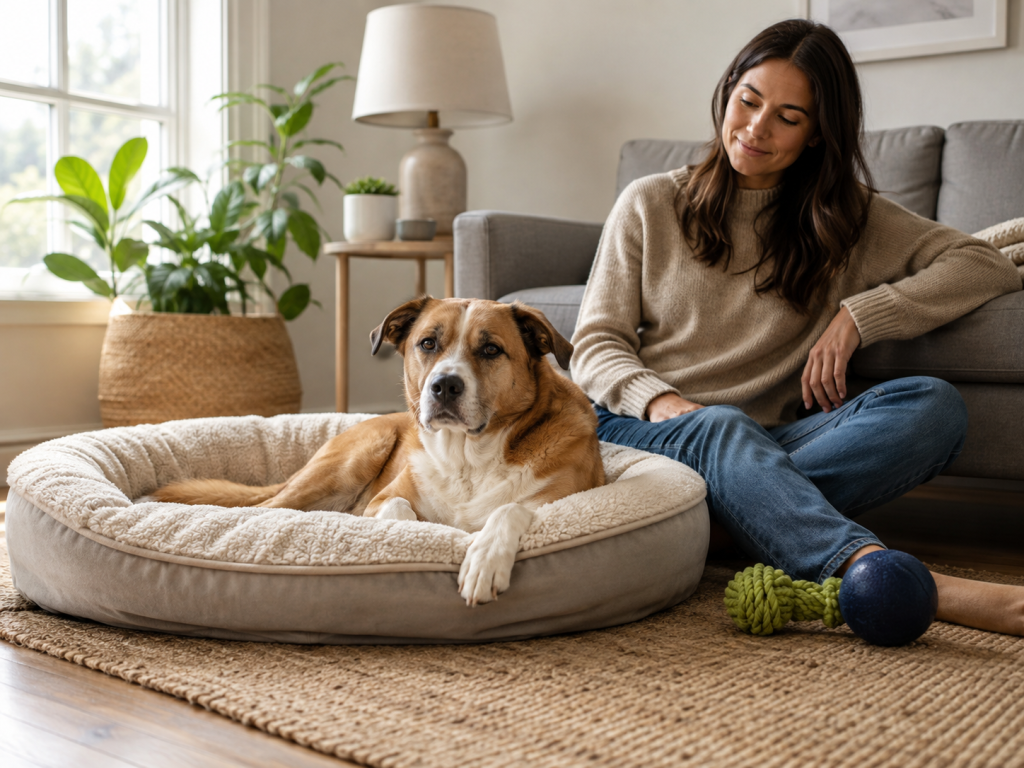
Dog anxiety and emotional wellbeing are closely connected to how safe, predictable, and manageable a dog’s everyday environment feels. Anxiety can appear as pacing, panting, trembling, hiding, excessive barking, destructive behavior, restlessness, avoidance, or difficulty settling. Fear and anxiety can overlap, but anxiety often involves anticipating a possible threat rather than reacting only to something happening in the moment.
Occasional fear is a normal part of life. A dog may become nervous during a thunderstorm, veterinary visit, unfamiliar encounter, or major change in routine. Problems develop when fear becomes intense, occurs frequently, prevents normal activities, or seriously affects the dog’s quality of life.
Supporting emotional wellbeing does not mean preventing a dog from ever experiencing stress. Instead, owners should provide security, appropriate exercise, mental stimulation, rest, predictable routines, positive training, and opportunities for dogs to move away from situations that make them uncomfortable.
What Is Anxiety in Dogs?
Fear and anxiety are related but slightly different emotional responses.
Fear usually occurs when a dog perceives an immediate threat. Anxiety involves anticipation or apprehension about something that might happen. A phobia is an especially intense fear response that can cause panic.
For example, a dog may become afraid when fireworks suddenly explode nearby. After repeated frightening experiences, the same dog might begin showing anxiety before the fireworks even start because they recognize environmental cues associated with the event.
Dogs can also develop anxiety around separation, unfamiliar people, other dogs, transportation, handling, veterinary visits, household changes, or particular sounds and environments.
Common Signs of Anxiety in Dogs
Anxiety does not look identical in every dog.
Some dogs become highly active, while others withdraw. AAHA identifies signs such as panting, urination, defecation, and other stress-related behaviors among possible indicators of anxiety or distress.
Other possible signs include:
- Pacing
- Trembling
- Excessive panting
- Lip licking
- Yawning
- Avoiding eye contact
- Hiding
- Excessive barking or whining
- Refusing treats
- Trying to escape
- Destructive behavior
- Difficulty settling
- Increased vigilance
AKC also identifies whale eye, tucked ears or tail, lip licking, yawning, panting, and looking away as common stress signals.
One signal alone does not prove anxiety. Look at the entire body, environment, and pattern of behavior.
Learn Your Dog’s Early Stress Signals
Recognizing anxiety before it becomes severe can make management much easier.
A dog may first turn the head away, lick the lips, yawn, lower the body, stop accepting treats, or become unusually focused on the environment. Later, the same dog may begin barking, lunging, attempting to escape, or shutting down.
Early intervention allows you to increase distance or change the situation before the dog becomes overwhelmed.
AKC guidance on fearful dogs recommends recognizing early warning signs such as yawning, panting, reduced interest in food or toys, and displacement behaviors.
What Causes Dog Anxiety?
There is rarely one universal cause.
Genetics can influence temperament, while early experiences, socialization, previous frightening events, health, living conditions, and learning can shape how a dog responds to stress.
Some dogs are naturally more cautious. Others develop strong fear after a particular negative experience.
Changes in the household can also contribute. Moving home, introducing a new pet, losing a companion, changing work schedules, or suddenly spending more time alone may affect emotional wellbeing.
Understanding the trigger is one of the most important steps toward helping the dog.
Separation-Related Anxiety
Some dogs become distressed when separated from particular people or left alone.
Possible signs include pacing, whining, trembling, barking, howling, destructive behavior around doors or windows, house-soiling, drooling, panting, and escape attempts.
These behaviors often occur shortly before or after the owner leaves rather than randomly throughout the day.
Not every dog that chews furniture while alone has separation anxiety. Boredom, insufficient exercise, puppy behavior, or lack of training can produce similar problems.
Recording the dog while you are away can provide useful information for a veterinarian or behavior professional.
Noise Anxiety and Phobias
Thunderstorms, fireworks, construction, alarms, and other loud sounds can frighten dogs.
Some dogs hide or seek their owners. Others pace, pant, tremble, bark, attempt to escape, or destroy doors and windows.
Severe noise phobia can become progressively worse when repeated frightening experiences continue without effective management.
Create a secure resting area before predictable events begin. Closing windows, reducing outside noise, and providing familiar bedding may help some dogs.
Dogs with severe panic may require a treatment plan from a veterinarian.
Anxiety Around Strangers
Some dogs feel uncomfortable around unfamiliar people.
They may move away, hide behind their owner, bark, growl, freeze, or refuse interaction.
Do not force a nervous dog to be touched because someone wants to say hello. Allowing the dog to maintain distance often produces a safer and more positive experience.
Visitors can ignore the dog initially rather than leaning over, staring, or reaching toward the head.
As confidence improves, voluntary interactions can be rewarded.
Anxiety Around Other Dogs
A dog that barks or lunges at another dog is not necessarily eager to fight.
Fear, frustration, excitement, or previous negative experiences can all produce reactive behavior.
Distance is often extremely useful. A dog capable of calmly observing another dog from 30 feet away may be unable to cope when forced into a face-to-face greeting.
Repeatedly pushing a frightened dog closer can worsen the emotional response. AAHA warns that overexposure can make fearful dogs worse and that dogs beginning to withdraw or show fear should not simply be given more exposure.
Veterinary Visits Can Be Stressful
Many dogs become anxious at veterinary clinics because of unfamiliar smells, animals, restraint, previous painful experiences, or the examination itself.
AAHA recommends reducing fear, anxiety, and stress during veterinary visits through appropriate handling and individualized management.
Owners can help by making the carrier or car comfortable, bringing high-value rewards when appropriate, and practicing simple handling exercises at home.
Tell the veterinary team if your dog has previously shown severe fear.
For some dogs, veterinarians may recommend medication before appointments to reduce distress.
Predictable Routines Can Improve Emotional Wellbeing
Dogs often benefit from knowing what to expect.
Regular meals, walks, bathroom opportunities, play, training, rest, and social interaction create structure.
Predictability does not require an inflexible schedule. The goal is simply to avoid a life in which essential needs are unpredictable or repeatedly disrupted.
Routine is particularly helpful for anxious dogs because it reduces uncertainty.
A dog that knows there will be regular opportunities to exercise, rest, eat, and interact may find daily life easier to manage.
Exercise Supports Emotional Health
Physical activity provides an outlet for energy and allows dogs to explore their environment.
Walks can offer much more than cardiovascular exercise. Sniffing, investigating new smells, and moving through the environment can provide valuable mental stimulation.
However, exercise should match age, breed, health, and physical condition.
A dog experiencing anxiety does not necessarily need to be exhausted with intense exercise. Mental enrichment, rest, training, and emotional security also matter.
Sniffing Is Valuable Enrichment
Dogs experience much of the world through smell.
Allowing a dog time to sniff during walks gives them opportunities to investigate information rather than simply moving continuously beside the owner.
Scent games can also provide enrichment at home.
Hide a few pieces of the dog’s measured food around a safe room or use a simple sniffing game.
Mental activities can be particularly useful on days when weather or health limits physical exercise.
Dogs Need Enough Rest
Constant stimulation is not the same as good emotional wellbeing.
Dogs need opportunities to sleep and rest without interruption. Puppies and senior dogs may require particularly large amounts of rest.
Provide a comfortable location where family members and other pets leave the dog alone.
A dog that is repeatedly disturbed while sleeping may become irritable or struggle to settle.
Balance activity with recovery rather than filling every minute with entertainment.
Give Your Dog a Safe Space
A safe resting area can help dogs regulate their own interactions.
This might be a quiet bed, open crate, separate room, or protected corner of the home.
The dog should be allowed to go there voluntarily and should not be repeatedly followed or disturbed.
Children should learn that a dog resting in its safe area needs space.
A secure retreat becomes particularly valuable during parties, visitors, thunderstorms, or other potentially stressful events.
Reward-Based Training Supports Confidence
Training can improve communication and give dogs predictable ways to earn positive outcomes.
AVSAB recommends reward-based methods for dog training and behavior treatment rather than methods based on pain, intimidation, or fear.
Reward calm behavior, voluntary attention, appropriate greetings, and useful responses such as going to a mat.
Training sessions should be short enough that the dog remains engaged.
Confidence grows more effectively when the dog understands how to succeed.
Avoid Punishing Fear
A frightened dog is experiencing an emotional response rather than deliberately misbehaving.
Punishing barking, growling, trembling, or attempts to escape may make the situation more frightening.
AVSAB notes that positive associations with frightening stimuli are important when reducing fear and anxiety.
Instead of correcting fear, increase distance and help the dog feel safer.
Once the dog is calm enough to learn, gradual behavior modification can begin.
Desensitization and Counterconditioning
Two commonly used approaches for fear and anxiety are desensitization and counterconditioning.
Desensitization means exposing the dog to a very mild version of the trigger at a level that does not overwhelm them. Counterconditioning pairs that trigger with something positive, such as food.
Merck lists these techniques among commonly used methods for modifying dog behavior.
For example, a dog nervous around strangers might initially observe a person from a comfortable distance while receiving high-value rewards.
Progress should be gradual.
Why Flooding Can Make Anxiety Worse
Flooding means exposing an animal intensely to something frightening until they stop reacting.
This can be risky because reduced movement does not necessarily mean the dog has become comfortable.
Merck notes that flooding is not commonly recommended because it can make animals worse.
Forcing a fearful dog to remain surrounded by strangers, dogs, or loud sounds may increase panic instead of teaching confidence.
Controlled gradual exposure is safer.
Socialization and Emotional Development
Positive early socialization can help puppies develop more flexible responses to everyday experiences.
However, socialization should never mean forcing puppies into frightening situations.
A puppy beginning to withdraw or display obvious fear should be given more distance rather than additional exposure. AAHA specifically warns that excessive exposure can sensitize fearful dogs.
Introduce new people, environments, sounds, handling, and appropriate animals gradually.
The goal is positive learning, not simply checking experiences off a list.
Changes in Routine Can Trigger Stress
Dogs can become unsettled when familiar routines change dramatically.
A person returning to office work after spending months at home, moving to a new house, introducing a baby, or losing another household pet can alter the dog’s environment.
Changes do not automatically cause serious anxiety, but sensitive dogs may need additional support.
Where possible, make major transitions gradually.
Maintain familiar activities such as walks, feeding times, resting areas, and individual attention while the dog adapts.
Emotional Wellbeing in Multi-Dog Homes
Dogs living together still need individual resources and rest.
Competition around food, toys, beds, doorways, or attention can create chronic tension even when serious fights are rare.
Feed separately when necessary and provide enough resting areas that one dog cannot constantly disturb another.
Watch for subtle signs such as staring, blocking access, freezing, avoidance, or one dog repeatedly leaving when the other approaches.
Not all dogs want constant canine companionship.
Dogs Can Become Frustrated
Frustration occurs when a dog is prevented from reaching something they want or completing a behavior.
Merck notes that frustration can result in redirected behavior, displacement activity, or anxiety.
A dog barking behind a fence because another animal is visible may become increasingly aroused.
Reduce opportunities to rehearse intense frustration when possible.
Training alternative behaviors and modifying the environment can make these situations easier to manage.
Emotional Wellbeing Is More Than Preventing Anxiety
A healthy emotional life also includes positive experiences.
Dogs should have opportunities to play, explore, make simple choices, interact socially, rest, learn, and perform species-appropriate behaviors.
Merck emphasizes meeting behavioral needs and preventing repeated rehearsal of problematic behavior as important parts of behavior management.
A dog’s life should therefore contain more than food, brief bathroom trips, and sleep.
Enrichment should match the individual dog rather than following one universal routine.
Allow Dogs to Make Choices
Appropriate choice can support confidence.
Let your dog decide whether to approach an unfamiliar person instead of forcing the greeting. Allow them to choose between several safe resting areas.
During walks, provide opportunities to sniff and occasionally select a safe direction.
This does not mean the dog controls every household rule.
It simply means that safe opportunities for choice can make the environment more predictable and less threatening.
Anxiety Can Affect Appetite
Some dogs eat less when highly stressed.
A dog may refuse treats at the veterinary clinic, stop eating during a thunderstorm, or become less interested in food after a major household change.
Loss of appetite can also have many medical causes.
Do not automatically diagnose anxiety when a dog suddenly stops eating. Persistent appetite changes deserve veterinary evaluation, particularly when accompanied by vomiting, diarrhea, lethargy, pain, or weight loss.
Anxiety Can Affect Sleep
Anxious dogs may struggle to settle.
They may pace at night, repeatedly change sleeping locations, remain unusually alert, or wake frequently in response to small noises.
A comfortable sleeping environment and predictable evening routine may help.
However, sudden nighttime restlessness in an older dog can have medical or cognitive causes.
Behavioral and physical health should be considered together.
Anxiety and Destructive Behavior
Destruction is sometimes a symptom rather than simple disobedience.
A dog experiencing separation-related distress may chew door frames, damage windows, dig at flooring, or destroy objects close to exits.
Other dogs destroy household items because they are young, under-stimulated, or have learned that chewing is enjoyable.
Video recordings can help determine when the behavior occurs.
The treatment depends heavily on the underlying cause.
Anxiety and Aggression
Fear and anxiety can contribute to aggressive behavior.
A dog that cannot escape may eventually growl, snap, lunge, or bite to create distance.
Do not interpret every aggressive display as an attempt to dominate.
Merck notes that fear, anxiety, impulsivity, and aggression are often addressed by changing the dog’s emotional response to the triggering situation.
Aggression creates safety concerns, so professional help is appropriate when biting or serious threatening behavior occurs.
Pain Can Look Like Anxiety
Physical discomfort can change behavior dramatically.
A dog in pain may become restless, pant, avoid touch, struggle to sleep, hide, growl, or become unusually dependent on the owner.
Medical problems can therefore resemble emotional disorders.
Merck identifies several medical conditions that can cause changes in temperament, fear, aggression, repetitive behavior, sleep, and other behavioral signs.
A sudden behavioral change should always raise the possibility of illness or pain.
Senior Dogs and Emotional Changes
Older dogs may experience increasing anxiety for several reasons.
Hearing or vision loss can make the environment less predictable. Arthritis or other pain can reduce confidence and tolerance. Cognitive changes may cause confusion, nighttime waking, vocalization, or difficulty following familiar routines.
Do not assume these changes are simply unavoidable consequences of age.
Veterinary assessment can identify medical problems and help determine whether cognitive or emotional support is needed.
Can Dogs Take Medication for Anxiety?
Yes, veterinarians may use medication as part of treatment for some dogs with significant anxiety.
Medication does not replace environmental management or behavior modification. Instead, it may reduce anxiety enough for a dog to function and learn more effectively.
The correct medication depends on the type of anxiety, health history, other medications, and individual response.
Never give your dog human anti-anxiety medication or sedatives without veterinary instructions.
Supplements and Calming Products
Many supplements, pheromone products, calming chews, pressure garments, and other products are marketed for anxious dogs.
Some individual dogs may appear to benefit from particular products, but these should not distract from identifying the actual cause of the anxiety.
Severe anxiety generally requires a broader plan involving environment, training, behavior modification, and potentially veterinary medication.
Discuss supplements with your veterinarian because ingredients can interact with medications or be inappropriate for particular health conditions.
When Should You Contact a Veterinarian?
Veterinary help is appropriate when anxiety becomes frequent, severe, suddenly appears, or interferes with normal life.
Seek guidance if your dog:
- Panics when left alone
- Attempts to escape and injures themselves
- Shows sudden aggression
- Cannot settle for long periods
- Stops eating normally
- Develops severe noise phobia
- Frequently trembles or hides
- Shows major personality changes
- Begins repetitive or compulsive behavior
- Becomes increasingly fearful despite gradual training
Behavioral evaluation should be part of veterinary medicine because emotional changes may reflect both behavioral and physical health problems.
When to Consider a Veterinary Behaviorist
Some cases need specialist care.
A veterinary behaviorist is particularly useful when fear or anxiety is severe, aggression creates a safety risk, several problems occur together, or previous treatment has not worked.
A specialist can evaluate medical factors, diagnose behavioral disorders, design behavior-modification programs, and prescribe medication when appropriate.
Early help is often easier than waiting until the behavior has been rehearsed for years.
Supporting Your Dog’s Emotional Wellbeing Every Day
Good dog anxiety and emotional wellbeing care begins with learning what your individual dog looks like when relaxed and recognizing when that behavior changes.
Provide a predictable routine, appropriate physical exercise, mental enrichment, adequate sleep, social interaction, and safe places to retreat. Give your dog choices when possible and avoid repeatedly forcing them into situations they find frightening.
Use reward-based training. AVSAB recommends reward-based methods for both ordinary training and behavior problems because methods relying on fear or pain can create welfare concerns and damage the human-dog relationship.
When your dog is afraid, increase safety rather than punishment. Gradual desensitization and counterconditioning can help change emotional responses, while overwhelming exposure can make fear worse.
Most importantly, remember that emotional and physical health are connected. Sudden anxiety, aggression, restlessness, sleep disruption, or personality changes can sometimes result from pain or disease rather than a purely behavioral problem.
A dog does not need to be fearless to have good emotional wellbeing. The goal is a life in which they feel secure enough to eat, sleep, explore, play, interact, learn, and recover from ordinary challenges without persistent distress.