
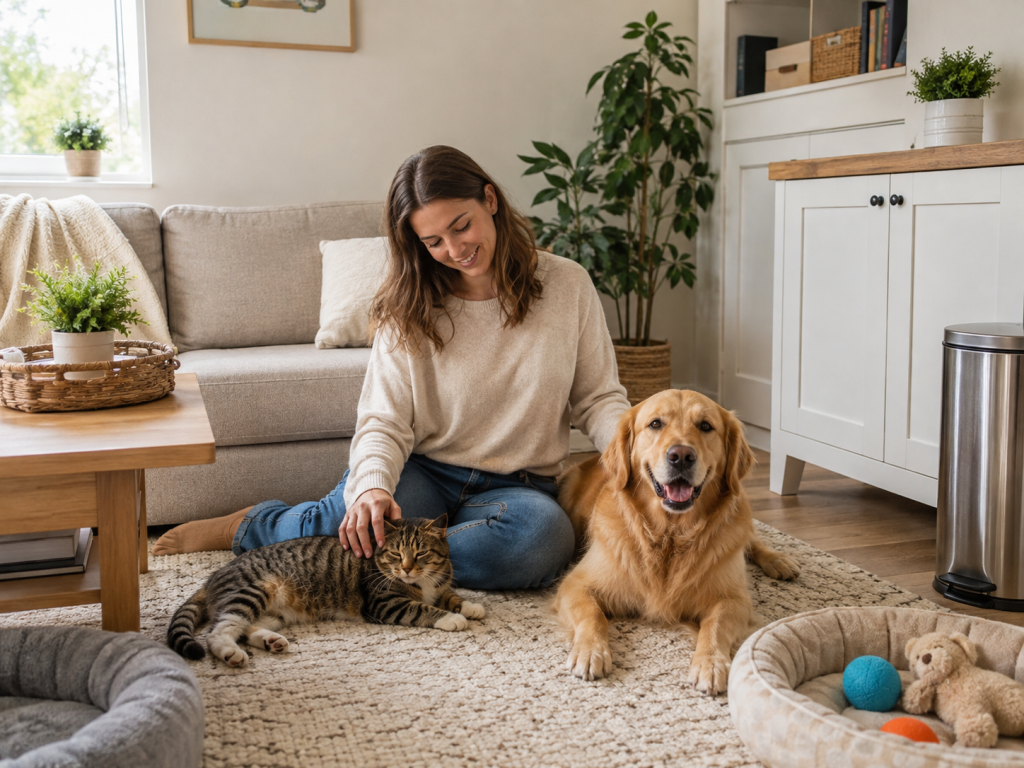
Household safety for pets means identifying everyday hazards before they cause poisoning, injury, choking, burns, falls, or intestinal blockage. Dogs and cats explore their environments differently, but both can get into medications, food, cleaning products, plants, cords, small objects, trash, and other items that appear harmless to people. The AVMA warns that ordinary household items can be dangerous or even fatal to pets, which makes prevention one of the most important parts of responsible pet care.
A safe home does not need to be empty or restrictive. Instead, owners should think about what a curious dog, puppy, cat, or kitten could reach, chew, swallow, knock over, climb into, or lick. Young animals are especially vulnerable because exploration is part of normal development.
Regularly reassessing the home is important because a pet’s abilities change. A kitten that could not reach a shelf last month may soon be able to jump onto it, while a growing puppy may learn how to open bins, reach countertops, or chew through stronger materials.
Start With a Pet-Safety Check
Walk through your home from your pet’s perspective.
Look at the floor, low furniture, countertops, shelves, trash cans, bathrooms, bedrooms, kitchens, garages, balconies, and storage areas. Ask whether anything accessible could be swallowed, chewed, spilled, pulled down, or used to climb somewhere unsafe.
The AVMA recommends taking precautions around household hazards rather than relying on pets to avoid dangerous items naturally.
Repeat this inspection periodically, particularly after moving furniture, bringing home a new pet, or introducing new household products.
Keep Human Medications Locked Away
Human medications are one of the most important household hazards for pets.
Dogs may chew bottles or pick up dropped pills, while cats may investigate medication left on counters or bedside tables. Common pain relievers and other human medications can cause serious poisoning in dogs and cats. Merck notes that accidental ingestion and inappropriate administration by well-meaning owners are common ways pets are exposed to human analgesics.
Store all prescription and over-the-counter medication in closed cabinets that pets cannot access.
Do not leave daily pill organizers, handbags containing medication, or tablets on bedside tables.
Never Give Human Medication Without Veterinary Guidance
A medication that is safe for a person is not automatically safe for a dog or cat.
Different species metabolize drugs differently, and the safe dosage can vary dramatically.
Never give painkillers, cold medicine, sleep aids, antidepressants, or other human drugs simply because your pet appears uncomfortable.
Contact your veterinarian for appropriate treatment instead.
Pick Up Dropped Pills Immediately
Accidents often happen when a tablet falls onto the floor.
Pets may swallow medication before an owner realizes what happened.
If you drop a pill, keep the pet away from the area until you have located it.
If you suspect a medication has been swallowed, identify the exact product, strength, possible amount, and approximate time of exposure before contacting a veterinarian.
Secure Cleaning Products
Cleaning products should be stored behind closed doors or in cabinets that pets cannot open.
ASPCA specifically identifies household cleaning agents among products capable of causing toxic exposures in pets.
Keep dogs and cats away from freshly treated areas until the product has been used according to its instructions and surfaces are safe.
Do not allow pets to drink from buckets, toilets containing cleaning products, or containers used for diluted chemicals.
Cleaning Products Can Cause More Than Stomach Upset
Exposure to cleaning products can happen through licking, swallowing, inhalation, or contact with the skin.
Merck notes that soaps, detergents, and shampoos commonly cause gastrointestinal signs such as nausea, vomiting, and diarrhea when toxic exposure occurs.
More corrosive products can create additional risks.
If a pet is exposed to a household chemical, check the label and contact a veterinarian for product-specific guidance.
Be Careful With Essential Oils
Essential oils should not automatically be considered safe because they are natural.
Concentrated oils can cause poisoning after ingestion, skin exposure, or other forms of contact. Merck lists vomiting, drooling, lethargy, loss of coordination, tremors, and other serious signs among possible effects of essential-oil toxicosis in animals.
Store bottles securely and clean spills immediately.
Do not apply concentrated essential oils to a pet unless specifically directed by a veterinarian.
Keep Toxic Foods Out of Reach
Many foods that humans regularly eat can be dangerous to pets.
ASPCA identifies chocolate, xylitol-containing products, alcohol, coffee and caffeine, grapes, raisins, onions, garlic, and other foods as potential hazards.
Dogs are particularly skilled at stealing food from tables, counters, bags, and trash cans.
Cats may be more selective, but they can still investigate dangerous food or ingredients.
Chocolate Can Be Dangerous
Chocolate should remain inaccessible to dogs and cats.
The risk depends on the type and amount consumed as well as the animal’s body size.
Dark chocolate, baking chocolate, and cocoa products can contain especially high concentrations of methylxanthines.
Do not wait for symptoms if your pet consumes a meaningful quantity. Contact a veterinarian and provide information about the type of chocolate and possible amount.
Xylitol Is a Major Dog Hazard
Xylitol is an artificial sweetener found in some sugar-free gums, candies, baked goods, dental products, and other products.
It can be particularly dangerous to dogs.
ASPCA includes xylitol-containing foods among major toxic food exposures.
Check ingredient lists carefully, especially when storing sugar-free products where a dog could reach them.
Grapes and Raisins
Grapes and raisins should not be intentionally given to dogs.
Toxic reactions can occur, and the safe amount cannot reliably be predicted for an individual dog.
Keep trail mixes, baked goods, cereal, and other products containing raisins inaccessible.
ASPCA continues to list grapes and raisins among important pet food toxins.
Onions and Garlic
Onions and garlic can be harmful to pets, particularly when consumed in sufficient amounts.
They can also appear in powdered seasonings, sauces, soups, baby foods, and prepared meals.
Do not assume a piece of meat is safe simply because the meat itself is appropriate.
The entire recipe matters.
Alcohol Must Stay Away From Pets
Pets should never intentionally consume alcoholic drinks.
Alcohol may also appear in desserts, fermenting dough, sauces, and other products.
Merck explains that alcohol exposure can cause vomiting, loss of coordination, central nervous system depression, tremors, breathing problems, seizures, coma, and other serious effects.
Clean spills promptly and keep unfinished drinks out of reach.
Secure Coffee and Caffeine
Coffee, coffee grounds, tea, caffeine tablets, energy products, and similar items can be harmful.
Do not leave mugs or used coffee grounds where pets can access them.
This is particularly important for dogs that raid trash bins or countertops.
A small pet can receive a much larger dose relative to body weight than a human.
Be Careful With Bread Dough
Unbaked yeast dough can create unusual but serious risks.
Merck notes that expanding dough can distend the digestive tract, while fermentation can produce alcohol. Severe cases can include neurological signs and other complications.
Keep rising dough somewhere completely inaccessible to pets.
Do not leave it on a low counter or table if your dog is capable of reaching food.
Secure the Trash
Garbage can contain toxic foods, spoiled food, bones, wrappers, string, medication packaging, sharp objects, and other hazards.
Use a lidded bin that pets cannot open.
Some dogs learn how to push over lightweight trash cans or operate simple lids.
Kitchen safety should therefore consider the actual abilities of the pet rather than whether a container appears closed.
Bones Can Cause Injuries
Bones can create choking, dental, and gastrointestinal problems.
Cooked bones may break into sharp fragments.
Avoid leaving discarded bones in accessible trash.
If your pet swallows a large or sharp bone, contact a veterinarian for advice rather than automatically inducing vomiting.
Keep Small Objects Off the Floor
Anything small enough to fit into a pet’s mouth should be considered a potential swallowing hazard.
Coins, batteries, earrings, children’s toys, earplugs, bottle caps, socks, stones, rubber bands, and other objects can cause problems.
Some items may pass harmlessly, while others can cause choking or intestinal obstruction.
Puppies and kittens deserve particularly close supervision because oral exploration is common.
String Is Especially Dangerous for Cats
Cats are often attracted to thread, ribbon, yarn, dental floss, and string toys.
If swallowed, long flexible objects can become dangerous foreign bodies in the gastrointestinal tract.
Store sewing supplies and gift ribbon securely.
Interactive string toys should be put away when playtime ends rather than left available unsupervised.
Batteries Need Secure Storage
Batteries can cause serious injury if chewed or swallowed.
Keep loose batteries and battery-powered objects that can easily be dismantled away from pets.
Remote controls, hearing aids, small electronics, toys, and watches may contain batteries.
If you suspect battery ingestion or damage, seek veterinary advice promptly.
Electrical Cords Can Cause Burns and Shock
Puppies, kittens, and animals that enjoy chewing may target electrical cables.
Unplug unused cords, route cables behind furniture, or use protective covers where necessary.
Damaged electrical cables should be replaced.
Do not rely only on telling a young pet “no” because dangerous chewing may occur when nobody is watching.
Secure Blind and Curtain Cords
Loops from blinds, curtains, or similar household fixtures can create entanglement hazards.
Keep loose cords secured and out of reach.
Kittens are particularly likely to investigate dangling objects.
Check rooms where pets spend time unsupervised and remove unnecessary loops.
Check Plants Before Bringing Them Home
Some houseplants can poison dogs or cats.
ASPCA maintains a searchable database of plants classified by toxicity to dogs, cats, and horses and includes plants such as lilies, sago palms, azaleas, and tulips among common concerns.
Identify plants by species rather than assuming something is safe because it is commonly sold indoors.
Place questionable plants completely outside the pet’s environment.
Lilies Are Particularly Dangerous to Cats
Certain true lilies and daylilies are extremely dangerous to cats.
Even relatively small exposures can have serious consequences.
Owners of cats should be particularly careful with flower bouquets because lilies may arrive unexpectedly as part of mixed arrangements.
If a cat has contacted or eaten part of a potentially dangerous lily, seek veterinary advice immediately.
Sago Palm Is Dangerous
Sago palm is another important toxic plant.
Do not allow dogs or cats access to any part of the plant.
This includes plants in gardens and outdoor areas as well as indoor decorative plants.
If you are uncertain about the identity of a plant, identify it before assuming it is pet-safe.
Fertilizers and Garden Products Need Secure Storage
Household safety extends to garages, balconies, yards, and storage areas.
Fertilizers, herbicides, pesticides, rodent-control products, slug bait, and other garden products can be dangerous.
Store them according to the manufacturer’s instructions in secure areas inaccessible to animals.
Keep pets away while products are being applied and until the treated environment is safe for re-entry.
Antifreeze Is a Serious Hazard
Antifreeze containing ethylene glycol can cause severe poisoning.
Merck notes that ethylene glycol exposure can progress to serious kidney failure, with cats developing renal injury particularly rapidly.
Clean spills immediately and prevent animals from entering garages or areas where leaks may occur.
If exposure is suspected, seek veterinary care immediately rather than waiting for symptoms.
Keep Rodent Poison Inaccessible
Rodenticides can be extremely dangerous to pets.
Different products contain different active ingredients, meaning symptoms and treatment vary.
Do not place bait anywhere a dog or cat can reach it.
Secondary exposure can also be a concern in some situations when pets catch or consume poisoned rodents.
If ingestion is suspected, bring the product packaging to the veterinary clinic when possible.
Mothballs Are Not Pet Toys
Mothballs can cause gastrointestinal and systemic toxicity if eaten.
Merck notes that exposure can result in vomiting, appetite loss, abdominal discomfort, lethargy, and other problems depending on the chemical involved.
Keep them inside secure containers and inaccessible storage areas.
Do not place loose mothballs around areas where pets walk or sleep.
Bathroom Safety Matters
Bathrooms contain medication, razors, dental floss, cleaners, cosmetics, and sometimes standing water containing chemicals.
Keep toilet lids closed when cleaning products have been used.
Dispose of dental floss safely.
Store medication and personal-care products in cabinets.
A closed bathroom door can be useful when cleaning or using products that should not be accessible to pets.
Laundry Rooms Can Contain Hazards
Laundry detergent, pods, bleach, fabric products, and dryer sheets should be securely stored.
Laundry pods may be particularly tempting because they are small and easy to carry.
Check washing machines and dryers before closing them, especially in homes with cats that enjoy hiding in enclosed warm spaces.
Keep laundry baskets free from products or objects that animals might chew.
Check Appliances Before Using Them
Cats can enter washing machines, dryers, dishwashers, cupboards, and other enclosed spaces.
Develop a habit of checking before closing and starting appliances.
Young kittens are particularly likely to investigate small spaces.
Keep appliance doors closed when they are not being loaded if your pet tends to climb inside.
Kitchen Safety Requires Extra Attention
The kitchen combines food, heat, sharp objects, trash, chemicals, and appliances.
Keep knives and other sharp objects away from edges.
Turn pan handles inward when practical, and prevent pets from approaching hot cooking surfaces.
Some dogs and cats learn to jump onto counters even when they have never done it before.
Do not assume an elevated item is automatically inaccessible.
Hot Surfaces Can Cause Burns
Stoves, ovens, fireplaces, candles, radiators, hair tools, and hot pans can injure pets.
Cats may jump onto a recently used stovetop because the surface resembles a normal counter.
Dogs may investigate fireplaces or grills.
Use barriers and supervision where appropriate and allow surfaces to cool before pets regain access.
Candles and Open Flames
Candles can be knocked over by wagging tails, curious paws, or climbing cats.
Use stable placement and never leave open flames unattended around pets.
Consider flameless alternatives in areas pets can access.
Fireplaces should also have appropriate barriers.
Secure Windows
Windows can create fall and escape risks.
Screens should be strong, correctly fitted, and free from damage.
Do not assume a standard insect screen can support the weight of a cat leaning or climbing against it.
Check windows regularly, particularly during warm weather when they may remain open for long periods.
Balcony Safety
Balconies can be dangerous for both dogs and cats.
Cats may attempt to jump onto railings, while small dogs may fit through gaps.
Do not rely on the belief that cats always land safely.
Use appropriate secure barriers or keep pets away from balconies that cannot be made safe.
Stairs and Falls
Most healthy adult pets manage stairs well, but puppies, kittens, seniors, and animals with mobility or vision problems may need additional protection.
Baby gates can help limit access.
Use non-slip surfaces when necessary.
A senior pet that suddenly begins falling or hesitating on stairs should be evaluated for possible mobility, neurological, or sensory problems.
Keep Doors and Gates Secure
Escapes often happen during ordinary household activities.
Visitors, deliveries, moving furniture, and children opening doors can create opportunities for pets to run outside.
Use gates or closed interior doors when needed.
Microchipping and current identification provide additional protection if prevention fails.
Collar Safety for Cats
Cats that wear collars should generally use an appropriately designed breakaway-style collar.
This allows the collar to release if caught on something.
Check fit regularly as kittens grow or body weight changes.
A collar should never replace microchip identification.
Choose Safe Toys
Pet toys should be appropriate for the animal’s size, strength, and play style.
A toy safe for a small dog may be easily destroyed and swallowed by a much larger dog.
Cats may pull apart feathers, strings, or small attachments.
Inspect toys regularly and discard damaged items before pieces can be swallowed.
Supervise Destructive Chewers
Some dogs rapidly destroy toys intended for ordinary chewing.
Others swallow pieces rather than spitting them out.
Choose appropriately durable products and supervise until you understand how your dog uses a particular toy.
No toy should automatically be considered indestructible.
Protect Pets From Children’s Toys
Small building pieces, dolls, toy accessories, foam objects, and balls can be attractive to pets.
Store them after children finish playing.
Button batteries and magnetic toys deserve particular care because ingestion can be medically serious.
Teach children that pet toys and human toys should be kept separate.
Secure Sewing and Craft Supplies
Needles, thread, glue, paint, beads, ribbons, pins, and craft materials should be stored in closed containers.
Cats may be attracted to moving thread or ribbon.
Dogs may chew glue containers or swallow small craft objects.
Clean the area carefully after projects.
Keep Plastic Bags Away
Plastic bags, snack packaging, and similar materials can create suffocation or swallowing hazards.
Pets may also lick food residue from bags and accidentally become trapped.
Dispose of packaging securely.
Cut or remove loops from bags before discarding them when practical.
Garage Safety
Garages often contain some of the most dangerous household products.
Antifreeze, motor oil, fuel, pesticides, rodent poison, paint products, tools, and sharp objects should all be securely stored.
Check under vehicles and around garage doors before moving a car.
Keep pets away during vehicle maintenance or chemical use.
Never Leave a Pet in a Hot Car
Vehicles can heat rapidly even when outdoor temperatures do not seem extreme.
The AVMA specifically warns never to leave a pet unattended in a vehicle, even in the shade or with the windows cracked, because temperatures can quickly become deadly.
Plan errands so pets are not left inside parked cars.
Heat injury is much easier to prevent than treat.
Holiday Decorations Can Create New Hazards
Household safety changes during holidays.
Ornaments, ribbons, electrical lights, candles, food, plants, and decorations can all become accessible.
AVMA warns that breakable or swallowed ornaments can cause injury or intestinal obstruction.
Inspect seasonal decorations from your pet’s perspective.
Secure anything fragile, sharp, toxic, or easy to swallow.
Visitors Can Accidentally Create Risks
Guests may not know your household rules.
They may leave medication, handbags, food, drinks, or open doors accessible.
AVMA advises discouraging guests from giving pets table scraps because unfamiliar foods may be toxic or inappropriate.
Tell visitors about important pet-safety rules, particularly when children or multiple animals are present.
Puppy-Proofing Requires Extra Attention
Puppies commonly explore with their mouths.
Remove shoes, socks, cables, children’s toys, medication, trash, cleaning products, and anything small enough to swallow.
Use gates or pens to limit access when direct supervision is impossible.
The safe area can gradually expand as the puppy learns household routines.
Kitten-Proofing Requires Looking Upward
Kittens can climb and jump much earlier than owners expect.
Check shelves, curtains, houseplants, windows, cords, hanging decorations, and narrow gaps.
Secure tall unstable furniture if necessary.
A kitten-safe room should provide appropriate climbing and play opportunities without easy access to dangerous objects.
Senior Pets Need Different Safety Adjustments
Older pets may face risks that younger adults manage easily.
Slippery floors, high beds, steep stairs, and difficult litter-box entrances can become challenging.
Use rugs, ramps, low-entry boxes, and easily accessible resting areas when mobility declines.
Do not assume repeated slipping or falling is simply normal aging.
Multi-Pet Homes Need Individual Safety Planning
A product safe for one pet may not be appropriate for another.
Dog toys may be dangerous for smaller animals, while cat food or medications may need to remain inaccessible to dogs.
Keep species-specific treatments separated.
This is especially important with parasite products because a medication designed for dogs may not necessarily be safe for cats.
Store Pet Medication Carefully Too
Veterinary medication can also become dangerous when consumed by the wrong animal or in excessive amounts.
Keep prescriptions clearly labeled and separated when several pets receive different treatments.
Do not leave flavored veterinary medications where pets can reach the container.
Some products are deliberately made palatable, making accidental overeating more likely if the package is stolen.
Have an Emergency Plan
Know where your regular veterinarian and nearest emergency veterinary clinic are located.
Keep carriers, leads, vaccination records, medication information, and identification accessible.
Multi-pet households should have enough secure transport equipment for every animal.
Planning before an emergency reduces confusion when something actually happens.
What to Do After Possible Poisoning
If you suspect poisoning, remove the pet from further exposure when it is safe to do so and contact a veterinarian or animal poison service promptly.
Do not induce vomiting or give home remedies unless a veterinary professional specifically instructs you.
The correct response depends on the substance, amount, species, body weight, route of exposure, and timing. Treatment of poisoning can involve preventing further absorption, supportive care, and specific antidotes when available.
Keep the product container, ingredient list, plant sample, or medication package available when seeking help.
Do Not Wait for Symptoms After a Known Toxic Exposure
Some toxins cause delayed signs.
A pet may initially appear normal even when serious internal damage is beginning.
This is why known ingestion of medication, toxic plants, antifreeze, dangerous food, or chemicals deserves prompt professional advice.
Earlier treatment can make a major difference with certain toxic substances.
Signs That Require Immediate Veterinary Attention
Seek urgent veterinary care for symptoms such as:
- Severe breathing difficulty
- Collapse or loss of consciousness
- Repeated seizures
- Severe tremors
- Major weakness
- Repeated vomiting after suspected toxin exposure
- Uncontrolled bleeding
- Severe burns
- Known ingestion of a serious toxin
- Swallowing a battery
- Suspected intestinal obstruction
- Severe abdominal pain
- Inability to urinate
- Major trauma or falls
Do not wait for a routine appointment when symptoms are severe or rapidly worsening.
Build Household Safety Into Daily Life
Good household safety for pets is primarily about prevention.
Keep medications, chemicals, batteries, toxic foods, pesticides, and other dangerous products securely stored. Human medications and foods remain among common causes of toxic exposures reported to animal poison-control services.
Identify plants before bringing them into a pet household, and take extra precautions with cats around lilies and with all pets around toxic ornamentals. ASPCA maintains species-specific guidance for toxic and non-toxic plants.
Secure cords, string, small objects, trash, windows, balconies, hot surfaces, and household appliances. Adjust safety measures as puppies and kittens become more mobile and as senior pets develop changes in vision or movement.
Most importantly, take suspected poisoning seriously. The ASPCA and Merck both emphasize prompt professional guidance after potentially dangerous exposures rather than relying on home treatment or waiting for symptoms to appear.
A well-organized home does more than prevent emergencies. It gives dogs and cats the freedom to explore, play, rest, and live normally in an environment designed to keep avoidable risks under control.