
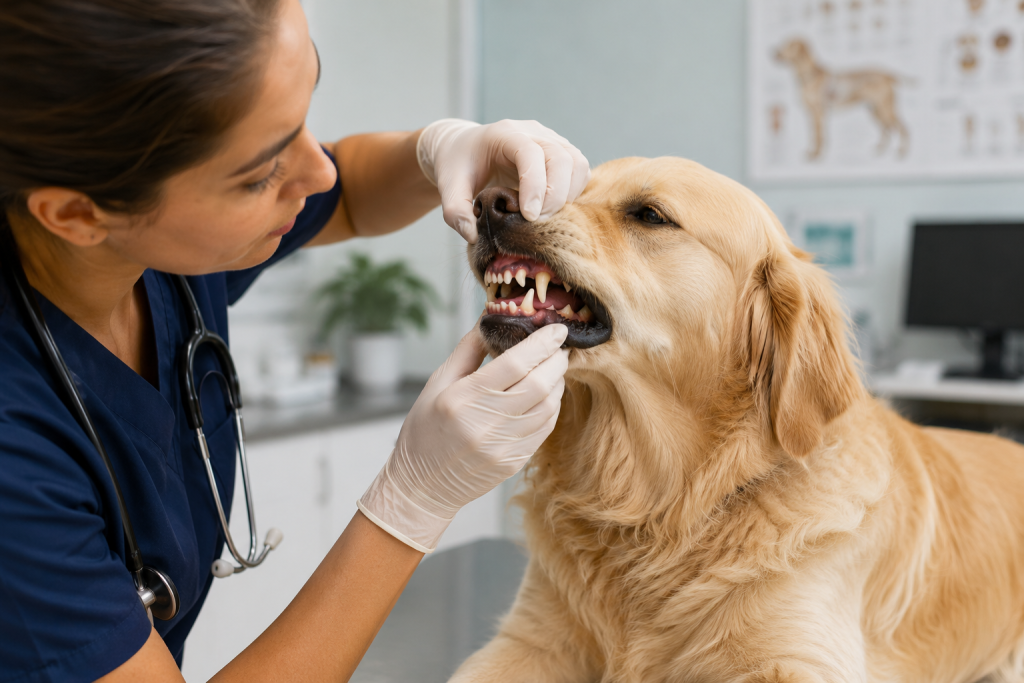
If you have been asking, “why does my dog have bad breath,” the most common cause is dental disease, including plaque and tartar buildup along the gumline. Diet, chewing habits, and occasional foreign objects can also play a role. In some cases, persistent bad breath points to a health issue beyond the mouth.
A little “dog breath” is normal. Dogs do not brush their teeth on their own, so some odor is expected. Strong, persistent, or suddenly worsening breath, however, is worth paying closer attention to.
This guide walks through the most common causes, how to check your dog’s mouth at home, and when the smell means it is time to call your veterinarian.
Common Causes of Bad Breath in Dogs
Several different issues can cause noticeably bad breath. Looking at the smell itself, along with any other symptoms, can help narrow things down.
Dental Disease and Plaque Buildup
Dental disease is the single most common cause of bad breath in dogs. According to VCA Animal Hospitals, plaque and tartar buildup along the gumline allow bacteria to thrive, producing a strong, unpleasant odor.
Left untreated, this buildup can progress to gum disease. At that point, the smell often becomes noticeably stronger and harder to ignore.
Diet and Food Particles
Certain foods, especially wet food or treats with strong smells, can temporarily affect breath odor. Small food particles trapped between teeth can also start to smell as they break down.
This type of odor is usually short-lived. It typically fades within a day, once the food particles clear or your dog drinks water and chews normally again.
Oral Growths or Infections
Bumps, growths, or infected teeth can cause a distinct, often stronger odor than typical plaque buildup. According to the American Kennel Club, unusual growths in the mouth should always be checked by a veterinarian, since some require prompt treatment.
A tooth root abscess is one specific example. It can cause a sharp, unpleasant smell along with swelling near the affected tooth.
Foreign Objects Stuck in the Mouth
Small sticks, bits of bone, or plant material can become lodged between teeth or against the gums. As the object sits there, bacteria build up around it, and the odor often becomes noticeably stronger over a day or two.
This cause is usually easy to confirm with a quick look inside your dog’s mouth, especially if the odor appeared suddenly.
Digestive or Systemic Issues
Occasionally, bad breath originates from somewhere other than the mouth. Digestive upset can sometimes cause a distinct odor. In rarer cases, kidney or liver issues can also change how a dog’s breath smells.
This type of odor often has a different quality than typical dental smell. Some owners describe it as sweet, fruity, or ammonia-like, depending on the underlying cause.
Puppy Teething
Puppies going through teething sometimes develop temporary bad breath. This is usually related to gum irritation and the natural process of losing baby teeth. It typically resolves once adult teeth fully come in.
Is Bad Breath Normal, or a Warning Sign?
Understanding what counts as typical dog breath helps you know when to simply monitor versus when to schedule a visit.
Normal or Common Behavior
A mild, slightly unpleasant smell is a normal part of having a dog. Most dogs are not going to have minty-fresh breath without regular dental care. This baseline is worth recognizing so you can notice when something actually changes.
Possible Explanations
Mild odor that follows a strong-smelling meal or treat often resolves on its own. The same is true for temporary teething-related breath in puppies. These situations usually do not require immediate concern.
Warning Signs
Some patterns suggest something more significant. Watch for:
- A sudden, noticeably stronger odor
- Breath paired with visible redness or swelling in the gums
- Drooling more than usual
- Difficulty or reluctance to chew
- A sweet, fruity, or ammonia-like smell
When to Contact a Veterinarian
If you notice several warning signs together, or if the odor persists for more than a few days, a veterinary visit is the appropriate next step. A veterinarian can examine your dog’s mouth and identify the underlying cause.
Trying to mask persistent bad breath with treats or sprays alone can delay treatment for an underlying issue, especially if the cause is dental disease or infection.
How to Check Your Dog’s Mouth at Home
A simple mouth check takes only a minute and can often reveal an obvious cause right away.
- Gently lift your dog’s lips to look at the teeth and gums
- Check for visible tartar, which often looks yellow or brown near the gumline
- Look for redness, swelling, or bleeding along the gums
- Check for any visible growths, bumps, or loose teeth
- Note whether the odor seems to come from one side or the whole mouth
If your dog resists a mouth exam or seems painful when you touch the area, stop and let a veterinarian handle a closer look instead.
Dental Disease: The Most Common Cause
Because dental disease causes most cases of bad breath, it deserves closer attention than any other single cause. Plaque forms constantly, and without regular removal, it hardens into tartar within just a few days.
Tartar buildup irritates the gums, which can lead to gingivitis. Left unaddressed, gingivitis can progress to more advanced periodontal disease, which affects the structures that hold teeth in place.
By the time bad breath becomes noticeable, dental disease has often been developing for a while. This is one reason regular dental checkups matter, even before any obvious smell appears.
Small and toy breeds tend to be especially prone to dental disease, partly due to crowded teeth. Larger breeds are not immune, though, so every dog benefits from consistent dental care regardless of size.
Professional Dental Cleanings: What to Expect
At some point, most dogs benefit from a professional dental cleaning performed under anesthesia. This allows a veterinarian to clean below the gumline, where the most damaging tartar tends to build up.
A full cleaning usually includes a thorough dental exam. Dental X-rays are often taken as well, since they can reveal problems hidden beneath the gum surface that a visual exam alone cannot detect.
Anesthesia understandably makes some owners hesitant. Modern veterinary anesthesia protocols include careful monitoring throughout the procedure, and most healthy dogs tolerate it well. Your veterinarian can walk you through the specific safety precautions used for your dog’s age and health history.
After a cleaning, many owners notice a real improvement in breath almost right away. Following up with consistent at-home care afterward helps maintain those results for much longer.
Bad Breath Across Life Stages
This concern can look different depending on your dog’s age.
Puppies
Mild, temporary bad breath during teething is common and usually nothing to worry about. It should ease once adult teeth finish coming in, typically by around six months of age.
Adult Dogs
In adult dogs, ongoing bad breath most often points toward developing dental disease. Because adult dogs have a fairly stable baseline, a gradual worsening is often the first noticeable sign that plaque and tartar have been building up.
Senior Dogs
In senior dogs, persistent bad breath deserves closer attention. Years of plaque buildup, combined with a higher chance of other health issues, make dental checkups especially important at this life stage. A senior wellness visit is a reasonable time to raise the concern.
What Bad Breath Can Signal Beyond the Mouth
While most bad breath starts in the mouth, it can occasionally reflect something happening elsewhere in the body. This does not mean every case points to a serious issue, but the possibility is worth understanding.
A sweet or fruity smell can sometimes relate to diabetes, particularly if paired with increased thirst or urination. An ammonia-like odor can occasionally relate to kidney function.
Liver disease can occasionally cause a distinct, unpleasant odor as well, though this is less common than dental-related causes. Watching for changes in appetite, energy, or thirst alongside the odor can provide helpful additional clues.
These systemic causes are far less common than dental disease. Still, a veterinarian is best positioned to tell the difference, especially if the smell has an unusual quality or appears alongside other new symptoms.
How to Help at Home for Mild Cases
For ordinary, mild breath odor, a few simple habits can make a real difference over time.
- Brush your dog’s teeth regularly with a dog-safe toothpaste
- Offer dental chews designed to help reduce plaque
- Provide fresh water throughout the day
- Schedule routine veterinary dental checkups
- Ask your veterinarian about dental-specific diets if buildup is a recurring issue
Consistency matters more than any single product. Regular brushing, even just a few times a week, tends to outperform occasional deep cleaning at home.
What Not to Do
A few common responses can make the underlying issue worse or simply mask it.
- Do not rely on breath sprays alone to cover up a persistent odor
- Avoid giving human toothpaste, since it is not safe for dogs
- Do not ignore a sudden change in odor, especially with other symptoms
- Avoid skipping professional dental cleanings out of concern about anesthesia without first discussing it with your veterinarian
Masking the smell without addressing the cause allows the underlying problem to continue developing, often out of sight.
When to See a Veterinarian
While mild odor is often manageable at home, certain situations call for a professional evaluation.
Schedule a veterinary visit if you notice:
- Breath that suddenly becomes much stronger
- Visible redness, swelling, or bleeding in the gums
- Loose teeth or reluctance to chew
- A sweet, fruity, or ammonia-like smell
- Bad breath paired with other new symptoms, such as increased thirst
A veterinarian can determine whether the cause is dental disease, an infection, or something else, and recommend the right treatment plan for your dog.
Frequently Asked Questions
Is it normal for dogs to have some bad breath?
Yes, mild odor is common since dogs do not naturally clean their own teeth. Strong, persistent, or suddenly worsening breath is what usually signals a problem worth addressing.
Can diet alone fix bad breath?
Diet can help in mild cases, but it usually is not a complete fix once dental disease has developed. A veterinary dental evaluation is the best way to know for sure.
How often should I brush my dog’s teeth?
Daily brushing is ideal, though even a few times a week provides meaningful benefit. Consistency matters more than achieving a perfect daily routine.
Are dental chews enough on their own?
Dental chews can help reduce plaque, but they generally work best alongside brushing, not as a full replacement for it.
Can bad breath mean something serious?
Occasionally, yes. While dental disease is the most common cause, persistent or unusual-smelling breath can sometimes point to an infection or a systemic health issue.
At what age should dogs start getting dental checkups?
Veterinarians typically recommend starting dental checkups during routine puppy visits, then continuing them as part of regular annual exams throughout life.
Key Takeaway
So, why does my dog have bad breath? In most cases, the answer comes down to plaque, tartar, and developing dental disease. Diet, foreign objects, and occasional systemic issues can also play a role.
If the smell suddenly worsens, or if you notice gum redness, swelling, or other new symptoms, a veterinarian is the right next step. Regular dental care remains the best way to keep your dog’s breath, and overall health, in good shape.