
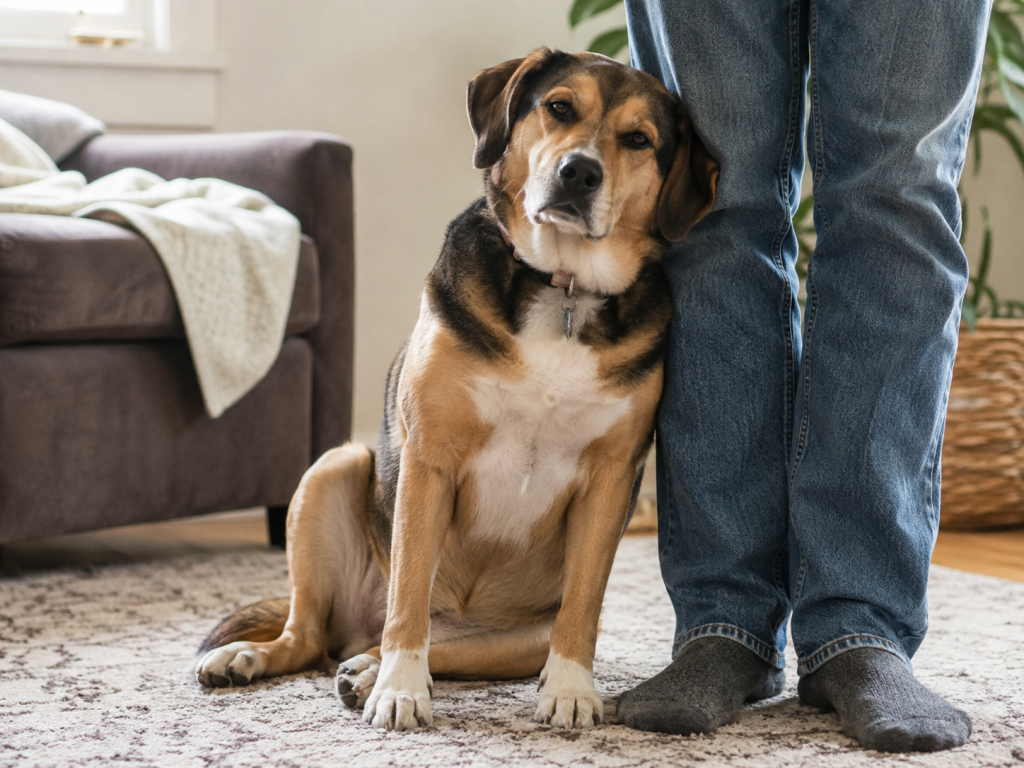
If you have wondered, “why does my dog lean against me,” the short answer is comfort, closeness, and reassurance. For most dogs, leaning is simply an easy, low-effort way to stay physically connected to someone they trust. It usually reflects affection rather than a problem.
You may notice this happening on the couch, during a walk, or while waiting near the front door. Each of these moments can carry a slightly different meaning, even though the physical behavior looks the same.
In some situations, though, leaning can also signal mild stress or a need for reassurance. Learning to read the context around the behavior helps you understand exactly what your dog is communicating in the moment.
This guide covers the most common reasons dogs lean and how to tell affection apart from anxiety. It also explains when the behavior might point toward a physical issue worth mentioning to your veterinarian.
Why Dogs Lean Against Their Owners
Leaning is a common behavior across breeds, sizes, and ages. Several overlapping reasons usually explain why a dog chooses to lean rather than simply sit nearby. Most dogs show a blend of these motivations rather than just one.
Affection and Trust
For many dogs, leaning is a straightforward expression of affection. Physical closeness feels rewarding, and leaning allows a dog to stay connected without needing constant movement or attention from you. It is often considered one of the clearer signs of trust in everyday canine behavior.
Unlike more demanding behaviors, leaning does not require anything from you in return. That quiet simplicity is part of what makes it such a reliable signal of comfort.
Dogs generally reserve this kind of contact for people they feel safe around. A dog rarely leans on someone it does not trust, so this behavior often says a great deal about your relationship.
Many owners notice more leaning after a strong bonding experience, such as bringing a new puppy home. The behavior often becomes more frequent as trust deepens over time.
Seeking Comfort or Reassurance
Leaning can also serve as a coping behavior during uncertain moments. A dog who feels slightly unsure, whether due to a new environment or an unfamiliar sound, may lean against a trusted person for reassurance.
This does not necessarily mean something is wrong. Mild, occasional reassurance-seeking is a normal part of how dogs manage everyday uncertainty.
For example, a dog might lean against you briefly in a crowded space or a new room before relaxing once the situation feels familiar. This kind of short, situational leaning is generally not something to worry about, and it usually resolves on its own within a few minutes.
Deep Pressure and a Calming Effect
Some trainers compare leaning to deep pressure therapy, a technique that uses firm, steady contact to produce a calming effect. This concept is well documented in service dogs trained specifically for this purpose. For pet dogs, the science is less established. Still, the general idea, that steady physical contact can feel soothing, lines up with what many owners observe at home.
This remains a possible explanation rather than a confirmed one for typical pet behavior. Even so, it offers a reasonable framework for why gentle pressure often has a calming effect.
Marking You as Familiar
Physical contact also allows dogs to exchange scent with the people and objects around them. This is not the primary reason most dogs lean. However, some behaviorists note that scent exchange may play a small supporting role. It may partly explain why dogs often return to leaning on the same person, rather than spreading it evenly among household members.
Physical Habit and Warmth
Sometimes the explanation is simpler than it seems. Leaning against a warm, familiar body can simply feel comfortable, especially during cooler months or after a long walk. Dogs, like people, often gravitate toward comfortable physical positions without much deeper meaning behind them. If your dog only leans during naps or after exercise, this simple explanation is probably the right one.
Is Leaning a Sign of Affection or Anxiety?
In most cases, leaning reflects affection rather than anxiety. According to the American Kennel Club, dogs that lean or sit against their owners are often expressing comfort and trust rather than distress.
However, context always matters. The same behavior can mean different things depending on when and how often it happens. A dog leaning during a relaxed evening tells a very different story than a dog leaning while trembling in a thunderstorm.
Normal Leaning vs. Anxious Leaning
Telling these apart usually comes down to body language and timing rather than the leaning itself. A quick mental checklist can make this much easier during the moment.
Signs that leaning reflects normal affection include:
- Loose, relaxed body language while leaning
- The dog can settle calmly nearby afterward
- Leaning happens during calm, everyday moments
- No trembling, panting, or restlessness involved
Signs that leaning may reflect anxiety include:
- Leaning paired with trembling or excessive panting
- Leaning that intensifies during loud noises or storms
- Difficulty settling down even after leaning
- Leaning combined with pacing or clinginess throughout the day
Anxious leaning sometimes appears consistently around specific triggers, such as thunderstorms or being left alone. If so, it may be worth addressing the underlying cause directly, not just the leaning itself. A calm, predictable response from you during these moments often helps your dog settle more quickly.
It also helps to avoid punishing anxious leaning, even if the timing feels inconvenient. Pushing an anxious dog away can increase distress instead of resolving it. Remember, the dog is seeking reassurance, not misbehaving.
Why Some Dogs Lean More Than Others
Not every dog leans with the same frequency or intensity. A few factors typically explain the difference, and understanding them can help you set realistic expectations for your own dog.
Breed Tendencies
Certain breeds, particularly large, people-oriented breeds like Greyhounds, Boxers, and many working breeds, are frequently described as natural “leaners.” This tendency likely reflects both temperament and simple body structure. Larger dogs often find leaning a practical way to stay close. Smaller breeds, by contrast, can simply curl up in a lap instead.
Personality
Individual personality plays a significant role as well. Naturally affectionate or people-focused dogs tend to lean more often. Independent dogs may show affection in other ways instead, such as staying nearby without direct contact.
Life Stage
Puppies often lean while still building confidence in new environments. Adult dogs typically settle into a consistent pattern. Senior dogs may lean more due to balance changes or a stronger need for reassurance. Because these shifts happen gradually, it helps to notice your own dog’s baseline over time.
Leaning During Specific Situations
Some dogs only lean in particular circumstances, which can offer useful clues about what is driving the behavior.
Leaning during thunderstorms, fireworks, or loud noises often reflects a stress response rather than simple affection. During vet visits or unfamiliar environments, it frequently serves as a way to seek reassurance from a trusted presence. Leaning during quiet, relaxed moments at home, on the other hand, is far more likely to represent simple comfort-seeking.
Some dogs also lean more during transitions, such as when guests arrive or the household routine changes. This kind of situational leaning usually fades once the dog adjusts, especially with a calm response from you.
Paying attention to when leaning happens, not just that it happens, gives you a clearer picture of your dog’s emotional state. Keeping a mental note of these patterns over a few weeks makes it easier to spot a genuine trigger.
Should You Encourage or Discourage Leaning?
For most dogs, there is no need to discourage leaning. It is a low-effort, generally harmless behavior that often strengthens the bond between you and your dog. Many owners even come to look forward to it as part of their daily routine.
That said, leaning can become impractical for very large dogs, especially if it causes balance issues for you or discomfort for the dog. In these cases, teaching an alternative, such as sitting calmly beside you, offers similar closeness without the physical strain.
Discouraging leaning purely out of habit, without a practical reason, is generally unnecessary. Doing so may reduce a harmless way your dog naturally seeks connection with you.
How to Respond to a Leaning Dog
A few simple habits help you respond appropriately, whether the leaning reflects affection or mild stress.
- Offer calm, gentle contact rather than pulling away abruptly
- Notice the context, especially if leaning coincides with a specific trigger
- Avoid punishing the behavior, since it is rarely problematic on its own
- Provide a consistent, predictable environment to reduce anxiety-driven leaning
- Consult a professional if leaning is paired with clear signs of distress
- Give your dog access to a calm, comfortable resting spot as an alternative when needed
Responding calmly and consistently helps reinforce that leaning is a safe, welcome way for your dog to seek connection. Over time, this consistency also makes it easier to notice if the pattern shifts.
When Leaning Might Signal a Health Issue
Occasionally, increased leaning has a physical rather than emotional explanation. This is worth understanding, since it changes the appropriate response.
Consider a veterinary checkup if increased leaning appears alongside these signs:
- Sudden onset in a dog who did not previously lean
- Signs of poor balance or stumbling
- Reduced vision, especially in low light
- Weakness or reluctance to stand for long periods
Older dogs, in particular, may lean more due to joint pain, vision changes, or early cognitive changes. A veterinarian can help determine whether a physical cause is contributing, especially if the change appeared suddenly.
Do not assume a sudden increase in leaning is purely emotional, especially in an older dog. Ruling out pain first ensures the behavior gets the right response, instead of being mistaken for simple affection.
Frequently Asked Questions
Is it normal for my dog to lean on me every day?
Yes. Many dogs lean daily as part of normal bonding, especially during calm moments like relaxing on the couch or waiting near the door.
Why does my dog lean on me more during storms?
This usually reflects a stress response. Physical contact with a trusted person can feel calming during frightening situations, similar to how deep pressure can ease anxiety in some dogs.
Should I push my dog away when they lean on me?
Not unless the behavior causes physical discomfort or safety concerns. In most cases, gently allowing the contact supports your dog’s sense of security.
Can leaning behavior change as my dog ages?
Yes. Senior dogs often lean more due to balance changes, joint discomfort, or an increased need for reassurance. A gradual increase with age is common and usually manageable at home.
Is it a problem if my dog only leans on one family member?
No, this is common and usually reflects a particularly strong bond with that person. It does not mean the dog dislikes other household members.
Does leaning mean my dog is trying to be dominant?
No. This outdated idea does not reflect how modern behavior science understands dog behavior. Leaning is almost always about comfort, trust, or reassurance rather than any attempt to assert control.
Key Takeaway
So, why does my dog lean against me? Usually, it is a simple, comforting way for a dog to stay close to someone they trust. Paying attention to body language and context helps you tell the difference between everyday affection and leaning driven by stress.
If leaning appears suddenly or alongside other physical symptoms, a veterinary visit is the safest next step. Most of the time, though, that gentle weight against your leg is simply your dog’s quiet way of staying close.