
Dogs are social, intelligent animals that can become deeply integrated into family life, but responsible ownership involves much more than providing food and affection. A healthy dog needs appropriate nutrition, daily physical activity, mental stimulation, training, preventive veterinary care, grooming, safe living conditions, and regular social interaction. The exact needs vary significantly according to age, breed, size, health, temperament, and lifestyle.
Some dogs are energetic companions suited to hiking and outdoor activity, while others prefer a quieter routine. Puppies require extensive supervision and training, adult dogs benefit from consistent routines and exercise, and senior dogs often need adjustments as mobility and health change. AAHA’s canine life-stage guidance specifically recommends adapting preventive care throughout a dog’s development rather than treating every dog the same way.
Understanding these basic needs helps owners create a safe, predictable, and healthy life for their dogs.
Choosing the Right Dog
Choosing a dog should involve more than appearance or breed popularity. Energy level, adult size, temperament, grooming needs, exercise requirements, and expected health care should all fit realistically into your lifestyle.
Dogs vary enormously. Even within the same breed, two individuals may have different levels of confidence, sociability, activity, and independence. Breed traits can provide useful guidance, but the personality and history of the individual dog still matter.
Consider how much time you can dedicate every day. A dog that needs extensive exercise and training may struggle in a household that expects a quiet, low-maintenance companion.
Long-term costs should also be considered before adoption. Food, routine veterinary visits, parasite prevention, grooming, training, equipment, pet sitting, and unexpected medical care can continue throughout the dog’s life.
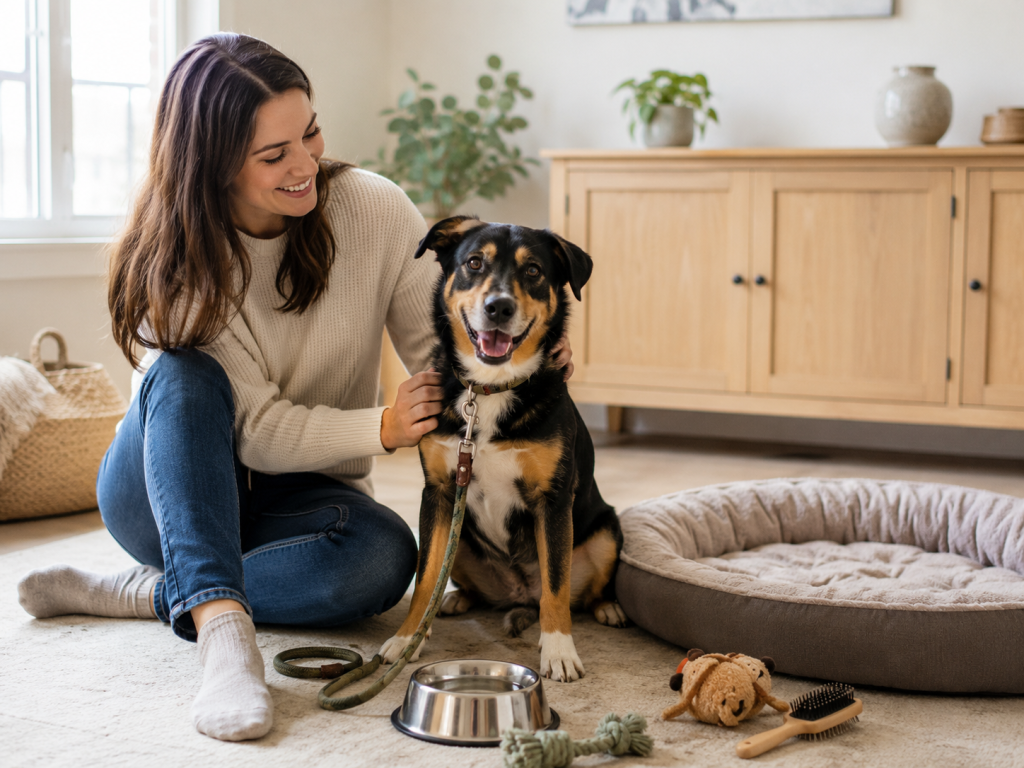
ALT TEXT: Healthy adult dog relaxing at home with essential dog care supplies.
Dogs Need Complete and Balanced Nutrition
Good nutrition is one of the foundations of canine health. Merck Veterinary Manual emphasizes that healthy dogs should receive a complete and balanced diet appropriate for their life stage.
Puppies, adults, pregnant or nursing dogs, seniors, and dogs with particular medical conditions can have different nutritional requirements. A puppy should therefore not simply receive whatever food is available for an adult dog.
Portions also matter. Feeding too many calories can gradually lead to excessive body fat, while feeding too little can result in weight loss and nutritional problems.
The amount a dog requires depends on factors such as body weight, reproductive status, age, activity, and individual metabolism. Merck’s energy guidelines use different estimates for puppies, healthy adult dogs, neutered dogs, and obesity-prone animals.
Fresh Water Should Always Be Available
Dogs should normally have access to fresh, clean drinking water.
Water needs can change with exercise, diet, environmental temperature, body size, and health. A dog that has been exercising outdoors on a warm day may drink substantially more than one resting indoors.
Sudden dramatic changes in thirst deserve attention because increased or decreased drinking can sometimes accompany medical problems.
Do not restrict water simply because your dog suddenly appears to be drinking too much. Discuss persistent changes with a veterinarian.
Exercise Is Essential
Dogs need regular physical activity, but the appropriate amount varies considerably.
The AKC notes that exercise requirements depend on factors including age, breed, and health. Puppies, healthy adults, senior dogs, and highly athletic breeds should not automatically receive identical exercise routines.
Walking is one of the easiest ways to combine physical exercise with environmental exploration. Active dogs may also enjoy hiking, running, swimming, retrieving, agility, or other dog sports when these activities are appropriate for their health and physical condition.
Exercise should be adjusted when a dog is injured, recovering from surgery, overweight, elderly, or affected by heart, respiratory, or orthopedic disease.
Mental Stimulation Matters Too
Physical exercise alone does not meet every behavioral need.
Dogs benefit from opportunities to sniff, explore, solve simple problems, play, and learn. Food puzzles, scent games, reward-based training, safe chews, and interactive toys can all make daily life more engaging.
Training itself can also provide mental stimulation. Practicing a few simple cues for several minutes can require concentration and strengthen communication between dog and owner.
A predictable routine that includes exercise, enrichment, training, and grooming can help dogs feel more secure and confident.
Training Should Start Early
Training helps dogs understand what is expected in the household.
Puppies need to learn house training, appropriate chewing, handling, leash behavior, and how to interact safely with people and other animals. Adult dogs can continue learning throughout life.
Reward-based methods are generally the most useful foundation. Desired behavior can be reinforced with food, toys, play, attention, or access to something the dog values.
Consistency matters. If jumping on people is rewarded with attention one day and discouraged the next, learning becomes more difficult.
Training should help the dog succeed rather than rely on intimidation or fear.
Socialization Is Important for Puppies
Puppyhood contains important developmental periods during which safe, positive experiences can influence future behavior.
Exposure to different people, environments, surfaces, sounds, handling, transportation, and appropriately selected animals can help puppies learn that ordinary life is not threatening.
Socialization does not mean overwhelming a frightened puppy with as many experiences as possible. Quality matters more than intensity.
Puppies should be allowed to explore at a pace that keeps them reasonably comfortable while owners follow veterinary advice about infectious-disease risk and vaccination status.
Dogs Need Predictable Routines
Routine can make daily life easier for both dogs and owners.
Regular feeding, exercise, bathroom opportunities, training, rest, and social interaction help create predictability. AKC guidance notes that routines can support confidence, training, grooming, and emotional health throughout a dog’s life.
This does not mean every walk must happen at exactly the same minute.
A healthy routine should still allow flexibility. The goal is for the dog to understand that their needs will be met consistently.
Veterinary Care Is Part of Responsible Ownership
Dogs should receive preventive veterinary care even when they appear healthy.
The AVMA describes preventive health care as including regular veterinary evaluation of overall health and individual disease risks.
Veterinary care can include physical examinations, vaccination, parasite prevention, dental evaluation, nutritional assessment, weight monitoring, and age-appropriate screening.
AAHA also emphasizes adjusting preventive care according to canine life stage and individual risk.
Do not wait for obvious illness before establishing a relationship with a veterinary clinic.
Vaccinations Protect Against Serious Disease
Vaccination schedules vary according to age, previous vaccination, geographic location, lifestyle, and exposure risk.
Puppies generally require a series of vaccines because protection develops over multiple appointments. Adult dogs require appropriate follow-up vaccination according to veterinary recommendations.
Some vaccines are considered important for nearly all dogs, while others are selected according to lifestyle.
Your veterinarian can create an individualized schedule rather than relying on a single generic plan found online.
Parasite Prevention Matters
Dogs can be exposed to fleas, ticks, intestinal parasites, and other parasites depending on where they live and how they spend their time.
Parasite prevention should be selected according to local risks and individual health.
A dog that hikes through wooded areas may face different exposure than one living primarily indoors in a city apartment.
Never use a product simply because it worked for another pet. Species, age, body weight, health, and active ingredients all matter.
Grooming Needs Depend on the Dog
Every dog needs some level of grooming, but the amount varies dramatically according to coat type.
The AKC notes that regular brushing helps keep the coat clean and manageable, while grooming frequency should be adapted to the individual dog.
Short-coated dogs may require relatively simple maintenance. Long, curly, double-coated, or continuously growing coats can require much more brushing and sometimes professional grooming.
Nail trimming, ear checks, dental care, and skin monitoring also form part of routine care.
Regular grooming creates an opportunity to notice lumps, wounds, parasites, irritated skin, or other changes.
Dental Care Should Not Be Ignored
Dental health can significantly affect a dog’s comfort.
Plaque, tartar, gum disease, fractured teeth, and other oral problems can lead to pain and difficulty eating.
Begin getting puppies comfortable with gentle mouth handling early. Veterinary-approved brushing can then become part of the routine when tolerated.
Professional dental treatment may still be needed even when home care is good.
Bad breath, dropping food, difficulty chewing, drooling, mouth bleeding, or obvious oral pain deserve veterinary attention.
Maintain a Healthy Body Weight
A healthy dog should not automatically be as heavy as possible.
Weight should be considered alongside body condition and muscle condition. Excess body fat increases the physical load placed on joints and can complicate overall health.
Measure food rather than repeatedly filling the bowl by eye. Treats, chews, table scraps, and food used during training all contribute calories.
If your dog needs to lose weight, work with your veterinarian to establish an appropriate calorie target and safe rate of weight reduction.
Puppies Require Additional Care
Puppies are not simply smaller adult dogs.
They require growth-formulated nutrition, frequent bathroom opportunities, socialization, training, supervision, veterinary visits, safe play, and plenty of sleep.
They also investigate the environment with their mouths, making household safety particularly important. Electrical cords, medications, toxic foods, cleaning products, socks, string, small toys, and household waste should remain inaccessible.
The amount and intensity of exercise should also be appropriate for the puppy’s age and physical development. AKC guidance emphasizes that puppy exercise differs from adult exercise.
Adult Dogs Still Need Daily Engagement
Once puppy training is finished, dogs do not stop needing attention.
Healthy adult dogs benefit from regular exercise, enrichment, social interaction, training refreshers, and preventive veterinary care.
Daily routines can also reveal subtle health changes. A dog that suddenly refuses a normal walk, stops jumping into the car, becomes less interested in food, or sleeps much more may be communicating discomfort.
Knowing your dog’s normal behavior helps you recognize when something changes.
Senior Dogs May Need Extra Support
As dogs age, mobility, hearing, vision, muscle condition, appetite, sleep, and behavior can change.
AAHA’s canine life-stage guidance specifically recognizes senior dogs as requiring age-appropriate preventive care and individualized health planning.
An older dog may benefit from shorter or gentler exercise sessions, easier access to beds, non-slip flooring, ramps, and more frequent veterinary monitoring.
Do not assume every change is simply normal aging. Reduced activity, difficulty standing, weight loss, increased thirst, confusion, or sudden behavioral changes can have medical causes.
Dogs Need Safe Resting Areas
Every dog should have somewhere they can rest without being constantly disturbed.
A comfortable bed or quiet area can be especially important in homes with children, visitors, or multiple pets.
Teach family members to leave a sleeping dog alone rather than climbing on, hugging, or repeatedly waking them.
Dogs also need adequate sleep. Puppies and senior dogs may spend particularly large portions of the day resting.
Household Safety Is Essential
Ordinary homes contain many hazards.
Chocolate, xylitol-containing products, grapes and raisins, certain medications, cleaning products, pesticides, antifreeze, toxic plants, batteries, cooked bones, and swallowed objects can all cause serious problems.
Garbage should be secured, medication should be stored behind closed doors, and dangerous foods should remain inaccessible.
Puppies and dogs that chew frequently need especially careful supervision.
If your dog consumes a potentially toxic substance, contact a veterinarian promptly rather than waiting for symptoms.
Learn Your Dog’s Normal Behavior
One of the most useful health tools an owner has is familiarity.
Know how much your dog normally eats and drinks, how often they urinate and defecate, how they walk, how active they are, and how they usually interact with people.
Changes in these patterns can provide early clues that something is wrong.
A dog suddenly hiding, limping, vomiting repeatedly, refusing food, coughing, drinking excessively, or behaving unusually deserves closer attention.
When Should a Dog See a Veterinarian?
Routine preventive appointments are important, but some changes require earlier veterinary advice.
Contact your veterinarian when your dog develops persistent appetite loss, unexplained weight change, repeated vomiting or diarrhea, significant limping, unusual thirst, changes in urination, skin problems, persistent coughing, or marked behavioral changes.
Difficulty breathing, collapse, repeated seizures, severe trauma, uncontrolled bleeding, suspected poisoning, or inability to urinate can require emergency care.
Preventive veterinary health care is intended to detect problems and manage risks before they become more serious.
Building a Healthy Life With Your Dog
Living successfully with dogs requires consistent care throughout every stage of life.
Start with appropriate nutrition. Complete and balanced diets are designed to provide required nutrients for the relevant life stage, making them an important foundation for canine health.
Add regular exercise and mental stimulation that match your dog’s age, breed, health, and energy level. Exercise needs vary considerably between individuals, so the goal is not to reach one universal number of minutes every day.
Continue training, grooming, social interaction, and veterinary preventive care throughout adulthood. Adapt the routine again when your dog becomes a senior.
Most importantly, treat your dog as an individual. A small dog is not automatically low-energy, a large dog is not automatically difficult, and breed alone cannot predict every behavior or health need.
When owners combine good nutrition, preventive veterinary care, exercise, training, enrichment, safety, and affection, dogs have the best opportunity to remain healthy and comfortable throughout their lives.