
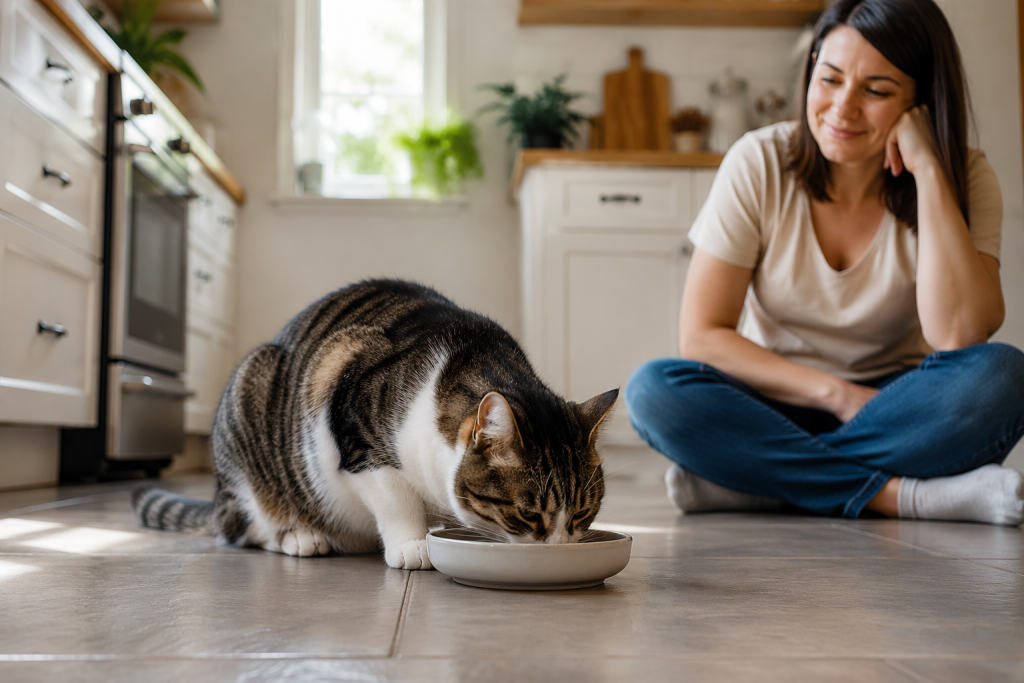
Why does my cat only eat when I am nearby? Your presence may make your cat feel safer, more relaxed, or more comfortable enough to focus on eating. Some cats also develop a strong feeding routine around their owners and learn that meals are connected with social contact, attention, or reassurance. Cats need to feel safe while eating, and anxiety or tension can interfere with normal feeding behavior.
For many cats, this habit is harmless. A cat that eats a normal amount, maintains a healthy weight, and otherwise behaves normally may simply prefer company during meals. However, a cat that suddenly refuses to eat unless you stay nearby may be responding to environmental stress, conflict with another pet, pain, nausea, dental problems, or another medical issue. Changes in appetite can be an important sign of illness.
Understanding what happens around mealtime can help you determine whether your cat simply enjoys your presence or is relying on you because something makes eating alone uncomfortable.
Your Presence May Make Your Cat Feel Safe
Eating requires a cat to focus attention on food instead of constantly monitoring the surrounding environment. A cat that feels uncertain may repeatedly stop eating to look around or may avoid approaching the food altogether.
FelineVMA feeding guidance notes that cats need to feel safe while eating. An anxious or tense cat may show vigilant behavior, such as frequently scanning the environment or approaching food cautiously.
Your presence can reduce that uncertainty. If your cat trusts you, sitting nearby may act as a familiar and predictable part of the environment.
This can be especially noticeable in cats that are naturally cautious, have experienced unstable environments in the past, or live in busy households.
Your Cat May Associate You With Mealtime
Cats can develop strong routines around feeding. They learn what happens before meals, where food appears, and which person usually provides it.
VCA notes that cats are creatures of habit and that regular feeding schedules can help create predictable routines.
If you have always filled the bowl and remained nearby while your cat eats, your presence may simply have become part of the feeding sequence. Walking away can feel like changing one familiar part of that routine.
Your cat may not consciously believe that food becomes unsafe when you leave. Instead, eating with you nearby may simply be what they have learned to expect.
Some Cats Enjoy Social Contact During Meals
Cats vary greatly in how much human interaction they prefer. Some want to eat alone, while others seem more comfortable when a familiar person is close.
Feline environmental guidance emphasizes that cats have individual preferences for human interaction and benefit from positive, predictable relationships with people.
A cat that follows you around the home, sleeps near you, and regularly seeks attention may also enjoy your company at mealtime.
In this situation, your cat may eat perfectly well when hungry enough but simply prefer that feeding becomes another shared household routine.
Why Does My Cat Look at Me While Eating?
Looking at you between bites can be a normal part of monitoring the environment.
Your cat may briefly check where you are before returning to the bowl. If your presence has become associated with safety, looking toward you may provide reassurance that everything is normal.
A relaxed cat will usually return to eating easily. The body remains loose, and there is no obvious attempt to hide or escape.
More persistent vigilance is different. A cat that repeatedly freezes, scans the room, crouches tensely, or abandons the food may be uncomfortable with something in the feeding environment. FelineVMA guidance describes this type of vigilance as a possible sign that a cat does not feel completely safe while eating.
Another Pet Could Be Making Your Cat Nervous
In multi-pet households, another animal can influence feeding even without obvious fighting.
One cat may stare at another from across the room, approach the food bowl, block a doorway, or wait nearby until the other cat leaves. A dog may also hover around the food even if it never directly attacks the cat.
Cats need access to important resources without feeling threatened. Current feline environmental guidance emphasizes meeting each cat’s needs and providing an environment that minimizes distress, especially in multi-cat homes.
Your cat may therefore wait for you because your presence discourages another animal from approaching.
Try feeding cats separately in quiet locations where each animal can eat without being watched or interrupted.
The Feeding Location May Feel Unsafe
Sometimes the problem is not the food or your absence. It is where the bowl has been placed.
A feeding station beside a noisy washing machine, busy doorway, litter box, or frequently used hallway may make a cautious cat uncomfortable. Sudden noises or approaching people can interrupt eating.
Cats benefit from secure, predictable environments and accessible resources.
Try moving the bowl to a quiet location with good visibility and an easy escape route. Avoid trapping your cat in a corner where another pet could approach from behind.
If your cat begins eating more confidently after the location changes, environmental security was probably contributing.
Your Cat May Have Learned That Waiting Gets Attention
Behavior can also be reinforced by your response.
Imagine that your cat waits beside the food bowl without eating. You sit down, talk softly, pet them, or add something tasty to the meal. Eventually, the cat learns that waiting produces extra interaction.
This does not mean your cat is manipulating you in a calculated way. Animals repeat behaviors that are followed by outcomes they value.
Merck Veterinary Manual explains that behavior management often involves understanding triggers and preventing patterns that repeatedly reinforce unwanted behavior.
If your cat is healthy and you want to encourage more independent eating, gradually reducing the amount of attention provided during meals may help.
Could Your Cat Be Anxious?
Anxiety can affect eating behavior. Merck describes anxiety as anticipation of danger accompanied by increased vigilance, movement, and muscle tension.
A nervous cat may feel more comfortable eating when a trusted person is present. Environmental changes such as moving, new pets, visitors, construction, or changes in routine can increase uncertainty.
VCA also notes that stress-related conditions in cats can occur alongside abnormal eating behaviors, including picky eating.
Look for other signs of stress, such as hiding, increased alertness, reduced play, tension around another pet, inappropriate elimination, or changes in normal social behavior.
If several changes appear together, the feeding habit may be part of a broader problem rather than an isolated preference.
Why Has My Cat Suddenly Started Doing This?
A long-standing habit is generally less concerning than a sudden change.
If your cat has eaten independently for years and suddenly refuses meals unless you stay nearby, ask what has changed. A new pet, different feeding location, unfamiliar noise, or stressful event may provide an explanation.
However, medical problems should also be considered because appetite and feeding behavior can change when cats feel unwell. VCA specifically notes that sick cats may eat more or less than usual and that appetite changes deserve attention.
Dental pain, nausea, digestive disease, and other illnesses can make eating more difficult. Your reassurance may temporarily encourage the cat to eat despite discomfort.
Sudden dependency at mealtime therefore deserves closer monitoring.
Dental Pain Can Make Eating More Difficult
A cat with oral discomfort may approach food but hesitate once chewing begins.
You may notice that your cat eats slowly, drops kibble, prefers softer food, chews on one side, or walks away repeatedly. VCA notes that cats with dental disease may appear picky about food.
Sitting beside the cat may encourage them to continue eating, but your presence does not treat the underlying pain.
If your cat seems hungry yet repeatedly struggles with food, schedule a veterinary examination.
Nausea or Digestive Problems Can Change Eating Behavior
Cats experiencing nausea or gastrointestinal discomfort may become hesitant around food. Merck notes that digestive disorders can cause appetite loss, vomiting, diarrhea, lethargy, abdominal discomfort, and other signs depending on the condition.
A mildly nauseated cat may approach the bowl, sniff it, eat a few bites, and walk away. Your presence or encouragement may persuade them to return.
Be careful not to repeatedly force food toward a reluctant cat. Merck warns that repeatedly presenting food to a cat showing signs of aversion can worsen negative associations with food in some medical situations.
Persistent appetite changes, vomiting, weight loss, or diarrhea should be evaluated by a veterinarian.
Is It Bad to Sit With Your Cat While They Eat?
No. If you enjoy keeping your cat company and your cat eats normally, there is usually no need to stop.
The behavior becomes inconvenient when your cat refuses to eat whenever you are unavailable. It can also become concerning if your presence is compensating for fear, pain, or another problem.
Consider whether your cat can maintain normal food intake if you leave the room. A healthy cat that simply prefers company may eventually continue eating.
A cat that repeatedly skips meals without you deserves more attention.
How Can You Help Your Cat Eat More Independently?
Start by making the feeding environment secure. Use a quiet room or low-traffic corner where your cat can eat without another pet approaching.
Keep meal times predictable. VCA recommends regular feeding schedules because cats respond well to routine.
Then gradually increase your distance. Sit beside the bowl initially, then move a few feet away during later meals. Over time, try standing across the room or briefly leaving while your cat remains comfortable.
Avoid making abrupt changes if your cat is highly anxious. The goal is to teach them that the feeding area remains safe even when you are not sitting directly beside them.
Food Puzzles Can Build Confidence
For suitable cats, food puzzles can make feeding more independent and mentally engaging.
FelineVMA environmental guidance notes that food puzzles and food balls can mimic elements of hunting behavior and provide a more natural feeding experience.
Start with an easy puzzle containing part of your cat’s normal daily ration. Do not make access so difficult that the cat becomes frustrated or fails to eat enough.
Food puzzles work best for cats that are already medically healthy and comfortable with their food.
A cat that is losing weight or refusing meals should receive veterinary attention before feeding is turned into a more challenging activity.
Do Not Force Your Cat to Eat Alone
There is usually no reason to suddenly shut your cat in another room and expect the habit to disappear.
If your cat associates your presence with safety, abrupt isolation can increase stress and make eating even less appealing.
Instead, make gradual changes while maintaining a predictable environment. Positive, consistent human-cat interactions are one of the recognized components of a healthy feline environment.
Progress may simply mean moving farther from the bowl over several days rather than immediately disappearing.
When Should You Be Concerned?
The behavior deserves veterinary attention when it is new, becomes more intense, or appears alongside other changes.
Watch for:
- Reduced total food intake
- Weight loss
- Vomiting or diarrhea
- Dropping food
- Difficulty chewing
- Increased thirst
- Lethargy
- Hiding
- Changes in litter box habits
- Significant behavioral changes
- Refusing food even when you are present
Appetite changes can accompany many medical problems, and VCA recommends taking changes in food or water intake seriously.
Merck also lists altered appetite among behavioral signs that can occur with underlying medical disease.
What If Your Cat Stops Eating Completely?
Complete refusal to eat is different from simply preferring company during meals.
Cats should not go prolonged periods without adequate nutrition, particularly when they are overweight or already ill. Serious liver complications can develop in cats experiencing significant periods of inadequate food intake, and nutritional support becomes an important part of treatment for feline hepatic lipidosis.
If your cat stops eating, seems sick, repeatedly vomits, becomes weak, or loses weight, contact your veterinarian promptly.
Do not wait several days hoping hunger will eventually force the cat to eat independently.
Why Your Cat Wants You Nearby at Mealtime
So, why does your cat only eat when you are nearby? In many cases, your presence makes the feeding environment feel safer and more predictable. Your cat may also have learned that meals and your company naturally happen together.
Cats need to feel secure while eating, and some become visibly more vigilant when they are anxious or uncomfortable. A quiet feeding location, separation from competing pets, and a predictable routine can therefore make independent eating easier.
If the habit has existed for a long time and your cat eats enough, maintains a healthy weight, and behaves normally, it may simply be an individual preference. There is nothing inherently wrong with sitting nearby.
However, sudden changes deserve attention. A cat that suddenly needs reassurance to eat may be responding to stress, dental pain, nausea, illness, or another change in the environment. Appetite changes are particularly important when they appear with weight loss, vomiting, hiding, lethargy, or difficulty eating.
Make the feeding area safe, predictable, and comfortable, then gradually encourage independence if needed. Most importantly, monitor how much your cat actually eats rather than focusing only on where you are standing.