
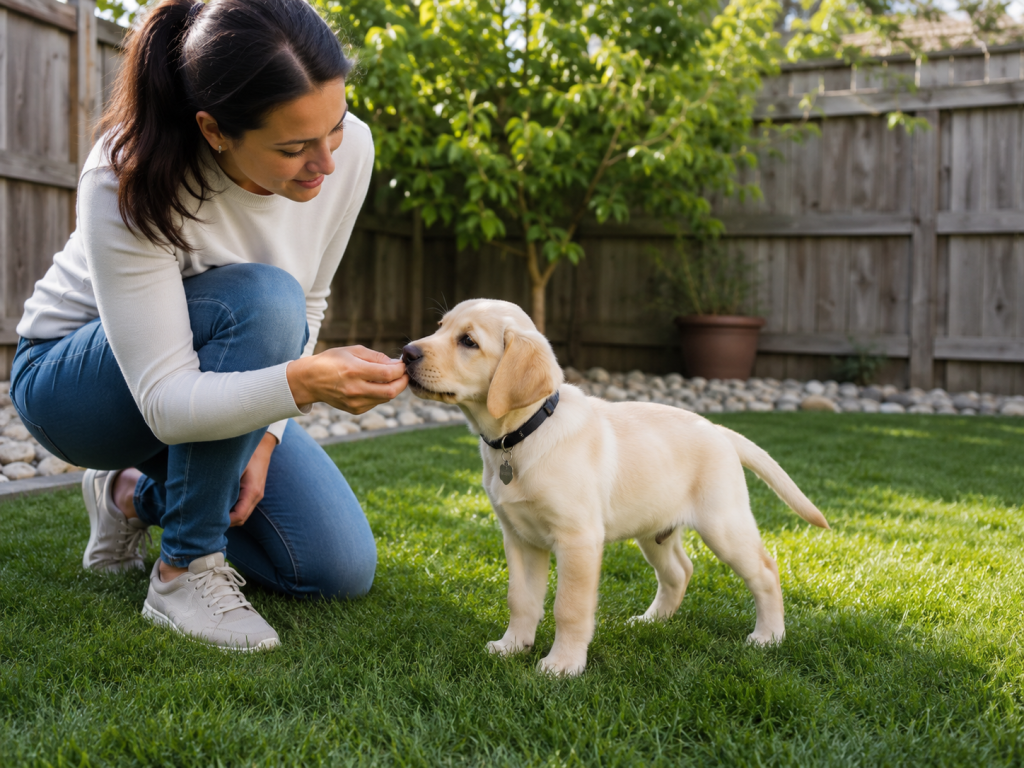
The fastest way to potty train a puppy is to prevent accidents before they happen. Take your puppy to the same bathroom area frequently, especially after waking, eating, drinking, playing, and leaving the crate. Reward them immediately after they eliminate in the correct place, supervise closely indoors, and follow the same routine every day.
Potty training can improve quickly when owners stay consistent, but “fast” does not mean every puppy will be fully trained in a few days. Young puppies are still developing bladder and bowel control. Merck Veterinary Manual notes that housetraining usually takes patience and consistency over several weeks, although individual puppies progress at different speeds.
The goal is not to wait for your puppy to make a mistake and then correct it. Instead, create so many opportunities to succeed that going outside becomes the obvious habit.
Start Potty Training From the First Day
Begin as soon as your puppy arrives home. Waiting several days can allow indoor accidents to become part of the puppy’s routine, which can make training more confusing.
Choose one bathroom location and take your puppy there consistently. Using the same area helps create a predictable routine because the smells and environment begin to signal what you expect.
When you reach the bathroom area, keep things calm. Give your puppy enough time to sniff and eliminate instead of immediately turning the trip into playtime.
As soon as your puppy finishes, reward them with praise and a small treat. Timing matters because the reward needs to follow the correct behavior closely enough for your puppy to make the connection.
Merck recommends taking puppies outside several times each day and praising successful elimination. Starting early and remaining consistent can significantly improve housetraining progress.
Take Your Puppy Outside More Often Than You Think
One of the biggest potty training mistakes is simply waiting too long between bathroom breaks. Young puppies cannot reliably hold their bladder for the same amount of time as adult dogs.
Instead of waiting until your puppy has an accident, anticipate when they are most likely to need the bathroom. Puppies often need to eliminate after sleeping, eating, drinking, playing, training, or becoming excited.
Merck Veterinary Manual recommends taking dogs outside shortly after eating and immediately after waking or playing when working on housetraining.
During the early stages, take your puppy outside:
- Immediately after waking
- Shortly after meals
- After drinking a significant amount
- After active play
- After training sessions
- After leaving the crate
- Before bedtime
- Whenever you notice potty signals
A very young puppy may need bathroom opportunities surprisingly often. As bladder control improves, you can gradually increase the time between trips.
Learn Your Puppy’s Potty Signals
Puppies often show small behavioral changes before they eliminate. Recognizing those signs gives you an opportunity to get outside before an accident happens.
Common signals can include suddenly stopping play, sniffing the floor intensely, circling, wandering away from the family, becoming restless, or moving toward an area where previous accidents occurred.
Some puppies become noticeably distracted just before they need to go. A puppy playing enthusiastically may suddenly stop and begin investigating the floor.
When you notice these behaviors, do not wait to see what happens. Calmly take your puppy directly to the bathroom area.
Over time, you may begin recognizing your puppy’s individual pattern before they have a chance to make a mistake.
Use a Predictable Feeding Schedule
Regular meals can make bathroom habits more predictable. If food is available continuously throughout the day, it may become harder to anticipate when your puppy needs to defecate.
Feed an appropriate puppy diet on a consistent schedule recommended for your puppy’s age and nutritional needs. After eating, take your puppy outside rather than allowing them to wander freely around the house.
Predictability is one of the most useful tools in fast puppy potty training. When meals, sleep, play, and bathroom trips follow a general routine, you can begin anticipating your puppy’s needs.
Fresh drinking water should still be available appropriately. Do not restrict water excessively simply to prevent accidents, as puppies need proper hydration.
If your puppy suddenly begins drinking or urinating much more than usual, discuss the change with your veterinarian rather than trying to solve it by limiting water.
Reward Your Puppy Immediately
Positive reinforcement makes the correct bathroom behavior worthwhile. AAHA recommends positive reinforcement and good supervision when establishing appropriate behavior with a new puppy.
Take a few small treats with you every time you go outside. Once your puppy finishes eliminating in the correct place, praise calmly and give the reward immediately.
Do not wait until you return indoors. By then, your puppy may associate the treat with entering the house rather than going potty outside.
You can also introduce a simple cue such as “go potty.” Say it calmly when your puppy begins eliminating rather than repeating it continuously beforehand.
With repetition, the cue can eventually become associated with the behavior. This can be useful when traveling, during bad weather, or before bedtime.
Supervise Closely Inside the House
Freedom should increase as your puppy becomes reliable. Giving a new puppy unrestricted access to several rooms makes accidents much easier to miss.
Keep your puppy near you when they are awake. Baby gates, a puppy pen, or keeping the puppy in the same room can make close supervision easier.
If you cannot actively watch your puppy, use a safe confinement area instead of allowing them to disappear somewhere in the house.
Supervision also teaches you the puppy’s patterns. You may notice that they consistently need to urinate 10 minutes after drinking or shortly after a particular type of play.
The more accurately you predict those moments, the fewer accidents your puppy can practice.
Can a Crate Help With Potty Training?
A properly introduced crate can be a useful potty training tool because many puppies naturally prefer not to eliminate where they sleep.
The crate should be large enough for your puppy to stand, turn around, and lie comfortably. However, excessive unused space may allow a puppy to sleep on one side and eliminate on the other. VCA recommends choosing an appropriately sized crate when using confinement as part of housetraining.
A crate should never be used as punishment. Introduce it positively with comfortable bedding, safe items, food, or treats so that it becomes a secure resting space.
Most importantly, a crate does not magically increase a young puppy’s bladder capacity. Very young puppies still require frequent bathroom breaks, including during the night.
VCA notes that a two-month-old puppy may need nighttime bathroom opportunities about every two hours, while a three-month-old puppy may need them around every three hours. Individual needs still vary.
What Should You Do When Your Puppy Has an Accident?
Accidents are normal during the learning process. How you respond can either support training or make it more stressful.
If you catch your puppy beginning to eliminate indoors, calmly interrupt them and take them to the correct bathroom area. If they finish outside, reward them.
If you discover an accident afterward, simply clean it. Your puppy cannot connect punishment now with something that happened earlier.
Do not rub your puppy’s nose in urine or feces, yell, or punish them physically. AAHA recommends reward-based training and advises against punishment-based approaches.
Instead, treat an accident as information. Perhaps you waited too long, missed a signal, gave too much unsupervised freedom, or changed the routine unexpectedly.
Adjust the plan and give your puppy another opportunity to succeed.
Clean Accidents Thoroughly
Dogs have a much stronger sense of smell than humans. An area that seems clean to you may still carry enough odor to encourage your puppy to eliminate there again.
Use a pet-safe cleaner designed to remove urine and fecal odors rather than simply covering them with fragrance. Follow the product directions and keep your puppy away until the area is safe and dry.
Repeated accidents in exactly the same location often suggest that either odor remains or the puppy has begun treating that area as an acceptable bathroom.
Block access temporarily if necessary while you strengthen the outdoor routine.
Good cleaning does not replace training, but it can prevent old accident areas from competing with the bathroom location you want your puppy to use.
Potty Training a Puppy at Night
Nighttime is often one of the hardest parts of early potty training. A young puppy may simply be physically unable to remain dry until morning.
Place the puppy’s crate or sleeping area somewhere you can hear them become restless. Some puppies whine when they need the bathroom, while others begin moving around or waking suddenly.
Keep nighttime bathroom trips boring and efficient. Take the puppy to the bathroom area, wait calmly, reward successful elimination, and return to bed.
Avoid turning a 3 a.m. potty trip into an exciting play session. Otherwise, your puppy may begin waking because nighttime outings have become entertaining.
As your puppy matures and consistently remains dry, nighttime trips can gradually become less frequent.
Should You Use Puppy Pads?
Puppy pads can be useful when outdoor access is difficult, but they can also create an extra learning step if your final goal is exclusively outdoor toileting.
A puppy trained to eliminate on pads first learns that going inside on a particular surface is acceptable. Later, you may need to transfer that behavior outdoors.
For some owners, that tradeoff is worthwhile. Apartment living, mobility limitations, severe weather, or vaccination-related restrictions may make an indoor toilet area useful.
If you use pads, keep them in one consistent location rather than placing them throughout the house. VCA recommends establishing a designated elimination area whether the chosen location is indoors or outdoors.
If outdoor potty training is practical from the beginning, going directly outside can make the final expectation clearer.
Why Is My Puppy Still Having Accidents?
An occasional accident does not mean your puppy has forgotten everything. Excitement, changes in schedule, too much freedom, distraction outdoors, and waiting too long between breaks can all cause temporary setbacks.
Ask yourself whether the puppy actually eliminated during the previous trip. Some puppies become distracted outdoors, return inside, and immediately have an accident.
Stay outside calmly until your puppy has had a reasonable opportunity to go. Reward elimination first, then provide sniffing or play as an additional bonus.
However, a sudden increase in accidents deserves attention. A puppy who was becoming reliable but suddenly urinates much more frequently, strains, appears uncomfortable, drinks excessively, or develops other symptoms may need veterinary evaluation.
Not every house-training problem is behavioral.
How Long Does It Take to Potty Train a Puppy?
There is no exact number of days. Some puppies understand the basic idea quickly but still have occasional accidents because their physical control has not fully developed.
Merck Veterinary Manual states that consistent housetraining commonly takes several weeks. Age, previous living conditions, routine, supervision, individual development, and owner consistency all influence progress.
Instead of judging success by one accident-free day, look for gradual improvement. Your puppy should begin having fewer accidents, signaling more clearly, and holding their bladder for longer periods as they mature.
Even after several successful weeks, continue providing regular bathroom opportunities. Giving too much freedom immediately can cause setbacks.
Common Potty Training Mistakes
The fastest potty training usually comes from avoiding a few predictable mistakes. Waiting for the puppy to ask every time is unreliable during early training because many puppies have not yet learned how to communicate the need.
Inconsistent schedules also create problems. If different family members follow completely different routines or use different bathroom locations, learning may take longer.
Punishing accidents is another mistake. It may teach a puppy to avoid eliminating in front of you rather than teaching them where they should go.
Finally, expecting too much too soon can lead to frustration. A very young puppy needs frequent supervision and bathroom opportunities because physical development is part of the process.
The Fastest Potty Training Routine
For most puppies, the most effective routine is simple: supervise indoors, take the puppy outside before they are likely to need the bathroom, and reward every successful outdoor elimination.
Begin each morning with an immediate bathroom trip. Repeat after meals, naps, drinking, active play, crate time, and whenever you notice signals. Give another opportunity before bedtime and provide nighttime breaks while your puppy is still too young to remain dry.
When accidents happen, clean them thoroughly and adjust the schedule rather than punishing your puppy.
Consistency makes the difference. If the same behavior produces the same reward every day, your puppy has a much easier pattern to learn.
How to Potty Train a Puppy Fast Successfully
If you want to potty train a puppy fast, focus less on correcting accidents and more on preventing them. Take your puppy outside frequently, use one consistent bathroom area, supervise closely, and reward successful elimination immediately.
A crate can help with management when introduced correctly, but it should never be used to force a puppy to hold their bladder longer than they physically can. Young puppies need frequent bathroom opportunities, and nighttime trips are often part of the process.
Most importantly, be consistent. Puppies learn through repetition, and every successful trip reinforces the behavior you want.
Progress may take several weeks rather than several days, but a clear routine can make training faster and less stressful for both you and your puppy. If accidents suddenly increase or appear alongside unusual thirst, pain, diarrhea, or other symptoms, contact your veterinarian to rule out a medical problem.