
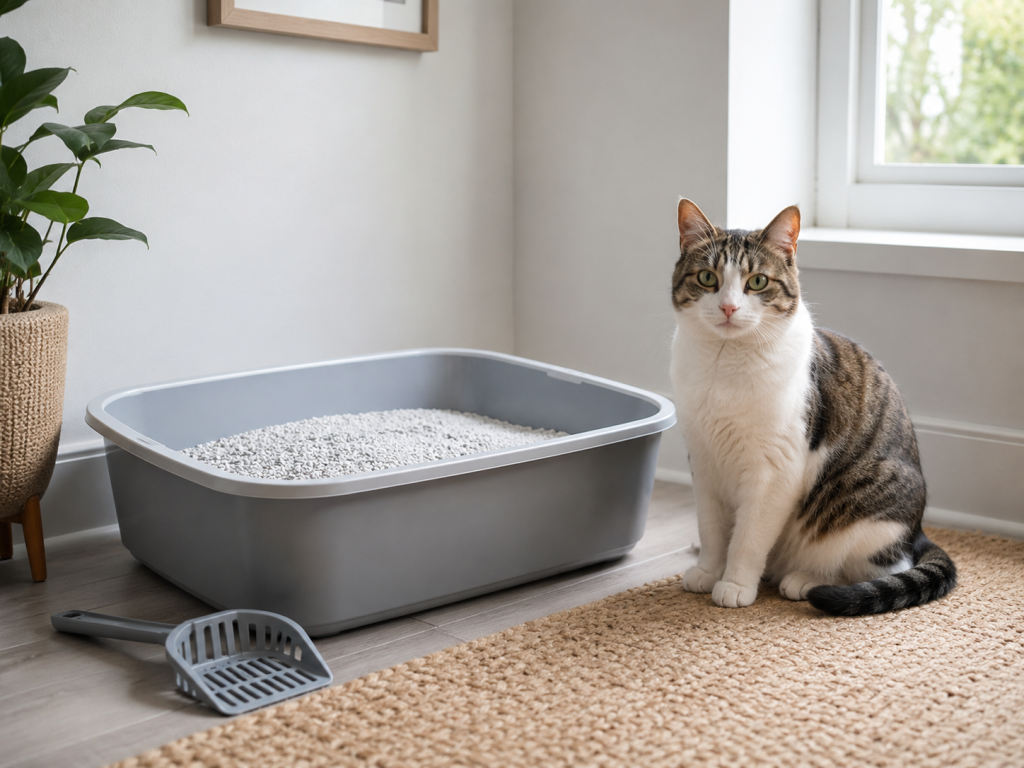
How often should you clean a litter box? You should remove urine clumps and feces at least once daily, although scooping twice a day is even better for many cats. The entire box should also be emptied, washed, dried, and refilled regularly. International Cat Care recommends scooping at least twice daily and performing a full clean on a regular schedule.
A clean litter box is not only about controlling smells. Cats can become reluctant to use boxes that contain too much waste, and regular cleaning also gives you an opportunity to notice changes in urine or stool. Cornell advises removing feces and clumps daily and changing litter often enough that the box remains clean and dry.
The exact full-cleaning schedule depends on the type of litter, how many cats use the box, and how quickly it becomes dirty. However, waiting until the box smells bad is generally too long.
Scoop the Litter Box Every Day
Daily scooping should be considered the minimum routine for most litter boxes. Remove feces, urine clumps, and obviously dirty litter rather than simply adding fresh litter on top.
FelineVMA recommends scooping at least once every day, while its feline behavior guidance recommends twice-daily scooping. International Cat Care also advises removing urine-soiled litter and feces at least twice daily.
For many households, once in the morning and once in the evening creates an easy routine. This prevents waste from accumulating for long periods and means your cat is more likely to find a clean area whenever they enter the box.
If you only have time to scoop once on a particular day, that is still much better than leaving waste for several days. However, twice-daily cleaning is a useful target when practical.
How Often Should You Completely Clean a Litter Box?
Scooping removes daily waste, but eventually the whole litter box also needs cleaning. This means removing the old litter, washing the tray, drying it, and adding fresh litter.
International Cat Care recommends cleaning the entire tray weekly in its general home-care guidance. Its multi-cat advice adds more detail, suggesting a weekly complete clean for non-clumping litter and potentially every two to four weeks for clumping litter, depending on use.
This difference makes sense because urine remains distributed through non-clumping litter, while clumping products allow more of the soiled material to be removed during everyday scooping.
Your cat’s actual box should guide you too. If litter starts looking dirty, odor remains after scooping, or residue builds up on the bottom, the box needs attention even if your planned cleaning day has not arrived.
A Simple Litter Box Cleaning Schedule
For most households, the routine does not need to be complicated. Regular small cleaning sessions are easier than waiting until the box becomes extremely dirty.
A practical schedule can look like this:
- Once or twice daily: Remove feces and urine clumps.
- As needed: Replace litter lost during scooping so the depth remains comfortable.
- Regularly: Inspect the box for odor, stuck litter, cracks, and dirty surfaces.
- About weekly: Consider a complete clean, especially with non-clumping litter.
- Every few weeks: Some clumping litter setups may go longer between full changes if the litter stays genuinely clean and the manufacturer recommends it.
The type of litter and number of cats can change this schedule. Cornell notes that boxes used by more cats require more frequent cleaning and that litter should be replaced often enough to remain clean and dry.
Why Cats Care About a Clean Litter Box
Cats can be selective about where they eliminate. Smell, texture, cleanliness, box size, and location can all affect whether a particular litter box feels acceptable.
Cornell specifically warns that cats may avoid litter box areas that are not clean. This means poor cleaning can contribute to house-soiling even when the cat previously used the box reliably.
Remember that your cat enters the litter box barefoot. They need to walk across the substrate, dig, position themselves, and sometimes cover waste afterward.
A box containing several old urine clumps and feces offers much less clean space. If another suitable surface is available elsewhere in the home, some cats may eventually choose it instead.
Cleaning therefore supports both hygiene and consistent litter box habits.
How to Clean a Litter Box Properly
Start by removing your cat from the immediate cleaning area and emptying the litter into an appropriate waste container. Scrape away material stuck to the bottom or sides without damaging the box.
Cornell recommends scrubbing the tray with a gentle detergent, drying it, and then refilling it with clean litter. Strong odors are unnecessary, and International Cat Care recommends avoiding strongly scented cleaning products.
Rinse the tray thoroughly so cleaning residue does not remain. Allow it to dry before adding fresh litter.
Once clean, refill the box with the litter your cat normally accepts. A full cleaning is usually not the ideal moment to introduce a completely different scented product, change the litter depth dramatically, and move the box to another room all at once.
Consistency can help keep the box familiar.
Avoid Strongly Scented Cleaning Products
Humans often want litter boxes to smell perfumed after cleaning, but your cat may not share that preference.
International Cat Care recommends avoiding strong-smelling cleaners around litter trays. It also advises against scented litter in its home-environment guidance.
The goal should be a clean box that smells relatively neutral rather than one that smells strongly of artificial fragrance.
Adding perfume cannot replace removing urine and feces. If a box continues smelling unpleasant after normal scooping, that is usually a sign that the litter or box itself needs more thorough attention.
Should You Add Fresh Litter After Every Scoop?
Yes, when necessary. Removing urine clumps also removes some clean litter around them, so the overall level gradually decreases.
Adding a small amount of fresh litter can maintain a comfortable depth without requiring you to empty the entire tray every day. International Cat Care recommends topping up fresh litter after removing waste.
Avoid continually adding clean litter on top of dirty material without scooping first. That may make the surface look better while leaving odor and contamination underneath.
Pay attention to your cat’s preference as well. Some cats dig deeply, while others seem more comfortable with a shallower layer.
Does Clumping Litter Need Less Cleaning?
Clumping litter can make everyday cleaning easier because urine forms removable clumps. This allows you to remove much of the soiled material without replacing all the litter each time.
That does not mean clumping litter never needs a full change. Small contaminated pieces, dust, odor, and residue can remain in the box over time.
International Cat Care suggests that some clumping litter trays can be completely cleaned every two to four weeks, while non-clumping trays generally need full cleaning more frequently.
Always consider manufacturer instructions and your individual setup. A heavily used box may require a complete change long before a lightly used box.
Non-Clumping Litter Often Needs More Frequent Changes
With non-clumping litter, urine is absorbed into the substrate rather than forming a removable clump. This can make it harder to remove all urine contamination during a simple scoop.
For this reason, full litter replacement may need to happen more frequently. International Cat Care’s multi-cat guidance recommends weekly complete cleaning when non-clumping litter is used.
You should still remove feces and visibly dirty litter every day.
If the box develops a strong urine odor before the scheduled full cleaning, do not wait. Replace the litter and wash the box.
Multiple Cats Mean More Cleaning
The more cats using a litter box, the faster waste accumulates. Even a large tray can become undesirable quickly when several cats rely on it.
Cornell states that litter needs to be changed more frequently when more cats use the same box.
Cleaning more often is important, but adding more litter boxes is usually better than expecting several cats to share one tray indefinitely. Cornell recommends providing as many boxes as there are cats, plus one additional box.
For example, a three-cat household generally benefits from several boxes distributed around the home rather than one enormous box that needs almost constant cleaning.
Multiple options also reduce competition and make it less likely that every toileting resource becomes dirty simultaneously.
Where You Place the Box Affects Cleanliness
Location does not directly change how often a cat urinates, but it can affect the condition of the litter box.
A box in a damp area may not stay as fresh as one in a well-ventilated location. A box that is difficult for you to reach may also get cleaned less often simply because scooping becomes inconvenient.
Choose a location that works for your cat while still making daily care practical. You should be able to reach the box easily enough that scooping twice a day does not become a major task.
Keep food and water separate from the toileting area. Cornell recommends positioning food and water well away from the litter box.
Should You Replace the Litter Box Itself?
Litter boxes do not necessarily last forever. Plastic can become scratched over time, and damaged surfaces may become harder to keep clean.
Cornell recommends replacing boxes that have become cracked or continue to smell.
Inspect the tray whenever you perform a complete cleaning. Look for deep scratches, cracks, rough areas, or odors that remain even after washing.
There is no universal deadline requiring every litter box to be replaced after a specific number of months. Condition matters more than the calendar.
If the tray cleans easily, remains intact, and your cat continues using it happily, there may be no reason to replace it simply because it is older.
Can a Dirty Litter Box Make a Cat Pee Elsewhere?
Yes, cleanliness can contribute to litter box avoidance. Cornell notes that cats may avoid litter box areas when they are not kept clean.
However, do not automatically assume dirt is responsible when a cat suddenly begins urinating elsewhere.
Medical problems can cause house-soiling too. Urinary pain, digestive issues, mobility problems, stress, litter preferences, and conflicts with other cats can all affect litter box behavior.
If a previously reliable cat suddenly stops using the box, improve cleanliness but also consider veterinary evaluation. Simply making the tray spotless will not treat a painful urinary condition.
Daily Cleaning Helps You Monitor Your Cat’s Health
Scooping is also a basic health-monitoring habit. When you see the litter every day, you become familiar with your cat’s normal urine and stool patterns.
You may notice that urine clumps suddenly become much larger, that your cat produces many tiny clumps, or that no urine appears at all. Changes in bowel movements can also become obvious much sooner.
Cornell recommends daily removal of feces and clumps, and regular litter box observation can reveal changes that deserve attention.
You do not need to measure every clump. Simply learning what is normal for your cat can make meaningful differences easier to recognize.
When Litter Box Changes Need Veterinary Attention
A clean litter box cannot solve every toileting problem. Contact your veterinarian when your cat suddenly changes litter box habits, especially if other symptoms appear.
Watch for repeated straining, frequent trips with little urine, blood, crying, vomiting, diarrhea, constipation, unusual thirst, appetite changes, or lethargy.
A cat repeatedly straining but producing little or no urine needs urgent veterinary attention. Do not assume the cat is simply constipated or unhappy with the litter box.
Similarly, a box that suddenly contains far more or far less urine than normal can provide useful information about a possible medical change.
Keeping the Litter Box Clean Without Making It Complicated
So, how often should you clean a litter box? Scoop urine clumps and feces at least daily, with twice-daily cleaning being an excellent routine for many households. Feline veterinary and welfare guidance consistently emphasizes frequent waste removal to keep boxes appealing and hygienic.
A complete clean should happen regularly as well. Weekly cleaning is a sensible starting point, particularly for non-clumping litter, while some well-maintained clumping litter boxes may go longer between full changes.
Use gentle cleaning products, rinse thoroughly, avoid strong fragrances, and replace fresh litter as needed. If several cats share the home, expect to clean more often and provide additional boxes.
Most importantly, pay attention while you scoop. A litter box is something you see every day, which makes it an excellent place to notice changes in your cat’s bathroom habits early.
A few minutes of cleaning each morning and evening can keep the box more appealing, make household odors easier to control, and give you a clearer picture of your cat’s normal health.