
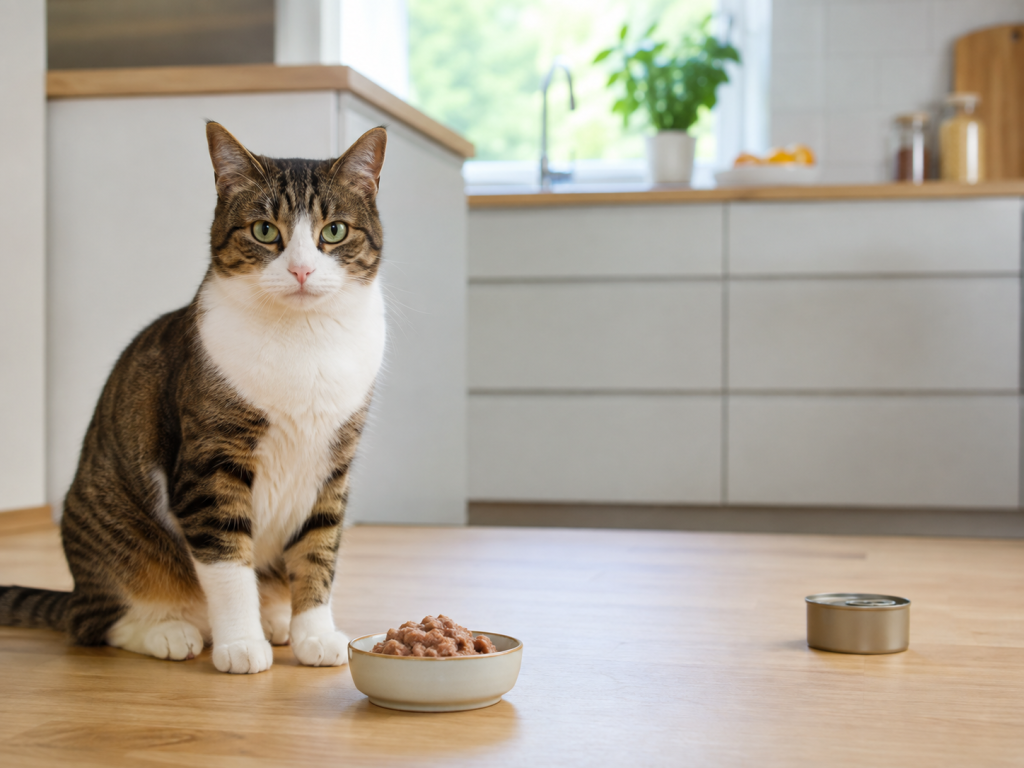
Can cats eat tuna safely? Cats can safely eat nutritionally complete cat food that contains tuna, but ordinary tuna made for people should not become a regular part of a cat’s diet. Human tuna is not formulated to provide all the nutrients cats need, and regular exposure to tuna can also increase concerns about mercury. Merck Veterinary Manual notes that commercial fish products such as tuna have been associated with long-term mercury poisoning in cats.
Cats are often extremely attracted to the smell and flavor of tuna, which can make it tempting to share a can whenever you prepare some for yourself. However, liking a food does not mean that food provides balanced nutrition. AAFCO explains that a complete and balanced cat food must contain all required nutrients in the correct proportions for the animal’s life stage.
Therefore, the safest approach is simple: choose complete cat food if you want your cat to enjoy tuna flavor, rather than regularly feeding tuna intended for humans.
Why Do Cats Love Tuna So Much?
Tuna has a strong smell and rich animal-based flavor that many cats find highly appealing. Some cats become excited as soon as a can is opened and may beg, vocalize, or follow their owner into the kitchen.
That enthusiasm can make tuna useful in very small amounts in specific situations. Veterinary guidance sometimes mentions a small amount of tuna or tuna water as a way to increase palatability or help administer medication.
However, something being highly palatable does not make it nutritionally suitable as a regular meal. Cats need specific amounts and ratios of protein, fat, amino acids, vitamins, minerals, and other nutrients.
If tuna becomes more appealing than your cat’s normal food, frequent feeding can also encourage picky eating.
Is Human Canned Tuna Safe for Cats?
Human canned tuna is not designed to be a complete feline diet. Even when the tuna itself contains no obviously toxic ingredients, it does not provide the balanced nutrition that a cat needs as a primary food.
VCA specifically advises against regularly feeding tuna intended for people because it lacks essential nutrients required in a properly balanced feline diet.
This distinction is important because a can labeled “tuna cat food” may be nutritionally very different from a can of tuna sold for sandwiches. Complete cat food has been formulated to meet feline nutritional requirements, while ordinary canned tuna has not.
Check the nutritional adequacy statement on cat food rather than assuming that every tuna-containing product is suitable as a full meal.
Tuna Cat Food Is Different From Human Tuna
A commercially prepared cat food containing tuna can be appropriate when the label states that the product is complete and balanced for your cat’s life stage.
AAFCO explains that complete food contains all required nutrients and balanced food provides those nutrients in the correct proportions. Recognized feline life stages include growth, adult maintenance, gestation and lactation, and all life stages.
Therefore, tuna itself is not automatically the problem. The nutritional formulation and how the food is used matter.
A complete tuna-based adult cat food can function as a normal diet. Plain tuna from your kitchen should not be treated as an equivalent substitute.
What About Mercury in Tuna?
Mercury is one of the main reasons repeated tuna consumption deserves caution.
Mercury can accumulate in predatory fish through the food chain. Merck Veterinary Manual states that commercial fish products, including tuna, have caused long-term mercury poisoning in cats and people.
This does not mean that a cat that steals one tiny piece of tuna will immediately develop mercury poisoning. The concern is much more relevant to repeated dietary exposure over time.
Because cats are small animals, regularly giving human tuna simply adds an unnecessary source of exposure when complete feline foods are readily available.
This is another reason tuna should not become a daily human-food treat.
Can Kittens Eat Tuna?
Kittens have particularly demanding nutritional requirements because they are growing rapidly.
A kitten should receive a complete and balanced diet formulated for growth. AAFCO recognizes growth as a specific nutritional life stage because developing animals have different nutritional requirements from adult cats.
VCA warns that regularly feeding tuna to kittens is dangerous because of mercury exposure and because kittens may begin refusing their nutritionally balanced kitten food in favor of highly appealing treats.
Therefore, plain tuna is especially unnecessary during kittenhood. If you want your kitten to eat tuna flavor, choose an appropriate complete kitten food containing fish rather than substituting human tuna for normal meals.
Can Cats Eat Tuna in Water?
Tuna packed in water may seem like the safest form of human tuna because it does not contain added oil. However, it is still human tuna and is still not a complete feline diet.
The water itself may sometimes be used in very small amounts for specific purposes. VCA discusses adding tuna juice to food or water to improve palatability in certain veterinary situations.
That does not mean an entire bowl of tuna water should become a daily drink.
If you use tuna water occasionally, check the ingredients first. Avoid products containing seasonings, onion, garlic, or other unnecessary additives.
Fresh plain water should remain your cat’s primary source of drinking water.
Can Cats Eat Tuna in Oil?
Tuna packed in oil is a poorer choice for cats than a nutritionally complete cat food.
Oil adds extra fat and calories that your cat does not need from a treat. Regular additional calories can contribute to gradual weight gain, particularly in indoor cats with modest energy requirements.
Draining the oil does not turn the tuna into a balanced meal either. The underlying nutritional limitations and mercury concerns remain.
If your cat accidentally eats a small piece, monitor them rather than panicking. However, there is no nutritional advantage to deliberately offering oil-packed tuna.
What About Tuna With Salt?
Human tuna products can vary significantly in sodium content and other ingredients. Cats do not need salty human foods added to an otherwise complete diet.
A cat’s normal food should already provide appropriate amounts of essential minerals when it is complete and balanced.
Products containing flavorings, sauces, seasonings, or additional ingredients create even more uncertainty. Feeding plain nutritionally complete cat food removes that problem.
If a veterinarian specifically recommends using tuna juice to encourage a sick cat to eat, VCA suggests options such as low-sodium flavoring in certain situations.
Follow veterinary guidance rather than routinely adding salty tuna liquid to meals.
How Much Tuna Can a Cat Eat?
There is no nutritional need to give a healthy cat human tuna at all. The safest choice is to use commercial cat treats or complete tuna-flavored cat food instead.
If a veterinarian recommends using a tiny amount of tuna for medication or appetite encouragement, it should remain a very small addition rather than replacing a meal.
General veterinary guidance recommends limiting treats to approximately 10% of a cat’s daily calorie intake so that the majority of calories come from complete and balanced nutrition.
However, that 10% limit should not be interpreted as permission to use the entire allowance on tuna every day. Because of tuna’s specific nutritional limitations and mercury concerns, there are better choices for routine treats.
Can Tuna Make Cats Picky Eaters?
Yes, highly palatable extras can sometimes interfere with normal feeding habits.
VCA specifically warns that kittens given tuna may begin holding out for the appealing treat and refusing nutritionally balanced cat food.
The same basic learning process can happen with adults. If refusing ordinary food repeatedly results in the owner opening tuna, the cat may learn that waiting produces something more desirable.
Avoid creating a cycle in which tuna is added every time your cat hesitates at a meal.
More importantly, sudden appetite changes should not automatically be treated as fussiness. Dental pain, nausea, illness, stress, and other problems can reduce appetite and deserve veterinary attention.
Can Tuna Cause Nutritional Deficiencies?
A diet dominated by ordinary tuna can become nutritionally incomplete because tuna intended for humans has not been formulated to meet all feline nutrient requirements.
AAFCO’s definition of complete and balanced nutrition emphasizes that cats require all necessary nutrients in appropriate ratios.
Replacing complete cat food with tuna can therefore displace essential nutrients. The problem becomes more significant as tuna represents a larger proportion of the total diet.
A few bites do not create an immediate deficiency. The concern is repeated substitution over weeks or months.
This is why the base of the diet matters much more than occasional exposure.
Is Tuna Good for a Cat’s Protein Needs?
Tuna contains animal protein, but protein alone does not make a food nutritionally complete.
Cats require multiple essential nutrients beyond protein. AAFCO explains that animal-sourced ingredients can provide valuable protein, amino acids, and minerals, but their nutrient amounts vary and must be balanced within the complete formulation.
Therefore, saying “cats are carnivores, so tuna must be good for them” oversimplifies feline nutrition.
Cats need properly balanced animal-based nutrition, not just a bowl containing one type of animal protein.
Can Cats Be Allergic to Tuna?
Cats can potentially develop adverse reactions to dietary ingredients, including animal proteins.
However, vomiting, diarrhea, itching, or skin problems after eating tuna should not automatically be labeled an allergy. Many medical conditions can produce similar symptoms.
If you repeatedly notice a reaction after your cat eats a particular food, stop offering the extra and discuss the pattern with your veterinarian.
Veterinary diagnosis of food allergy usually requires a controlled dietary trial rather than simply switching among different flavors.
Avoid repeatedly experimenting with different human foods if your cat already has digestive or skin problems.
Can Cats Eat Raw Tuna?
Raw tuna is not a better alternative to canned human tuna.
Raw animal products introduce additional concerns related to foodborne pathogens and nutritional imbalance when they become an important part of the diet. A piece of raw fish is not equivalent to a professionally formulated complete cat food.
Raw fish can also contain enzymes that affect certain nutrients depending on the species and preparation, adding another reason not to improvise a feline diet from raw seafood.
If you are interested in raw feeding, discuss the complete diet with a veterinarian or veterinary nutrition specialist instead of simply adding raw tuna.
Can Cats Eat Cooked Tuna?
Plain cooked tuna avoids some of the microbial concerns associated with raw fish, but cooking does not transform it into a nutritionally complete cat food.
Avoid tuna prepared with butter, oil, sauces, garlic, onion, salt, or other seasonings. Cats do not benefit from the additions normally used in human meals.
Again, the key distinction is between a tiny accidental or veterinarian-directed amount and regular feeding.
A nutritionally complete tuna-flavored cat food is the safer way to include tuna as part of your cat’s normal diet.
What If My Cat Accidentally Eats Tuna?
If your healthy cat steals a small amount of plain tuna once, serious poisoning is unlikely based solely on that isolated event.
Check what else was in the food. Tuna mixed with onion, garlic, alcohol-containing sauces, or other potentially harmful ingredients creates a different situation.
Monitor your cat for vomiting, diarrhea, unusual behavior, loss of appetite, or other symptoms.
If a large amount was eaten, the tuna contained questionable ingredients, or your cat has an existing medical condition, contact your veterinarian for individualized advice.
The long-term mercury and nutritional concerns discussed with tuna relate mainly to repeated feeding rather than one accidental bite.
Is Tuna Water Safe for Cats?
A small amount of plain tuna water can occasionally be used to make food or water more appealing, and veterinary sources mention this strategy in certain situations.
Choose liquid from tuna packed in water rather than oil and check for added seasonings.
Do not replace normal drinking water with tuna water. Cats should always have access to fresh plain water.
If you are using tuna water because your cat suddenly refuses food or water, address the underlying problem as well. Appetite loss or dehydration can indicate illness, particularly when accompanied by vomiting, lethargy, pain, or weight loss.
Can Senior Cats Eat Tuna?
Senior cats do not automatically need tuna simply because it is soft and appealing.
Older cats can develop kidney disease, hyperthyroidism, diabetes, dental disease, and other conditions that change their nutritional requirements. Human tuna may interfere with a carefully designed therapeutic feeding plan.
If your senior cat has become reluctant to eat, contact your veterinarian instead of relying on tuna as a long-term solution.
A veterinarian may sometimes suggest small amounts of highly palatable foods or tuna water temporarily, but the priority is maintaining an appropriate complete diet while identifying why appetite has changed.
When Should Tuna Be Avoided?
Human tuna is best avoided as a routine food for every cat, but additional caution is appropriate when a cat has a medical condition requiring controlled nutrition.
Cats eating prescription diets for kidney, urinary, gastrointestinal, allergic, diabetic, or weight-related problems should not receive regular extras unless the veterinarian confirms they fit the treatment plan.
Avoid seasoned tuna entirely when it contains ingredients that may be unsafe for cats.
Kittens should also receive carefully balanced growth nutrition rather than tuna-based human-food treats.
When in doubt, use a cat treat specifically designed for feline consumption.
What Should You Feed Instead of Human Tuna?
If your cat loves tuna, the easiest alternative is a commercial cat food containing tuna that is labeled complete and balanced for the appropriate life stage.
You can also choose commercially prepared cat treats and keep treats within a small part of total daily calorie intake. VCA recommends limiting treats to around 10% of daily calories.
This allows your cat to enjoy highly appealing flavors without replacing nutritionally complete meals.
Always introduce new foods thoughtfully and monitor body weight. Even nutritionally appropriate food can contribute to obesity when too many calories are fed.
So, Can Cats Eat Tuna Safely?
Cats can eat nutritionally complete cat food containing tuna, but ordinary human tuna should not become a regular food or routine treat. Human tuna does not provide balanced feline nutrition, and repeated exposure raises additional concern because tuna can contain mercury. Merck Veterinary Manual documents long-term mercury poisoning associated with commercial fish products such as tuna.
If your cat enjoys tuna flavor, choose a complete cat food formulated for their life stage. AAFCO explains that complete and balanced foods provide all required nutrients in appropriate proportions, which ordinary canned tuna does not.
Do not replace meals with tuna, especially for kittens or cats receiving therapeutic diets. Avoid tuna packed with sauces or seasonings, and do not assume that raw or oil-packed tuna is healthier.
A tiny amount may occasionally be used under veterinary guidance for purposes such as encouraging appetite or helping administer medication. However, your cat does not need human tuna to have a healthy diet.
The safest rule is simple: tuna formulated as complete cat food can be part of the regular diet; tuna prepared for people is better left off the everyday menu.