
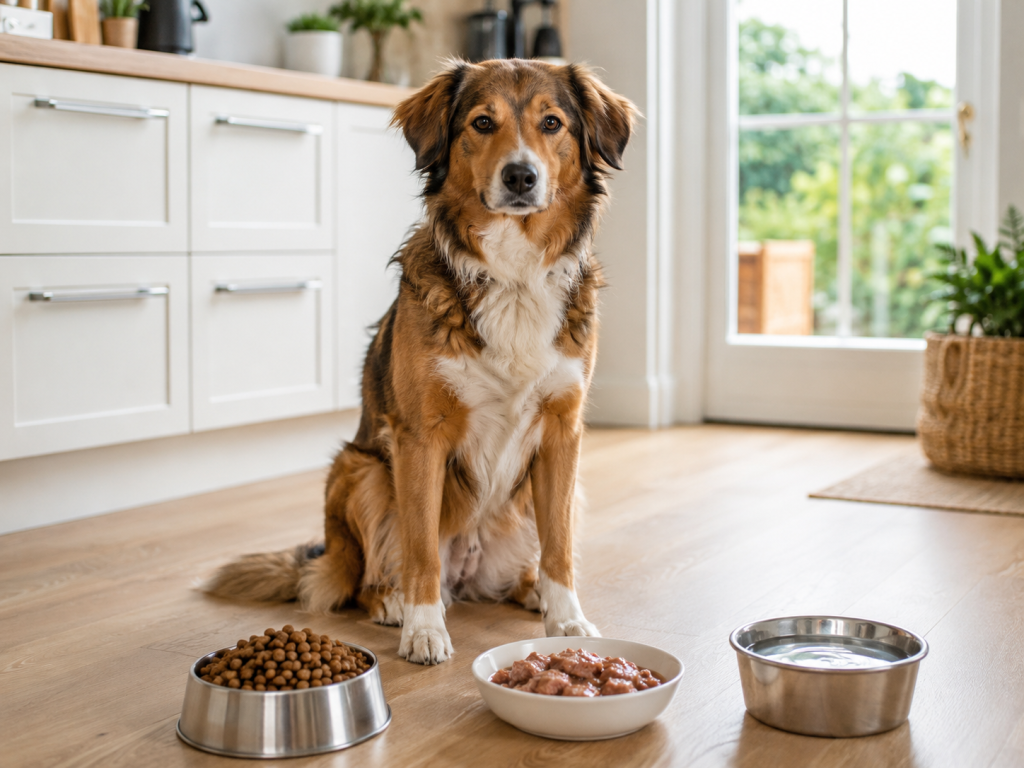
Dog nutrition is the foundation of healthy growth, body weight, energy, muscle maintenance, and long-term wellbeing. A healthy dog should receive a complete and balanced diet that provides all required nutrients in the correct proportions for their life stage. AAFCO defines “complete” as containing all required nutrients and “balanced” as supplying those nutrients in appropriate ratios.
The right diet also depends on the individual dog. Puppies, adults, pregnant or nursing dogs, seniors, highly active dogs, and dogs with medical conditions may have different nutritional needs. WSAVA therefore recommends an individualized nutrition plan rather than assuming that one food or feeding method is ideal for every dog.
Good nutrition is not only about choosing a bag or can of food. Portion size, feeding frequency, treats, body condition, hydration, exercise, and changes in health all influence whether a feeding plan is working.
What Does a Dog Need From Food?
Dogs require energy as well as appropriate amounts of protein, fat, vitamins, minerals, essential fatty acids, and other nutrients.
A diet can contain ingredients that sound healthy while still being nutritionally incomplete if those nutrients are present in the wrong amounts or ratios. This is one reason properly formulated complete diets are generally safer than improvising meals based only on individual ingredients.
Merck Veterinary Manual states that providing a complete and balanced diet for the appropriate life stage is critical for overall health.
The entire formulation matters more than one ingredient appearing at the top of the label.
What Does “Complete and Balanced” Mean?
The nutritional adequacy statement is one of the most useful parts of a dog food label.
AAFCO recognizes growth, adult maintenance, gestation and lactation, and all life stages as nutritional categories for dogs. A complete and balanced product should identify which life stage it is intended to support.
This distinction matters because puppies need different nutrient levels from healthy adults.
Treats and complementary foods may not provide complete nutrition. They are generally intended to supplement the primary diet rather than replace it.
How to Read a Dog Food Label
Start with the nutritional adequacy statement and life stage.
Then review calorie information and feeding directions. Feeding guides can provide a starting estimate, but actual needs vary according to metabolism, body condition, activity, age, and health.
AAFCO explains that labels for complete and balanced foods include feeding directions, although individual portions may still need adjustment.
The ingredient list can provide useful information, but it should not be used alone to judge the quality of the entire diet.
Protein Is Important
Protein supplies amino acids used throughout the body.
Muscles, enzymes, hormones, tissues, and many normal biological processes depend on adequate protein intake.
However, a food should not be judged only by having the highest protein percentage possible. A complete formulation must balance protein with total calories, fat, minerals, vitamins, and other nutrients.
The appropriate amount can also change when a dog has certain medical conditions.
Fat Provides Energy
Dietary fat is an energy-dense nutrient and also supplies essential fatty acids.
It can influence palatability, skin and coat health, and the calorie density of the diet.
Puppies need enough dietary fat to support growth, while adult dogs that consume more calories than they use can gain excess body fat regardless of whether those calories come from fat, protein, or carbohydrates.
Portion control remains important even when the ingredients are nutritionally appropriate.
What About Carbohydrates?
Carbohydrates can provide energy and useful dietary components in appropriately formulated dog foods.
The presence of rice, corn, wheat, oats, potatoes, or other carbohydrate ingredients does not automatically make a diet low quality.
Likewise, grain-free does not automatically mean healthier.
Focus on the nutritional adequacy of the complete diet rather than judging food according to a single ingredient or marketing claim.
Are Grain-Free Diets Better?
Not necessarily.
A grain-free label only tells you that certain grains have been excluded. It does not tell you whether the food is more nutritious, better balanced, or more appropriate for your individual dog.
Unless a veterinarian has identified a reason to avoid a particular ingredient, there is no universal requirement for healthy dogs to eat grain-free food.
Choose diets according to nutritional quality and suitability rather than marketing terminology.
How Much Should You Feed a Dog?
There is no universal portion size.
Dogs differ dramatically in body weight, activity, age, metabolism, reproductive status, and health. Even two dogs of identical weight can need different calorie amounts.
Use the package feeding guide as a starting point, then adjust according to body weight and body condition.
Merck provides calorie-estimation tools for dogs but treats calculated energy requirements as estimates that must be adapted to the individual animal.
Measure Portions Consistently
Eyeballing portions can easily lead to accidental overfeeding.
A slightly larger scoop every day can add substantial calories over months. Digital kitchen scales can provide more accurate measurements than cups when precision is important.
VCA specifically recommends measuring food and notes that kitchen scales are more precise than measuring cups.
Include treats and training rewards when estimating total daily intake.
Calories Matter More Than Bowl Size
Different foods can contain very different numbers of calories in the same volume.
Switching from one food to another without checking calorie density may lead to unexpected weight gain or loss.
Always compare how many calories your dog receives rather than simply feeding the same number of cups.
This becomes particularly important when changing from a lower-calorie diet to a highly energy-dense formula.
How Often Should You Feed an Adult Dog?
Many healthy adult dogs do well with two measured meals each day.
The exact schedule can vary according to routine, health, appetite, and individual preference.
Dividing the daily ration into two meals can make portion control easier and avoids giving one very large meal.
Some dogs may benefit from more frequent smaller meals when recommended for specific medical or behavioral reasons.
Feeding Puppies
Puppies need diets specifically formulated to support growth.
Merck states that puppy food must provide sufficient calories, fat, protein, vitamins, and minerals for development.
Puppies between weaning and approximately 6 months are generally fed three meals per day. From around 6 to 12 months, twice-daily feeding is commonly recommended.
The transition to adult food depends on breed size and development, so larger breeds may remain on appropriate growth nutrition longer.
Large-Breed Puppies Need Special Attention
Large and giant breeds have particular nutritional considerations during growth.
Merck recommends complete and balanced growth foods specifically labeled as suitable for the growth of large-size dogs expected to reach at least about 32 kg, or 70 pounds, as adults.
Rapid excessive growth is not the goal.
Large-breed puppies need controlled, balanced development to support bones and joints appropriately.
Avoid adding calcium or other mineral supplements unless your veterinarian specifically recommends them.
Adult Dog Nutrition
Once growth is complete, most healthy dogs transition to an adult-maintenance diet.
Adult feeding should focus on maintaining ideal body condition rather than supporting rapid growth.
Monitor weight and body shape over time. Activity often changes after puppyhood, neutering, injuries, or lifestyle changes, which can alter calorie requirements.
A dog that once maintained weight easily on a certain portion may need less food later.
Feeding Senior Dogs
Senior dogs do not all need the same diet.
Some gain weight as activity decreases. Others lose body weight or muscle and may need a different nutritional strategy.
Medical conditions become increasingly important when deciding what to feed.
A healthy senior dog should therefore be evaluated individually rather than automatically placed on a low-calorie or restricted-protein diet simply because of age.
Wet Food vs. Dry Food
Both wet and dry dog foods can provide complete and balanced nutrition when properly formulated.
Dry food is convenient, easy to measure, and useful in puzzle feeders or training. Wet food contains more moisture and may be more appealing to some dogs.
One format is not automatically healthier than the other.
The best option depends on your dog’s preferences, dental condition, calorie needs, health, and your feeding routine.
Can Dogs Eat Wet and Dry Food Together?
Yes.
You can combine complete wet and dry foods as long as the total calories remain appropriate.
The most common mistake is giving a full daily serving of dry food plus a full daily serving of wet food.
Instead, divide the total daily calories between both formats.
Is Free Feeding a Good Idea?
Free feeding means leaving food available throughout the day.
Some dogs regulate intake, but many will eat more calories than necessary when unlimited food remains available.
Measured meals make appetite and calorie intake easier to track.
They can also help owners recognize changes sooner when a dog suddenly begins eating less.
For most dogs, structured feeding is more practical for weight control than repeatedly refilling an open bowl.
Fresh Water Is Essential
Dogs should normally have continuous access to fresh, clean water.
Water requirements change with environmental temperature, exercise, diet, body size, and health.
A dog exercising in hot weather will need more water than one resting indoors.
Persistent changes in thirst deserve attention. Increased drinking can accompany medical conditions and should not be addressed by restricting water without veterinary instructions.
Treats Should Stay Limited
Treats can be useful for training, enrichment, and bonding.
However, they should remain a relatively small percentage of total daily calories because many treats are not complete and balanced.
Merck recommends keeping treats below 10% of total calorie intake to reduce the risk of nutritional imbalance, and VCA provides the same general maximum.
Using part of your dog’s normal meal as training rewards can reduce unnecessary extra calories.
Human Food and Table Scraps
Some plain human foods can be safe in small amounts, but regular table scraps can make nutrition difficult to control.
Prepared foods may contain excessive fat, salt, seasonings, or ingredients that are dangerous to dogs.
Chocolate, xylitol, grapes, raisins, onions, and garlic are examples of foods or ingredients that should not be given to dogs.
Even safe human foods should remain extras rather than replacing complete dog food.
Can Dogs Eat Raw Food?
Raw feeding introduces both nutritional and food-safety concerns.
A raw diet that has not been carefully formulated can be deficient or excessive in essential nutrients. Raw animal products can also carry pathogens that may affect pets or people.
Merck recommends that owners choosing home-prepared diets use recipes formulated by a board-certified veterinary nutritionist rather than relying on recipes found online or in books.
If you are considering raw feeding, discuss the full diet with your veterinarian.
Are Homemade Dog Diets Healthy?
A properly formulated home-prepared diet can meet nutritional requirements.
However, combining meat, rice, vegetables, and supplements without professional formulation does not guarantee balance.
Home diets can become deficient in calcium, vitamins, minerals, or other nutrients if recipes are incomplete or ingredients are substituted.
Merck specifically advises using recipes developed by boarded veterinary nutritionists for home-prepared diets.
Follow the recipe precisely rather than modifying ingredients casually.
Does Your Dog Need Supplements?
A healthy dog eating a complete and balanced commercial diet usually does not need random vitamin or mineral supplements.
Adding unnecessary nutrients can disturb the balance of the existing diet.
For example, calcium deficiency is uncommon in dogs eating complete and balanced foods, which is one reason routine calcium supplementation is generally unnecessary.
Supplements can have legitimate medical uses, but they should be selected according to a specific need rather than given automatically.
Omega-3 and Other Supplements
Fish oils and other supplements are frequently marketed for skin, coat, joints, and general health.
Some may have evidence-based uses in particular conditions, but dose and product quality matter.
Supplements also add calories and can interact with medications.
Discuss routine supplement use with your veterinarian, especially if your dog has a chronic disease or takes prescription medication.
Maintaining a Healthy Body Condition
Healthy weight is more useful than aiming for a particular number based only on breed averages.
WSAVA uses body condition scoring to assess fat stores and recommends routine nutritional assessment.
You should generally be able to feel the ribs without pushing through a thick layer of fat, and your dog should have an appropriate waist when viewed from above.
Ask your veterinarian to show you your dog’s body condition score so you can monitor changes at home.
Why Obesity Matters
Obesity places additional strain on the body and can make movement more difficult.
Weight gain usually happens gradually, which makes it easy to overlook.
Measure meals, count treats, and reassess portions if activity changes.
If your dog needs to lose significant weight, work with your veterinarian rather than drastically reducing food without a structured plan.
Safe Weight Loss
Weight loss should be controlled and nutritionally appropriate.
Simply feeding much less of an ordinary maintenance diet can reduce essential nutrient intake along with calories.
Veterinary weight-management diets may allow greater calorie restriction while continuing to provide appropriate nutrient concentrations.
Regular weigh-ins help determine whether the plan is working.
VCA also recommends incorporating treat calories into weight-reduction plans rather than ignoring them.
What If Your Dog Is Underweight?
Unexpected weight loss should be investigated.
Dental disease, digestive problems, parasites, metabolic disease, cancer, chronic pain, and other conditions can affect body weight.
Increasing food may be appropriate in some cases, but the underlying cause should be understood first.
A dog losing weight despite eating normally or becoming unusually hungry deserves veterinary attention.
Exercise and Nutrition Work Together
Calorie needs are closely connected to physical activity.
A working dog exercising for hours each day may require substantially more energy than an inactive pet of identical body weight.
Likewise, a dog recovering from injury may need fewer calories during restricted activity.
Reassess food portions when lifestyle changes rather than feeding the same amount automatically for the dog’s entire life.
Neutering Can Affect Calorie Needs
Some dogs require fewer calories after neutering because metabolism and activity patterns can change.
This does not mean neutering automatically causes obesity.
Weight gain develops when calorie intake exceeds energy expenditure.
Monitor body condition after surgery and adjust portions when needed.
Feeding Multiple Dogs
Several dogs eating together can make individual intake difficult to monitor.
A fast eater may finish their meal and move to another dog’s bowl. Dogs can also experience tension around food.
Separate feeding locations can help owners measure portions accurately and reduce competition.
This becomes essential when one dog requires a prescription diet or a different calorie intake.
Slow Feeders and Puzzle Feeders
Dogs that eat extremely quickly may benefit from feeding methods that slow food consumption.
Slow-feed bowls, food puzzles, and scatter feeding can make meals last longer and provide enrichment.
Use part of the measured daily food allowance rather than adding extra calories specifically for the activity.
Choose equipment appropriate for your dog’s size and supervise when necessary.
Changing Dog Food
Abrupt changes can cause digestive upset in some dogs.
When there is no medical reason to switch immediately, introduce the new food gradually by increasing its proportion over several days.
Monitor stool, appetite, vomiting, and overall comfort.
If your veterinarian prescribes a therapeutic diet, follow the specific transition instructions provided.
Food Allergies
Food allergy is less straightforward than simply noticing that a dog scratches after eating a particular brand.
Skin disease, environmental allergies, parasites, and infection can all cause similar symptoms.
When food allergy is suspected, veterinarians may recommend a controlled elimination diet using a novel or hydrolyzed protein.
Randomly switching between chicken, beef, lamb, grain-free, and fish foods does not reliably diagnose an allergy.
Prescription and Therapeutic Diets
Veterinary therapeutic diets are formulated for particular medical conditions.
They may be used for kidney disease, urinary disease, gastrointestinal disorders, liver disease, obesity, food allergy, or other health problems.
These diets intentionally modify nutrient levels for a medical purpose.
For example, Merck describes specific protein modifications in therapeutic canine diets used for some liver disorders.
Do not feed another dog’s prescription diet simply because it sounds healthier.
Nutrition During Pregnancy and Nursing
Pregnancy and lactation substantially increase nutritional requirements.
AAFCO recognizes gestation and lactation as a distinct life stage because these dogs need more than ordinary adult maintenance nutrition.
Pregnant and nursing dogs should receive an appropriate complete diet that supports these demands.
Veterinary monitoring can help ensure that body condition remains appropriate throughout pregnancy and lactation.
Common Dog Nutrition Mistakes
Overfeeding is one of the most common problems.
Other mistakes include providing too many treats, feeding an inappropriate life-stage diet, making sudden food changes, adding unnecessary supplements, and choosing food entirely according to marketing trends.
Home-prepared diets can also create serious nutritional imbalances when not professionally formulated.
A simple, well-measured, complete feeding plan is usually better than constantly changing diets without a clear reason.
When Appetite Changes
A major appetite change can indicate more than a food preference.
Dogs may eat less because of dental pain, nausea, digestive disease, infection, stress, or pain.
Increased appetite can also accompany certain medical conditions.
If your dog suddenly eats much more or less than normal, particularly alongside weight change, vomiting, diarrhea, thirst changes, or lethargy, contact your veterinarian.
When to Ask Your Veterinarian About Nutrition
Nutrition should be reviewed whenever your dog’s life stage, body condition, or health changes.
Veterinary advice is particularly useful if your dog:
- Is significantly overweight or underweight
- Is a puppy of a large or giant breed
- Has persistent vomiting or diarrhea
- Develops a chronic disease
- Has suspected food allergies
- Is losing muscle
- Refuses normal food
- Requires a homemade diet
- Is pregnant or nursing
- Needs a therapeutic diet
WSAVA emphasizes that the best nutrition plan is individually tailored to the animal rather than based on one universal recommendation.
Building a Healthy Dog Nutrition Routine
Good dog nutrition starts with a complete and balanced food formulated for the appropriate life stage. AAFCO’s nutritional framework recognizes growth, adult maintenance, gestation and lactation, and all life stages as distinct categories.
Measure portions instead of repeatedly filling the bowl by eye. Monitor body weight and body condition, provide fresh water, and keep treats below about 10% of total daily calories.
Puppies need growth nutrition and more frequent meals, with large-breed puppies requiring particular attention to appropriate formulation. Adults generally need controlled maintenance calories, while senior dogs should be fed according to health, body condition, and muscle status rather than age alone.
Avoid unnecessary supplements and be cautious with homemade or raw diets unless they have been professionally formulated. Merck specifically recommends veterinary nutritionist-designed recipes for owners who choose home-prepared feeding.
Most importantly, monitor the dog rather than the advertising on the package. A suitable feeding plan should maintain healthy body condition, stable energy, good digestion, appropriate muscle, and overall health.
When your dog’s appetite, weight, digestion, thirst, or body condition changes significantly, discuss nutrition with your veterinarian. The best diet is the one that safely meets the needs of the individual dog.