
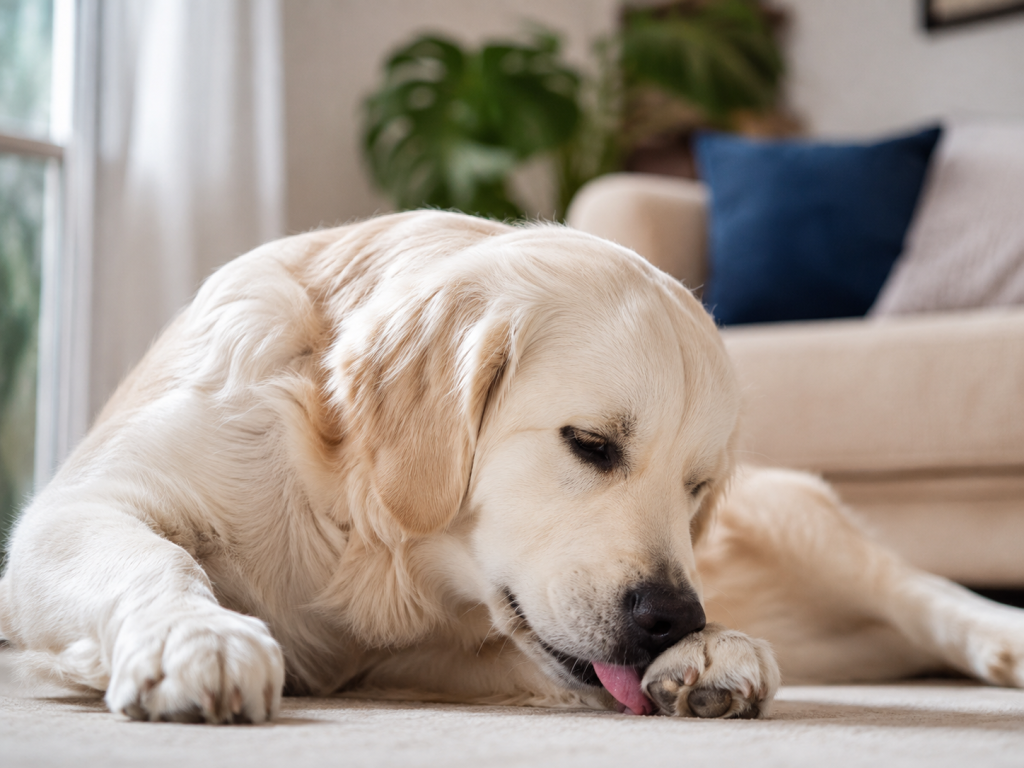
If you have been asking, “why does my dog lick his paws so often,” the answer usually involves allergies, dry skin, minor injuries, boredom, or anxiety. Occasional licking after a walk is usually normal grooming. Frequent, intense, or ongoing licking, however, often points to an underlying cause worth investigating.
Because paw licking can come from very different sources, figuring out the pattern matters. This guide walks through the most common causes, how to check your dog’s paws at home, and when the behavior needs veterinary attention.
Paying attention to which paw is affected, how long the licking lasts, and what else is going on can help you and your veterinarian narrow down the cause more quickly.
Common Reasons Dogs Lick Their Paws
Several distinct causes can produce the same behavior. Looking at timing, intensity, and other symptoms usually helps narrow things down, often before you even talk to a veterinarian.
Allergies
Allergies are one of the most common causes of paw licking. According to the American Kennel Club, environmental allergens, food sensitivities, and contact irritants can all cause itchy paws, leading a dog to lick for relief.
Allergy-related licking often affects multiple paws and may come with other symptoms, such as itchy ears or skin redness elsewhere on the body. It can also worsen at certain times of year, depending on the specific allergen involved.
Dry or Irritated Skin
Cold weather, dry air, and walking on hot pavement or salted sidewalks can all irritate paw pads. This type of licking often improves once the underlying irritation resolves.
Rinsing paws after walks during winter, when sidewalk salt is common, can help prevent this kind of irritation before it starts.
Injury or Something Stuck in the Paw
A thorn, small pebble, or splinter lodged between the toes can cause focused, persistent licking at one specific paw. Cuts, cracked pads, and torn nails can also trigger this response.
This type of licking usually appears suddenly, often right after a walk or time spent outdoors, which can be a helpful clue when narrowing down the cause.
Boredom or Anxiety
Some dogs lick their paws as a self-soothing behavior, especially when understimulated or anxious. This type of licking often happens during quiet, low-activity periods, such as when a dog is left alone.
Over time, this kind of licking can become a repetitive habit, sometimes continuing even after the original source of boredom or stress has changed.
Pain from Joint or Bone Issues
Occasionally, licking targets a paw or leg because of underlying joint pain or a bone issue. This is more common in senior dogs or those with a history of injury.
In these cases, the licking may be paired with limping or reluctance to bear weight on that leg, which is a useful clue that something beyond the skin may be involved.
Parasites
Fleas and other external parasites can cause itching that leads to paw licking, particularly around the ankles and feet where parasites often gather. Consistent, year-round parasite prevention helps reduce this risk considerably.
Is Occasional Paw Licking Normal?
Understanding what counts as typical behavior helps you know when to simply observe versus when to act right away.
Normal or Common Behavior
Brief grooming after walks, meals, or naps is a normal part of a dog’s routine. Most dogs lick their paws occasionally without any underlying problem. This baseline behavior is worth recognizing, since it helps you notice when something shifts.
Possible Explanations
Mild, occasional licking without redness, swelling, or limping often reflects simple grooming or minor, temporary irritation. This usually resolves on its own within a day or two of consistent observation.
Warning Signs
Some patterns suggest something more significant. Watch for:
- Licking focused intensely on one paw
- Redness, swelling, or a noticeable odor
- Hair loss or a darkened, moist appearance on the fur
- Limping or reluctance to walk
- Licking that continues for more than a few days
When to Contact a Veterinarian
If you notice several warning signs together, or if the licking seems to be causing skin damage, a veterinary visit is the appropriate next step. A veterinarian can identify the underlying cause and recommend appropriate treatment.
Trying to guess the cause and treat it entirely at home can sometimes delay proper care, especially if the underlying issue is an infection or allergy that needs targeted treatment.
How to Check Your Dog’s Paws at Home
A simple paw check takes only a couple of minutes and can often reveal an obvious cause right away.
- Gently spread the toes and look between them for debris, redness, or wounds
- Check the pads for cracks, cuts, or embedded objects
- Smell the paw for any unusual odor, which can indicate infection
- Compare both front paws and both back paws for differences
- Watch how your dog walks for signs of discomfort
If you find an obvious foreign object, you can often remove it carefully. If it is deeply embedded, or if your dog resists, a veterinarian should handle removal instead.
Doing this check regularly, even when nothing seems wrong, helps you learn what your dog’s paws normally look like. That familiarity makes it much easier to notice a genuine change later.
Paw Licking Across Life Stages
This behavior can look different depending on your dog’s age and overall life stage.
Puppies
Puppies often mouth and lick their paws while exploring new textures and easing teething discomfort. This is usually a normal part of development. It typically eases on its own as a puppy matures and settles into a steady daily routine.
Adult Dogs
In adult dogs, paw licking more often points to allergies, mild irritation, or a specific trigger, such as weather, rough terrain, or a change in routine. Because adult dogs usually show a fairly stable baseline, a sudden increase is easier to notice. That makes it easier to trace the behavior back to a likely cause.
Senior Dogs
In senior dogs, new or worsening paw licking deserves closer attention. Joint pain, skin changes, and reduced mobility all become more common with age. Any of these factors can contribute to increased licking, especially when it centers on one sore paw or leg. A senior wellness visit is a reasonable place to raise the concern, even if the licking still seems mild.
Environmental and Seasonal Allergies
Allergies deserve extra attention because they are such a common cause of paw licking, and they often require a somewhat different approach than other causes.
Seasonal allergies, similar to hay fever in people, can cause itchy skin and paws during certain times of year. Food allergies tend to appear year-round and often come with additional symptoms, such as digestive upset or skin issues elsewhere.
Identifying the specific allergen usually requires veterinary guidance, sometimes including diet trials or allergy testing. Managing allergies effectively often improves paw licking significantly, even when the paws were not the primary allergy site.
Contact allergies are another possibility worth mentioning. Certain grasses, cleaning products, or lawn treatments can irritate paws specifically, since that is the part of the body making direct contact with the ground.
Behavioral Paw Licking: Boredom, Anxiety, and Habit
Not all paw licking has a physical cause. Some dogs develop the habit as a coping mechanism, much like a person biting their nails during a stressful week.
This type of licking often becomes repetitive. It may worsen during specific situations, such as when a dog is left alone or during stressful events. Over time, behavioral licking can become a habit even after the original trigger fades.
Addressing the underlying boredom or anxiety, rather than only the licking itself, tends to produce better long-term results. Increased exercise, mental enrichment, and a consistent routine often help.
If the habit has already caused hair loss or skin irritation, a veterinarian can help break the cycle, since the irritation itself can sometimes keep the licking going even after the original trigger fades.
When Paw Licking Signals a Medical Emergency
Most paw licking is not an emergency, but a few signs deserve prompt attention.
Seek veterinary care promptly if you notice:
- Sudden, intense licking paired with visible swelling
- Signs of significant pain, such as yelping when the paw is touched
- A deep wound or heavy bleeding
- Signs of a severe allergic reaction, such as facial swelling or difficulty breathing
These situations are less common but require immediate attention rather than a wait-and-see approach. When in doubt, calling your veterinary clinic for guidance is always a reasonable first step.
How to Help at Home for Mild Cases
For minor, non-urgent paw licking, a few simple steps can help.
- Rinse paws after walks to remove irritants like salt or allergens
- Keep paw fur trimmed to reduce debris buildup
- Provide mental stimulation if boredom seems likely
- Use a vet-approved paw balm for dry or cracked pads
- Monitor the paw for a few days to see if the behavior improves
If these steps do not lead to improvement within a few days, it is time to involve your veterinarian rather than continuing to guess at home.
What Not to Do
A few common responses can make the situation worse.
- Do not apply human skincare products, since many are unsafe for dogs
- Avoid ignoring persistent licking, since it can lead to skin damage or infection
- Do not use a cone or deterrent spray without addressing the underlying cause
- Avoid harsh home remedies not approved by a veterinarian
These approaches can mask the problem or create new complications without solving the actual issue. It is generally better to address the root cause than to simply stop the visible symptom.
When to See a Veterinarian
While many cases resolve with simple home care, certain situations call for professional evaluation.
Schedule a veterinary visit if you notice:
- Licking that lasts more than a few days despite home care
- Signs of infection, such as odor, discharge, or swelling
- Limping or visible pain
- Recurring episodes that keep coming back
A veterinarian can determine the underlying cause, whether it is allergies, injury, or a behavioral issue, and recommend an appropriate treatment plan tailored to your dog.
Frequently Asked Questions
Is it normal for dogs to lick their paws after every walk?
Yes, brief licking after walks is common and usually reflects simple grooming. It becomes worth watching only if it becomes intense or frequent.
Can food cause paw licking in dogs?
Yes. Food allergies or sensitivities can cause itchy skin, including the paws. A veterinarian can help identify whether diet is a contributing factor.
Should I stop my dog from licking their paws?
Occasional licking does not need to be stopped. However, persistent licking that causes skin damage should be addressed with your veterinarian rather than only managed at home.
Can anxiety alone cause paw licking?
Yes. Some dogs develop paw licking purely as a stress response, even without any physical cause. Addressing the anxiety itself is usually necessary for lasting improvement.
Why does my dog only lick one paw?
This often points toward a localized cause, such as an injury, embedded object, or a specific spot of irritation. It is worth checking that particular paw closely for a clear cause.
Can paw licking lead to an infection?
Yes. Persistent licking can break down the skin barrier, which sometimes allows bacteria or yeast to cause a secondary infection. This is one reason ongoing licking should not be ignored for too long.
Key Takeaway
So, why does my dog lick his paws so often? Occasional licking is a normal part of a dog’s grooming routine. Persistent, intense, or one-sided licking, especially with redness or swelling, deserves closer attention.
If home care does not resolve the behavior within a few days, a veterinarian can help identify the true underlying cause. Catching the pattern early usually makes treatment simpler and more effective.